Silver Palace Food and Drink: Every Shop, Menu and Buff
Silvernia sells the same dish at three prices, and the flavour text changes class every time the price goes up. That is not a reading imposed on the data. It is how the menu is built.
Quick answer
Food and drink in Silver Palace runs on four layers. Auto vendors dispense packaged, brand-licensed food on the street. Twelve named shops sell raw ingredients alongside their own finished products. Restaurants and bars serve sit-down menus through a system the game calls Purchasing Food, where each dish grants a buff and you may take only one item per category. And a fifteen-recipe craft list lets you cook at home, mostly from things the shops will not sell you.
The menu items are grouped in threes. Every restaurant dish exists at exactly three rarities, and the three tiers are the same dish for three different customers: a worker, a clerk, and someone with money to display.
Eighteen triads, and not one exception
The restaurant menu is fifty-four dishes, and it divides without remainder into eighteen sets of three. Every dish comes in a green, a blue and a purple version, and not one sits outside a set. There is no odd pairing and no lonely special.
The game's own tutorial explains the rule that sits on top of that: you may choose only one Food item from each category, and two items from the same category do not stack. So a category is a single dish line, and its three tiers are the same dish at three prices. That is why they cannot stack, and it is why the writers could use the price as a social register without breaking anything mechanically.
Watch the cake line do it. The cheapest:
A slice of cake decorated with strawberries and cream. This is the favourite amongst students. A sudden sugar spike will liberate one's cerebral mass from the clutches of complex Reactor sciences.
The middle tier:
A 6-inch cake filled with strawberries and cream. Homemakers would sit around this cake, sharing gossip while enjoying a precious break in between housekeeping chores.
The dearest:
A huge cake decorated with strawberries and cream. When young noble ladies wish to host a tea party in the garden and need something delicious while flaunting their wealth, this cake would be their primary choice.
Same strawberries, same cream, three sizes. Students, then homemakers on a snatched break, then a garden party held partly in order to be seen. Nothing in the mechanic required the middle tier to be someone tired.
The ladder runs three more times
The salad line is the same shape, compressed into one clause each: the cheapest is "an economic choice that balances one's diet", the middle one is "a nutritious feast of meat and garden produce for company clerks", and the dearest opens with "Forget about your budget and satisfy the gullet."
The bar's drinks line is the sharpest of the four, because all three tiers are about pretending. The cheap one is an alcohol-free soda:
This concoction is specifically prepared for youths who cannot handle the excitement of alcohol yet need to boast of their bar experiences in social settings. Some middle-aged office clerks might order this just to remember their green, youthful days with the green, lemony tastes.
The middle one is a fruit cobbler, and it is the only item in the game that says out loud what has happened to the aristocracy:
This drink is a favourite amongst young nobles. The cobbler's brilliant colours and refreshing flavours give the last of the aristocrats the means to fantasize about past glories and deny the loss of their family fortunes.
And the top of the line is not old money at all:
The first choice of middle-aged moneybags looking for a drink. While sipping away, they would boast about their rags-to-riches story and how they got to the top of the Reactor industry with one successful decision after another... So long as the malt never dies, the drunken dreams of the golden age will never fade.
Read the three together and the bar is a room where a boy fakes a drink, a noble fakes a fortune, and an industrialist tells the truth and is the least sympathetic of the three.
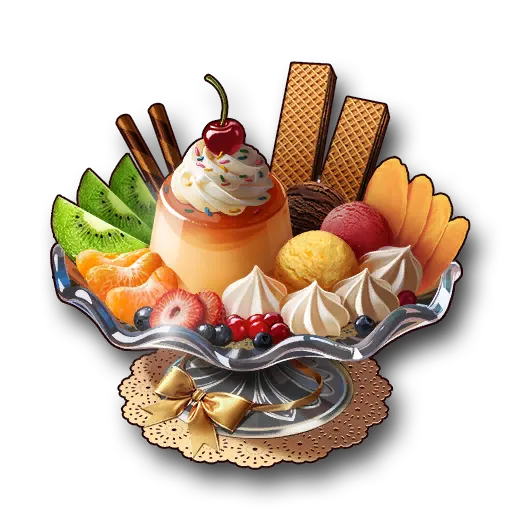
The ice cream line closes the pattern. It begins as a worker's break, "makes one's break time just that much sweeter", becomes an eleven o'clock tea break, and arrives here:
Children from rich families flaunt their parents' wealth with this. It satisfies a hungry stomach as well as the need to become the most envied kid in the entire alley.
The alley is the detail. The parfait is not eaten in a garden. It is eaten where the other children can see it.
Purchasing Food, and the word for being fed
The system has a name and a tutorial, and neither has been written up anywhere. Three cards, verbatim:
Restaurants offer a sumptous selection of food, categorized by the icons shown in the top-left corner of each item.
Different foods grant a range of effects and buffs. Purchase, and it's all yours to enjoy.
Each time you dine, you may choose only one Food item from each category. All Food effects gained will be displayed in the bottom-right corner. Note: Food effects from the same category do not stack. If you consume another item from the same category, its effect will replace the previous one.
The typo in the first card is the game's own.
The buff itself has a name, and exactly one item in the game says it out loud. Appropriately, it is the cheapest food on the street:
A cheap bar of oats. Great for giving some instant satiety.
Satiety is the game's own word for what eating does to you. It is not a label the interface necessarily puts in front of you, so take it as the game's term rather than one you will read off a buff bar.
Separately, Hilbert's Hotel has its own rule, and it is the blunt version: "Eat the food on the dining table to restore a portion of your HP."
The twelve shops
Every item in the game records where it can be got, and twelve of those sources are named retail premises rather than game modes. Six sell food or drink, and each stocks two raw ingredients alongside its own finished goods.
| Shop | Sells | Named proprietor |
|---|---|---|
| Gelato & Chill | Ice Cubes, Biscuit Crumbs, three tiers of frozen dessert | none |
| Wheaty Baker & Deli | Oats, Burnt Toast, two breads | Mrs Comoz |
| Milk Punch | Sage, Sour Cream, milk and cheese | Mr. Hunter |
| Burgerstack Masters | Smoked Bacon, Fresh Beef Cut, Pepper, two items | none |
| Honey and Milk | Honey, White Sugar, Eggs, two breads | none |
| Chipmunk Grocery | Chopped Nuts | none |
| Perfumes & Vanity | Distilled Spirits, Cinnamon, two perfumes | Dondieu |
| Solferino Branch | Sewing Kit | none |
| Solferino Flagship Store | Steaming Spray | none |
| McBarley | Doll Fabric, Fine Wool | Grandad McBarley |
| Wisdom Books | Insert Paper | none |
| Hearts and Arrows | Purified Water | none |
Two things about that table are worth stating plainly. The first is that Perfumes & Vanity sells food. Distilled Spirits and Cinnamon are kitchen goods that the perfumer buys for other reasons, and the descriptions say so: cinnamon was "originally only used as a seasoning", and the alcohol "can be sipped as it is". The boundary between a grocer and a chemist is not drawn where you would expect.
The second is that twelve is not the whole street. The game accounts for roughly twenty premises and only twelve of them currently carry stock, so a good third of Silvernia's high street is signposted and empty. Those gaps are the clearest hint in the food text that more shopfronts are coming.
The site already publishes the shop ingredients' cousins on /materials, and deliberately leaves these ones out: that page filters for progression drops, and thirty-four rows come from shops instead. This is where those rows live.
Mrs Comoz burns the toast on purpose
Two shops have a named owner, and both owners are characterised entirely through product copy.
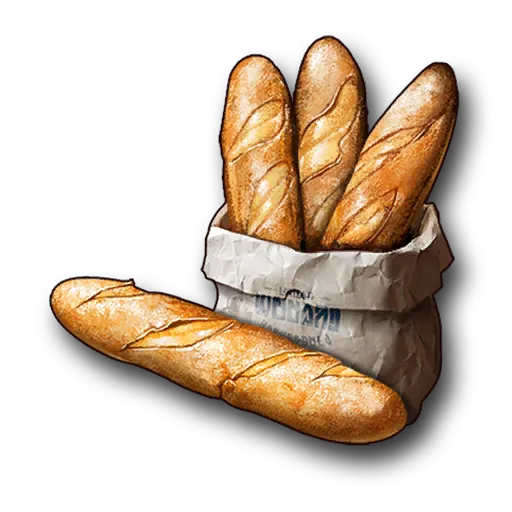
Mrs Comoz runs Wheaty Baker & Deli. Her good bread is sold on her manner as much as the loaf: "If this soft, delicious-smelling bread is served with Mrs Comoz's smile, it will keep one happy for an entire day." Her second product is a failure she kept on the shelf:
A masterpiece of Mrs. Comoz's mistake. It will definitely keep one awake. The unfortunate one who got this bread will be compensated. However, there are patrons who actually enjoy this flavour.
And the shop's own ingredient list gives the game away, because Burnt Toast is a stocked line:
While Wheaty Baker & Deli claims not to make burnt toast "intentionally", they always seem to have a steady supply of it on their shelves, for some reason...
Gratia has a voice line for standing in the doorway: "Mmm, this bread smells delicious... No, NO! A Silverknight can't eat while on duty. It would look really unknightly!"
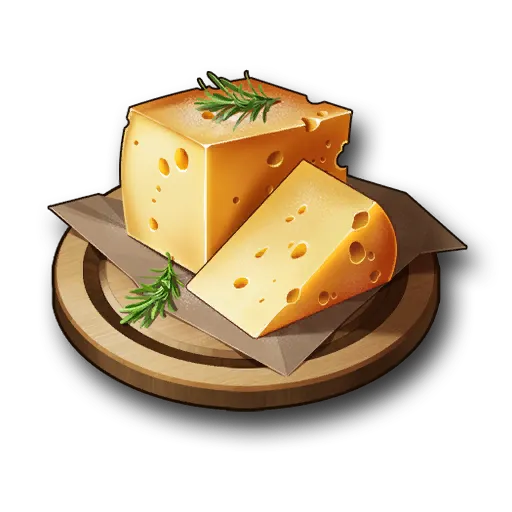
Mr. Hunter runs Milk Punch, and his characterisation is a rumour he cannot kill:
Mr. Hunter has repeatedly explained that the eyes are a result of gas bubbles from the cheese-making process. However, many patrons still adamantly believe that the eyes are evidence of the boss using the cheese as punching bags in the middle of the night.
His sage exists to answer a different accusation, "sold in shops mainly to show that the green marbling isn't mould or toxin". Burgerstack Masters runs the same defensive pattern: "Stores originally sold ground beef patties, but started offering whole cuts too in order to avoid customers' doubts as to the ingredients used to make them." Three shops in a row are managing suspicion about what is in the food.
Captain Kaboom shops there for her crew: "Number One likes hot, Three likes sweet, Six likes stinky cheese... Brilliant! Just enough change. Time to bring the crew some milk!"
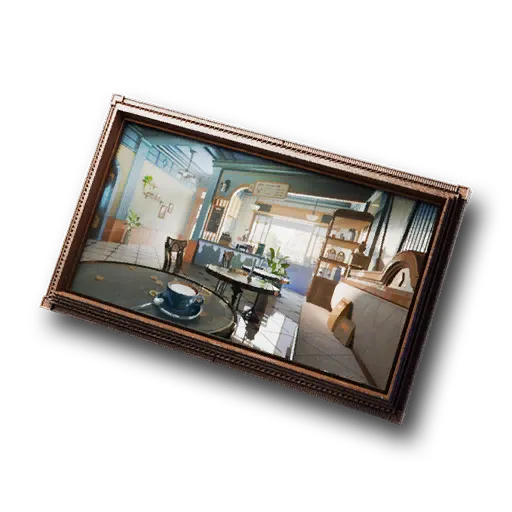
There is also a painting of the place. Leisurely Afternoons is a Valuable, and it is the warmest piece of writing in this whole body of text:
The afternoon sun's warm rays filter through the window to fall on the clean, white tiles of the dairy. All is quiet and tranquil. Do not be frightened by the scars on the shop owner's face or his tattoos, for he always goes the extra mile to satisfy his customers.
Its second line: "The faint aroma of milk blends with the mellow bitterness of the roasted coffee. The buttery notes from the bakery next door complete this duet ushering in a relaxing afternoon." The painting never names Milk Punch, so the identification rests on the scars and the tattoos. It is very probably his shop, and the art shows a cat on the floor.
McBarley, the auto vendors, and bread that imitates a doll
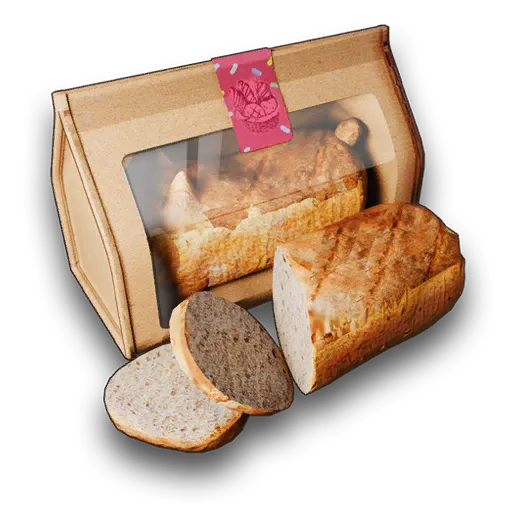
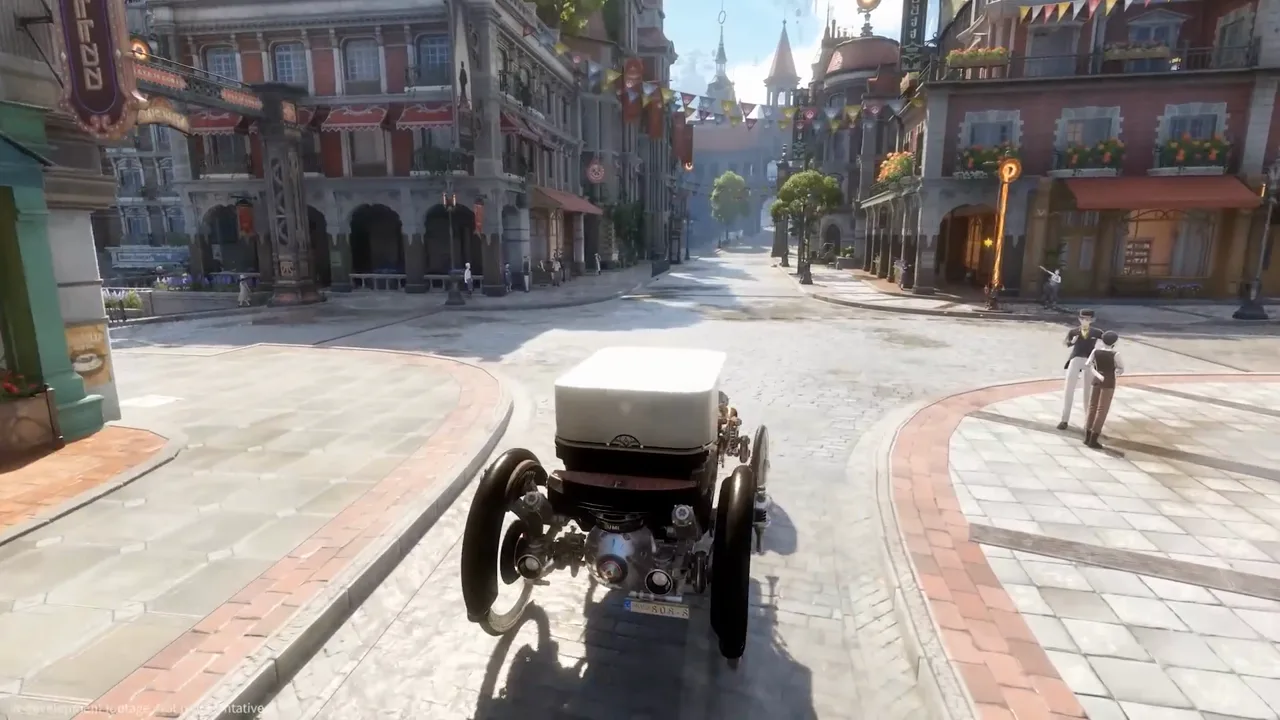
Against the neighbourhood bakery the game sets a vending machine, and it does not pretend to be neutral about it:
The design of this packaged sliced toast is based on "Toast", a toy made by McBarley. Forget about the rich aromas and softness of something freshly baked in an oven. Instead, "Toast" is served via auto vendors poised to conquer every corner of the city.
Read the direction of that sentence carefully. "Toast" is a toy first. The packaged bread is modelled on the doll, not on bread. Its siblings work the same way: Mini "Doughnut" is "based on 'Doughnut', a toy made by McBarley", and Stubby "Baguette" is "shorter than a real baguette but longer than the auto vendor's pickup port, the package can only be retrieved by clever use of three-dimensional geometry."
Cynthia II closes the loop from inside the fiction, standing in a bakery and asking the obvious question:
Why won't they bake bread in the shapes of Toast and Doughnut? Are the copyright fees too high?
She is asking why real bread does not imitate the toy. The copy of the copy is the version she grew up with.
The vendors have their own folklore, and all of it is about luck rather than food. A One More! bottle cap's "most important property is the ability to make the owner feel extremely lucky". A secret button sequence yields a whole pallet of drinks. And a lunch tin appears at a 0.07% chance, with advice attached:
It is a symbol of luck on par with the lucky horseshoe. Those who successfully draw this item are advised to test their luck against the Fox Croupier of Shadow's End, or lose their entire fortune for a dinner of tins.
Elsewhere the street sweets are sold on advertising rather than taste. A chocolate bar's "street reputation is on par with the Queen's authority. Even the most unruly street urchin would run an errand for this treat." And a bag of sweets lists its flavours as "Rhubarb, raspberries, morning dew, an assassin's regret, betrayal of a loyal minister...", then admits the pitch: "Ad campaigns nowadays are getting wilder with every episode."
Willie's Teas and Coffees sells your working day back to you
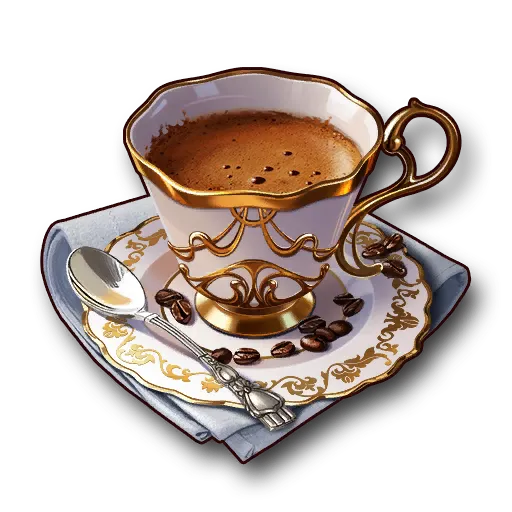
One venue exists to keep clerks upright. Its flagship is stated as a productivity multiplier:
Triple concentration for triple vitality! The best flagship product of Willie's Teas and Coffees. Perfect for every office clerk who needs to do the work of three.
The range around it is a joke about product management. The orange juice in the same line opens "A triple shot product... for diversifying the catalogue", then reasons out loud: "Since it's a 'triple' shot, there should be three options in total." It contains no caffeine at all, is "excessively concentrated to the point that it feels more like jam than a drink", and closes by noting that customers spread it on toast.
The pastry side keeps the same subject. An affogato is "enough to ease away the exhaustion of any overtimer". And the crafted nougat that ships alongside the range is aimed at people who have stopped eating breakfast: "ideal for busy professionals who barely have time for breakfast."
Bentham, the secretary, is the customer this venue was written for. She has two lines about coffee and both are about not getting a break. In a cafe: "This seems like a wonderful time for a cup of coffee... Hmm, I may as well draft the documents for next week's conference." And on a sunny day: "Such lovely weather... It's a pity that I can't just find a café and spend a lazy afternoon there..."
Jon's Pizza is the one place nobody robs
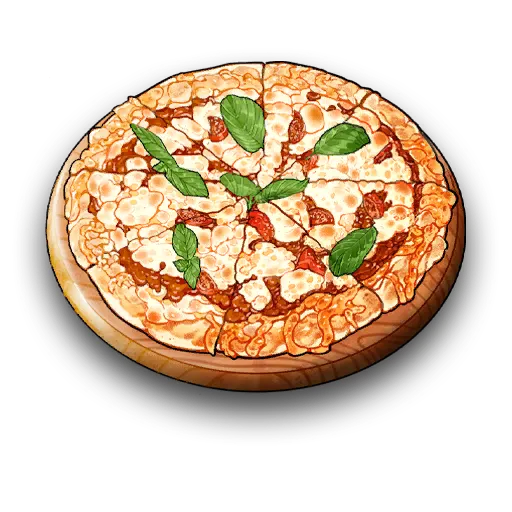
Jon's Pizza gets two full triads, six items, level with Willie's and Pierre's for the largest named menu. Its dishes are sold by the slice, the half and the whole, which is a price ladder made physical rather than social. The whole pie carries the line that tells you what the place is:
They say even the most vicious gangs would exempt Jon's Pizza from their racketeering operations.
That is the strongest statement of civic affection in the food text, and it is doing work the district posts could not. Morgue Street is a protection-racket neighbourhood. One pizzeria is out of scope. The second triad says the same thing from the other direction: "Even the most unruly of street punksters would find themselves overwhelmed by the delicious smells of bacon and roasted mushrooms."
The site already publishes the view from below. Letter in the Corner is a factory worker writing home, who has taken a second job waking colleagues who cannot afford clocks, because one of them was punished for oversleeping. What he is saving for is this:
I've saved up a fair amount now, so I'll take us all out to Jon's Pizza next time I'm home. I'll bet you've been craving pizza, what with being on your feet all day: do you ever sneak off to grab a slice?
The class ladder in the menus has a bottom rung, and it is a man saving up for a pizza that the local gangs have already agreed not to touch.
Pierre's Food for Thought, the third in-universe textbook
Silver Palace quotes its own books by chapter. Two of them, Cybernetics and Fluid Intelligence and Its Creation, argue about whether a built mind counts as alive. There is a third, and nobody has mentioned it.
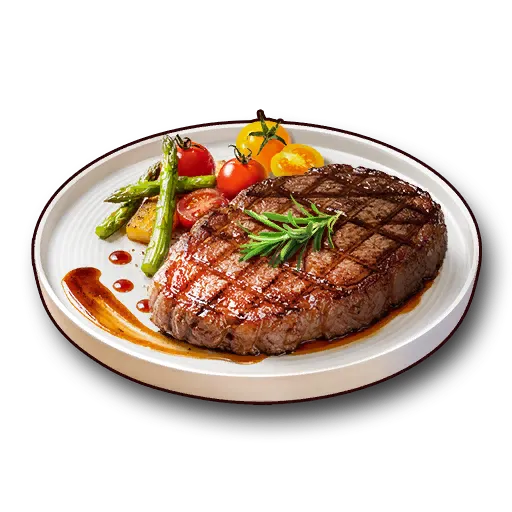
Pierre's Food for Thought, Chapter 2: "Can't afford marbled beef? No matter. Simply brush a thin layer of honey over your steak, and you'll enjoy a meal that rivals even the finest restaurants."
The other two textbooks are issued to captains of security forces and to stewards in the Office of Security Operations. This one is addressed to a reader who cannot afford beef, and its advice is a workaround. It is the only in-universe book in the game written downward.
Pierre himself is the only chef in Silvernia with a following, and the copy treats that following as a bit. His wings are "a bargain often considered an essential first course by regulars". His broccoli has "brought many to tears of joy, claiming it tastes just like home". A loyalist is quoted on the roast vegetables: "It's a meal that really brings me a sort of peace". And the last line of his last dish drops the pretence of being about food:
Our diets simply cannot do without fibre, just as Pierre's loyal fans cannot do without Pierre himself.
The Reactor economy reaches the dinner table
The Silverium posts argue that the city's power source shapes everything. The food text proves it in a chain you can follow end to end, and it is a supply chain rather than a metaphor.
Heat first. The Ignis material line states the domestic outcome: "Making anything from toasted rye bread to steaming oatmeal, high-temperature Reactors have already become a household essential." One tier up, the same family records who got heat before anyone was toasting bread with it: "The upper classes can now comfortably live out winters with their heated ballrooms."
Cold created a whole industry. All three of Gelato & Chill's products are described as "a novel product following the popularisation of Glacies Reactors", and the Glacies material line names the trade it made possible: "Ice cream vans and chilled seafood... as dear as ice, yet of a far more enduring cold."
But cooling Reactors are scarce, and the shop's own ingredient stock records the consequence:
As cooling Reactors are in such short supply, commodities like ice cubes (which are essentially just water, after all) retain a steady demand in shops.
Which is why the home-cooked version cannot compete. Midnight Sorbet is "a great option for novice chefs trying their hand", and then: "If only ice cubes were a bit cheaper, it would be the perfect homemade dessert." A Reactor shortage ends up as a line about a dessert being slightly out of reach.
The drinks pick it up too. Super-Strength Bock is "crafted through new ice-distillation methods that ramp up its alcohol content", so the same cold that made ice cream also made a stronger beer.
And one ingredient states the class conclusion without any Reactor at all. Purified Water is "filtered and distilled multiple times, making it fit for use in perfumes, makeup, and other skin products", and then:
For the affluent in society, however, it's merely common drinking water.
The recipe list is the shopkeepers' backstories
Fifteen recipes and manuals form their own small class of item, separate from the food itself. What they produce is almost never something a shop sells. Read them together and they are the private histories of the people behind the counters.
The Jon's Pizza founder's childhood remedy:
Believed to be a popular home remedy from the Jon's Pizza founder's childhood. Made by simmering a slice of burnt toast for five to ten minutes, it's a kind of savoury broth that aids digestion. Its effectiveness is up for debate, but it most certainly sparked the young Jon's lifelong love of baking.
Note what that requires: burnt toast, which is the thing Wheaty Baker & Deli keeps a suspicious supply of. The craft list connects two shops through a mistake.
Dondieu's student work, which he refuses to sell:
Said to be one of Dondieu's trial creations from before he became a fully-fledged perfumer. With a dominant cinnamon note, it exudes a rich, comforting warmth, like an autumn harvest, a late-night hearth... the very scent of home. Given its relatively simple aroma profile, it's not sold but instead given as a complimentary gift to regular customers.
A confectioner reading the pavement:
Believed to have been inspired by the South Church Quarter cobblestones, left slippery and well-trodden after rainfall.
That is Cocoa Cobbles, and it is the only food item in the game tied to a named quarter. It is credited to 897 Roastery's menu.
Five further recipe slots are already in place with no dish attached to them, so this list is still being written.
The crafted goods themselves are quieter than the shop products, and better. A porridge whose "secret" is one extra egg. A hot drink developed from eggnog. A cocktail called White Queen, "like an austere queen upon her throne, beneath its tough exterior there's a gentle and warm heart to it". And a honey wound dressing with a genuine drawback: "you're left with a rumbling stomach as your nose fills with that sweet, inviting scent."
Head Chef Alex, and the market that buried him

The Gourmet Market has appeared on the site twice, both times as a place where thieves work. It also has a dead chef, and a funeral its traders arranged themselves.
Bouquets prepared in honour of Head Chef Alex by the various shop owners of the Gourmet Market. Carefully arranged by Hypnos Garden, they're presented to each visitor joining the festivities. It's both a gesture of respect, and a show of appreciation: to never forget their beloved head chef.
The other half of that story is already published. Report: A Chef's Hat is a constabulary record about a chef's hat that a six-year-old will not sleep without, because it was held over the child's eyes during the werewolf attack that killed the man wearing it. The item text calls the memorial "the festivities", and every trader in the market contributed a bouquet.
That is the food economy's one death, and the whole street closed ranks around it.
Fish and chips, and the only dish the game calls national
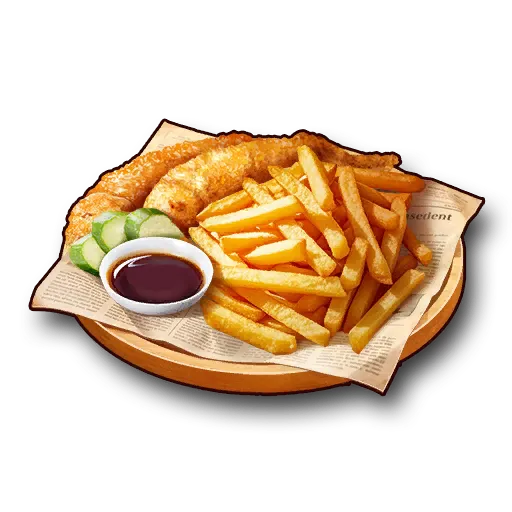
Two items claim to represent Silvernia rather than a shop. One is a layer cake, "lauded as among the best representations of Silvernian dessert cuisine". The other is the pub's top dish, and its copy is a small manifesto:
A beloved national classic, whose popularity has given rise to countless variations over time. Here, however, we remain faithful to tradition, serving it simply with salt and malt vinegar, wrapped in paper. Sip your drink, tuck in, and savour the simple pleasures of Silvernia.
The art follows the text exactly and serves the dish on printed newspaper.
Three more items attach a dish to an institution. The pub's porter is "a firm favourite of many sailors, championed by the Royal Navy", which is the force that installed Rex as Superintendent. The bitterest coffee in the game is "a favourite among United Mining Industry workers". And a gift fruit records what happens when a food becomes a class marker outright:
Owing to the exceptionally high cost of cultivation, it has gradually become a symbol of status among the aristocracy, with even its consumption regarded as a luxury.
Set against that, a Valuable called Poor Quality Beer:
A bitterness pervades, from the first bite to the last. Like the bitterness of daily life, for some. Yet they persevere nonetheless, for life must go on.
And a bottle cap from a tavern that did not survive its neighbourhood: "An aged tavern, yellowed over the years since the Bridgehead Commercial District's rise and fall, its colours faded like memories."
Seven of the twelve places a character will talk about are food
Characters carry voice lines keyed to specific locations. There are twelve such places, and seven of them serve food or drink: a bakery, a bar, the Memoir Bar, the Voicepipe Café, an unnamed cafe, Milk Punch, and Wheaty Baker & Deli. The constabulary, the Maid Institute, a clinic, a bridge and a spine make up the rest.
Argos, who works behind one of those bars, explains the name: "Wondering why they call it the 'Memoir Bar'? Perhaps from the memories that float to our minds after a cocktail or three. What'll you be having?" His own Motive states the professional use of that: "A special with 30 millilitres of alcohol can quickly loosen any tongue, then it's just a matter of listening afterwards."
Lorin, the chief inspector, negotiates with himself in the doorway: "I won't be able to keep myself dry here! I'm not off duty yet... But a single shot never hurt anyone, did it?" Cynthia II, who is a child, takes the constitutional route: "Why won't the grown-ups let me drink? Because of the law? Hmph. When I go home, I'll ask my cousin to change it!" Her cousin is the monarch.
Ashley on the Voicepipe Café is the one line that treats a venue as infrastructure: "My interview was the first time I'd set foot here. You hear all sorts in this place, secrets, intel, gossip."
Three Motives are food businesses seen from the inside. A dairyman thinks in apprenticeships: "Whole milk was much like a young apprentice. A bit of guidance and it could find its own path to grow into butter or ice cream..." and then looks out of the window, where "the little cat that used to sneak in for a sip of milk was nowhere to be seen today." A baker has ruined a batch and carries on anyway: "The bread will be baked, one way or another. Once it's out of the oven, she'll turn those peculiar flavours into something called 'happiness'."
And a coffee manager named Ginkgo gets the most precise sentence in the game:
Grind thoroughly, preheat the cup, wet the filter, pre-brew evenly, and extract with water at exactly 93°C, and there you have it: the Manager's Brew.
Her story is that expertise stopped being enough. A stall keeper took her to a food festival, she saw "ice cream, pastries, and so many treats she'd rarely encountered", and "Ginkgo realised it was high time she revamped the menu." The Detective helps: a Commission item is "a collection of suggestions from customers and coffee experts for improving the new coffee flavours."
Where the menus stop naming their venue
Eleven of the eighteen triads name no venue at all. Only four venues are stated outright inside the menu text: Jon's Pizza and Willie's Teas and Coffees with two triads each, Pierre's Kitchen with two, and Charcoal Grill with one. Between them they account for seven.
The rest are menus without an address. The lab-glassware coffees, whose espresso arrives in a graduated cylinder so "the markings are a clear reminder of just how much caffeine you've indulged in", match the Voicepipe Café pamphlet the site already publishes, which advertises "Beakers. Wide-mouth jars. Slender-necked flasks." That is a strong match and still an inference. The bar's drinks, the cakes, the salads, the seafood skewers, the beers and their snacks, both cocktail sets, and the closing coffee and layer-cake pair name nobody at all.
There is no honest way to assign them. Argos fits the cocktail list so well that it is tempting, and nothing in the text supports it. They are published here as menus.
The short version
- The restaurant menu is fifty-four dishes in eighteen exact sets of three, every dish in a green, a blue and a purple version. The tier is the price, and the description treats it as the customer's class.
- Purchasing Food is the system: one item per category, and same-category effects replace rather than stack. The game's word for what eating does is Satiety.
- Twelve named shops stock the city, six of them food. The game accounts for roughly twenty premises, so around eight shopfronts are standing empty.
- Mrs Comoz and Mr. Hunter are the only named proprietors, and both are drawn through customer suspicion and shop gossip rather than biography.
- McBarley's packaged food imitates McBarley's toys, not the other way round, and Cynthia II asks in-universe why real bread does not follow.
- Pierre's Food for Thought is a third in-universe textbook quoted by chapter, and the only one addressed to someone who cannot afford the ingredients.
- The Reactor supply chain reaches the menu: Glacies made ice cream, ice cube scarcity made it expensive, and a home recipe complains about the price.
- The fifteen-recipe craft list is mostly the shopkeepers' own histories, including the Jon's Pizza founder's childhood broth made from a rival bakery's burnt toast.
- Head Chef Alex is dead, and the Gourmet Market's traders arranged the flowers.
The one thing to take away
Silvernia's food writers were given a rarity scale and used it as a class scale. Three tiers per dish, over eighteen dishes, and at almost every top tier somebody is being watched: a child in an alley, noble ladies in a garden, a table drawing envious glances. At the bottom tier somebody is tired, economical, or on a break they had to snatch. The city's power grid decides what is on the menu, and the price decides who the sentence is about.
Sources
- In-game item descriptions and flavour text: the Consumables, Other Materials, Valuables and Commissions categories, covering every restaurant dish, shop product, ingredient and recipe quoted above.
- In-game tutorial text: the Purchasing Food and Hilbert's Hotel: Supplies pages in the Exploration section.
- In-game character bios, Intel entries and the location-keyed voice lines.
- In-game Motive text for The Festival Drinks Mystery, The Richness Mystery, The Fatuity Mystery and The Duplicity Mystery, published on /motives.
- The in-game Classical Curations collection, published in full at /lore/classical-curations.
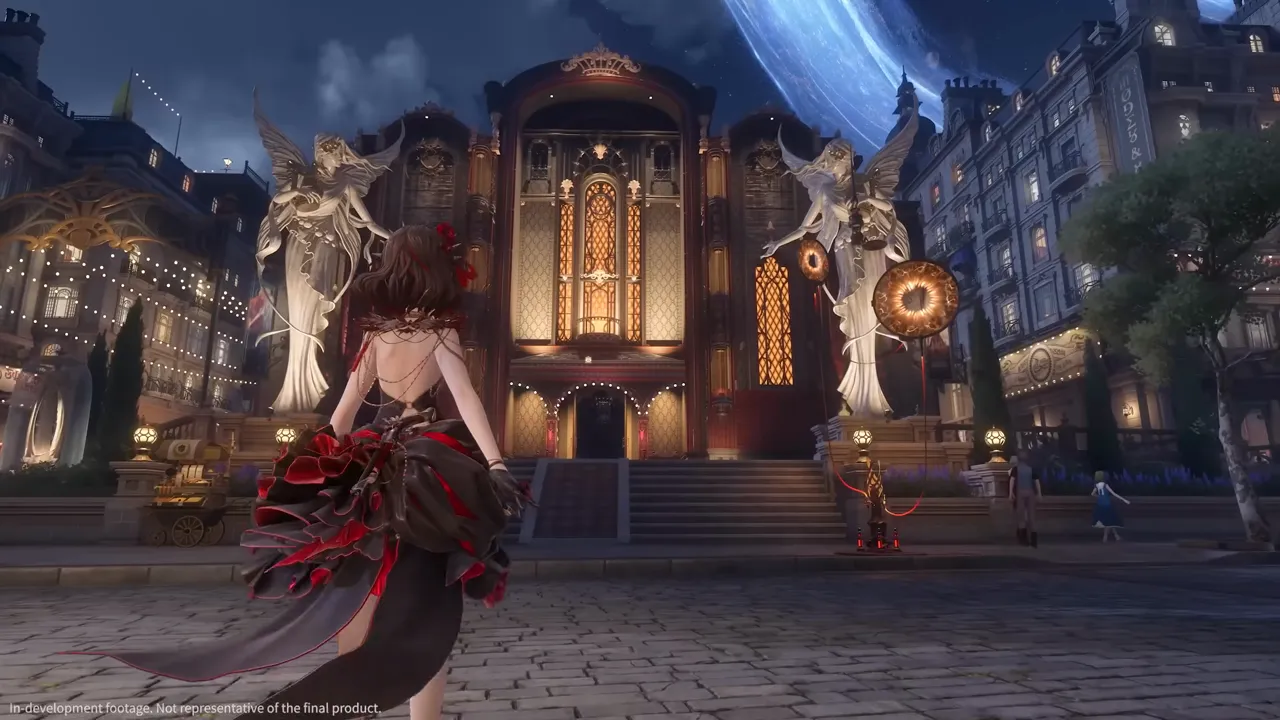
- Feature image: a frame from the official Dichotomy gameplay showcase.
Know someone tracking Silver Palace? Send them this.
About the Author
Silver Palace Meta Team
Silver Palace Meta Team
We're dedicated to providing comprehensive coverage of Silver Palace news, updates, and community insights.