Is Silverium Alive? Mechanical Life in Silver Palace
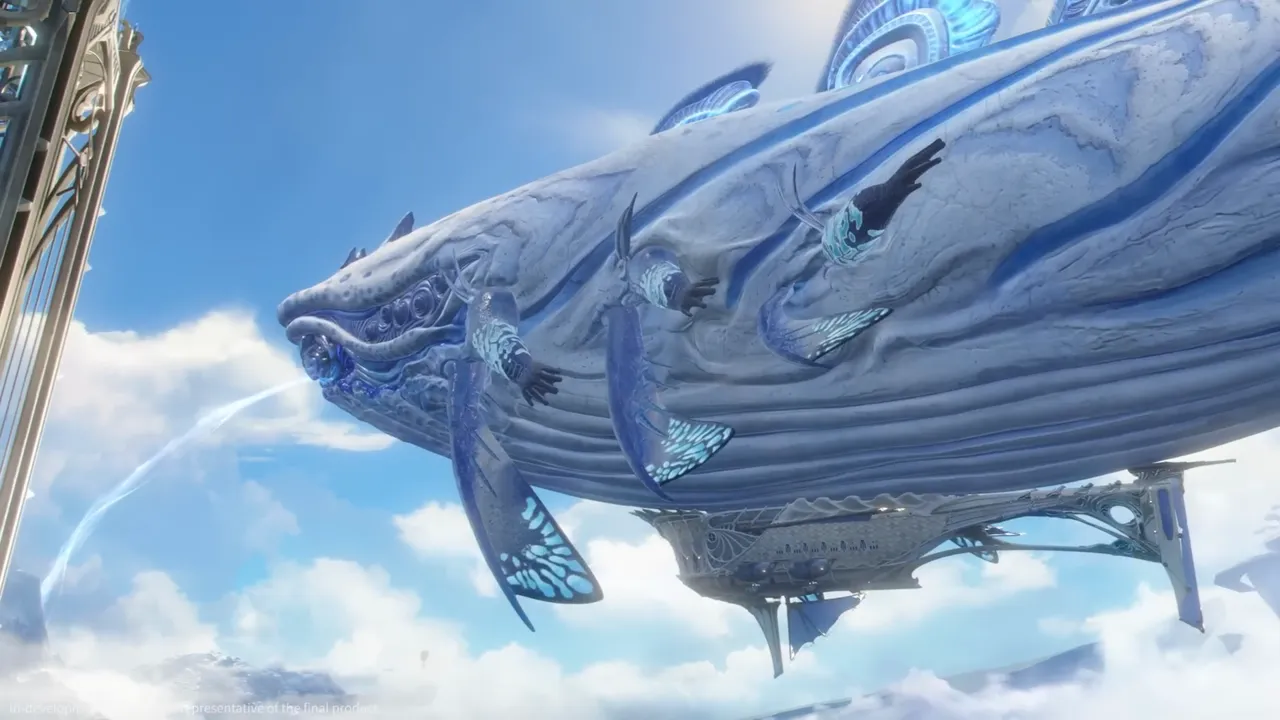
Every Reactor in Silvernia runs on a Reactor Crystal. Here is how the game describes one:
A small shard often used as a Reactor core. Tiny life-like particles seem to be swimming within this amber-like and translucent crystal. It is both a rock and an ecological vessel.
Both a rock and an ecological vessel. A mineral and a habitat, at the same time.
That line is not in a cutscene. It sits on a crafting material. And it asks the biggest question in the game: the silver fluid that runs this city might be alive.
Nothing here spoils the story, because none of it comes from the story. It all comes from item text.
Quick answer
Silver Palace contains two textbooks. They disagree about whether machines should act human. A third set of research notes asks whether Silverium is alive. None of them answers. All of them are printed on crafting materials.
Four groups of item text hold the whole picture:
- Cybernetics. A book about control. One chapter per Signal Receiver tier. The best one is handed to UMI's security office.
- Fluid Intelligence and Its Creation. A book about building machines. One quote per Power Core tier. It contradicts itself.
- The Fluid Data notes. Four research notes. The last one asks if Silverium is alive.
- Things that are already alive. Jellyfish in the power grid. A candle that copies itself. Gadgets the game files as creatures. Three characters with machine parts.
Three chains, one argument
Crafting materials come in sets of four, one per rarity tier. Three of those sets are quote chains. They sit next to each other in the same category, run across the same four tiers, and each tier moves its own text forward by one step. Someone planned that.
| Rarity | Signal Receiver | Power Core | Fluid Data |
|---|---|---|---|
| 2 | Broken: Cybernetics, Chapter I | Damaged: Fluid Intelligence, Chapter II | Limited: vortices and fluid dynamics |
| 3 | Intact: Chapter II | Short-Circuited: a margin note | Complete: Spillage that never returns |
| 4 | Special: Chapter III | Complete: the preface | Special: Mermaidomorphosis |
| 5 | Customised: Chapter IV | Custom: the Final Chapter | Abnormal: "is it alive, or merely a metal?" |
Read across and you get three questions climbing together. How do you control a system. How do you build a mind. And does the result count as alive.
Read down and each column is a short essay with a start and a finish.
Cybernetics, the book about control
The Signal Receivers carry four chapters of a book called Cybernetics. It opens as wide as it can:
Cybernetics, Chapter I: This is a science of control and communication. The economy, society, population, animals, and machinery can all be controlled with a perfect system.

Look at that list. The economy and society sit right next to animals and machinery. As if running a country and wiring a gadget were the same job at different sizes.
Chapter II cuts the method down to one line:
Cybernetics, Chapter II: The essence of control lies in the allocation of information. Information is synonymous with command.
The item holding that line is "a simple-looking signal receiver that still works pretty well, though it is no longer receiving anything." That is a joke. A receiver in perfect shape, with nothing coming in, stamped with a chapter about information being power.
Chapter III adds the first note of worry. Chapter IV ends on a job title:
Cybernetics, Chapter III: To achieve self-modulation of a complex system, a multi-layered management must be in place. However, equal attention must be given to the issues that may arise.
Cybernetics, Chapter IV: "If cybernetics is the science of control, then management is its practiced profession."
Now look at who gets these. The tier-4 receiver goes to "captains of security forces." The tier-5 goes to "a select few stewards in the Office of Security Operations."
So a book about controlling economies, populations and animals ends up as work gear for the people who control Silvernia's workers. The game does not leave you to spot that. It hands you the delivery list.
Fluid Intelligence and Its Creation, the book about building
The Power Cores carry a second book, and this one argues with itself. Every core in the set is "a special power core developed by the United Mining Industry," so this is UMI's own engineering manual.
Chapter II lays down a rule:
Fluid Intelligence and Its Creation, Chapter II: "The ultimate purpose of mechanical life is the augmentation of efficiency; lesser automatons ought not aspire to the imitation of human conduct."
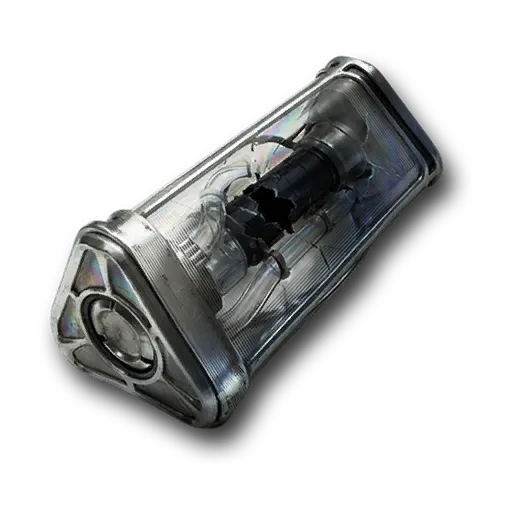
Two things slip past you there. The book says "mechanical life" plainly, like a term everyone already accepts. And the rule is about wanting, not about ability. The machines are not told they cannot act human. They are told they should not want to.
The next tier is not a chapter. It is someone writing in the margin:
A comment written in Fluid Intelligence and Its Creation: "If we think of machinery in human terms, then is short-circuiting comparable to fainting from shock?"
Whoever owned that copy was doing the exact thing Chapter II bans, in pencil.
The preface, on the tier-4 core, is warmer than either:
In the preface of Fluid Intelligence and Its Creation: "A technological masterpiece, even its shadows entwined with wires."
Then the Final Chapter, on a core "designed exclusively for large automata," throws the rule out:
Fluid Intelligence and Its Creation, Final Chapter: "Remember this: if we are to construct sentient yet inefficient machines... Then we must do it right."
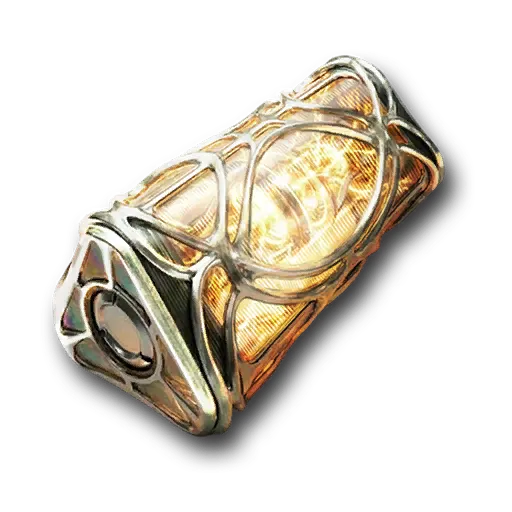
Line them up. Chapter II says efficiency is the whole point, and acting human is beneath a machine. The Final Chapter says the thinking machine is coming, and the only question left is whether you build it well.
Same book. Four tiers apart. The author changed their mind, and the game files that change of mind as a rarity upgrade.
Both books belong to UMI
Neither book is neutral science.
The Power Cores are UMI products, by their own text. The best Signal Receiver goes to UMI's Office of Security Operations. That office has a leader, described in The Pincers Mystery:
Her iron prosthetic limb acts as both a weapon and a shield, a barrier that forever separates her from the world of ordinary people. She doesn't mind it in the least; however. The UMI Office of Security Operations' leader should inspire fear in others, after all.
So one company runs the Reactor trade, a control programme and a machine-building programme. And the head of its security arm is part machine herself. For how UMI got there, see the United Mining Industry faction guide.
The Fluid Data chain asks the question outright
The third chain has no textbook. It is research notes, and they climb from a physics oddity to the question in the title.
Tier 2 is almost boring:
Silverium overflows can be used to create vortices that adhere to the laws of fluid dynamics, a phenomenon that's stirred up much interest in physicist circles.
Tier 3 records something odd, and it is a big deal if you have read the Argent Strand piece:
This Silverium Spillage does not lose its potency or return to the Argent Strand; it endures, making it an exceptionally valuable material for archival records.
Used Silverium is supposed to go back to the Argent Strand. This sample will not. And refusing is exactly what makes it worth keeping records on.
Tier 4 names the event that changed everything:
Silverium's peculiar properties come to light thanks to a tail-worthy manifestation of Mermaidomorphosis. A most momentous discovery, indeed.
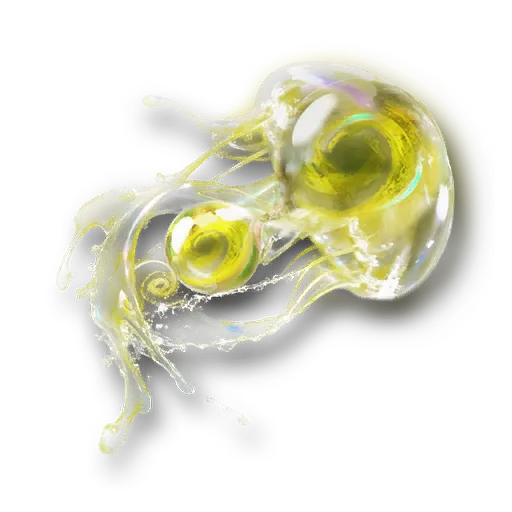
Tier 5 stops describing and starts asking:
The ripple of Mermaidomorphosis through society revealed Silverium's inherent properties: is it alive, or merely a metal? Does it hold memory, or the promise of what is yet to come?
The four flavour lines attached to those tiers are worth reading on their own:
- "A single minnow is preferable to returning with naught but an empty pail."
- "So long, and thanks for all the fish!"
- "Do Silverium fish dream of silver seas?"
- "As written in a certain unpublished thesis."
Number two is Douglas Adams. It is what the dolphins say when they leave Earth, after spending the whole book as the smartest species on it. Number three is Philip K. Dick, the title question of the novel about telling a built mind from a born one.
Silver Palace borrows like this everywhere. The same trick runs through all 30 Epiphanies. But look where these two land. Both are about smart things nobody noticed, stacked in order, on the two tiers right before the game asks whether Silverium is alive.
Mermaidomorphosis
Mermaidomorphosis shows up twice in the whole game, and nowhere else on this site until now. Two lines is not much, but they are specific.
It happened once. "Tail-worthy" hints at the shape it took. It was big enough to call a discovery, not an accident. It "rippled through society," so the public knew. And what it changed was knowledge, not industry. It did not reveal a new use for Silverium. It revealed Silverium's "inherent properties," and those properties turn out to be two open questions about life and memory.
That is the entire record. Nothing says who saw it, when it happened, or what happened to it afterwards.
The things already alive
While the textbooks argue, the item descriptions keep reporting Silverium life like weather.
The Spinotrodes over the city are full of animals. One of the Detective's own photographs proves it:
A close-up photograph of the street-side Spinotrode, taken by the Detective. Countless Silverillia jellyfish can be seen drifting about inside the Spinotrode.
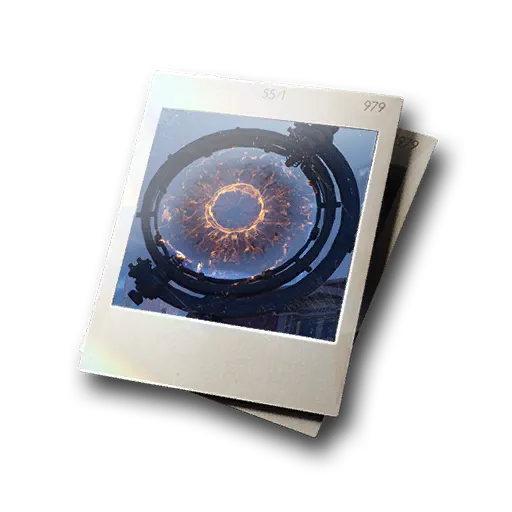
Silverillia are a species. Named, countable, living inside the city's power supply.
You can also buy some:
A small terrarium that houses Silverium beings. It's said one can even glimpse them fading into inactivity, returning to the Argent Strand. These sold fast upon release, a desirable item for Silverium enthusiasts.
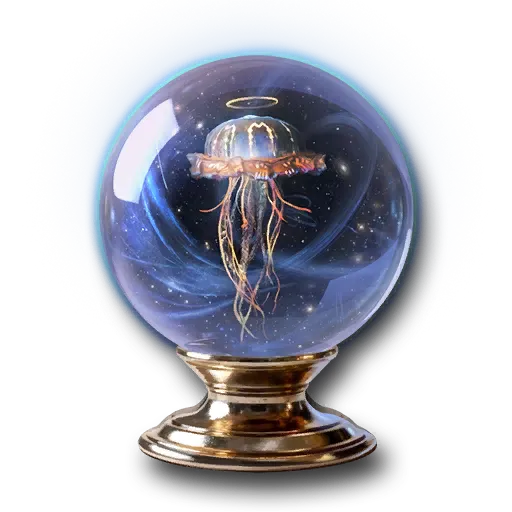
A product that sold out, and the selling point is watching something die. "Fading into inactivity" is the game's phrase. Where they go is the Argent Strand, the same place used Silverium goes.
Then there is a candle:
A candle that, in defiance of all scientific theory, can grow and duplicate its own form. As Silverium flows eternal, so does life itself.

Growing and copying yourself are on almost any list of what life means. The candle does both, and its own text admits it breaks the rules to do it.
Even household waste counts. Recyclable Whitesand is "fibrous white sands emitted from chimneys of working household Reactors," and the text notes that people admiring the galaxy overhead are "unaware that their homes are already creating miniature versions of milky ways."
The Silver Creatures on your shelf
The game stores its art in folders named after what the art shows. One folder is called silvercreature. Inside it are three tiers each of an electric buzzer, a tungsten lamp and a dagger.
Those are the home defence gadgets. The game files them as creatures.
Their behaviour backs that up. The tungsten lamp "can launch itself at the target and self-detonate," and its notes brag that "the in-built tracking feature was ahead of its time." It hunts. Then its description waves the whole thing off:
Interestingly, they are just luminaires shaped like insects.
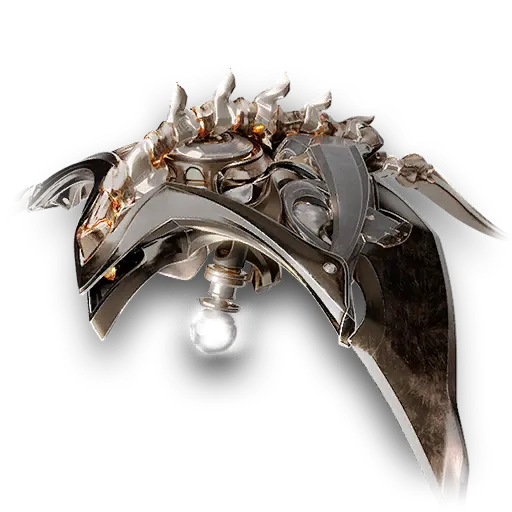
That "just" is carrying a lot.
So is the small print. The mid-tier buzzer has a straight legal warning about possible deaths. The top tier gives up on the form:
DISCLAIMER: Fine. There is none. Be aware that the Castle Act only grants you limited rights. You should know how destructive an unlicensed modification of this dangerous implement could be.
All of this sits inside the rights the Castle Act gave out 200 years ago, which is why every buzzer repeats that citizens "earned the right to protect their own residences and estates." What that law did not plan for is people ordering tracking predators by post.
The same idea scales down to toys:
An autonomous cat-shaped mechanical companion, that longs only to remain by its master's side. It simulates a cat's comforting warmth and even emits soft mews, making it, for some cat lovers, more ideal than a living cat.
The Automaton Cat Doll is Chapter II's ban, on sale. It wants nothing except to copy the comfort of a pet, it is worse at being a cat than a cat, and some buyers pick it anyway.
The machine UMI will not build
The sharpest item in the set is a piece of junk you make yourself.
The Package Locator is a cardboard box "stitched into the shape of a parcel and powered temporarily by Silverillia." It works because it is alive enough to want something:
Of a similar shape to Lost Packages, which they're drawn to: simply follow one's flight path to locate the nearest Lost Package. Regrettably, these pathfinding parcels are strictly single-use. Such poor efficiency means they will likely never see use by UMI.
Now put the two textbook lines next to it.
Chapter II: "the ultimate purpose of mechanical life is the augmentation of efficiency."
The Final Chapter: "if we are to construct sentient yet inefficient machines... Then we must do it right."
The Package Locator is that exact machine. It wants something, it goes after it, and it dies on the way. UMI turns it down for the precise reason Chapter II gives. Meanwhile a regular citizen can build one from a cardboard box and some Silverillia. The company that wrote the book will not, because it does not pay.
The people who are already part machine
While the books argue, the cast quietly settles it.
Firtho was "stricken with a congenital heart condition throughout her youth. Yet the mechanical heart that now beats within her allows her a new lease of life." Nobody treats her as less alive for it.
Ashley's horse is stranger. Her intel says: "Thanks to her meticulous care, the mechanical horse that should have been scrapped continues to run to this day. Almost a miracle of life, you could say." The machine was written off. Attention kept it going. The text reaches for the word life, then softens it with "almost" and "you could say." That is the same flinch as the pencil note in Fluid Intelligence.
Rex has two mechanical dogs, Chalky and Centimeter-wave Radar. He named the second one "after some consideration, from a naval studies book." He talks to them like dogs: "Chalky, Radar, sit! Good boys." And also, less nobly, "Chalky... Stop eating things on the ground." Whatever the books decide, Rex has moved on.
The gear set built on all this is called Illusion of Life. Its four pieces are named Swirling Thoughts, Journey of the Argent Strand, Time Cycle and Conscious Echoes. All four carry one line:
What appears to be the sea is not the sea. What appears to be life is not life. If that which is false is indistinguishable from the real, then where does the boundary between truth and falsehood lie?
The set says twice that the resemblance is fake. Then its own last clause admits you cannot tell the difference. It also sets that beside the Argent Strand and a cycle of time. The Detective Board already carries that link as a theory: the Cognito Sea and the Argent Strand may be one thing seen from two sides. For the mind half of that pair, see the Mind Palace and the Cognito Sea.
Gucia and the unpublished thesis
One thread is worth pulling, as a theory and not a fact.
The line asking whether Silverium is alive has a credit. Its flavour text reads: "As written in a certain unpublished thesis."
Silver Palace has exactly one character with that job. Gucia is "a junior researcher obsessed with studying Silverium lifeforms." Her skills include "observing Silverium life." She introduces herself with "Look for me if you ever have questions about Silverillia. I am... fairly familiar with them, one might say." Her intel puts her mid-career: "It's about time to consider what happens following thesis publication. Perhaps I could assist Gucia in preparing an acceptance speech for the Biology Award at the Royal Academy." So the thesis exists and is not out yet.
Her dislikes are listed as "Social etiquette, the United Mining Industry."
Add it up. An unnamed thesis asks whether Silverium is alive and remembers. The one expert on Silverium life has an unpublished thesis and a grudge against the company whose books say the answer is efficiency. No released line connects the two, and this site is not claiming it does. It is just the shape the evidence makes.
The short version, without the metaphors
All of the above comes from text printed on crafting materials. Here it is stated flat.
There are two textbooks, and neither appears in a cutscene. Cybernetics and Fluid Intelligence and Its Creation are quoted only on crafting materials, a few sentences per tier. To read either one in order, you farm it.
Cybernetics is about controlling people, and the game gives it to the people who do that. Chapter I lists the economy, society, population, animals and machinery as things one system can control. Chapter II boils the method down to information being command. The best copies go to security captains and to UMI's Office of Security Operations.
Fluid Intelligence and Its Creation contradicts itself, and that is the point. Chapter II says lesser automatons should not try to act human. The Final Chapter accepts that thinking machines are coming and asks only that they be built well. Same book, four tiers apart.
Both books are UMI's. Every Power Core is a UMI product. The top receiver goes to a UMI office. One company owns the case for control and the case against its own rule.
A third chain asks whether Silverium is alive and never answers. The Fluid Data notes go from vortices, to a sample that will not return to the Argent Strand, to Mermaidomorphosis, to the question itself. The last tier credits it to an unpublished thesis and does not say whose.
Everywhere else, Silverium life is treated as normal. Silverillia jellyfish live inside working Spinotrodes. Terrariums of Silverium beings sold out, and the appeal is watching them fade. A candle grows and copies itself. Household Reactors vent recyclable Silverium out the chimney.
The household gadgets are creatures, not tools. The buzzers, the tungsten lamps and the dagger sit in the game's Silver Creature group, three tiers each. A lamp flies at a target, tracks it and blows up, and its own text calls it just a lamp shaped like an insect.
Three characters are already part machine, and nobody thinks less of them for it. Firtho has a mechanical heart. Ashley keeps a mechanical horse that should have been scrapped, which her intel calls almost a miracle of life. Rex owns two mechanical dogs and tells one to stop eating things off the ground.
The Gucia link is a theory. The thesis behind the question has no name on it. Gucia is the only character who studies Silverium lifeforms, her thesis is unpublished, and she dislikes UMI. Nothing joins those facts, and this site is not joining them for the game.
Two of the eight Catalyst attributes have nobody to use them. The tutorials list Ignis, Glacies, Fulmen, Gravitas, Radiatio, Ferrugo, Alba and Omni. Ferrugo has a full four-tier material chain and its own text about rust and decay. No playable character uses it, and no icon has shipped for it or for Omni. The parts exist before the cast does.
What the game has not answered. It never says who wrote either book, when Mermaidomorphosis happened, what became of it, or whether anything in the Fluid Data chain can think. It never links either book to the Metal-Blooded or to their maker in a crown forged with lies. It never connects Silverillia to the Metal-Blooded either. The only overlap is that both involve Silverium and living things. The Azure Cave Experiment comes up once, on a Decay Concentrate, and it is about a disaster, not about machines.
The one thing to take away
The argument is already over. Shoppers ended it, not scholars.
UMI wrote both books and wants efficiency in both. That is why it will not build the Package Locator. A parcel that wants something and dies getting there costs too much per delivery. The company that published the Final Chapter turns down the thinking machine the moment one turns up.
Ordinary people went the other way with their own money. They buy buzzers that track and dive. They buy a mechanical cat that "longs only to remain by its master's side," which some cat owners prefer to a cat. They buy a tank whose advertised pleasure is watching a small living thing fade out. Firtho keeps a mechanical heart. Ashley keeps a horse the books say to scrap. Rex talks to Chalky like a dog, because Chalky acts like one.
So the question is not really open. It got settled at the shop counter, by people nobody asked. The Mind Palace says thought is the only thing in Silvernia that lasts. This thread says something smaller and odder: in this city, alive means whatever people are willing to take care of.
Which puts you back at the crystal inside every Reactor in Silvernia. Both a rock and an ecological vessel, and never made to pick one.
Sources
All of it is in-game text:
- The two book chains. Signal Receivers (Broken, Intact, Special, Customised) and Power Cores (Damaged, Short-Circuited, Complete, Custom).
- The research notes. Fluid Data, all four tiers (Limited, Complete, Special, Abnormal).
- The living things. Reactor Crystal, Silverium Terrarium, Wax Infinitus, Recyclable Whitesand, Package Locator, Automaton Cat Doll.
- The Silver Creatures. The Stinging, Imposing and "Silence" Lethal Buzzers, and the Unstable and "Detonator" Tungsten Lamps.
- The rest. Photograph of the Spinotrode 2, the four Illusion of Life Implement pieces, The Pincers Mystery, and the bios and intel for Firtho, Ashley, Rex and Gucia. The Catalyst attribute list is a tutorial page.
You can check the three chains against each other by item id. They sit at consecutive positions in one numbering block: Signal Receivers end 0003, Power Cores end 0005, Fluid Data ends 0007, and each one runs across the same four rarity tiers, 1402 up to 1405. Three sets, side by side, climbing in step. That is a plan, not luck.
The feature image is a frame from the official Silver Palace Dichotomy gameplay showcase.
Know someone tracking Silver Palace? Send them this.
About the Author
Silver Palace Meta Team
Silver Palace Meta Team
We're dedicated to providing comprehensive coverage of Silver Palace news, updates, and community insights.