Hilbert's Hotel Guide
Silver Palace's weekly combat mode: the Merit ladder, Weekly Earnings rewards, difficulty stages, and how it stacks up against other games' weekly content.
Hilbert's Hotel is Silver Palace's roguelike endgame mode and the first of three endgame modes you unlock as you progress. Where Thought Experiment is a story-gated gauntlet you climb once and revisit for harder tiers, Hilbert's Hotel is a room-by-room crawl you re-enter on a weekly cycle, drafting a fresh set of run buffs every time and paying out through its own Merit ladder rather than a tier-by-tier crystal drop.
The name is a small joke worth knowing: the in-game title card reads "Gilbert's Infinize: Hilbert's Hotel," referencing the Hilbert's Hotel thought experiment about a hotel with infinitely many rooms that can always fit one more guest. The lobby itself leans into it, presented as an endless wall of numbered key-boxes behind the front desk.
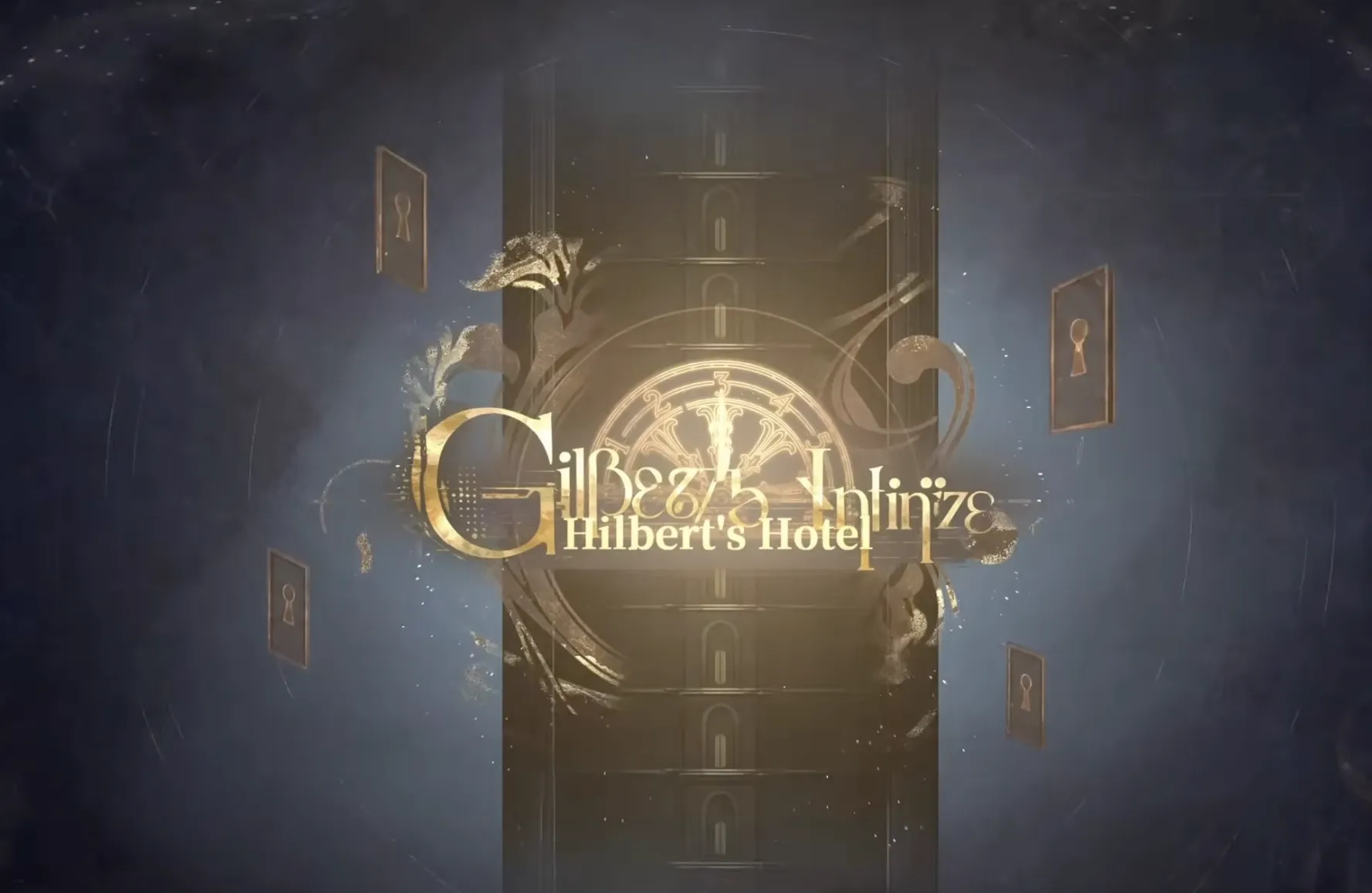
This guide is built from a single hands-on testing session during the Dichotomy Beta, so treat the numbers below as a snapshot of one build rather than a locked spec. Pair it with the Thought Experiment guide for the other endgame mode, the Combat Mastery guide for the fight fundamentals both modes share, and the Gem Rewards guide for how this fits into the wider Reactor Crystal economy.
Quick Answer
Hilbert's Hotel is a roguelike weekly mode built around three rooms, each running six difficulty tiers, and a Weekly Earnings Merit ladder with six thresholds: 500, 1000, 1500, 2000, 2500 and 3000 Merit. Each threshold pays a flat 150 Reactor Crystals alongside Ounce and Insight material, and sweeping all six in a week totals 900 Reactor Crystals, about 2.5 Revelations. Inside a run you pick one main character plus three teammates, clear rooms one at a time, and draft a buff after each. Two permanent tracks run underneath: Membership Privileges, a skill tree paid for with Membership Stamps, and Points Exchange, a level track that pays out weapons and materials.
Everything on Hilbert's Hotel
The lobby: Membership Privileges and Weekly Earnings
The Hilbert's Hotel front desk tracks your Membership Privileges count (2/22 observed), your Weekly Earnings Merit total against the 3,000 cap, and your progress on the mode's level track.
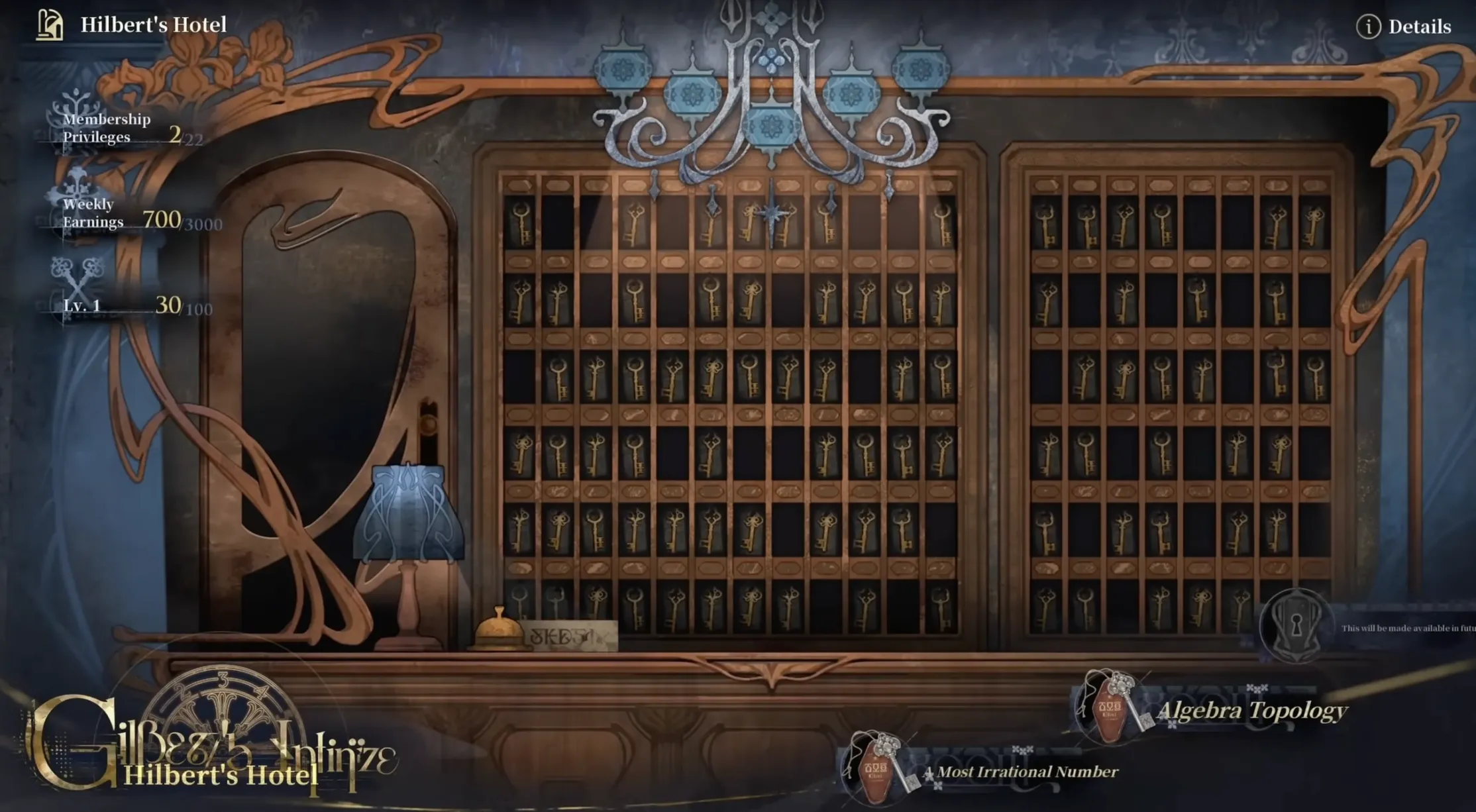
The wall of keys behind the desk is mostly decorative flavor for the infinite-hotel theme, though a locked keyhole icon in the corner is marked "This will be made available in future," suggesting Elementa has more planned for this screen than the beta build exposes.
To enter, talk to the receptionist in the hub rather than launching the mode from a menu.
Weekly Earnings: the Merit ladder
Every clear inside Hilbert's Hotel adds Merit points toward a six-step claim ladder. Points scale with difficulty, so higher tiers clear rungs faster.
| Merit threshold | Reactor Crystals | Other rewards |
|---|---|---|
| 500 | 150 | 50,000 Ounce |
| 1,000 | 150 | 5 Insight books |
| 1,500 | 150 | 100,000 Ounce |
| 2,000 | 150 | 8 Insight books |
| 2,500 | 150 | 150,000 Ounce |
| 3,000 | 150 | 10 Insight books |
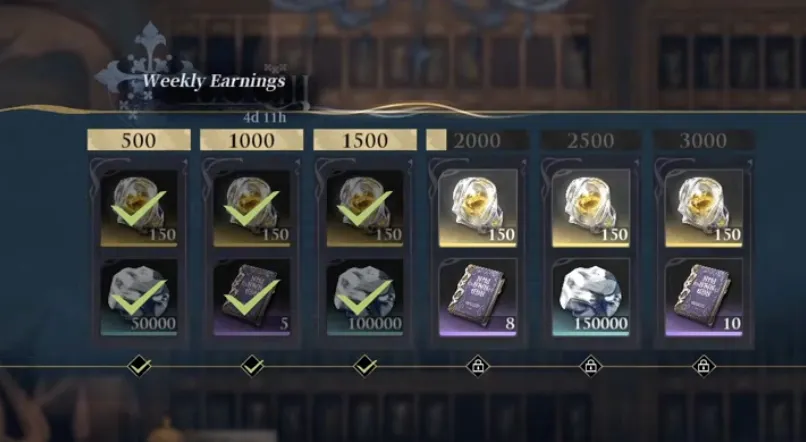
The Weekly Earnings ladder mid-week, with the 500, 1,000 and 1,500 rungs already claimed and a 4-day-11-hour countdown to reset.
Add the six thresholds together and a full sweep pays 900 Reactor Crystals in a week, about 2.5 Revelations at 360 crystals per pull, on top of 300,000 Ounce and 23 Insight books. The ladder resets on the same weekly cycle as the Merit total itself.
The three rooms
Hilbert's Hotel is not one stage list. It is three rooms, each with its own enemy types and its own pool of run buffs and debuffs. Room 1 is "A Most Irrational Number" and Room 2 is "Algebraic Topology." The third room was still locked during the Dichotomy Beta.
Each room runs six difficulty tiers, numbered with Roman numerals. The selector reveals them as you clear the tier below, so a fresh account sees the lower tiers first and the ladder opens up over several weeks of play.
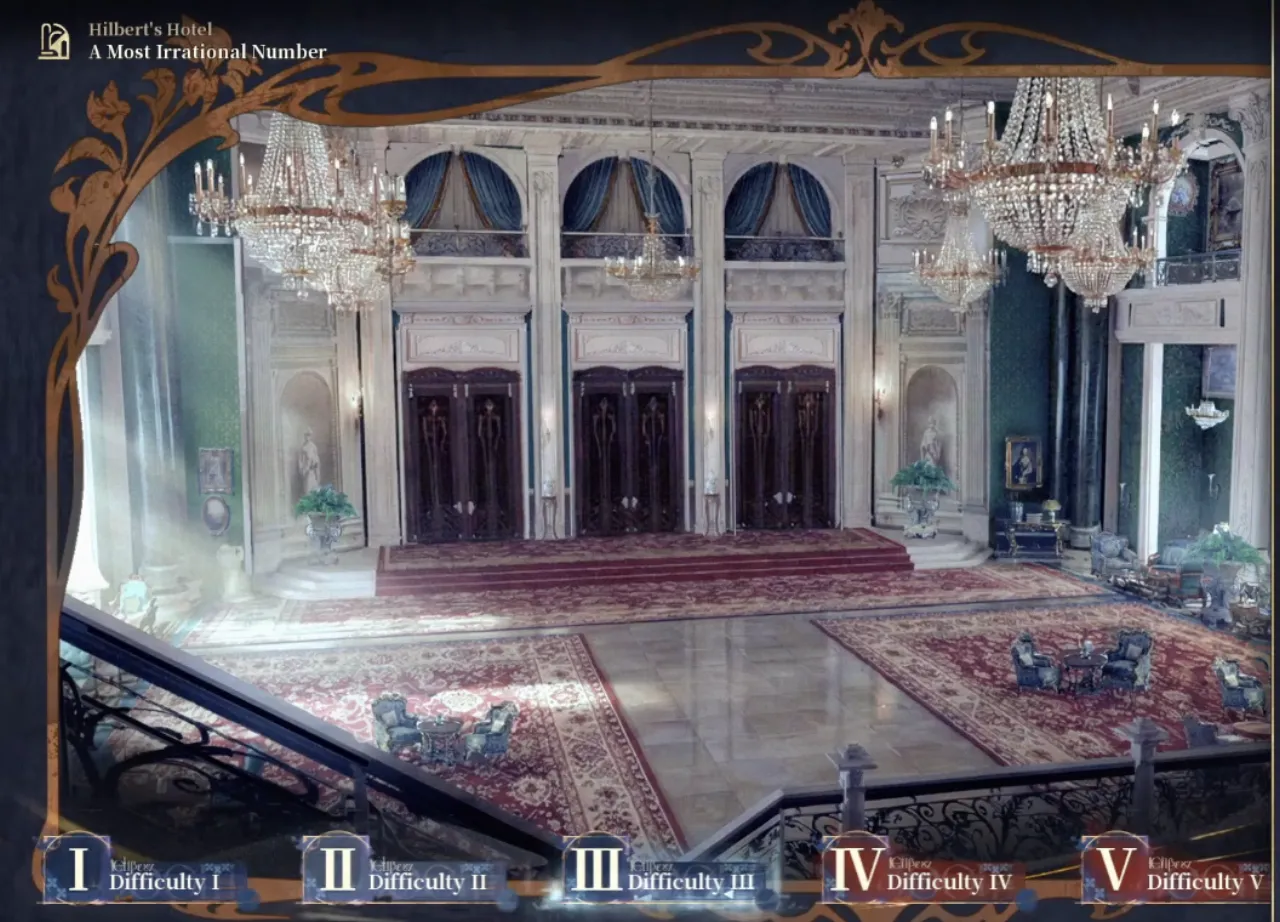
The difficulty selector for "A Most Irrational Number." Each tier is its own run with its own suggested team level and first-clear rewards.
Rewards scale with the tier you pick. Difficulty V of "A Most Irrational Number" is what a late-beta clear looks like:
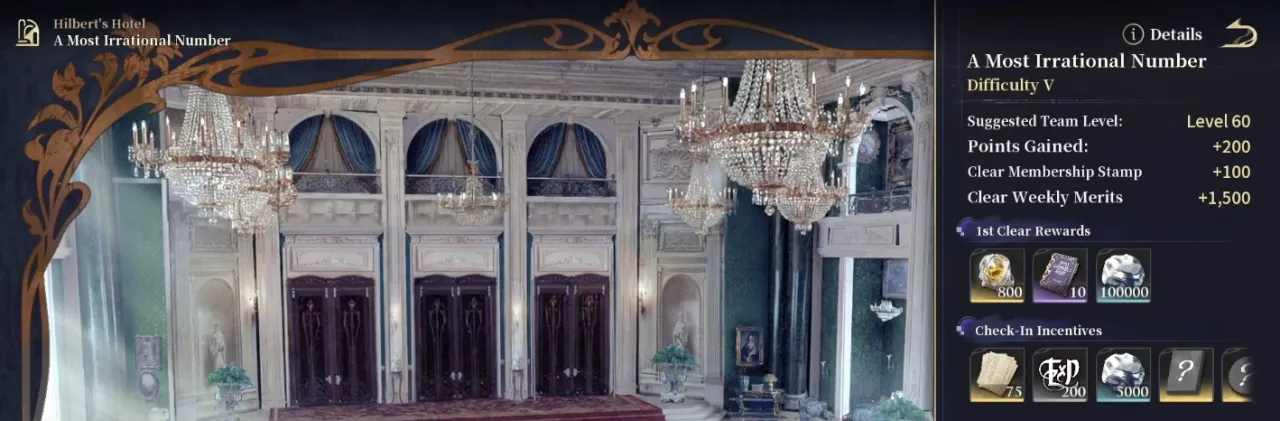
Difficulty V of "A Most Irrational Number," with the first-clear row paying 800 Reactor Crystals, 10 Insight books and 100,000 Ounce.
| Field | Value |
|---|---|
| Suggested team level | 60 |
| Points gained | +200 |
| Clear Membership Stamp | +100 |
| Clear Weekly Merits | +1,500 |
| 1st Clear Rewards | 800 Reactor Crystals, 10 Insight books, 100,000 Ounce |
| Check-In Incentives | 75 Fate Clippings, 200 Reputation, 5,000 Ounce and two more slots |
First-clear rewards scale sharply across the ladder: the opening tiers pay 300 Reactor Crystals, the middle ones 500, and Difficulty V pays 800. Because those are one-time bonuses, pushing a tier you can barely hold is worth more than farming a tier you have already cleared.
Team building uses the same Edit Team screen as Thought Experiment, including Recommended Partners suggestions.
Membership Stamps and the Privileges tree
Every Hilbert's Hotel clear pays a Membership Stamp, a currency whose only use is activating nodes on the Membership Privileges tree.
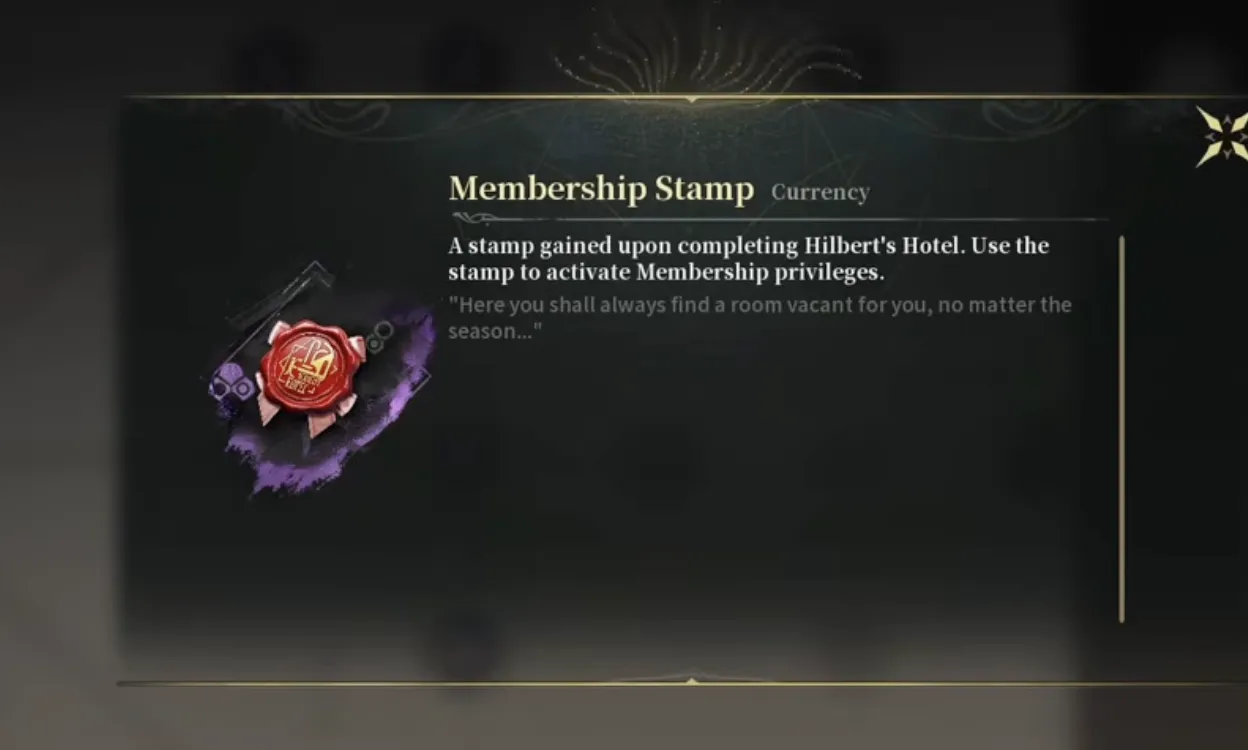
The Membership Stamp tooltip. Difficulty V paid +100 stamps per clear.
The Privileges tree is the mode's permanent upgrade track, and it works the way a roguelike meta-progression tree does in any other gacha: spend the run currency you bank on flat, always-on combat bonuses. Nodes branch across several parallel lines, and each is a single named effect rather than a stat allocation. Emergency Response, for example, increases Healing Received Bonus by 35%.
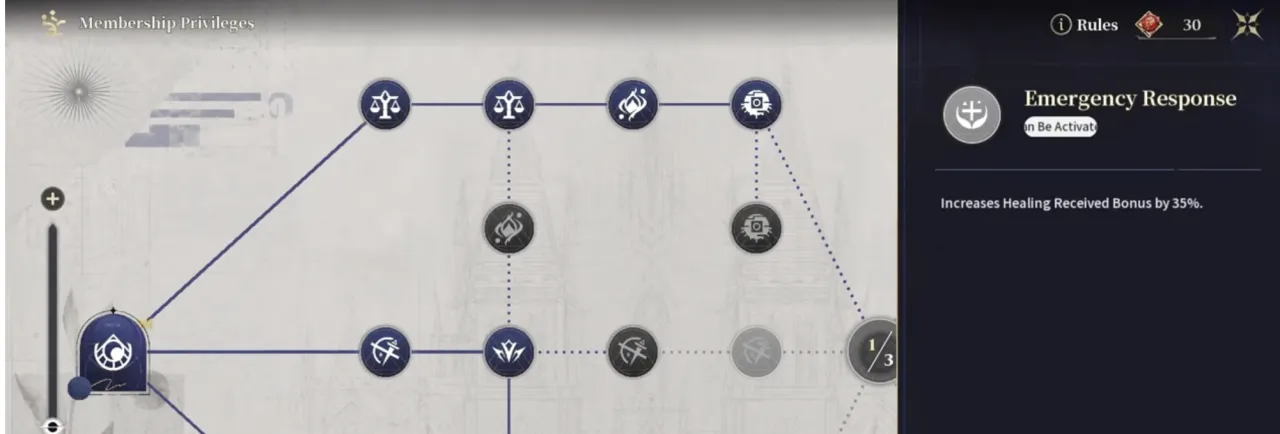
The Membership Privileges tree. Solid lines connect nodes you can already reach; dotted lines lead to nodes still locked behind stamp costs.
The tree runs a long way past the early nodes. At the far end sit gated picks behind a 1/3 selector, where you commit to one of three mutually exclusive premium perks rather than eventually buying all of them.
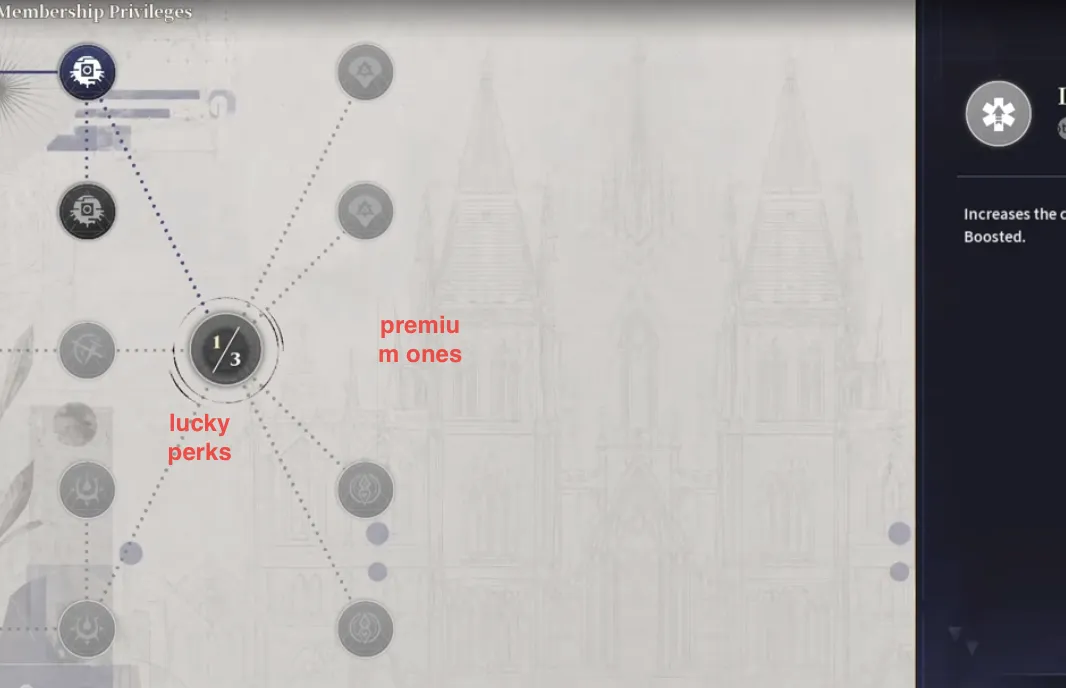
The far end of the Privileges tree, where a 1/3 selector gates the premium perks. The red labels are the tester's own annotations, not part of the game UI.
Points Exchange: the long-term track
Alongside the stamp tree, Hilbert's Hotel runs a Points Exchange level track fed by the Points you gain per clear. Levelling it walks a numbered reward row that pays Reactor Crystals, Insight books and Ounce, and ends on a weapon.
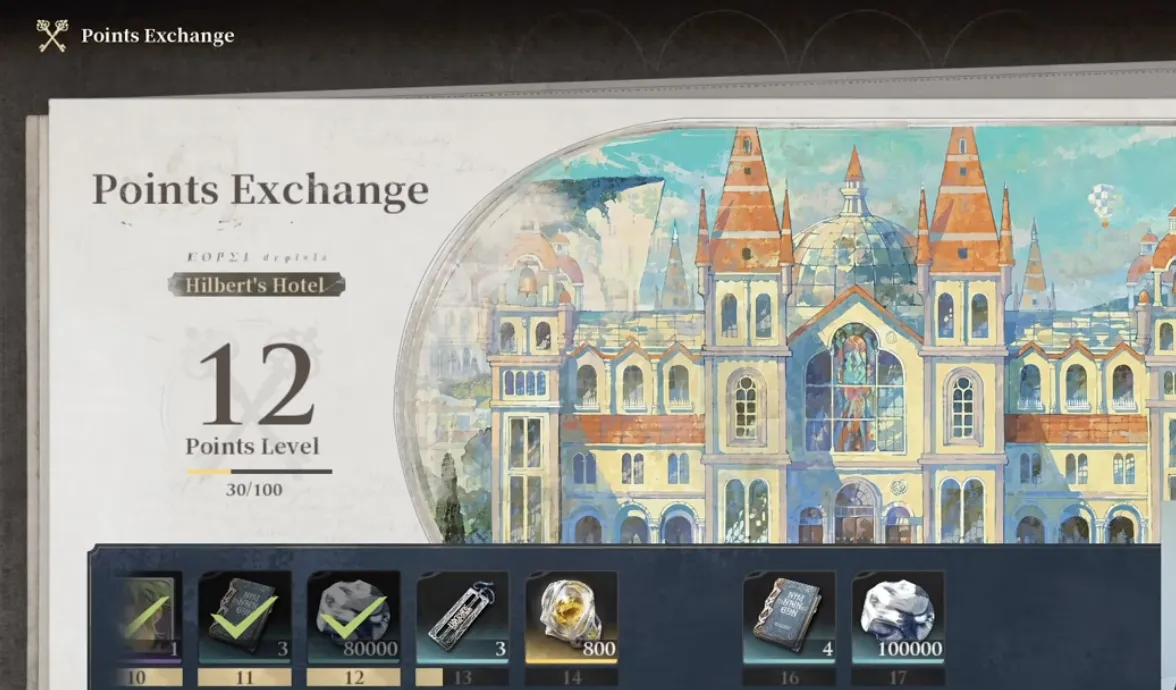
Points Exchange at Level 12, 30/100, with rewards 10 through 17 visible. The claimed nodes carry green ticks.
The final node pays a 4-star Mystery, the game's weapon class. The build's reward was The Duplicity Mystery, a Witness-type weapon whose Resonation Tier 1 effect grants the holder 10% Max HP and, on Ultimate damage, raises the whole team's ATK by 4% for 40 seconds, stacking twice.
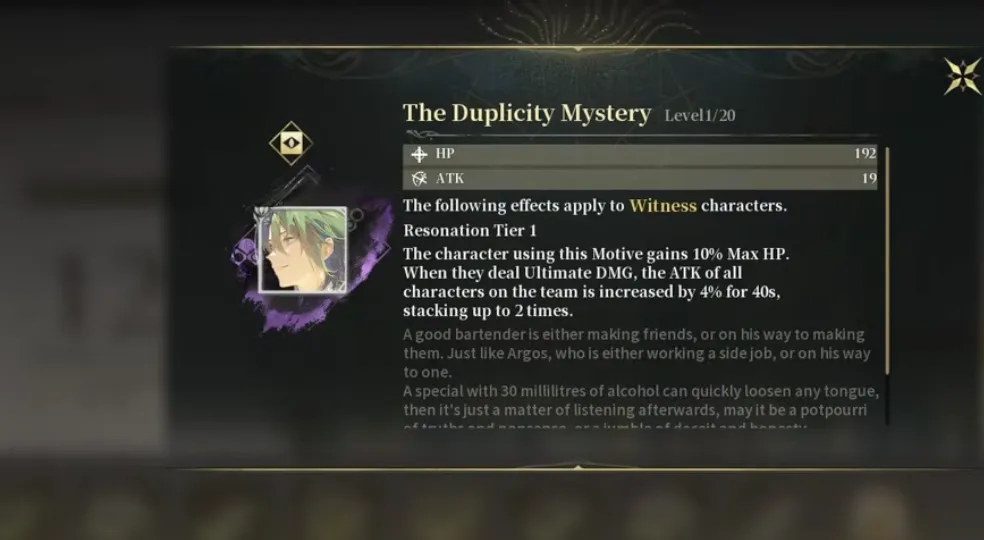
The Duplicity Mystery, the Points Exchange track's end reward in the beta build. Expect the weapon on offer to rotate by patch.
Building a run team
A run takes one main character plus three teammates. Selecting your main shows their Reactor Attribute, what they are strong against, and the Resonance Effects that attribute can trigger; then you pick the other three and hit Check In to start.
Your main character's attribute is the single most important choice you make, because it decides which Resonance Effect the run can build toward and therefore which buffs and Catalysts are worth drafting later. Running Cinderella as your main, for instance, locks the run into Ignis and its Extreme Heat Resonance, which makes every Ignis-tagged buff offer worth taking.
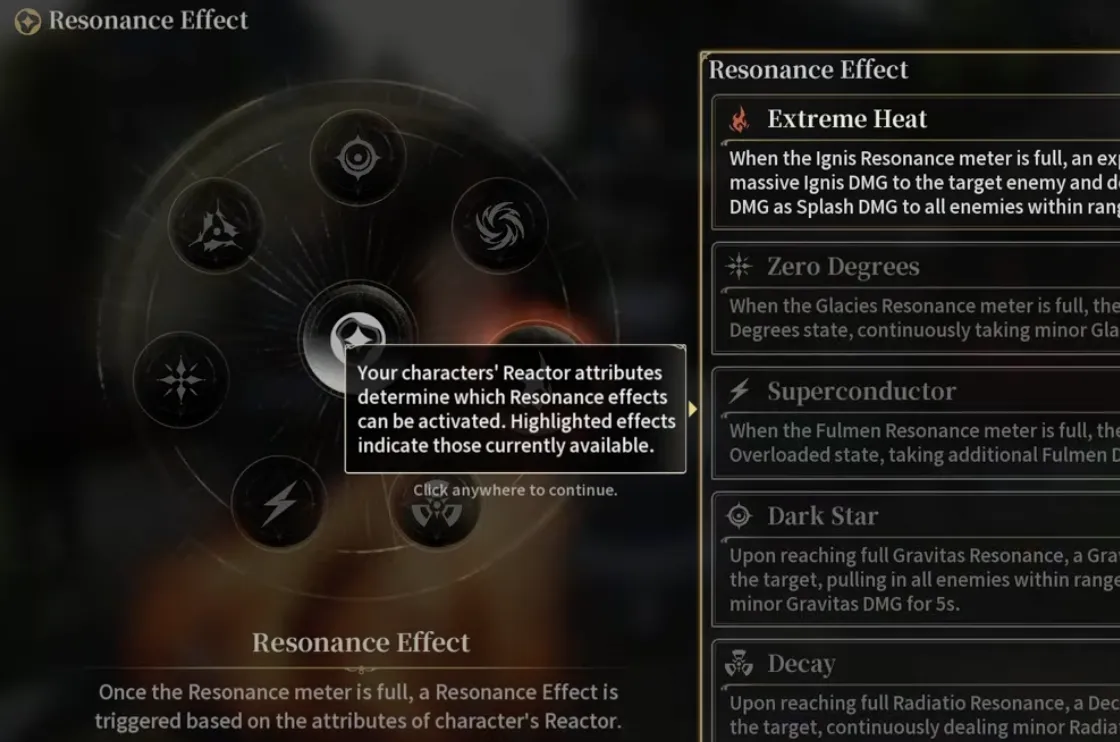
The Resonance Effect wheel. Highlighted segments are the effects your current team can actually trigger, which is what your main character's attribute determines.
The full attribute and Resonance breakdown lives in the Resonance guide.
Inside a run
A Hilbert's Hotel run is not a single fight; it plays out as a room-by-room crawl. A Progress counter tracks how many rooms you have cleared out of the run total, a separate currency accrues as you go, and at each step you pick a room door to enter, with an optional Vitality cost to receive bonus rewards from that room.
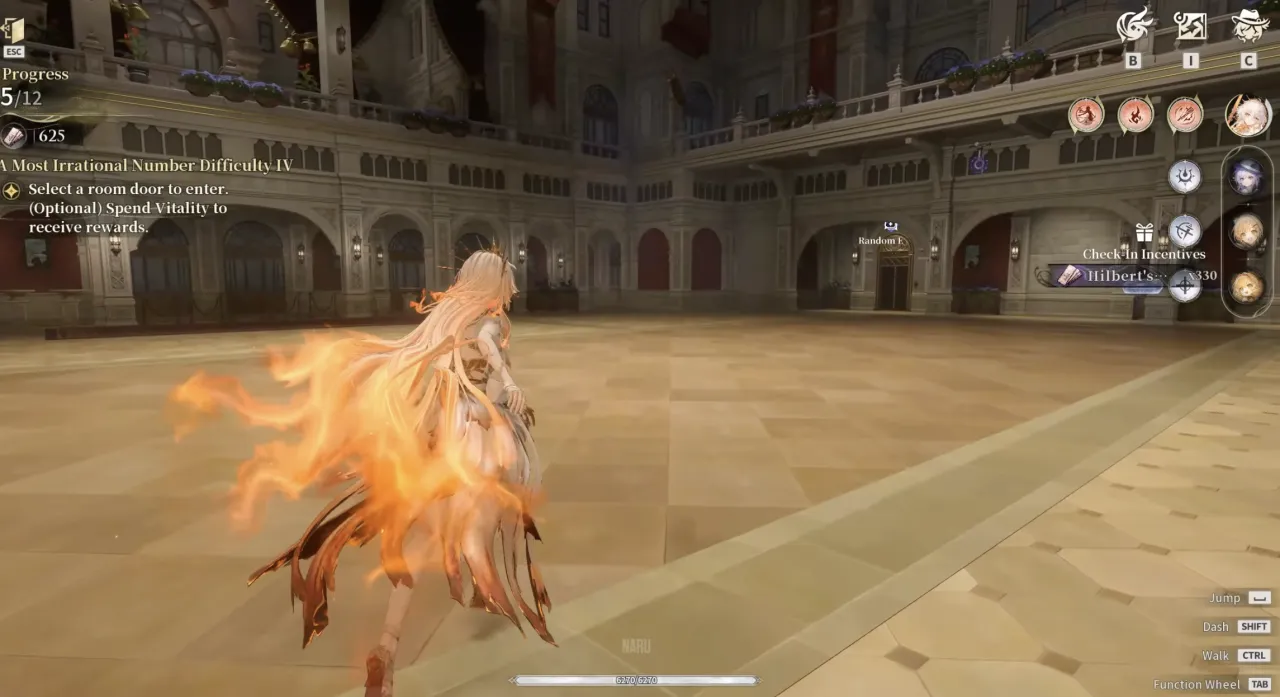
The room-crawl screen for a Difficulty IV run of "A Most Irrational Number," showing the Progress counter and room-door selection prompt.
Combat rooms
Most doors lead to a fight. Rooms carry an explicit clear condition and a timer, and the mix varies by room: some are mob waves, some are a single boss, some are both.
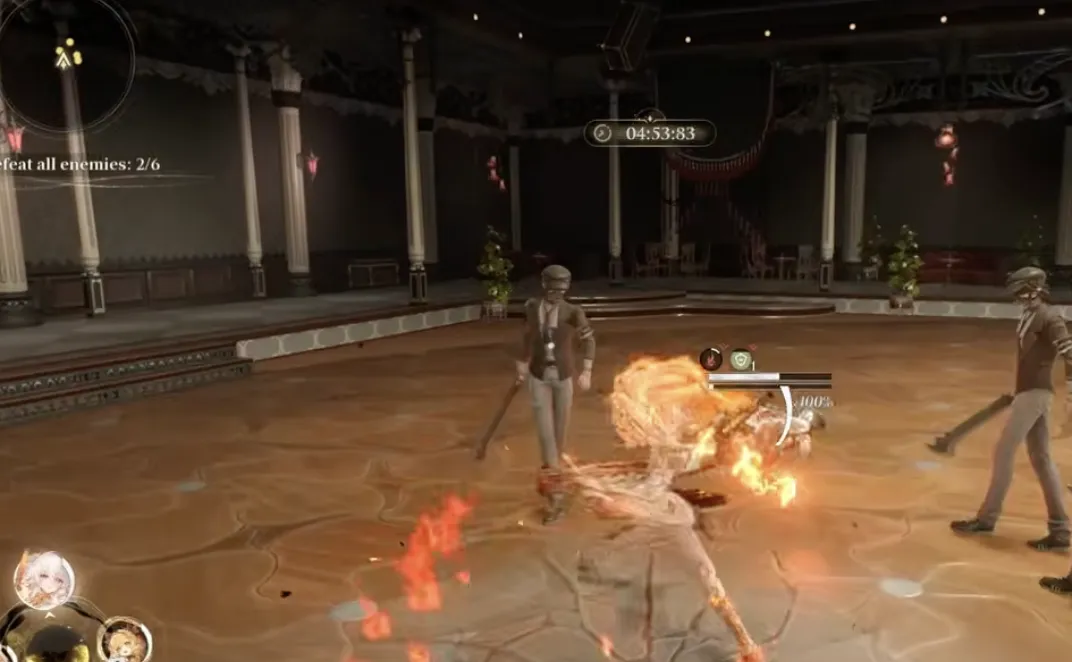
A combat room with a "Defeat all enemies 2/6" objective on a five-minute clock.
Fights use the same Parry-Stun-Execution-Tactical Assault loop as the rest of the game, covered in the Combat Mastery guide. The one addition is the energy ring at the centre of your party portraits. It fills as you deal damage, and each segment pays for one tag-in. Fill the ring completely and you can fire every tag-in at once, which both buffs your incoming characters and stacks debuffs on the enemy. Holding the ring for a full discharge on a boss is usually better than spending tag-ins one at a time on trash.
Catalysts
Clearing a room offers you a buff to carry for the rest of the run, and how many you walk away with varies by room. Most rooms give you one, some give two, and on rare occasions you get three.
The first and second offers are Catalysts. You are shown a choice of three and must select one to add to your run. Each Catalyst costs a flat amount of the run's currency (10 was the observed cost against a pool of 295), starts at Lv. 1 of 3, and carries filter tags describing what it affects, such as Main Character, an attribute name like Alba, or an effect category like Buff or HP.
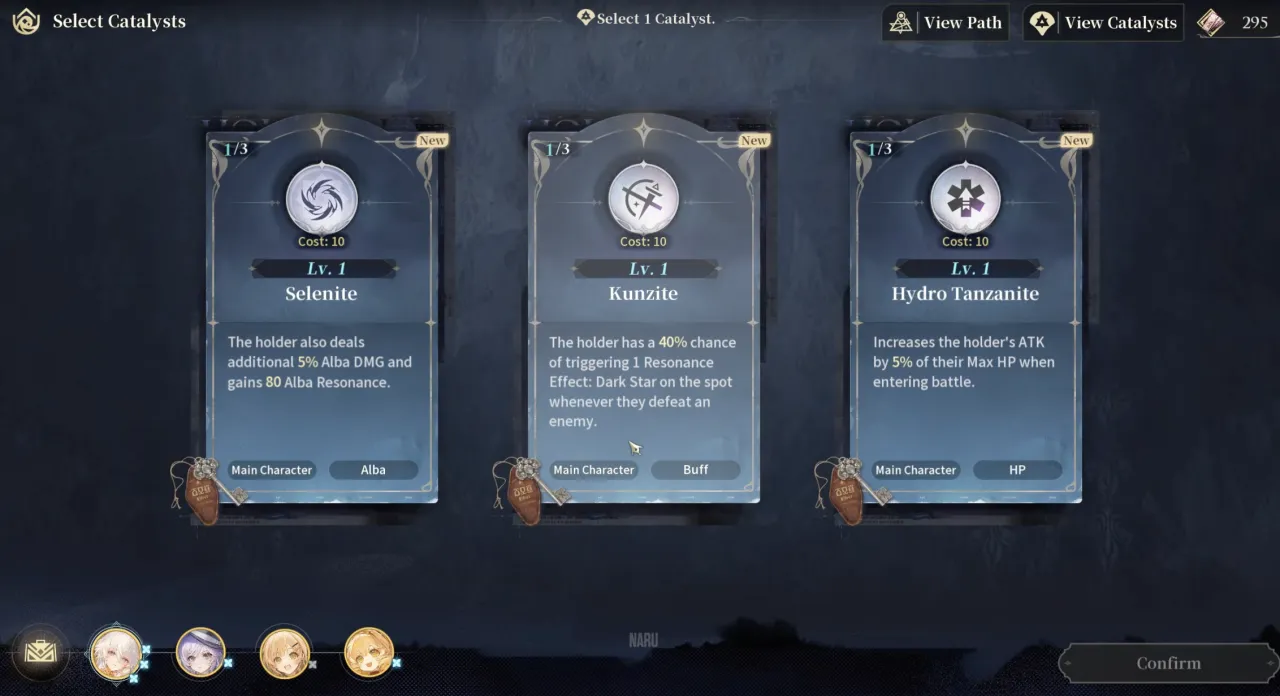
The Select Catalysts screen, offering a choice of Selenite, Kunzite or Hydro Tanzanite for the current run.
Catalysts are scoped, and the tags at the bottom of each card tell you how: Main Character Catalysts apply only to the character you are actively controlling, some are keyed to a specific teammate, and others key off an attribute or an effect category. Read the tags before picking. A card that reads well in isolation is worth little if it is bound to a teammate you rarely tag in.
These run-scoped Catalysts are a completely different system from the permanent Reactor Catalysts covered in the Reactor Energy & Tactical Assault guide. Reactor Catalysts are equipped outside of combat and persist across every fight; Hilbert's Hotel Catalysts are drafted mid-run, apply only for that run, and disappear once the stage ends.
The third pick: universal buffs
On the rare rooms that offer a third pick, that one is a universal buff applying to the entire team rather than a Catalyst bound to a character or an attribute.
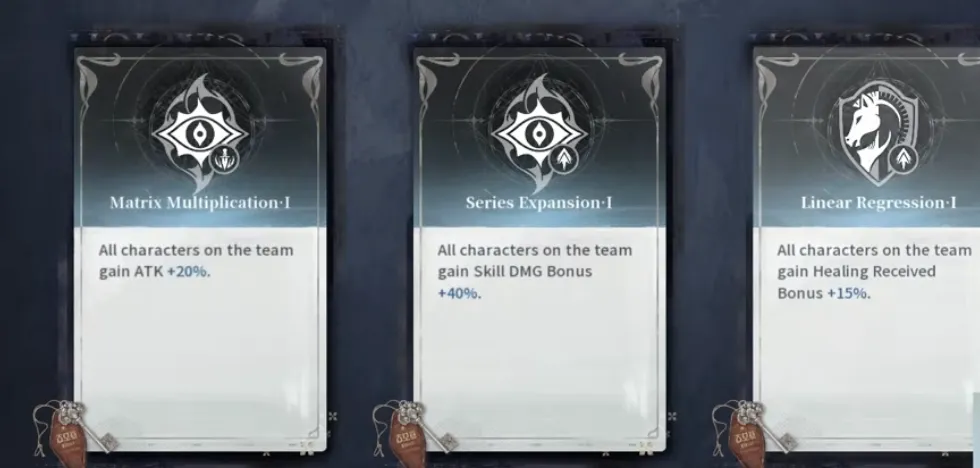
A rare three-buff roll. Matrix Multiplication, Series Expansion and Linear Regression all read "All characters on the team," so any of them is a safe pick.
Universal buff names follow the mode's mathematics theme, and the Roman numeral after the name is the buff's tier rather than a stack count. Because they carry no character or attribute binding, they are the one category you can take on autopilot when the run has drifted away from your main character's attribute.
Base, Refined and Synthesis Catalysts
Most Catalysts have a Refined upgrade, and it is a differently named Catalyst rather than a fourth level. Fuming Sulphur becomes Molten Sulphur and its 20% proc chance becomes 40%; the Lv. 1 to Lv. 3 range is replaced by one stronger effect.
Above that sits a third tier. A Synthesis Catalyst is made by combining two you already hold, and it carries both of their effects plus a link between them. Calcined Copper is Molten Sulphur combined with Fulgurite Copper, and its Burning Sparks now shorten the cooldown on the Shocking Current the other half fires.
That is the whole strategy of the mode. Taking the strongest-looking card in every offer leaves you holding a spread of unconnected Base Catalysts at the end of a run; committing to one chain early is what gets you to a Synthesis while the fights still matter.
There are 166 in total, 59 Base, 50 Refined and 57 Synthesis. The Hilbert's Hotel Catalyst database has every one of them with its full effect text at every level, what each is bound to, and all 57 Synthesis recipes.
Eight worth recognising on the offer screen:
| Catalyst | What it does at its best |
|---|---|
| Shadowflame | Revives the main character on death at 20% of Max HP, once per battle |
| Smelted Quartz | On crit, CRIT DMG increases by 450% for 10s, and 900% once Refined |
| Immaculate Gold | While at full HP, ATK increases by 338%, relaxing to above 80% HP once Refined |
| Corrosive Salt | 50% chance on damage to inflict Vulnerability, stacking 10 times for +20% damage taken |
| Kunzite | 90% chance to trigger Resonance Effect: Dark Star on defeating an enemy, rising to always |
| Extracted Cobalt | Adds damage and Resonance of whichever attribute just triggered, so it fits any team |
| Blasting Nitre | On Tactical Assault, +45% ATK for 300s, stacking up to 10 times |
| Moonstone | On Tactical Assault, recover 15% of Max HP, which is the only sustain some teams get |
Shadowflame is the one to take on sight. It has no Refined tier, it is the single best insurance pick in the mode, and it also turns up for sale in the Catalyst Shop.
Random Events and Mementos
Not every door is a fight. Some open onto a Random Event: a short dialogue scene with a branching choice, such as a luggage attendant asking which of two lost cases is yours.
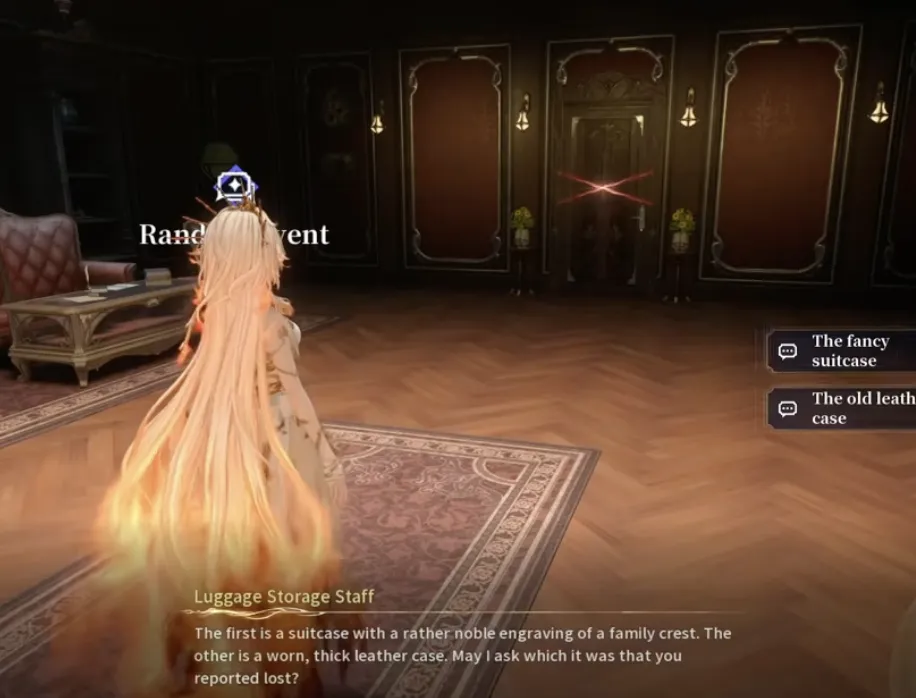
A Random Event. The branch you pick decides which reward the room pays out.
Events pay Mementos, run-scoped artifacts that either buff your team or debuff enemies for the rest of the crawl. They come in two flavours: economic ones that compound your run currency, and combat ones that change how you fight.
There are 26 in total, and the draft screen will not warn you which is which. Three of them do nothing but cost you, and all three are Common. The Memento database has every one with its full effect text.
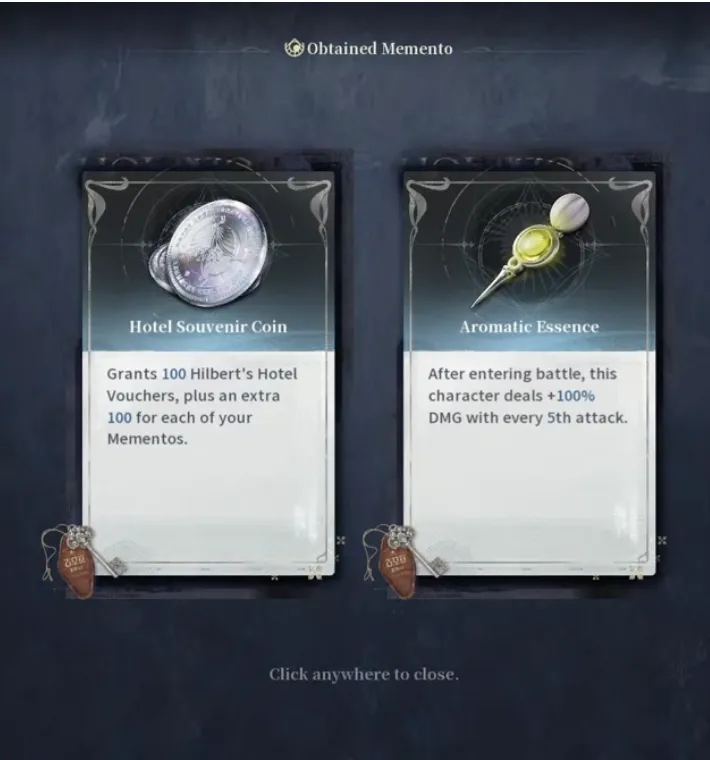
Two Mementos. Hotel Souvenir Coin scales with how many Mementos you already hold, so it is worth more the later you take it.
The Supplies Shop
One door in each run leads to a Supplies Shop, the crawl's rest stop.
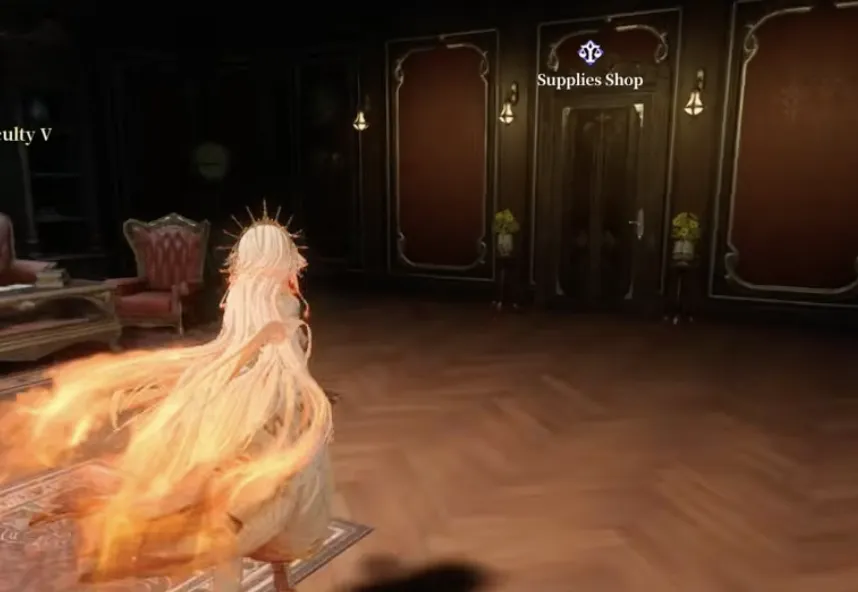
The Supplies Shop door, marked in the corridor alongside the run's other room options.
Inside are several interactables at once: a Catalyst Shop vendor, a Restore HP point that heals the team back to full, and an Elite Battle door for players who want the harder fight.
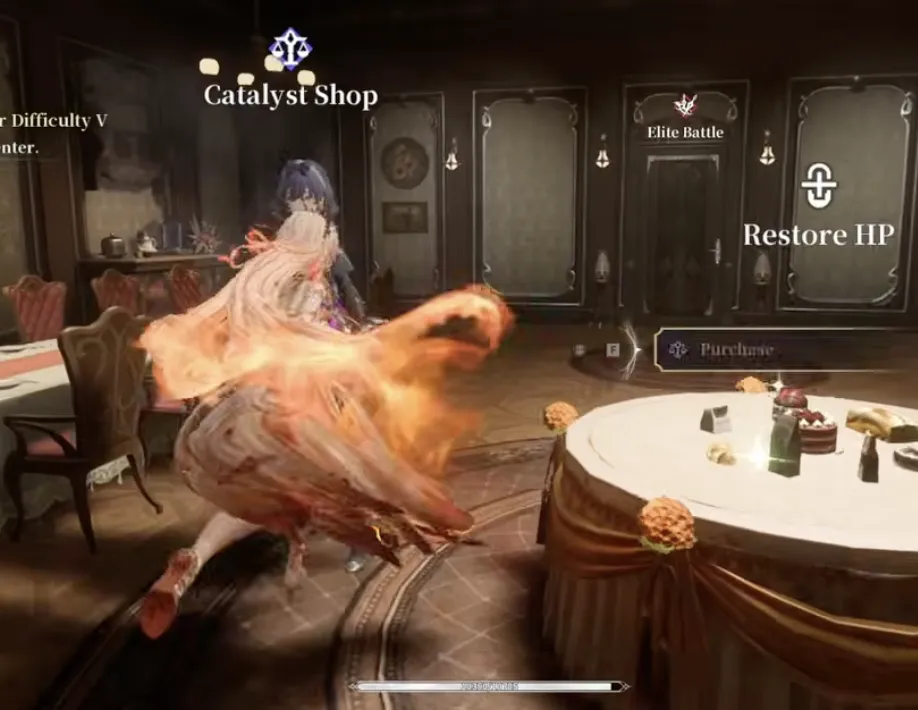
The Supplies Shop interior. Restore HP is free, so take it before stepping through the Elite Battle door.
The Catalyst Shop sells Catalysts outright for the run currency rather than making you draft blind, which is the only place you get to choose a specific Catalyst instead of picking from a random three.
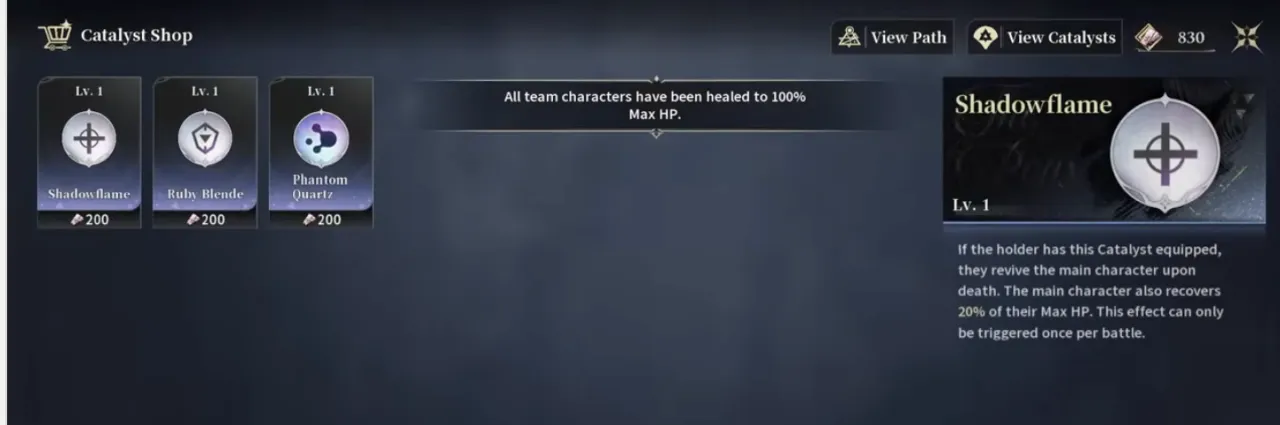
The Catalyst Shop, with Shadowflame on the shelf at 200 against a pool of 830.
Elite Battles
Elite Battle doors put a named boss in front of you instead of a mob wave.
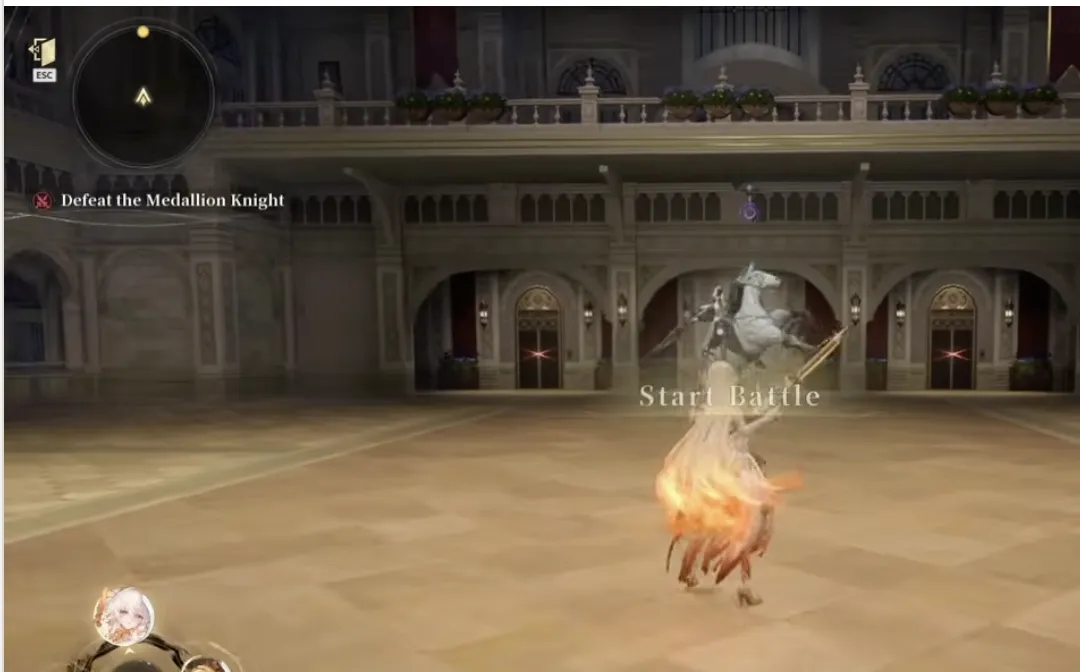
An Elite Battle against the Medallion Knight. Heal at the Supplies Shop first if the option is available.
Check-In Incentives
Scattered through the crawl are Check-In Incentives, chest rooms that convert Vitality into materials.
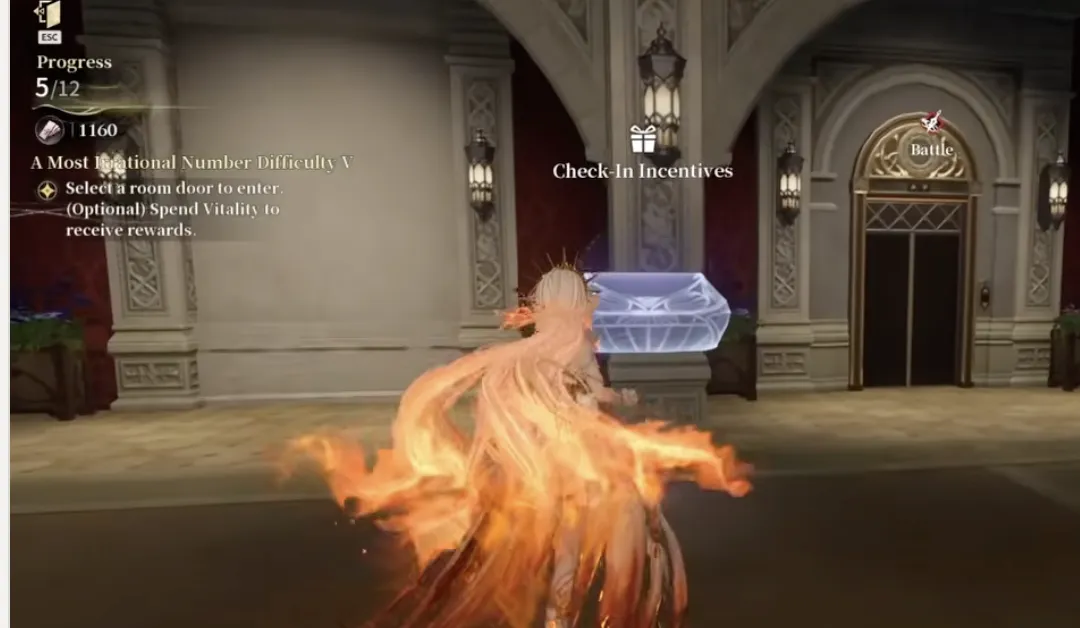
A Check-In Incentives chest offered as one of the room options at Progress 5/12.
Claiming costs 40 Vitality for a single payout or 80 Vitality to double it. The rewards are Fate Clippings, Reputation, Ounce and a random Level 60 Epiphany.
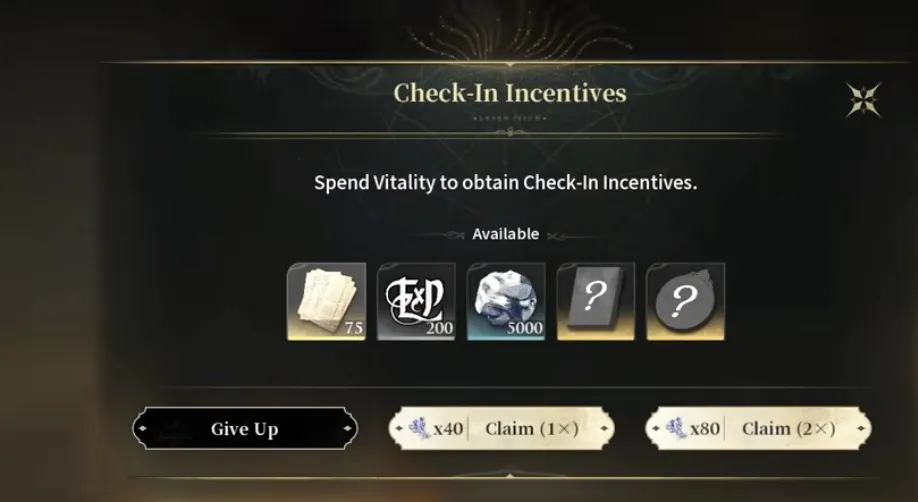
The Check-In Incentives claim prompt. The double claim is a straight 2x on both cost and reward, so take it whenever you have the Vitality to spare.
Saving and resuming
You do not have to finish a run in one sitting. Exiting offers Save Progress, which parks the run at whatever room you reached; re-entering Hilbert's Hotel drops you back at that room with your drafted buffs, Catalysts and Mementos intact. There is no penalty for stepping away mid-crawl.
What a run pays out
Hilbert's Hotel feeds almost every progression currency in the game at once, which is what makes clearing it weekly worth the Vitality.
| Reward | What it is for |
|---|---|
| Reactor Crystals | The pull currency, at 360 per Revelation |
| Ounce | The general-purpose currency for character and gear upgrades |
| Insight books | Character Insight material; The Science of All Things: Volume III grants 10,000 INS each |
| Fate Clippings | Gear currency, salvaged from Epiphanies |
| Reputation | Detective progression currency earned across the city |
| Random Epiphany | A sealed Lv. 20 to 60 Epiphany, the gear piece itself |
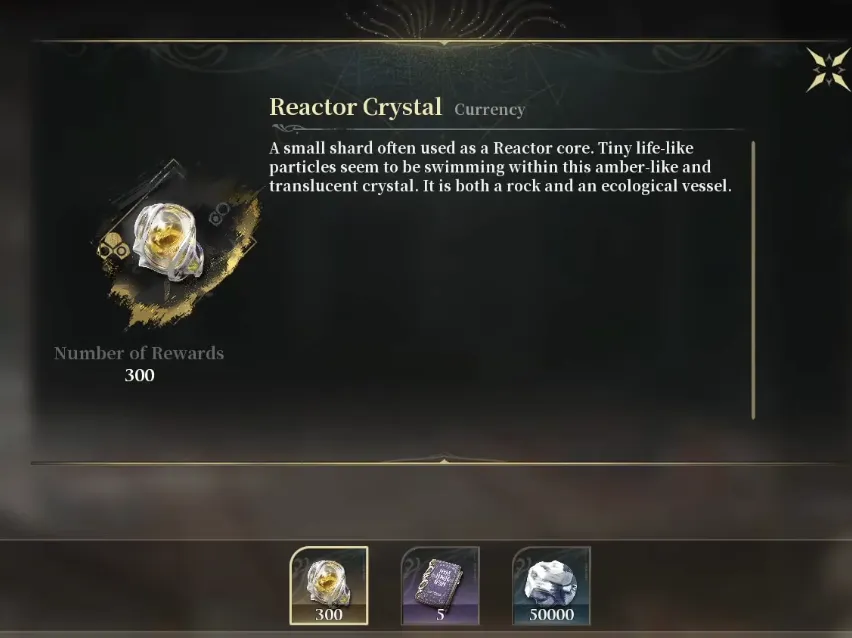
Reactor Crystals are the headline reward, paid by first clears, the Weekly Earnings ladder and the Points Exchange track alike.
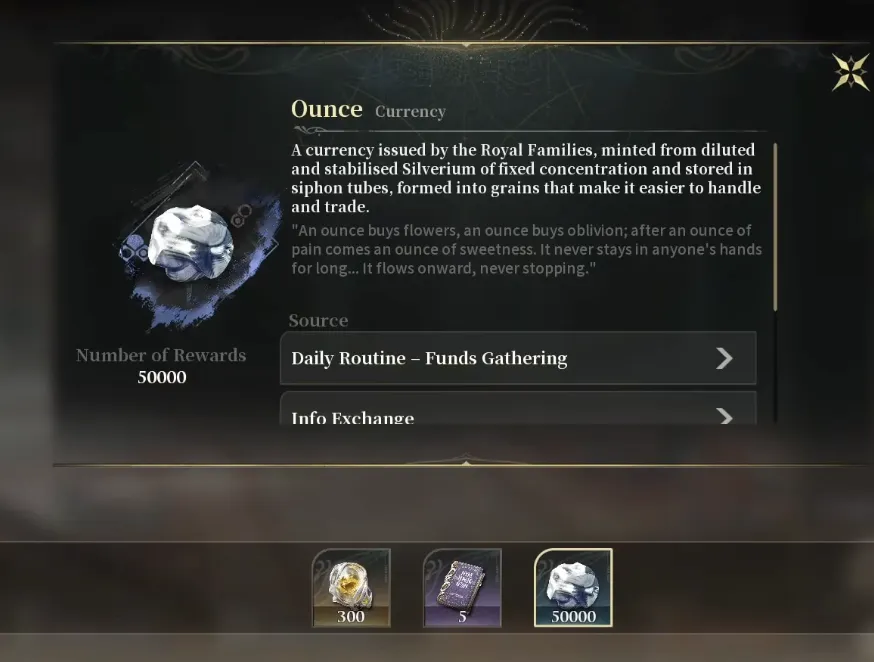
Ounce, the in-game coinage. The Weekly Earnings ladder alone pays 300,000 of it per full sweep.
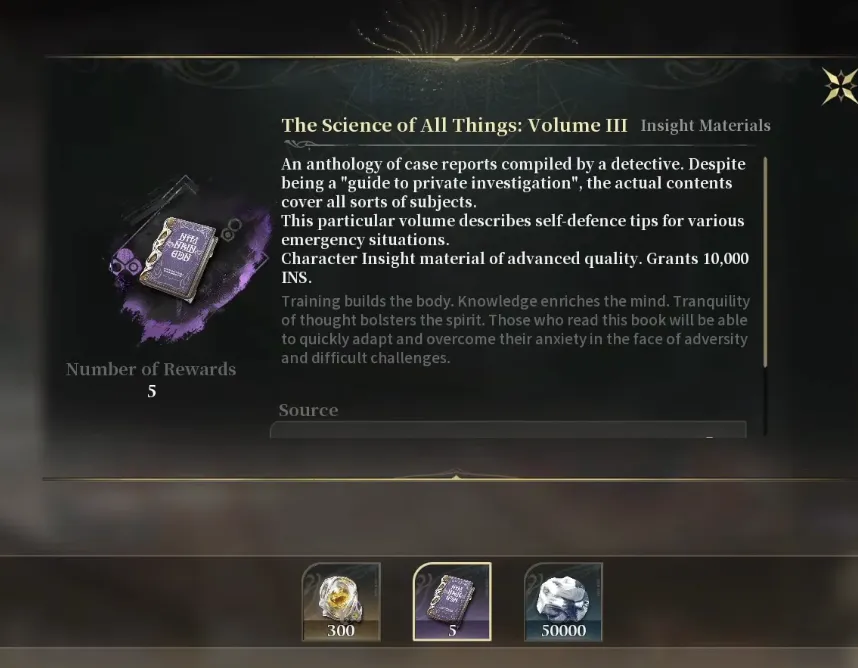
Insight books are the level-up material for your characters, and Hilbert's Hotel is one of the better weekly sources.
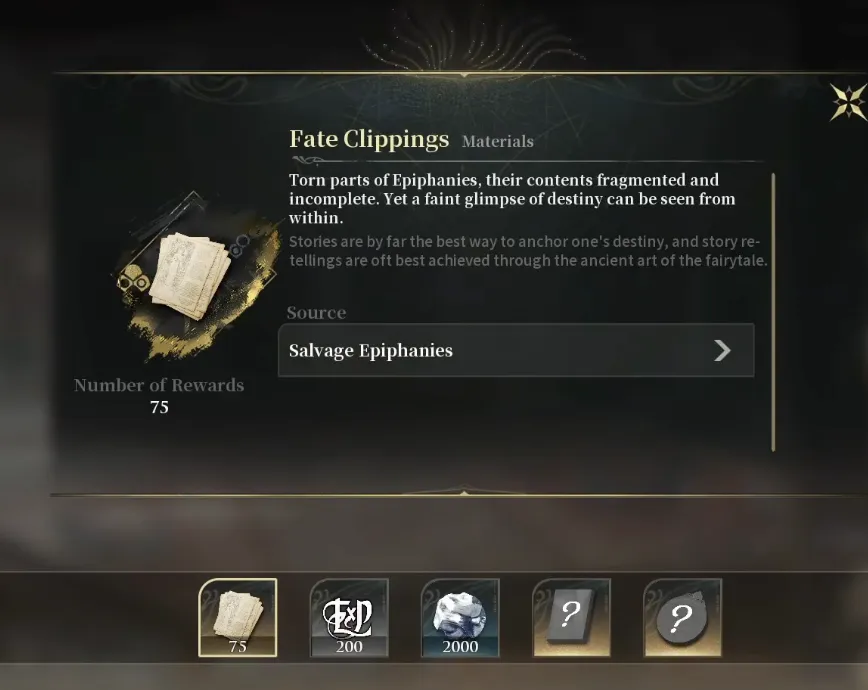
Fate Clippings unlock from Difficulty II onward and are what you spend on gear.
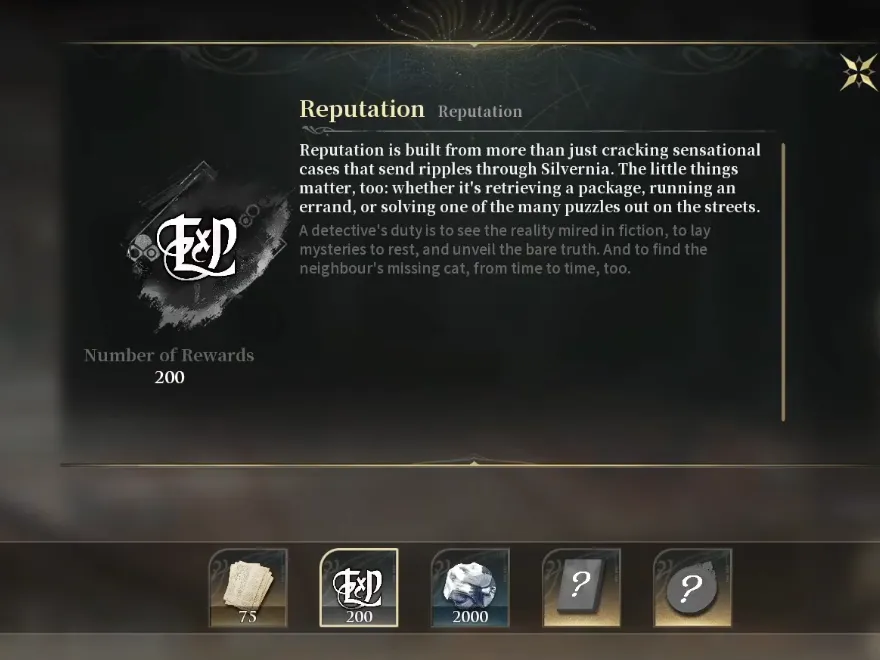
Reputation, the detective-progression currency, also drops from Check-In Incentives.
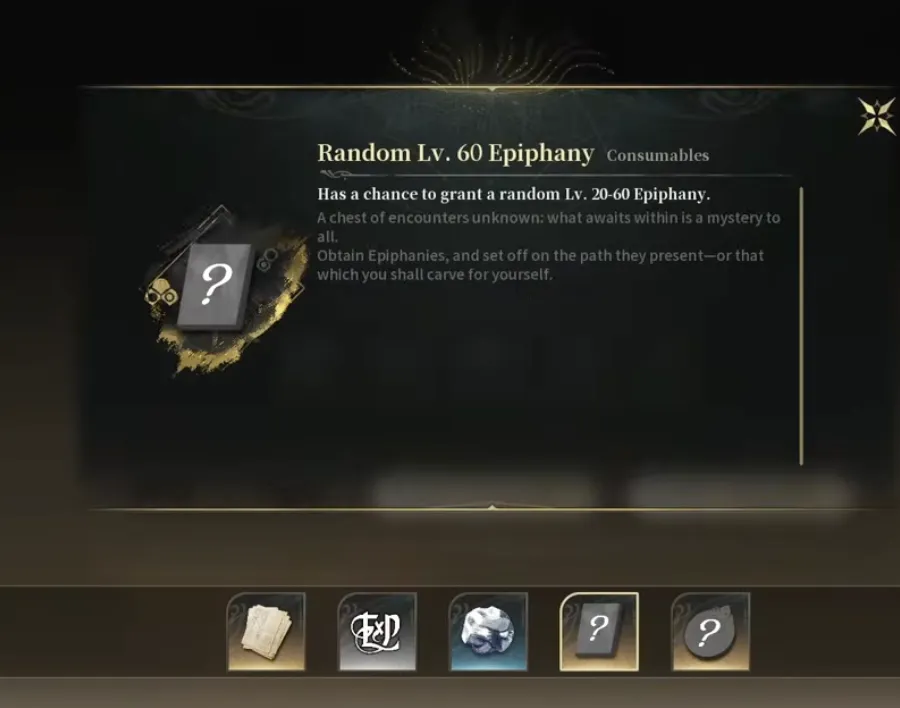
A Random Lv. 60 Epiphany from a doubled Check-In Incentive claim. It rolls anywhere in the Lv. 20 to 60 band.
Hilbert's Hotel and the daily loop
Hilbert's Hotel clears aren't isolated to the mode itself. The City Roaming Agenda lists "Clear Hilbert's Hotel x1" as one of its own weekly objective cards, worth 80 progress toward the Agenda's separate reward ladder on top of whatever Merit points the clear pays inside Hilbert's Hotel.
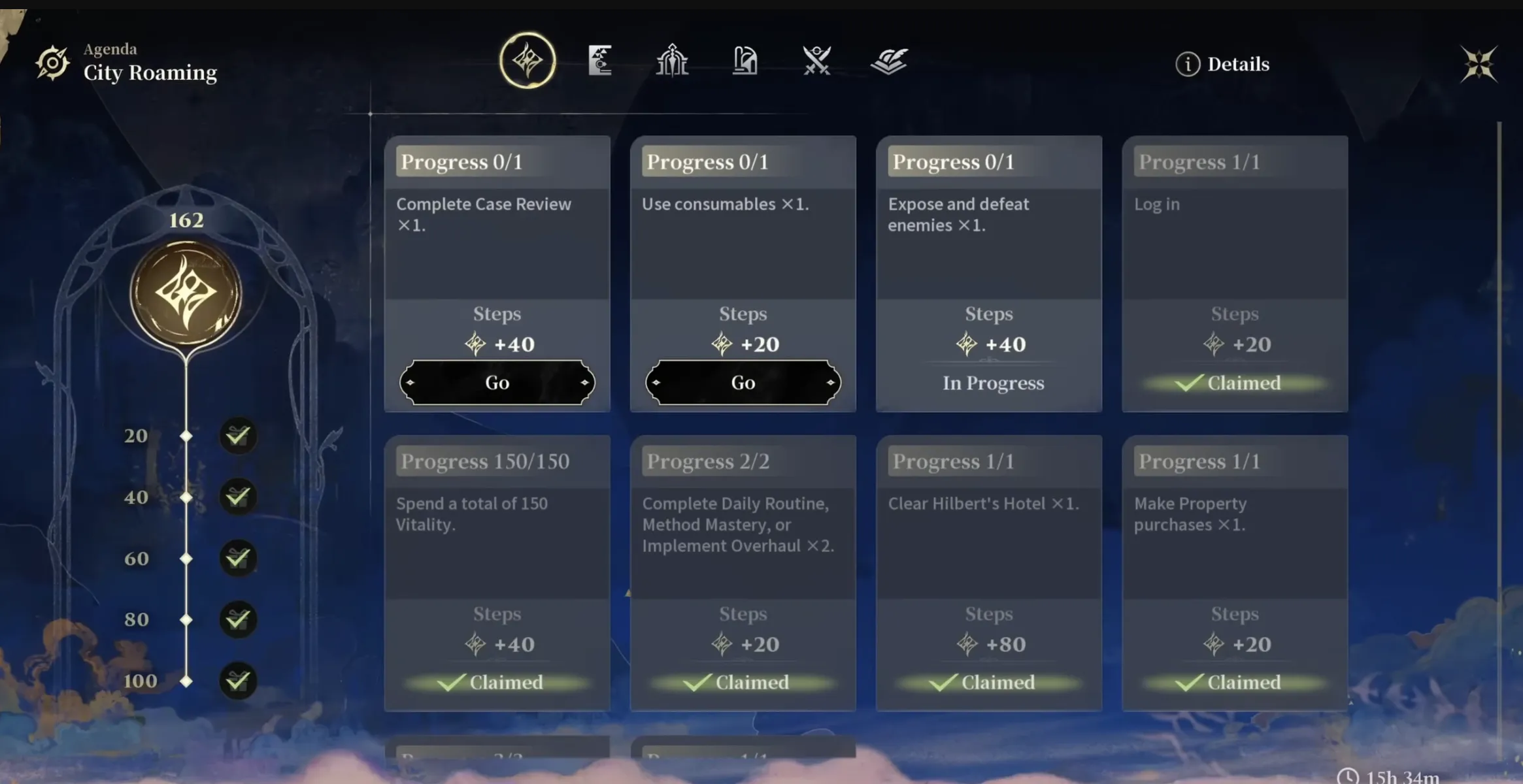
That makes Hilbert's Hotel one of the rare pieces of endgame content that pays out twice for the same action: once through its own Merit ladder, once through the Agenda's daily/weekly task list.
How it compares to other games' weekly modes
Hilbert's Hotel's 900 Reactor Crystals a week (about 2.5 pulls) sits ahead of the weekly modes in two of its closest genre peers, at least on beta-era numbers. Wuthering Waves' weekly Tower of Adversity reset paid roughly one pull's worth of crystals a week at launch, and Honkai: Star Rail's weekly Simulated Universe merits land around 1.5 pulls a week once converted. Silver Palace's 2.5-pull weekly figure reads generous next to both, though all three numbers are subject to retuning as their respective games mature past launch, and Silver Palace's is drawn from a single beta build rather than a live server.
Frequently Asked Questions
What is Hilbert's Hotel in Silver Palace?
Hilbert's Hotel is Silver Palace's weekly combat mode, a set of numbered difficulty stages cleared once per week for a Merit-based reward ladder. Its full title, "Gilbert's Infinize: Hilbert's Hotel," references the Hilbert's Hotel infinite-rooms thought experiment.
How do Hilbert's Hotel rewards work?
Clears add Merit points toward a Weekly Earnings ladder with six thresholds (500 through 3,000 Merit), each paying a flat 150 Reactor Crystals plus Ounce and Insight books. A full sweep of all six totals 900 Reactor Crystals, about 2.5 Revelations, and the ladder resets weekly.
How many difficulty tiers does Hilbert's Hotel have?
Each room runs six Roman-numeral difficulties, revealed a few at a time as you clear the tier below. Difficulty V of "A Most Irrational Number" suggested a Level 60 team and paid +200 Points, +100 Membership Stamp and +1,500 Weekly Merits.
How many rooms are in Hilbert's Hotel?
Three. Room 1 is "A Most Irrational Number," Room 2 is "Algebraic Topology," and the third was still locked during the Dichotomy Beta. Each room has its own enemy types and its own pool of run buffs and debuffs.
What are Membership Stamps for in Hilbert's Hotel?
Membership Stamps are earned for completing Hilbert's Hotel and spent to activate nodes on the Membership Privileges tree, the mode's permanent upgrade track. Nodes grant flat combat bonuses such as Emergency Response, which increases Healing Received Bonus by 35%.
Is Hilbert's Hotel the same as Thought Experiment?
No. Thought Experiment (previously covered on this site as Deep Cognito) is a story-gated tiered gauntlet climbed once. Hilbert's Hotel is a separate weekly mode with its own Merit ladder and Membership Privileges track. Both share the same Parry-Stun-Execution-Tactical Assault combat loop.
Does clearing Hilbert's Hotel count toward dailies?
Yes. The City Roaming Agenda lists a "Clear Hilbert's Hotel x1" objective worth 80 progress on its own reward ladder, on top of the Merit points earned inside Hilbert's Hotel itself.
Hilbert's Hotel is the clearest weekly-reset content Silver Palace has shown so far, and its 900-crystal Merit ladder is worth clearing in full every week before it resets. Push the highest difficulty you can actually hold rather than farming a tier you have already beaten: first clears pay up to 800 Reactor Crystals each and never repeat, and the Membership Stamps from a higher tier buy Privileges nodes that make the next tier easier. Pair it with the Thought Experiment guide for the mode's story-gated counterpart, the Combat Mastery guide for the shared fight fundamentals, and the Tier List to decide who to bring.