Silver Palace Alchemy: Alba, Ferrugo and the Golden Lion
Silver Palace has an alchemy problem, in the sense that once you notice it you cannot stop noticing it. Two of the seven Reactor Attributes are named after stages of the alchemical Great Work. The upgrade tiers on every ascension material are a distillation sequence. The roguelike mode is a shelf of alchemical reagents with a check-in desk attached, and its top achievement is named after a real 16th-century alchemy manuscript.
None of that is a fan reading. The game quotes the manuscript, names it in an achievement, and prints the word Albedo on an upgrade material.
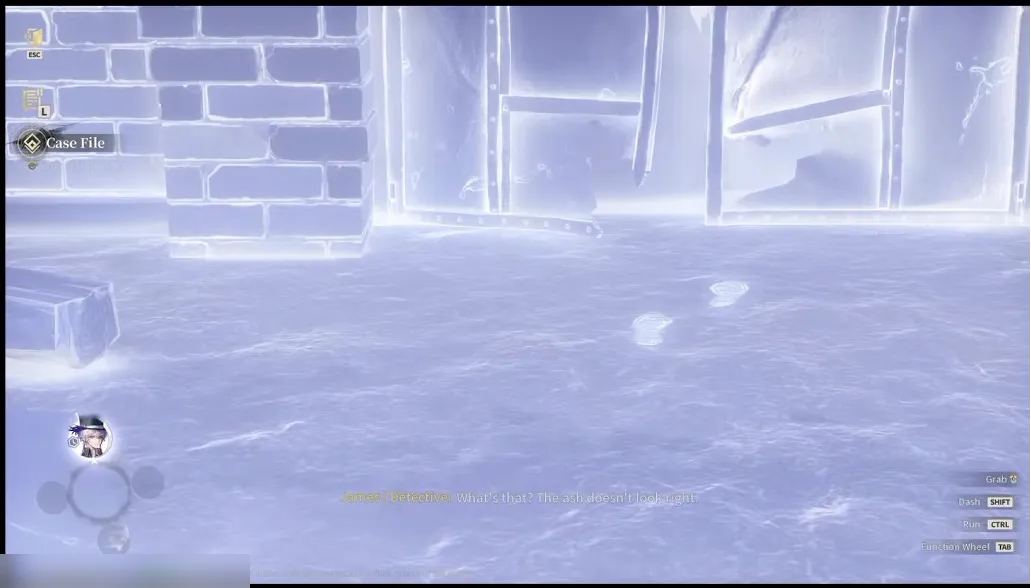
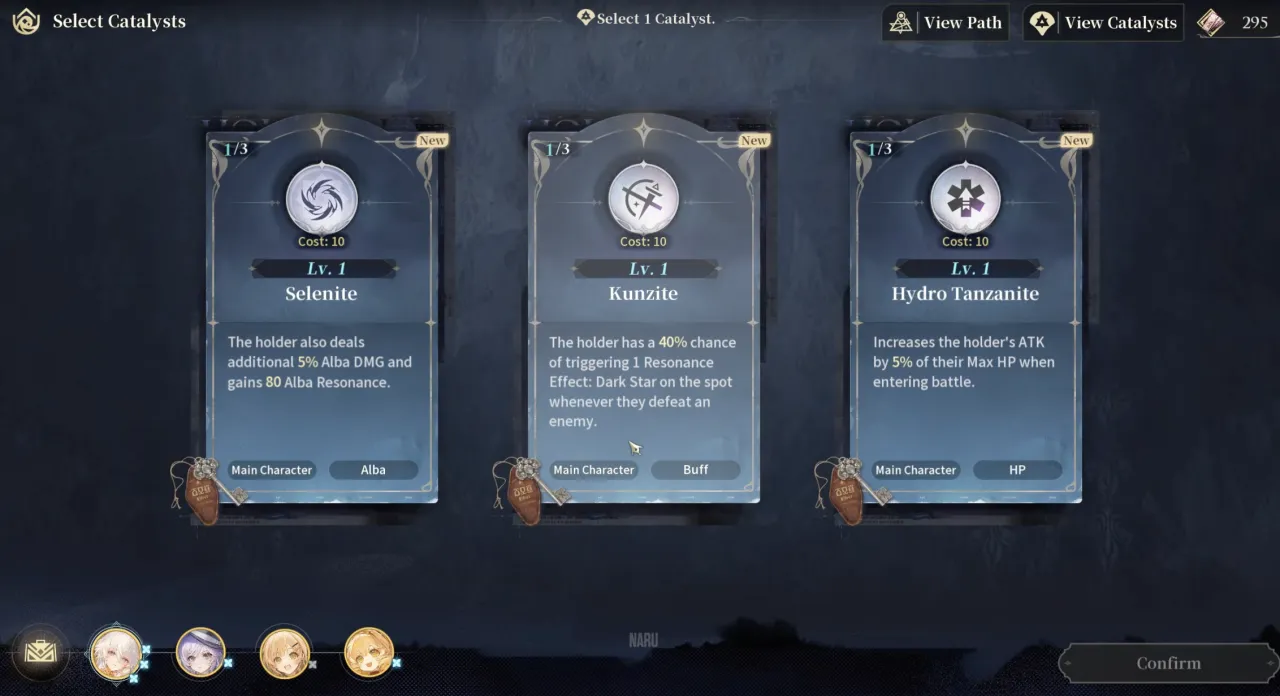
Catalyst selection inside a Hilbert's Hotel run. Reshape raises a Catalyst's level; Reform turns it into a different, stronger one. Official Elementa beta footage.
Quick answer
Silver Palace's progression systems are built on the vocabulary of historical alchemy, and the game says so out loud. Four points carry it:
- An Implement set quotes the Rosarium Philosophorum, a real alchemical text from 1550, and Hilbert's Hotel names that text in an achievement called Rosary Hotel of the Philosophers.
- Alba is Albedo, the whitening. Its ascension ladder is a purity percentage climbing 50 to 95, and the game prints the word Albedo on the third rung.
- Ferrugo is Nigredo, the blackening, described in full and never named. Its top tier ends "blackened in hue" and its flavour text says all colours mixed together leave black.
- The Catalysts are a reagent shelf. Antimony, Lead, Tin, Raw Mercury, Fuming Sulphur, Corrosive Salt, and one called Immaculate Gold that Reforms into Wrought Gold.
The set that quotes a real book
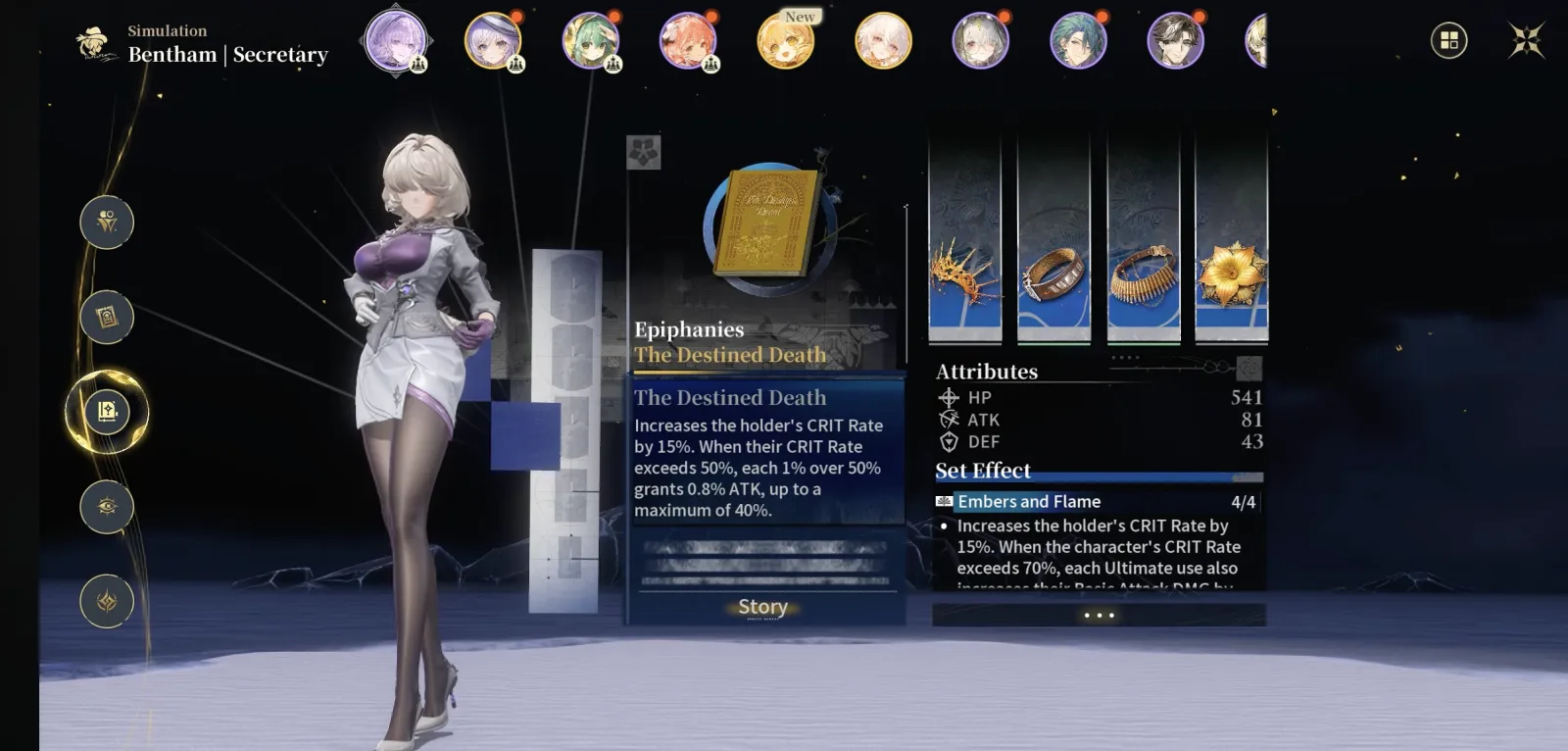
Four Implements make up the Centuries of Wisdom set: Truth Deduction Methods, Principles of Universal Motion, Path to Scholarly Pursuits and Celestial Roamings. Head, neck, secondary weapon and accessory. The set has no bonus text listed in the build, but all four pieces carry the same description, and it is the strangest sentence in the equipment database:
"A great sage penned a comment upon a sacred symbol of old: 'I am the true green and Golden Lion without cares. In me all the secrets of the Philosophers are hidden.'"

That is not written in the game's voice. It is a quotation, and it is a quotation of something real. The green lion swallowing the sun is one of the most reproduced emblems in European alchemy, and the couplet belongs to the Rosarium Philosophorum, the Rosary of the Philosophers, printed in 1550. The green lion is usually read as the solvent that dissolves gold; "the Philosophers" is the standard period term for alchemists rather than for philosophers in our sense.
You do not have to take that identification on trust. The game names the book itself, two systems away.
Hilbert's Hotel names the book
Hilbert's Hotel is the roguelike mode. Its nine achievements are mostly hotel jokes, Hotel California quotations and infinity-hotel gags. Two of them are not.
The Alchemist :: Reform a Catalyst during a single run.
Rosary Hotel of the Philosophers :: Reform a Catalyst during a single run, a total of 10 times.
There is the title. The achievement for reforming Catalysts ten times is named after the Rosary of the Philosophers, the same text the Centuries of Wisdom set is quoting, and it sits directly beneath one called The Alchemist. The writers put the source and the citation in two different systems and left you to join them.
The verbs are doing work too. A run lets you Reshape a Catalyst, which raises its level, or Reform it, which turns it into a different and stronger one. Reforming is transmutation with the serial numbers filed off, and the achievement rewards you for doing it ten times, which is roughly the attitude of every alchemist who ever wrote a laboratory notebook.
The Catalysts are a reagent shelf
Once you know what you are looking at, the naming stops being decorative.
The 17 Reactor Catalysts on the Catalyst database are a period chemistry cabinet: Antimony, Lead, Tin, Galena, Wolframite, Acetic Acid, Nitric Acid, Alkali, Sulfate, Vulkanash, Cryoflux, Ferroxene, Alumalloy, Asphaltnium, Hexogen, Dry Ice, and one simply called Stone.
Lead and tin are two of the seven classical planetary metals, Saturn and Jupiter. Antimony carried a whole treatise of its own in the alchemical canon. Acetic acid is acetum, the solvent that shows up on half the surviving recipes, and nitric acid is aqua fortis. Galena is lead ore. And putting an item called Stone on a shelf next to Antimony and Lead, in a game whose achievements name the Rosary of the Philosophers, is not an accident of translation.
The Hilbert's Hotel Catalysts go further. Of the 44 recorded during a hands-on Dichotomy beta session, with the full tables on the Hilbert's Hotel guide, nearly all are minerals or preparations, and a few are ones an alchemist would recognise on sight:
- Raw Mercury, which Reforms into Refined Mercury.
- Fuming Sulphur, which Reforms into Molten Sulphur.
- Corrosive Salt, which Reforms into Flux Salt.
Mercury, sulphur and salt are the tria prima, the three principles Paracelsus built his entire system on. All three are in the mode where you Reform things.
Then there is Peacock Ore, which Reforms into Fulgurite Copper. Peacock ore is a real miner's name for bornite, so it reads as ordinary mineralogy. It is also the cauda pavonis, the peacock's tail, a named transitional stage of the Great Work where the material breaks into iridescent colour on its way out of the black. Both meanings are correct at once, which is the kind of pun that only happens on purpose.
And Immaculate Gold Reforms into Wrought Gold, which is what the entire discipline was allegedly for.
Alba is the whitening
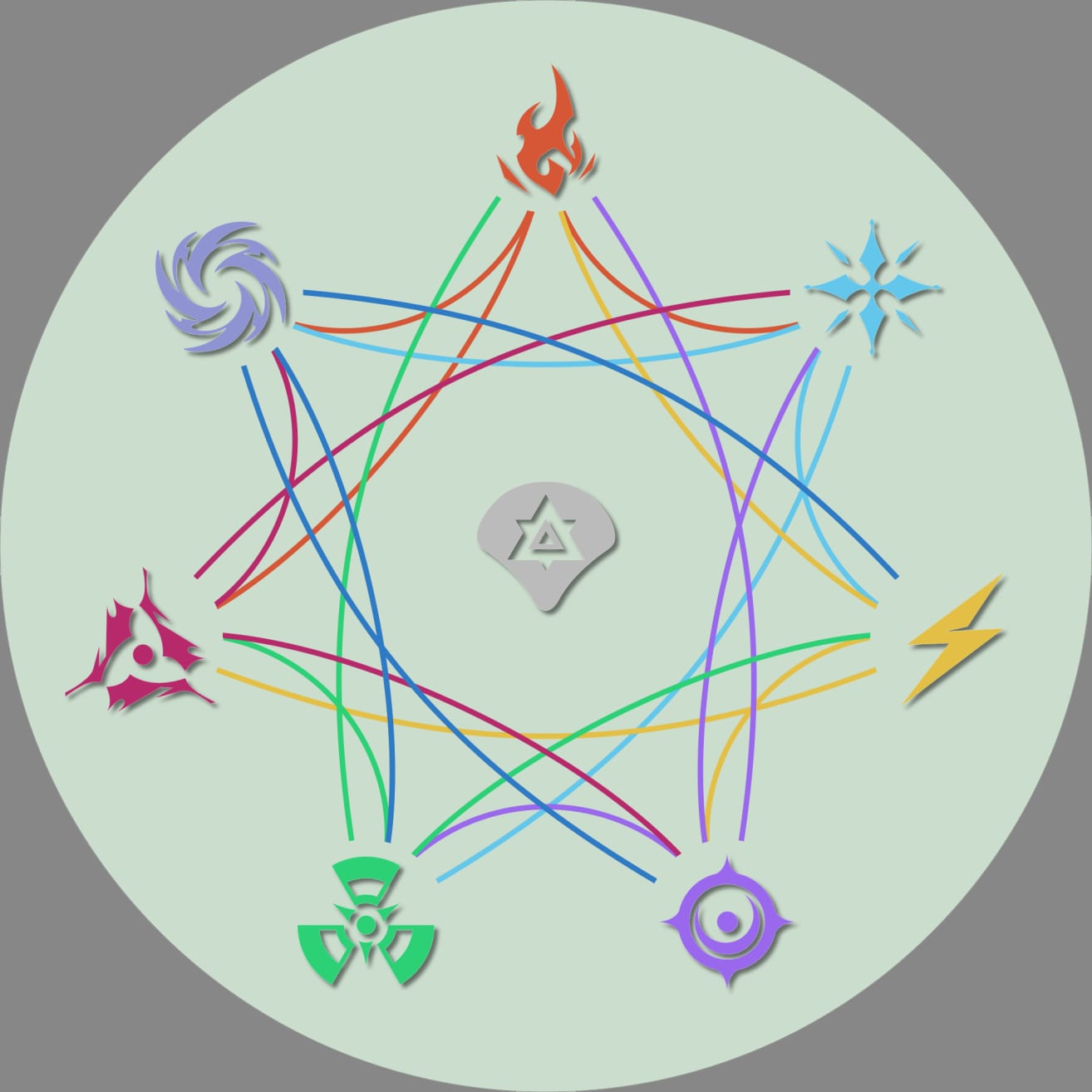
Seven Reactor Attributes power the game: Ignis, Glacies, Fulmen, Gravitas, Radiatio, Alba and Ferrugo. Four of those are plain Latin for the effect, fire, ice, lightning and radiation. Gravitas is gravity. The last two are not elements at all.
Each attribute has its own Concentrate ladder for Potential Breaks, four tiers deep. The Alba ladder is the only one measured in purity, and the numbers climb:
| Tier | Purity | What the text says |
|---|---|---|
| Basic Essence Concentrate | 50% | "Currency, Reactor vessels... These can all be realised with Silverium of only 50% purity." |
| Filtered Essence Concentrate | 78% | "Silverium of such purity sees few uses, but among them are in high-tier knight armour, relics passed down noble lineages, and the military." |
| Rectified Essence Concentrate | 89% | "A dusty tome from the Marian Era, Forbidden Alchemy, detailed this in the second-to-last stage of gold creation: Albedo." |
| Pure Essence Concentrate | 95% | "The foreword to The Great Chain of Being observes: 'At the heart of distillation lies return, the restoration of an entity to its original and most essential form.'" |
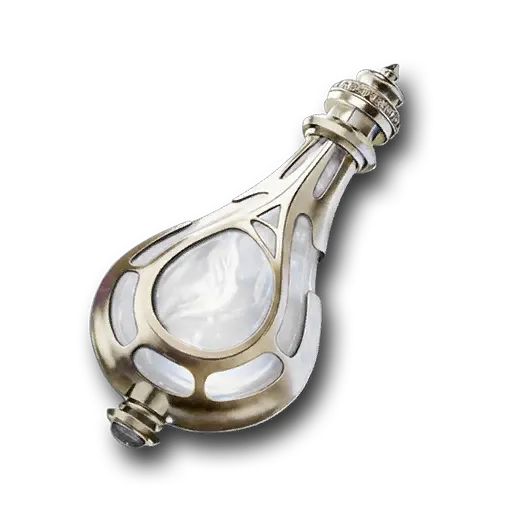
Albedo is the whitening, the stage where the material comes back pale after the blackening and before the end of the work. Alba is Latin for white. The whitening quote is printed on the white material, at 89% purity, one rung short of the top.
The phrasing repays a second read. The game calls Albedo "the second-to-last stage of gold creation". In the four-stage scheme, Albedo is second of four. In the three-stage scheme that most period texts actually use, nigredo then albedo then rubedo, Albedo is second to last exactly. The game is telling you which sequence it is working from, in a sentence most players will scroll past on a materials screen.
Ferrugo is the blackening
Ferrugo is Latin for rust, and its ladder is the one that gives the game away. Where the Alba text tracks purity going up, the Ferrugo text tracks decay going down, and it is delighted about it.
The first tier shrugs: "Silverium concentrate contaminated by impurities should be used up as soon as possible. It is still Silverium, after all!" The second is a joke about your funeral: "While the risk is undeniable, it's worth a try. Success would entail great industrial advancement, while failure... Well, I hope you've picked a plot out at the cemetery."
The third is where it turns. Rectified Ferrugo Concentrate describes itself as "what remains when corrosive Silverium concentrate is distilled, its impurities and their compositions achieving a most wondrous equilibrium", and then quotes a book:
The Dark Arts of Equilibrium read: "The purest of essences requires the concentrate to undergo complete corrosion and decay. Just as we must forge through darkness, if we are to reach the light."
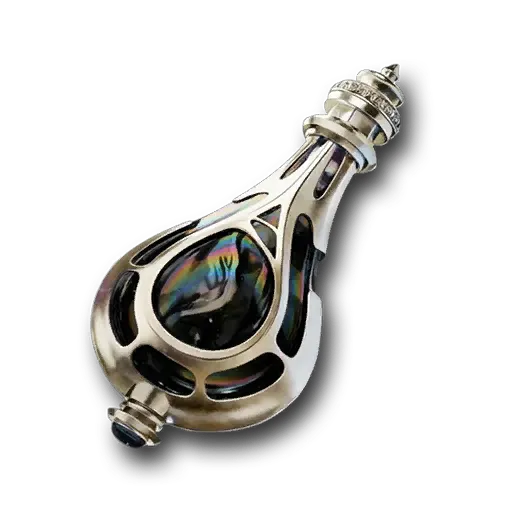
Corruption as a required stage on the way to purity is the whole argument of the Nigredo. And then the top tier removes any doubt. Pure Ferrugo Concentrate is "repeatedly processed until it showed a uniform sheen and blackened in hue", it can "corrode and assimilate with other kinds of Silverium concentrate", and its flavour text is this:
"By mixing all colours together, one is left with black. All life comes to an end in aging, death, and decay."
That is the Nigredo, described completely and never named. The game names Albedo out loud on one attribute and then declines to name the stage it has just spent four items illustrating on the other. Whether that is restraint or a setup, it is the single most deliberate piece of writing in the material database.
The grind is a distillation
Every Concentrate ladder in the game runs Basic, Filtered, Rectified, Pure.
Rectification is a specific word. It means redistilling something to raise its purity, and it is the term you would reach for if you were describing a still rather than a video game upgrade tier. Filtered and Pure would sit happily in any gacha. Rectified would not.
So the ascension economy, the thing you actually spend your week farming, is shaped like a purification sequence: take an impure substance, filter it, redistil it, arrive at the pure form. Your characters get stronger by being refined. The Argent Strand then completes the circuit by taking spent Silverium back to be recycled, which is the same idea from the other end and is why the Great Chain of Being quote lands where it does. Distillation as return.
Three books nobody has read
The materials cite three in-universe works on the subject, once each, and never again.
Forbidden Alchemy is dated to the Marian Era, the only named historical period in the released text, and it is the book that names Albedo. It is also, by its title, banned. Nothing says who banned it or when.
The Dark Arts of Equilibrium supplies the corrosion-before-purity line. The word equilibrium appears in the item description immediately above the quote, so the book and the material are describing the same process in the same language.
The Great Chain of Being is quoted from its foreword. The title is a real term, the scala naturae, the medieval hierarchy running from God down through angels, people, animals and minerals, with everything holding a fixed rung. A book with that name arguing that distillation returns a thing to "its original and most essential form" is arguing that the ladder can be climbed, which in a city that runs on refined Silverium is a political position rather than a chemical one.
There is an institution to go with them. The Household Medical Implement credits the Alchemical Research Academy with the design of stabiliser vials, made deliberately fragile so that a patient who cannot twist a cap can smash it instead. That is the only appearance of the Academy, and it is doing applied medical engineering rather than chasing gold, which suggests alchemy in Silvernia is a funded profession and not a heresy. Which makes the banned book stranger, not less strange.
What the game has not said
Three gaps, and they are the interesting part.
There is no Rubedo. The reddening is the final stage, the one that produces the stone, and the game has named the second-to-last stage and illustrated the first while leaving the last one empty. Ignis is fire and Ignis is red, but Ignis is straightforwardly an element in a way Alba and Ferrugo are not, and nothing in the released text connects it to the sequence. If the sequence is meant to complete, the missing rung is a story beat rather than a damage type.
Nobody says who forbade Forbidden Alchemy. The book is Marian Era, and the Silverium Fount's inscription makes clear the crown reserves the power to give and to take. A monarchy that controls the supply banning the book about transmuting it is a coherent guess and nothing more, because the game has not said it.
Ferrugo has no playable character. Every other Reactor Attribute has one. The attribute whose materials describe the blackening, and whose top tier can "corrode and assimilate" other Silverium, is sitting in the data with a full ascension ladder and nobody to spend it on.
For the wider substance, start with what Silverium actually is. For the argument about whether refined Silverium is alive, the in-universe library on mechanical life covers the other half of the game's scientific reading list.
FAQ
Is Silver Palace actually referencing real alchemy?
Yes, and it cites its source. The Centuries of Wisdom Implement set quotes a couplet from the Rosarium Philosophorum, a real alchemical text printed in 1550, and a Hilbert's Hotel achievement is named Rosary Hotel of the Philosophers after that same work. A second achievement in the same group is called The Alchemist. The word Albedo is printed on an ascension material.
What does Alba mean in Silver Palace?
Alba is one of the seven Reactor Attributes, and the name is Latin for white. Its ascension materials are measured in purity, climbing from 50% to 95%, and the third tier quotes an in-universe book called Forbidden Alchemy naming the Albedo, the whitening stage of the alchemical Great Work.
What does Ferrugo mean in Silver Palace?
Ferrugo is Latin for rust, and it is the Reactor Attribute whose materials describe the Nigredo, the blackening. Its top tier is "blackened in hue" and its flavour text reads "By mixing all colours together, one is left with black. All life comes to an end in aging, death, and decay." The game never uses the word Nigredo. Ferrugo currently has no playable character.
What is the Golden Lion in Silver Palace?
The Golden Lion appears in one line, repeated on all four pieces of the Centuries of Wisdom Implement set: "I am the true green and Golden Lion without cares. In me all the secrets of the Philosophers are hidden." It comes from the Rosarium Philosophorum, where the green lion is an emblem for the solvent that dissolves gold, and "the Philosophers" means alchemists.
Why are the Catalysts named after minerals?
Because they are reagents rather than gemstones. The 17 Reactor Catalysts include Antimony, Lead, Tin, Galena, Acetic Acid, Nitric Acid, Alkali and one called Stone. The Hilbert's Hotel Catalysts add Raw Mercury, Fuming Sulphur and Corrosive Salt, which are the tria prima of Paracelsian alchemy, plus Peacock Ore and an Immaculate Gold that Reforms into Wrought Gold.
What do Reshape and Reform do in Hilbert's Hotel?
Reshape raises a Catalyst's level within a run. Reform converts it into a different, stronger named Catalyst. Reforming one earns The Alchemist achievement, and doing it ten times earns Rosary Hotel of the Philosophers. Full Catalyst and Refined Catalyst tables are on the Hilbert's Hotel guide.
Know someone tracking Silver Palace? Send them this.
About the Author
Silver Palace Meta Team
Silver Palace Meta Team
We're dedicated to providing comprehensive coverage of Silver Palace news, updates, and community insights.