Silver Palace Epiphanies: All 30 Literary Sources
Open the Simulation tab on any character in the Dichotomy beta and a gold-bound book is sitting in the middle of the panel. On Bentham it reads The Destined Death. That book is an Epiphany.
All 30 Epiphanies in the build are named after real published works. Not "inspired by" in the loose way gacha games gesture at the classics, but named after: Hamlet, Frankenstein, Moby-Dick, a Chekhov short story, two Norse Eddas, one Gospel. Every one of the 30 is mapped below, with a link to its source and a short account of what the story actually is. If you are after what each book does in combat rather than where it came from, the Epiphany list with all 30 effects carries the in-game effect text.
What an Epiphany is
An Epiphany is a book you equip in its own slot on the Character Simulation screen, and it grants a passive of its own. It is an extra on top of your gear rather than a piece of it: the four equipment slots beside it carry their own set bonus, and the book is not one of those four. For how the gear layer behaves in this build, see how Simulation gear works in the CBT2 build, and the Motive cards page covers the weapon layer.
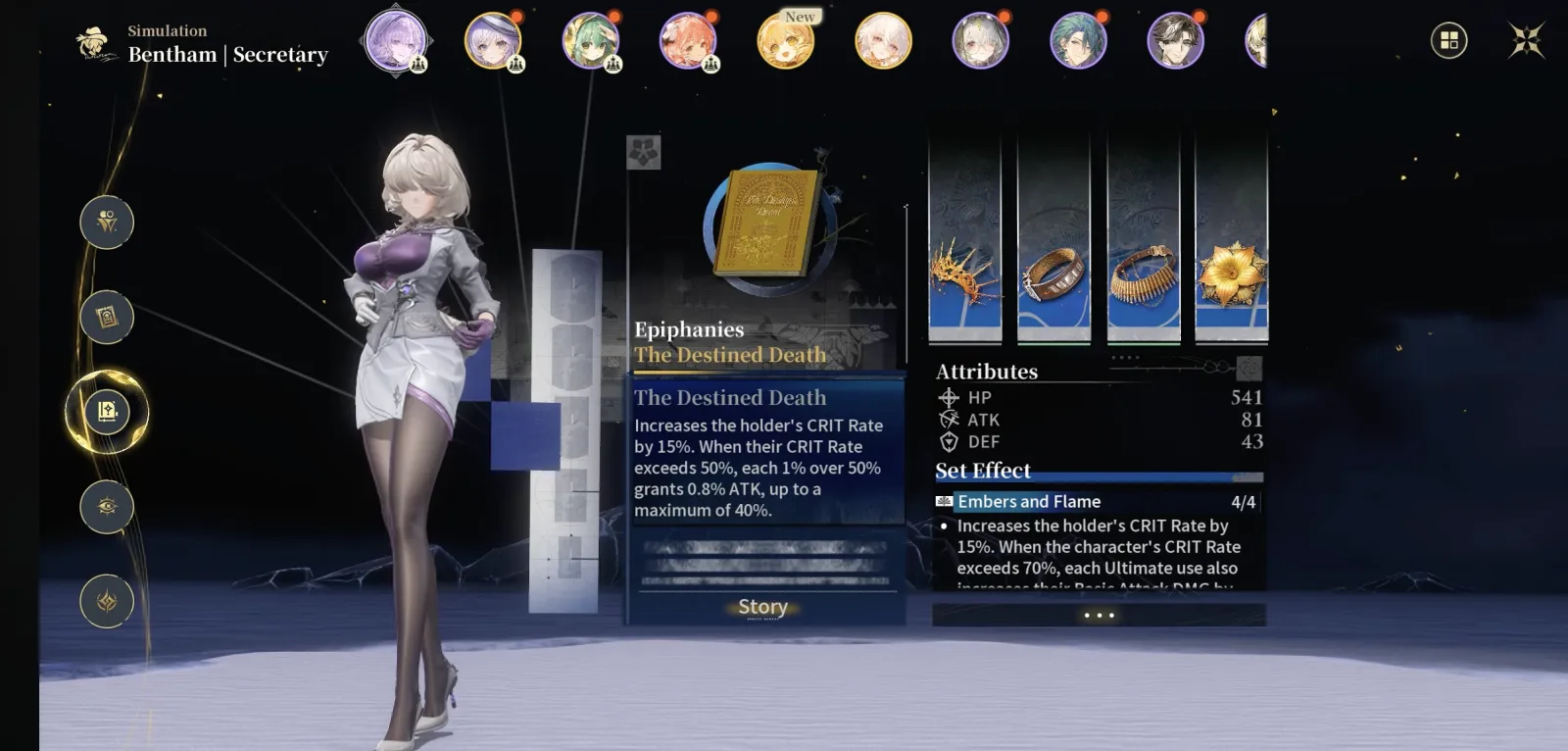
Books move between characters. The Destined Death turns up on Bentham and on the Detective with identical effect text, next to two completely different gear sets, so Epiphanies are not character-locked.
A CBT2 testing session also confirmed where Epiphanies actually come from: the Argent Docks' Epiphany Archive tab sells them directly, titles like Cinderella, The Red Shoes, Until Death Do Us Part and The Morgue Street Murder all priced at 1,000 currency each. That gives the shelf of literary titles above a real, walkable in-game source rather than just a Simulation-screen curiosity.
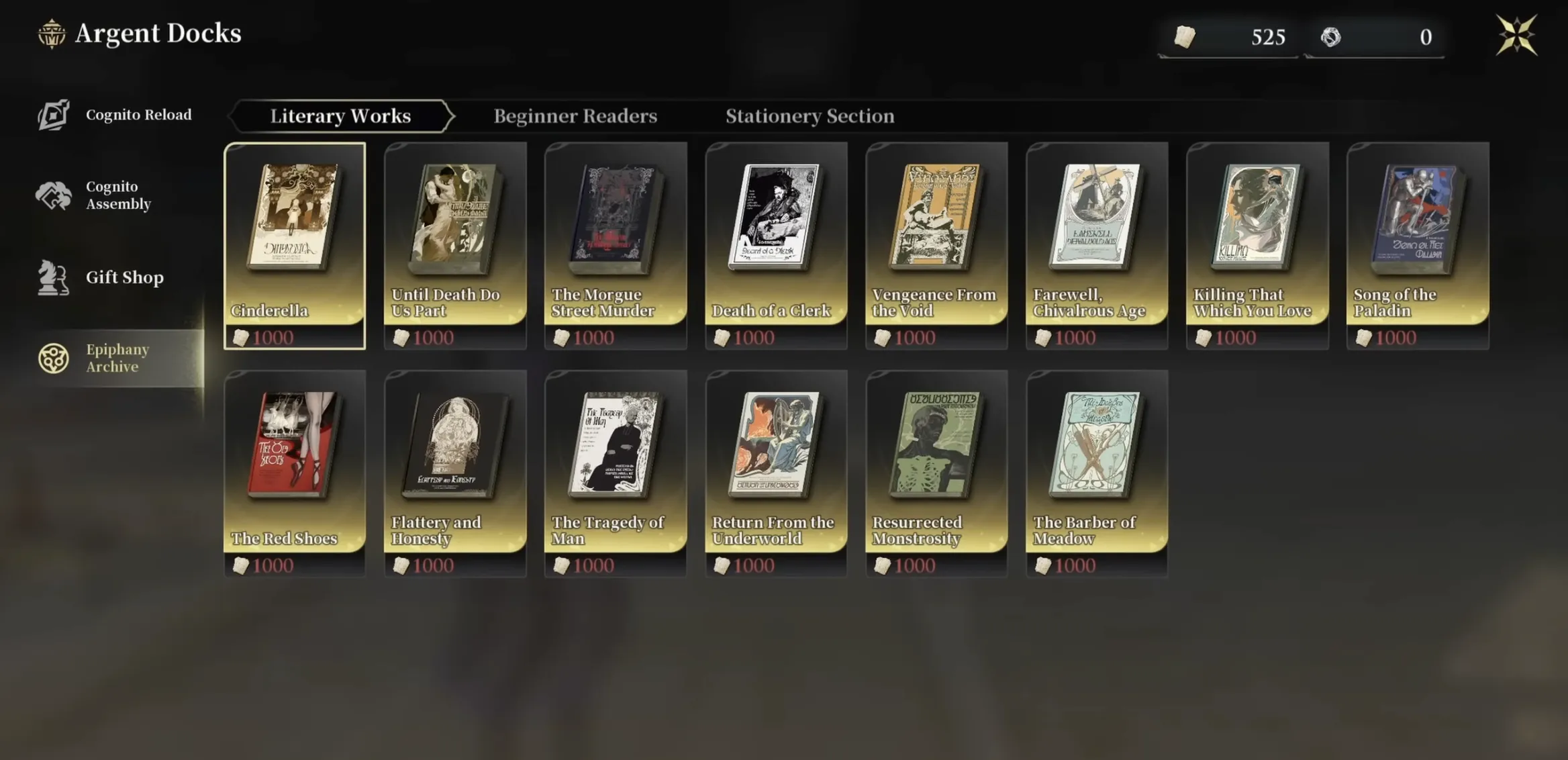
Under each book's effect box is a Story button, which opens the writing itself. No other equipment slot in the game offers to show you a text, and that button is the reason this list is worth reading rather than just filtering.
Every Epiphany and its source
All 30 Epiphanies in the Dichotomy beta take their name from a published work. Four are Shakespeare, seven come from myth, epic or scripture, and three from Poe and Doyle. The rest run from a European folk tale to Kafka, who wrote the most recent title on the shelf in 1915. Four titles are kept word for word, and the other 26 are rewritten. Each row links to the source; for the substats and Epiphany Effect attached to a given book, see the Epiphany database.
| Epiphany | Source text | Author or origin |
|---|---|---|
| Bloodline Feud | Hamlet | William Shakespeare, c. 1600 |
| Cinderella | Cinderella | European folk tale, Perrault and the Brothers Grimm |
| Death of a Clerk | The Death of a Government Clerk | Anton Chekhov, 1883 |
| Diamond Necklace | The Necklace | Guy de Maupassant, 1884 |
| Farewell, Chivalrous Age | Don Quixote | Miguel de Cervantes, 1605 |
| Flattery and Honesty | King Lear | William Shakespeare, c. 1606 |
| Frustrations of Youth | The Sorrows of Young Werther | Johann Wolfgang von Goethe, 1774 |
| Killing That Which You Love | The Gospel of Mark | New Testament, c. AD 70 |
| Resurrected Monstrosity | Frankenstein | Mary Shelley, 1818 |
| Return From the Underworld | Orpheus and Eurydice | Greek myth |
| Song of the Paladin | The Song of Roland | Old French chanson de geste, c. 1100 |
| The Barber of Meadow | The Barber of Seville | Pierre Beaumarchais, 1775 |
| The Castaway's Tale | Robinson Crusoe | Daniel Defoe, 1719 |
| The Count of the Cavern | The Count of Monte Cristo | Alexandre Dumas, 1844 |
| The Cursed Hound | The Hound of the Baskervilles | Arthur Conan Doyle, 1902 |
| The Destined Death | The Prose Edda and The Poetic Edda | Snorri Sturluson and anonymous Old Norse poets |
| The Fall of the House of Rot | The Fall of the House of Usher | Edgar Allan Poe, 1839 |
| The Hero's Shoulder | The Nibelungenlied | Anonymous Middle High German epic, c. 1200 |
| The Last Leaf | The Last Leaf | O. Henry, 1907 |
| The Metamorphosis | The Metamorphosis | Franz Kafka, 1915 |
| The Morgue Street Murder | The Murders in the Rue Morgue | Edgar Allan Poe, 1841 |
| The Priest and the Bread Thief | Les Misérables | Victor Hugo, 1862 |
| The Price of Safe Passage | Boule de Suif | Guy de Maupassant, 1880 |
| The Red Shoes | The Red Shoes | Hans Christian Andersen, 1845 |
| The Sword in Silvernia | King Arthur and Excalibur | Arthurian legend |
| The Tragedy of Man | Le Père Goriot | Honoré de Balzac, 1835 |
| Until Death Do Us Part | Romeo and Juliet | William Shakespeare, c. 1595 |
| Vengeance From the Void | Theogony | Hesiod, c. 700 BC |
| Villainous Crown | Macbeth | William Shakespeare, c. 1606 |
| White Beast of the Deep | Moby-Dick | Herman Melville, 1851 |
Three of those need a note before anyone files a correction. The Tragedy of Man is also the title of a Hungarian classic by Imre Madách, but the Epiphany's source is Balzac. The Barber of Seville is a Beaumarchais play from 1775 that most people now know through Rossini's 1816 opera, so the shelf is not strictly a shelf of novels. And The Price of Safe Passage was listed here as Brecht's Mother Courage and Her Children until the in-game text settled it: the book's own Story page describes a coach, a shared basket of food and an officer's condition for safe passage, which is Maupassant and not Brecht. Where a title could point at either, the text the game prints wins.
What each story actually is
Alphabetical, same order as the table, so you can read the one you have equipped. A few of them reach into Silvernia directly and get longer treatment.
Bloodline Feud. A prince learns from his father's ghost that his uncle murdered him to take both the throne and the queen. He feigns madness, hesitates for four acts, and by the final scene almost every member of the family is dead on stage.
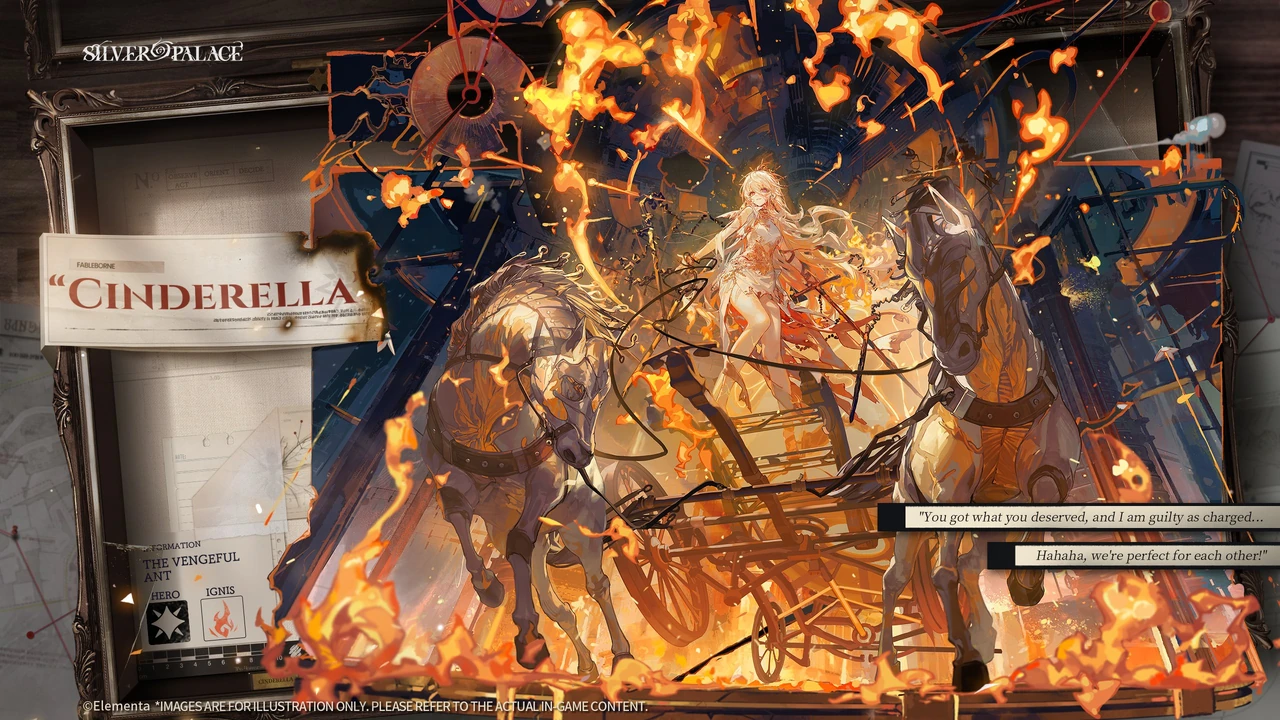
Cinderella. A girl kept as a servant by her stepmother gets one night at the prince's ball through magical help, loses a slipper on the stairs, and is identified by it. Perrault's 1697 version supplies the fairy godmother and the pumpkin coach; the Grimms' 1812 version has the stepsisters cut pieces off their own feet trying to fit the shoe.
This is the only Epiphany that shares its name with a playable character, and the two are separate things you can hold at once. Cinderella belongs to the Fableborne, meaning born out of a story. The Epiphany is the story. Nothing stops you equipping the book on the woman named after it, and the game does not comment.
Death of a Clerk. A minor official sneezes on a general's bald head at the theatre. He apologises, is forgiven, keeps apologising anyway, follows the man to his office to apologise again, and is finally shouted out of the building. He goes home, lies down, and dies. Chekhov gets a whole life out of eight pages and one sneeze.
Diamond Necklace. A clerk's wife borrows a diamond necklace to wear to a ministry party, loses it on the way home, and the couple spends the next ten years in poverty paying off the replacement. Then the friend she borrowed it from mentions the original was paste, worth almost nothing.
Farewell, Chivalrous Age. An aging gentleman reads so many chivalric romances that he decides he is a knight, and rides out to right wrongs that mostly are not there, including the windmills he takes for giants. The book is usually read as a farewell to a code of honour the world had already quietly stopped believing in, which is what the Epiphany's title says out loud.
Flattery and Honesty. A king divides his kingdom by asking his three daughters to say how much they love him. The two who flatter him get the land. The one who refuses to perform is disinherited, and the flatterers destroy him inside a year.
Frustrations of Youth. A young man falls for a woman already engaged to someone else, writes letters about it for an entire novel, and shoots himself. Published in 1774, it set off a wave of imitation across Europe, in dress, in mood, and in suicides, which is about as strong a reaction as a book has ever had.
Killing That Which You Love. The earliest of the four gospels, written around AD 70, and the bleakest: a Jesus nobody understands, abandoned by his followers, executed. The title points at the parable in Mark 12, where a vineyard owner sends his beloved son to tenants who have already beaten every messenger he sent before, knowing exactly what they will do to him.
Resurrected Monstrosity. A student assembles a body from corpses, animates it, and runs from what he made. The creature teaches itself to read and speak, is refused by everyone it approaches, and works methodically through the people its maker loves. Worth remembering for the trivia: the monster has no name, and Frankenstein is the scientist.
Return From the Underworld. A musician's wife dies, so he plays his way past the guardians of the dead and is allowed to lead her back out on one condition: do not look behind you. Near the exit he looks.
Of the 30 titles this is the closest fit to the game's own premise. The Detective comes back from a death, and an entity called the Author can rewrite a character's Fate outright. Orpheus failed because the rules of the underworld held, and the Author's power to rewrite fate is the fantasy of that same trip working.
Song of the Paladin. The oldest surviving French epic. Charlemagne's rearguard is ambushed in a mountain pass, and Roland is too proud to blow his horn for help until his men are already dying. He blows it so hard at the end that he bursts a vein in his temple.
The Barber of Meadow. A barber named Figaro helps a young count win a girl whose guardian intends to marry her himself, using disguises, forged letters and bribes. It is the one outright comedy on the shelf, and the only Epiphany where nobody dies.
The Castaway's Tale. A shipwrecked Englishman spends 28 years on an island, rebuilding a one-man version of the society he left out of salvaged tools, a ledger of profit and loss, and eventually a rescued companion he names Friday. Often called the first English novel.
The Count of the Cavern. Framed by three men who wanted his ship, his fiancée and his silence, Edmond Dantès spends 14 years in a sea fortress, escapes, digs up a fortune in a cave on the island of Monte Cristo, and comes back as a count to take all three of them apart. The Epiphany keeps the cave and drops the island's name.
The Cursed Hound. A family legend says a demonic hound hunts the Baskerville heirs across the moor. Holmes finds a real dog, painted with phosphorus, and a motive as ordinary as they come: inheritance. It is the shelf's clearest argument for the rational explanation over the supernatural one, which is a useful thing to have on hand in a city full of werewolves.
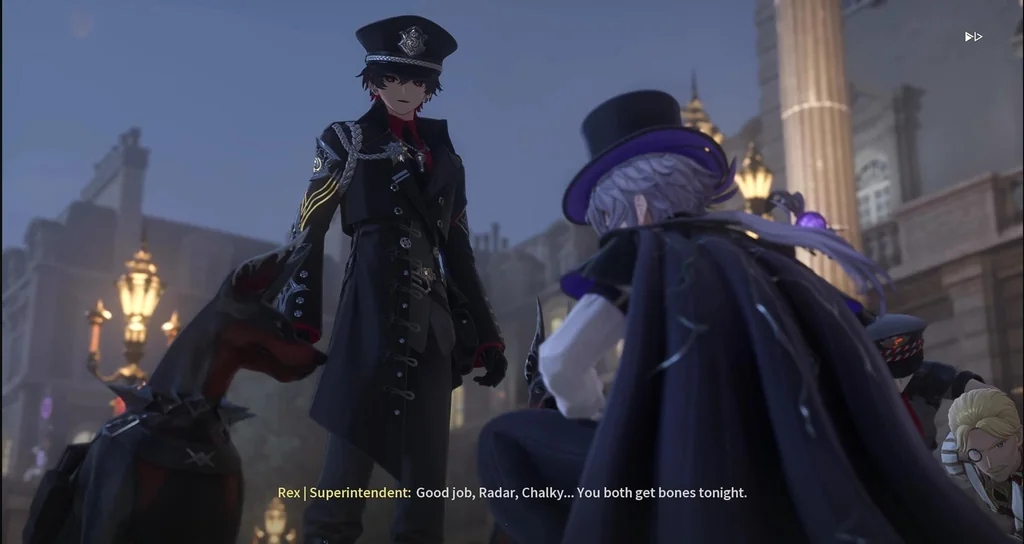
Worth noticing who else in Silvernia works with dogs: Superintendent Rex patrols with two Dobermans.
The Destined Death. The Norse pair, the Prose Edda and the Poetic Edda, which are two separate works rather than one. Their most famous scene is Baldr's death: his mother goes through the world extracting an oath from every thing in it not to harm her son, overlooks the mistletoe, and the god dies anyway because the killing was already foretold.
A book about a death that arrives no matter what precautions you take is a pointed thing to hand a player in a game about rewriting fate. The Norse layer runs deeper through the roster than this one title, as the character name origins breakdown sets out.
The Fall of the House of Rot. A man visits a childhood friend in a decaying mansion. The friend's twin sister Madeline is dying, is entombed in the vault, and turns out not to have been dead. Both siblings die in the same minute and the house splits and sinks into the tarn behind it.
The Poe thread is not just a title here. Run the Williams manor case in the beta and you get a mansion in decline, lamps dimmed on the late master's orders, and the original paintings quietly sold off and swapped for cheap copies. Then a Royal Academy administrator turns up offering his carriage and his authority. His name is Edgar. His assistant is Madeline. The beta story recap covers how that case resolves, and Madeline does not stay an assistant.
The Hero's Shoulder. Siegfried bathes in a dragon's blood and comes out invulnerable everywhere except one patch between his shoulder blades, where a linden leaf had stuck to his skin. Years later his wife lets slip where that spot is, and a spear goes through it while he is drinking from a stream.
The Last Leaf. A young painter with pneumonia decides she will die when the last leaf falls from the ivy outside her window. One leaf holds on through two nights of storm, and she recovers. The old failed artist downstairs painted it on the wall in the freezing rain, and dies of the pneumonia he caught doing it.
The Metamorphosis. A travelling salesman wakes up as an enormous insect. The horror is domestic rather than physical: his family's slow, entirely reasonable reclassification of him from son to burden to problem, until they are relieved.
One of only four Epiphanies whose title was left exactly as its author wrote it, and the game had already used the word. Howard Williams' own notes describe a metamorphosis triggered by a serum and a mask, which puts Silvernia's vampires and inheritance disputes closer to Kafka than they sound.
The Morgue Street Murder. Two women are murdered in a locked fourth-floor room on the Rue Morgue, and the eyewitnesses each swear the second voice they heard was speaking a language none of them recognised. Published in 1841, it is the first modern detective story, the one that invented the brilliant amateur, the useless police and the locked room.
Morgue Street is a district you can walk through. It has a bar, a cafe, a syndicate and a werewolf problem, and the site's Morgue Street district profile covers all of it without once naming Poe. This Epiphany closes the gap. A detective game that puts its founding text on the map rather than in the credits is making a fairly loud statement about what it thinks it is.
The Priest and the Bread Thief. Hugo's novel runs well past a thousand pages and contains a police inspector who chases one man across decades. The Epiphany's title ignores him completely and picks the opening instead: a convict, freshly out after 19 years for stealing bread, steals a bishop's silver, is caught, and is saved when the bishop tells the police he gave it to him as a gift.
Put that scene on the shelf of a city whose police force is funded by the powerful and the choice starts to read like an argument.
The Price of Safe Passage. A coach of respectable travellers flees the advancing army, and the only one who thought to bring food is the prostitute travelling with them. She shares it, and is briefly forgiven her profession for it. Then an enemy officer halts the coach and names his condition for letting it through: a night with her. She refuses; her fellow passengers spend two days talking her into it; and once she has done it and they are moving again, not one of them will sit near her or share their lunch.
The Red Shoes. A girl wears a pair of red shoes to church out of vanity and is cursed to dance without stopping, through fields and graveyards, until she begs an executioner to cut off her feet. The shoes dance away still wearing them.
The Sword in Silvernia. Excalibur comes out of a stone in one version of the Arthur legend and out of a lake, handed up by an arm, in another. Either way it is the object that proves a king is the rightful king rather than just the strongest man available.
Every other Epiphany either keeps its source's title or paraphrases it. This one relocates the story, so the sword in the stone becomes the sword in Silvernia. The Silvernia districts guide is the place to start on how much of the city's myth is homegrown.
The Tragedy of Man. An old man bankrupts himself buying his two daughters into Paris society, and they are too embarrassed by him to attend his funeral. The law student watching it happen draws the obvious conclusion and decides to beat Paris at its own game.
Until Death Do Us Part. Two teenagers from feuding families marry in secret. A faked death, a letter that never arrives, and both of them are dead for real. The whole thing takes less than a week.
Vengeance From the Void. Hesiod's account of where the gods came from, starting with Chaos, the void the Epiphany names. Ouranos imprisons his own children, so Gaia arms their son Kronos, who castrates his father. Kronos then eats his children to stop the same thing happening, and Zeus does it to him anyway. Succession by atrocity, twice over.
Villainous Crown. Witches tell a general he will be king. He murders the king, takes the crown, and then finds he has to keep killing to keep it, working through friends and children until he is a tyrant scanning prophecies for loopholes. Every loophole closes.
White Beast of the Deep. A whaling captain who lost a leg to a white sperm whale drags his crew across the world to kill it, past every chance to turn back. He finds it. The whale sinks the ship and one man survives to tell it.
What the 30 titles say about Silver Palace
Sort the shelf and the proportions come out strange for a detective game.
- Myth, epic and scripture, 7. The Destined Death, Return From the Underworld, Vengeance From the Void, Song of the Paladin, The Hero's Shoulder, The Sword in Silvernia, Killing That Which You Love. The largest group on the shelf.
- Wider canon, 7. Farewell Chivalrous Age, The Castaway's Tale, The Barber of Meadow, Resurrected Monstrosity, White Beast of the Deep, Frustrations of Youth, The Metamorphosis.
- Nineteenth-century realism, 7. Death of a Clerk, Diamond Necklace, The Count of the Cavern, The Last Leaf, The Priest and the Bread Thief, The Tragedy of Man, The Price of Safe Passage. Clerks, debts, rented rooms and social climbing, which is Silvernia's own century. Two of the seven are Maupassant, which makes him the most-represented author on the shelf after Shakespeare.
- Shakespeare, 4. Bloodline Feud, Flattery and Honesty, Until Death Do Us Part, Villainous Crown. All four are tragedies, and every one of them turns on inheritance or succession.
- Poe and Doyle, 3. The Morgue Street Murder, The Fall of the House of Rot, The Cursed Hound.
- Fairy tale, 2. Cinderella, The Red Shoes.
Three slots for detective fiction. Seven for gods, fate and prophecy. For a game whose loop is reading crime scenes, that ratio says the cases are the surface and the fate-rewriting is the subject.
The renaming has a house style too. Four titles are left verbatim: Cinderella, The Metamorphosis, The Last Leaf, The Red Shoes. A larger group gets paraphrased to the theme rather than the plot, so Macbeth becomes Villainous Crown, Moby-Dick becomes White Beast of the Deep, and Frankenstein becomes Resurrected Monstrosity, each one describing the story instead of quoting it. The looser ones work the same way once you find the scene, which is what the section above is for.
The last batch swaps out place names. Seville becomes Meadow, Monte Cristo becomes a cavern, the Rue Morgue becomes Morgue Street, Usher becomes Rot, and the stone becomes Silvernia. Five titles pulled out of Europe and dropped into the setting.
For the characters these books get equipped on, start with the full roster. For the other half of Silvernia's literary borrowing, the half that happens in the character designs rather than the gear, read the dark fairy tale characters breakdown.
Frequently Asked Questions
What are Epiphanies in Silver Palace?
Epiphanies are books you equip in a dedicated slot on the Character Simulation screen, and each one grants a passive of its own. Every Epiphany in the Dichotomy beta is named after a real published work, from Hamlet to Moby-Dick.
Are Epiphanies part of the four-piece Simulation sets?
No. The Epiphany sits in its own slot and is an extra on top of your gear, not one of the four equipment pieces that make up a set. Its passive applies alongside whatever set bonus those four pieces are giving you.
How many Epiphanies are in Silver Palace?
The Dichotomy beta build has 30, and all 30 take their name from a published source. Four are Shakespeare, seven come from myth, epic or scripture, six from nineteenth-century realism, eight from the wider canon, three from Poe and Doyle, and two from fairy tales.
Are Epiphanies locked to specific characters?
No. The Destined Death shows up on both Bentham and the Detective in beta footage with identical effect text, sitting beside two different gear sets, so the same book moves between characters.
What is The Destined Death named after?
The Prose Edda and the Poetic Edda, the two Old Norse collections that hold most of what survives of Norse mythology. The name points at Baldr, the god whose death is prophesied and then happens anyway, despite his mother extracting a promise from nearly everything in the world not to harm him.
Know someone tracking Silver Palace? Send them this.
About the Author
Silver Palace Meta Team
Silver Palace Meta Team
We're dedicated to providing comprehensive coverage of Silver Palace news, updates, and community insights.