Silver Palace Story Recap: The Detective's Return
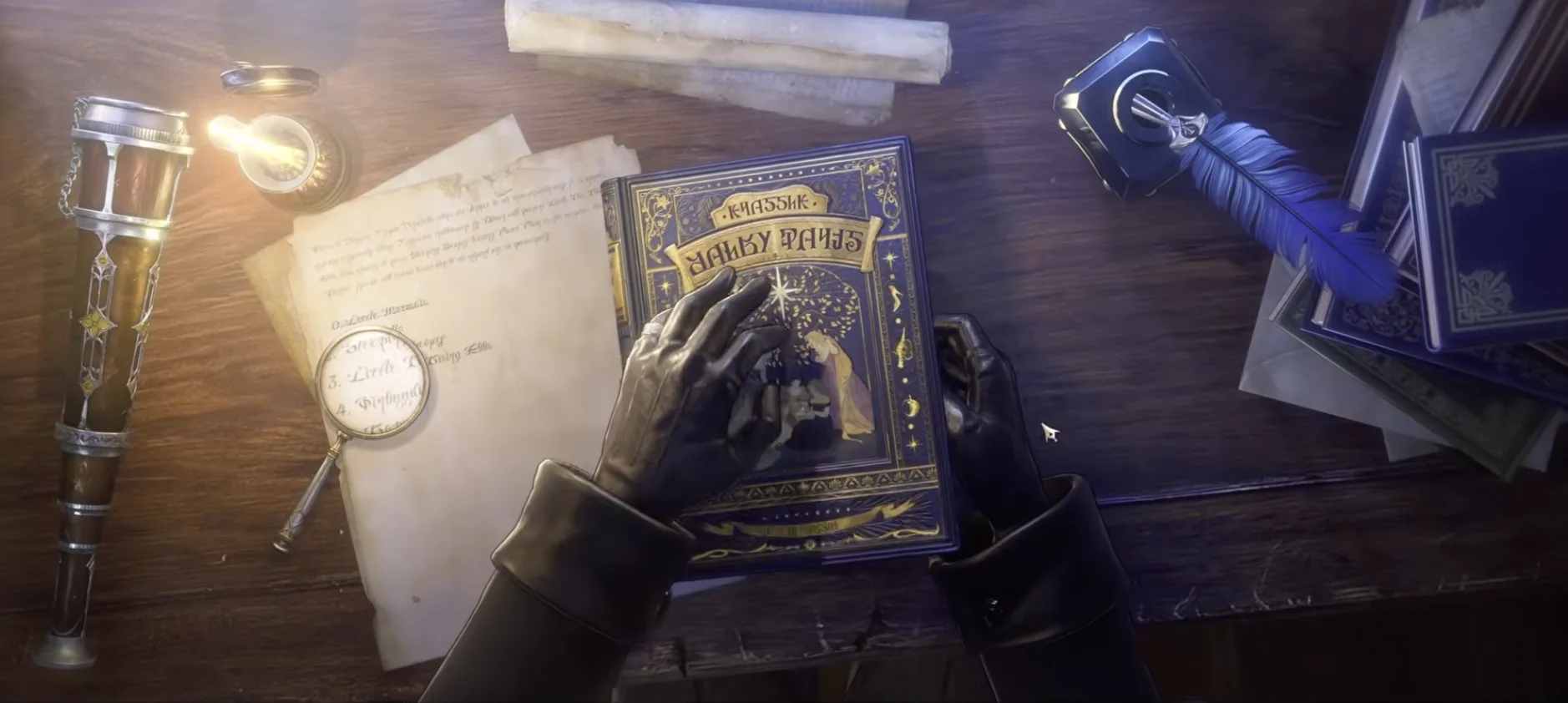
Silver Palace opens the way its own characters keep describing it: as a fairy tale. "Once upon a time, there was a detective," the narrator begins, and from there the beta story spins a murder mystery about two siblings, a fallen queen, and a city that runs on a glowing substance called Silverium. This recap walks the full beta campaign in order, from the prologue aboard a doomed airship to the factory floor where the truth finally surfaces. The headings below are this recap's own, grouped by what happens rather than by the game's internal divisions. For the campaign's official act and scene titles, see Major Cases.
Everything below comes from a hands-on playthrough of the Dichotomy Beta, so treat names, cases, and details as pre-release. Story beats and even spellings can shift before launch. Character names here follow the confirmed roster: the chief inspector is Lorin, the coroner is Firtho, the bunny knight is Gratia, the journalist is Grimm, and the young noble is Cynthia II.
Prologue: The Airship and the Fallen Queen
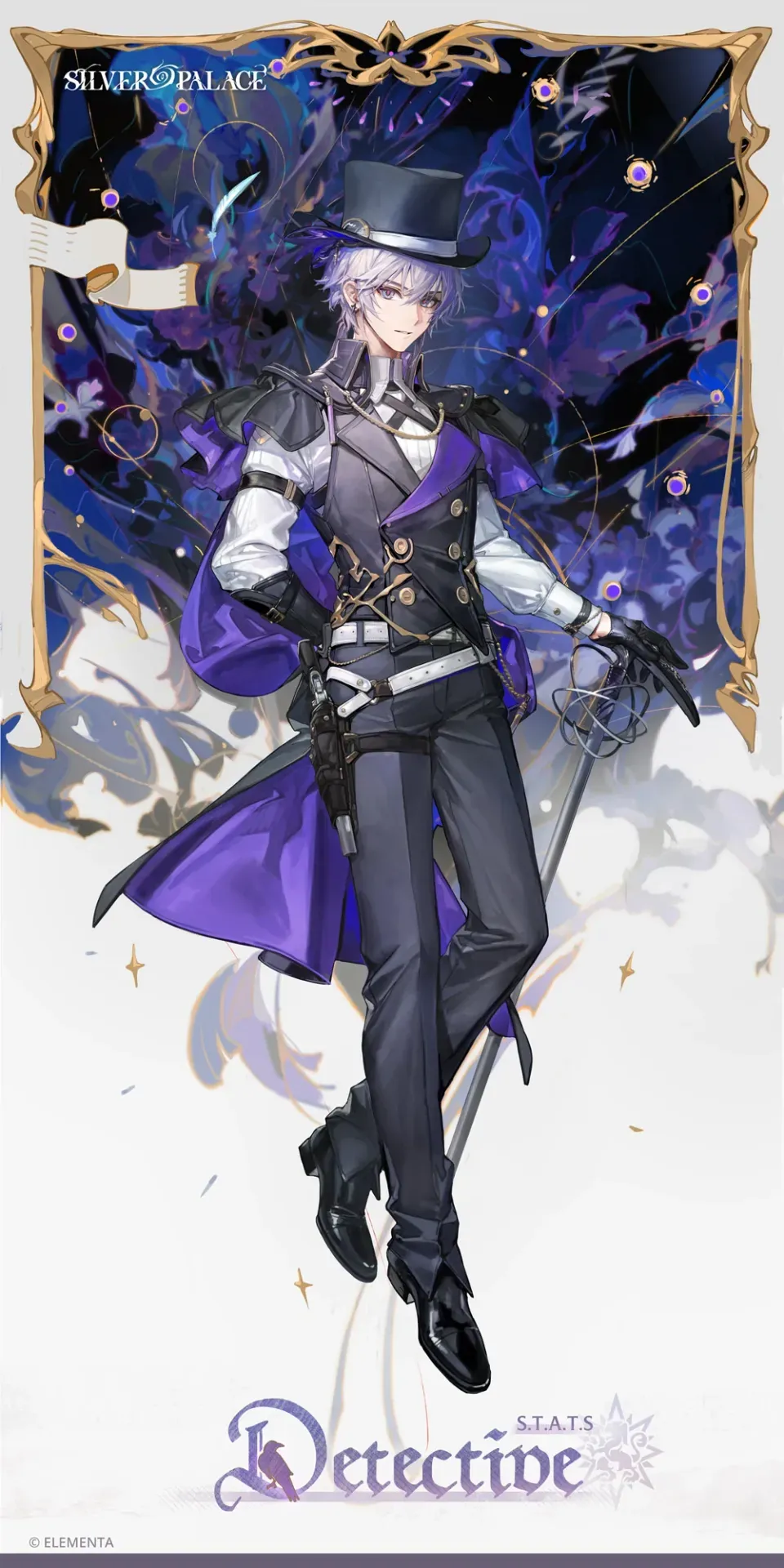
The story begins three years in the past, aboard the Evermore, a floating palace built by the United Mining Industry (UMI) and the realm's noble artisans. Two celebrated sibling detectives are the guests of honor at a royal ceremony where Queen Agoria intends to grant citizens the authority of Silverium development. One sibling works the hall in plain sight while the other slips through the staff passages above, and together they uncover a security threat: hazardous material in the sewage pipes and a rewired reactor rigged to blow.
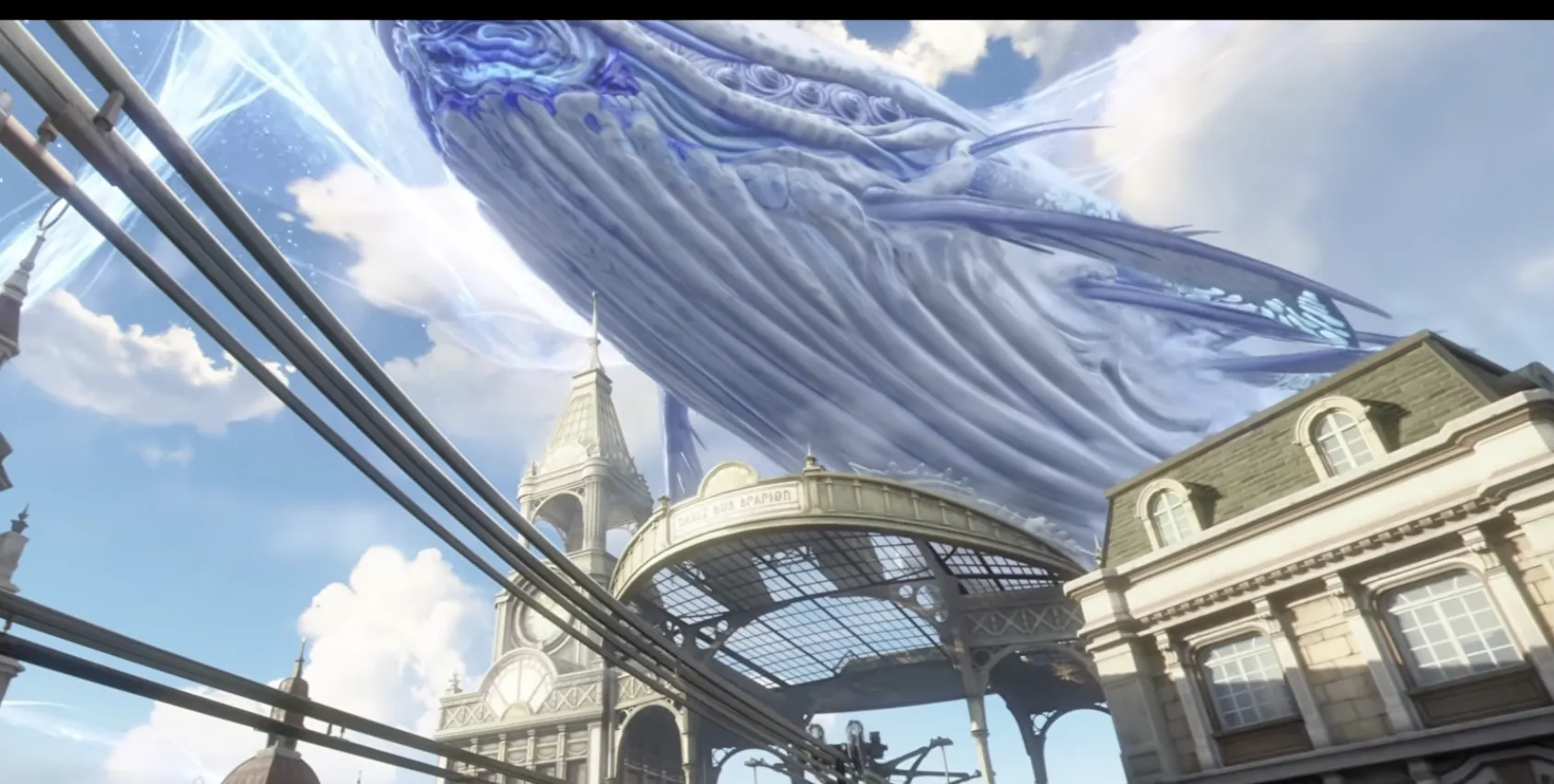
The queen presents the detective with a unique reactor gauntlet, a fusion of Tide Knight technology, moments before an assassin strikes. A purist faction turns the ship's core reactor against everyone aboard, spawning monstrous creatures from leaking Silverium. The detectives fight through the chaos, but the airship falls. Queen Agoria perishes, one of the two siblings is lost, and the surviving detective is blamed by the public as the queen's killer. The papers brand the case a tragedy, and the detective walks away from the city.
Act 1: Return to Silvernia
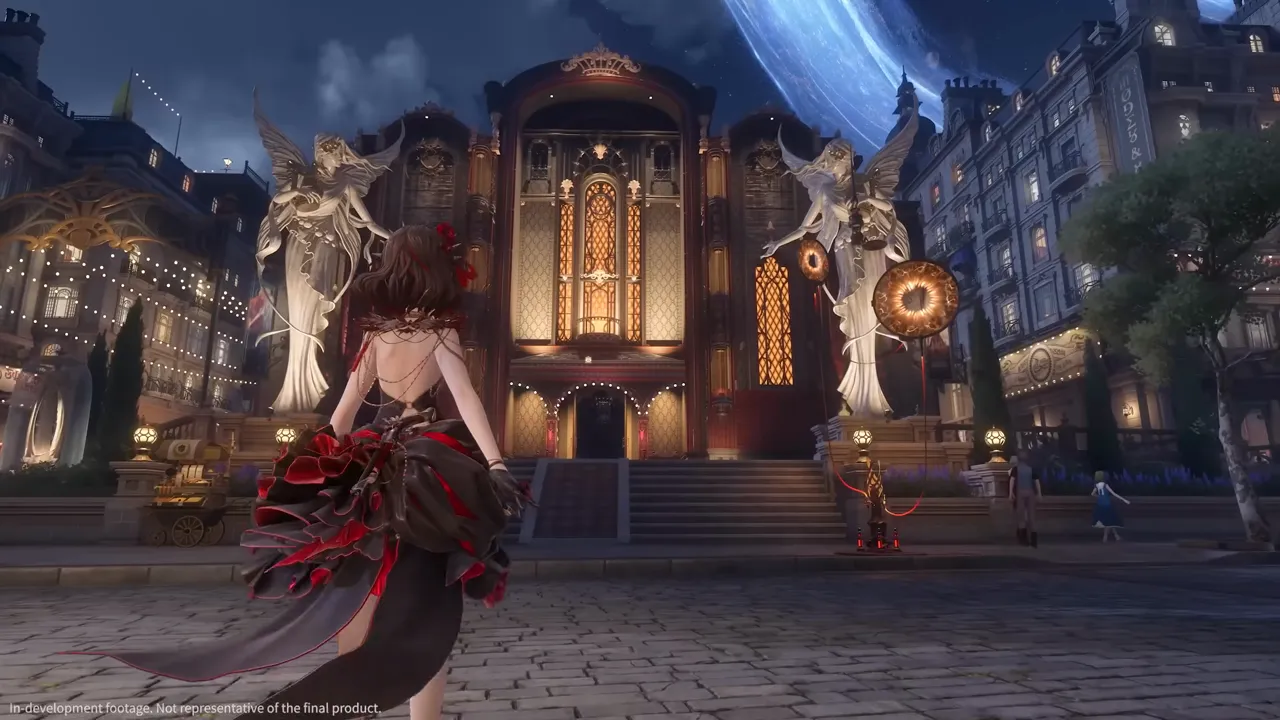
Three years later, the detective returns to Silvernia to chase the one clue left behind: a bullet bearing a strange mark, the same mark that will keep resurfacing. The city has changed. Queen Agoria's assassination forced her young cousin, Feliana, onto the throne, and the late queen's reforms stalled. Werewolves and street gangs prowl every district, and the newly formed constabulary, staffed by ex-soldiers rather than knights, cannot keep the peace.
The detective's first stop is the Memoir Bar, a warm, oak-scented haunt tended by the bartender Argos, who greets the detective like a returning legend and pours a strong, sweet house drink called the city wanderer on the house.
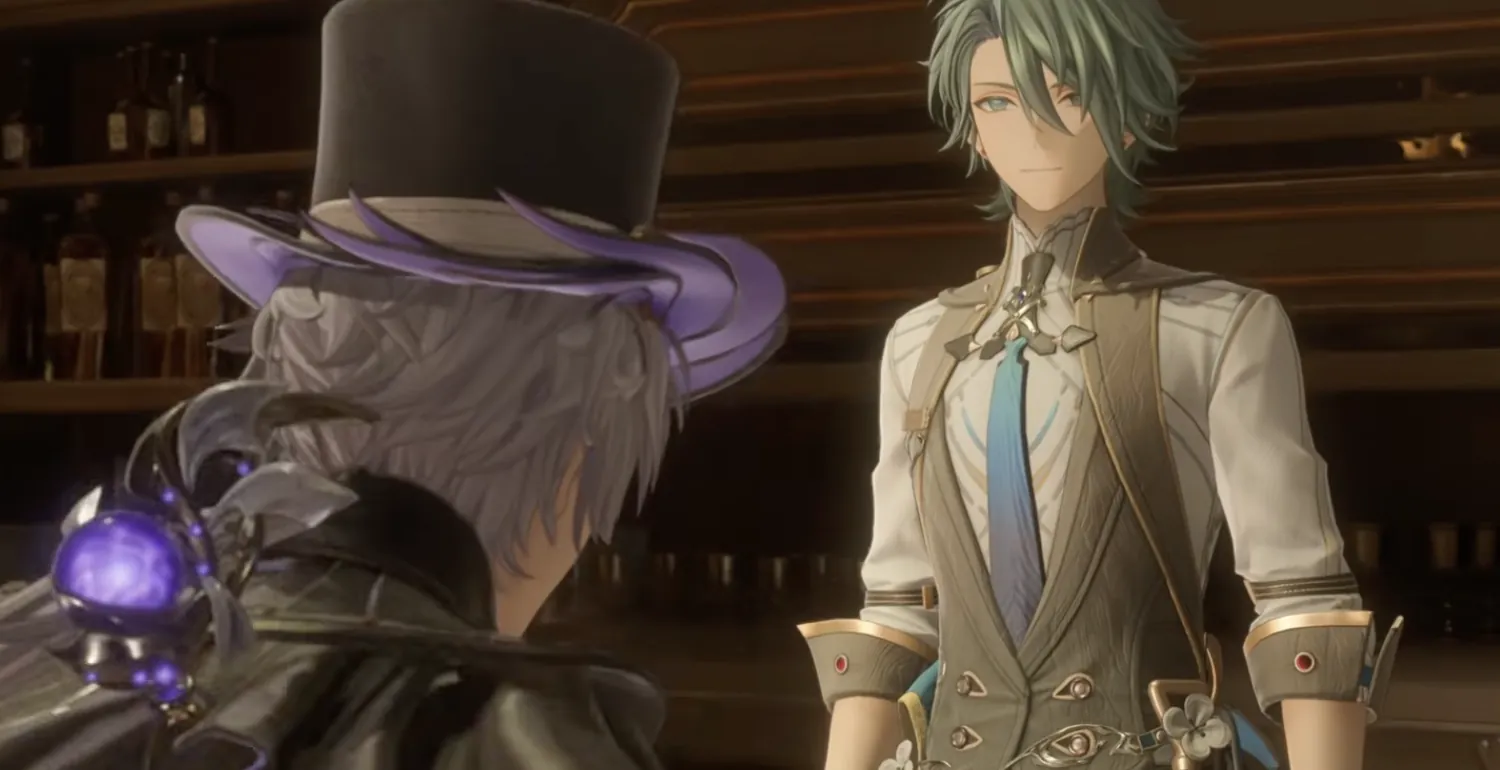
Word of the arrival has already spread, and Argos notes that plenty of people have been waiting for this return. One of them is Chief Inspector Lorin, who slides in with weary familiarity and waves off his own title. "Don't call me that," he says, since the rank only puts distance between old friends and he considers himself little more than a figurehead. He lays out what the city has become: the constabulary was cobbled together by the military to police the streets in the knights' absence, it is badly undermanned, and it is squeezed between the complaints of ordinary people and the demands of those in power. Lorin does not expect to hold his post much longer.
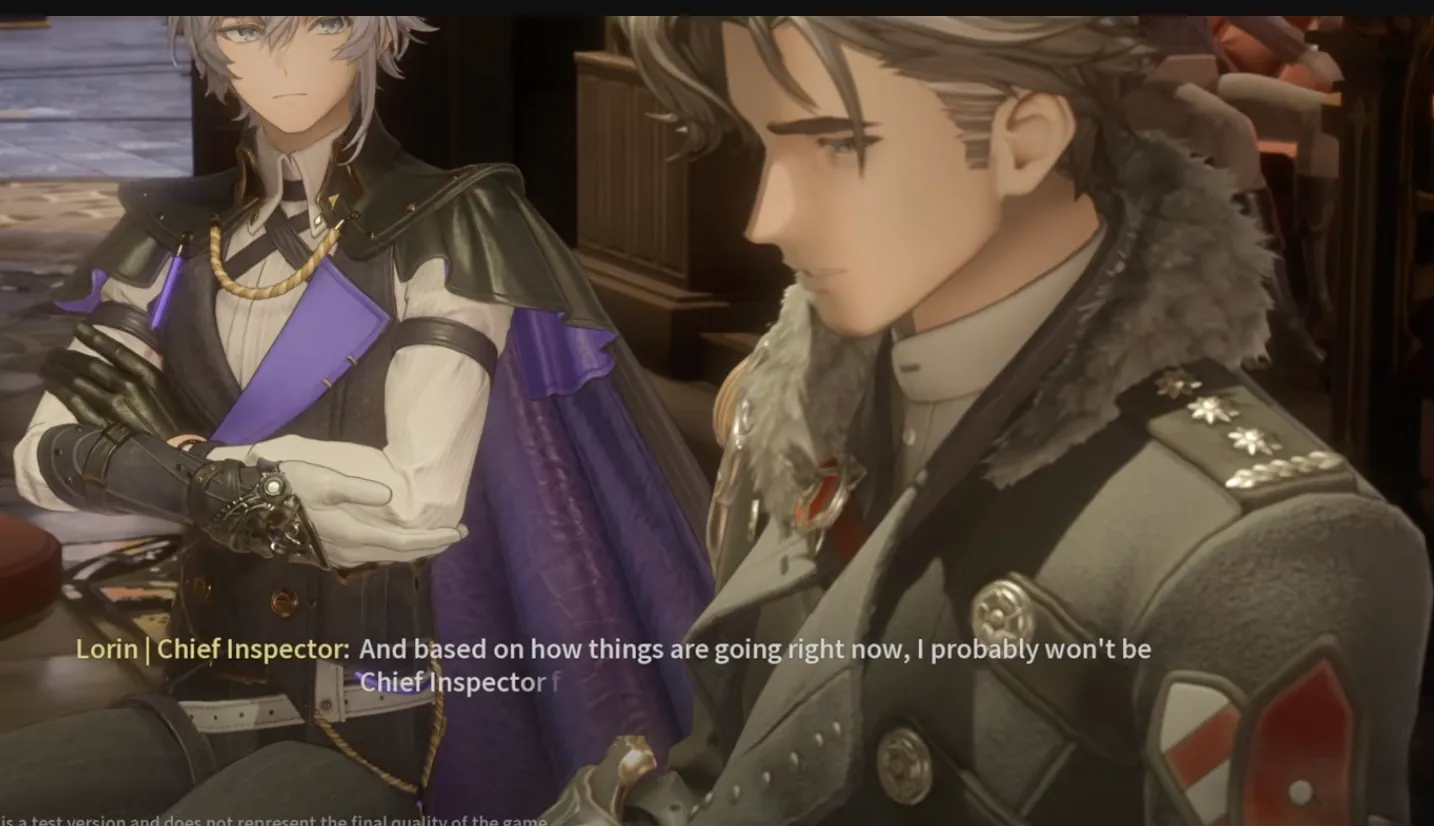
The case he needs help with is the one the constabulary calls the Nameless Ashes: several bodies burned to ash, unidentifiable, unclaimed, and all but clueless. The detective has a private reason to listen. The bullet that killed the detective's sister aboard the airship carried a distinctive mark, and it is the only lead left after three years. When the detective studies the wounds on the ash-covered victims, that same mark appears. The Nameless Ashes and the airship massacre are threads of a single case, and that is enough to pull the detective back into the work.
To prove the point and settle the room's nerves, the detective helps Lorin put down a werewolf disturbance on the spot, tracking a shapeshifter who has slipped back into human form and melted into the festival crowd, then exposing her before she can hurt anyone.
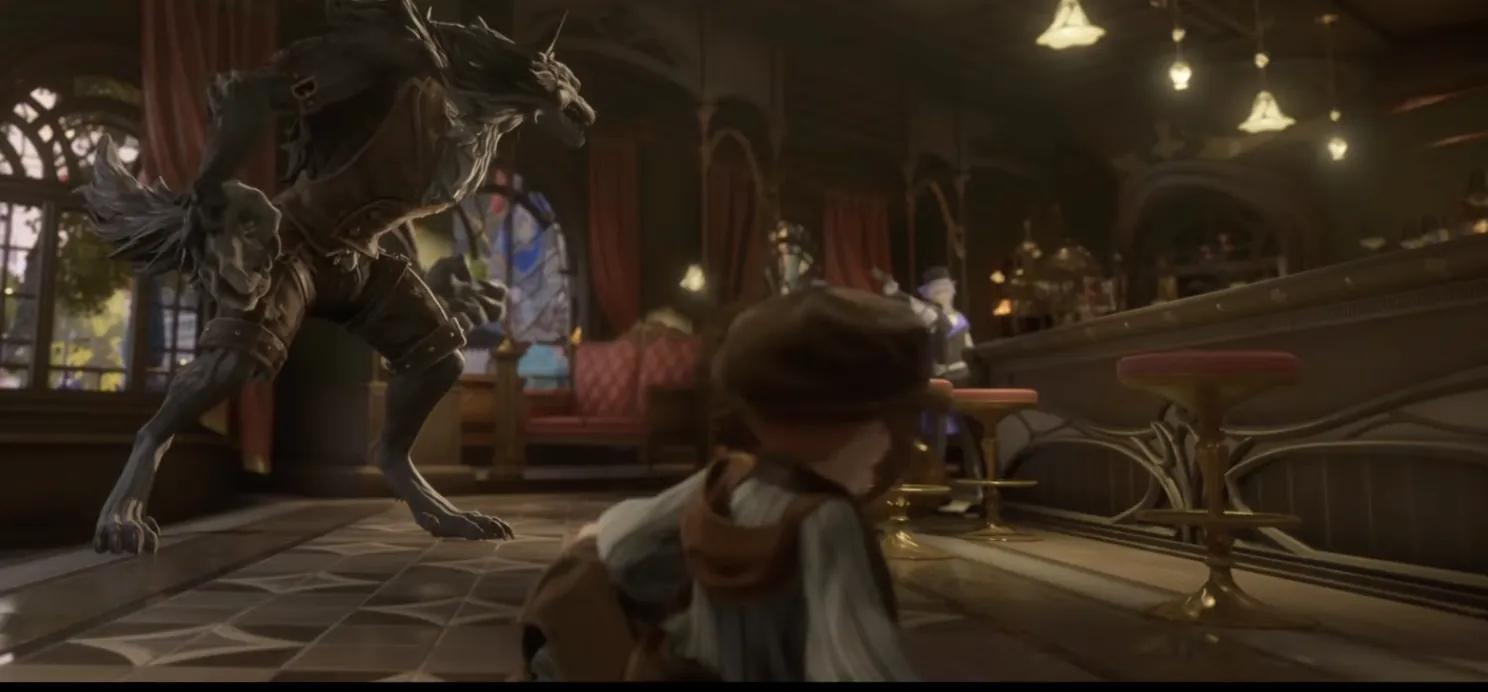
The onlookers, who moments earlier eyed the detective as the queen's killer, are won over. Among them is Pixy, a street kid who has read the detective's old newspaper cases, marvels at the reactor mounted on the detective's shoulder, and presses a small token of thanks into their hand. To Pixy and the other street children, the detective is no queen slayer but a hero, and she vows to spread the word that the detective is back.
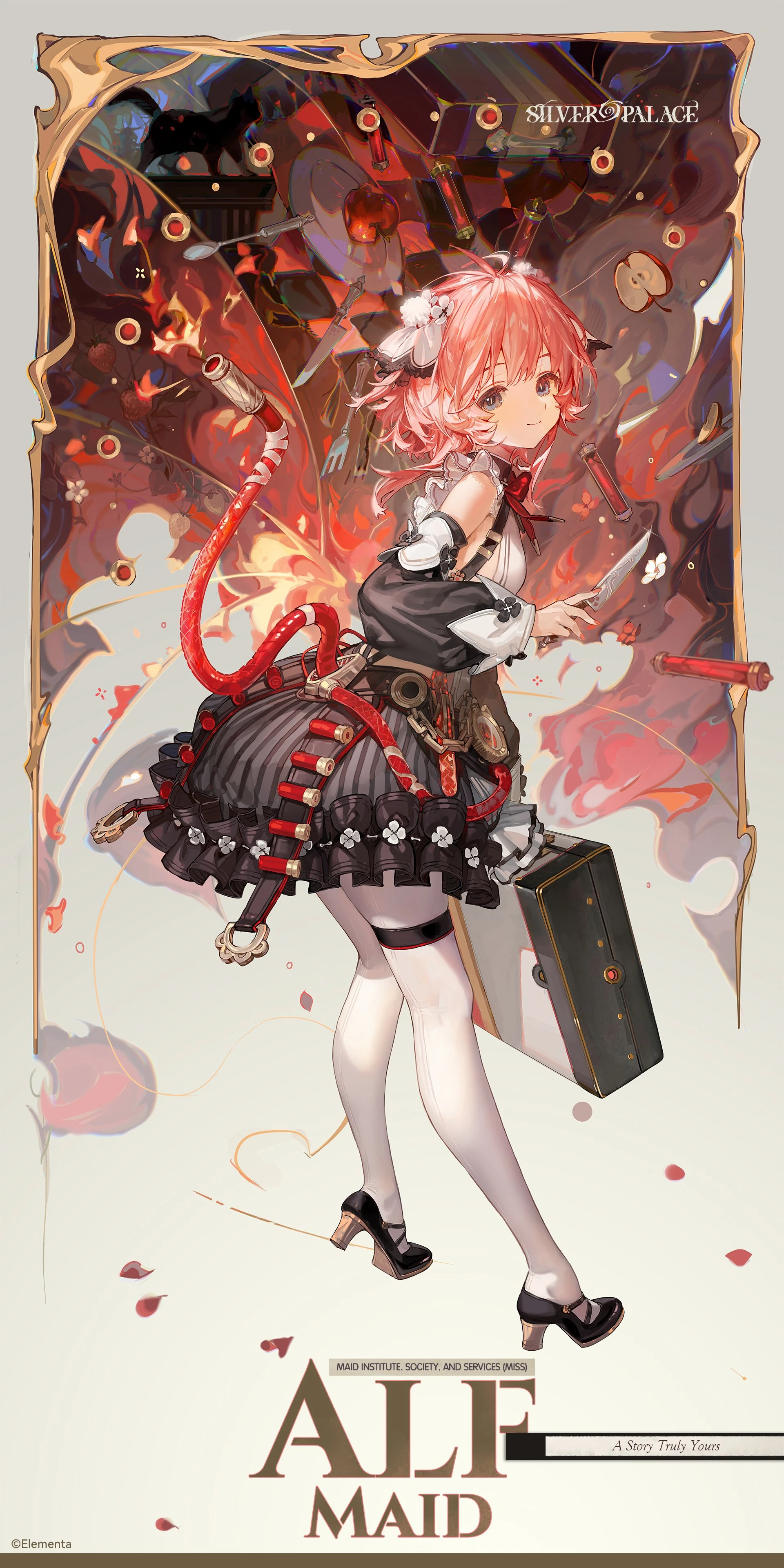
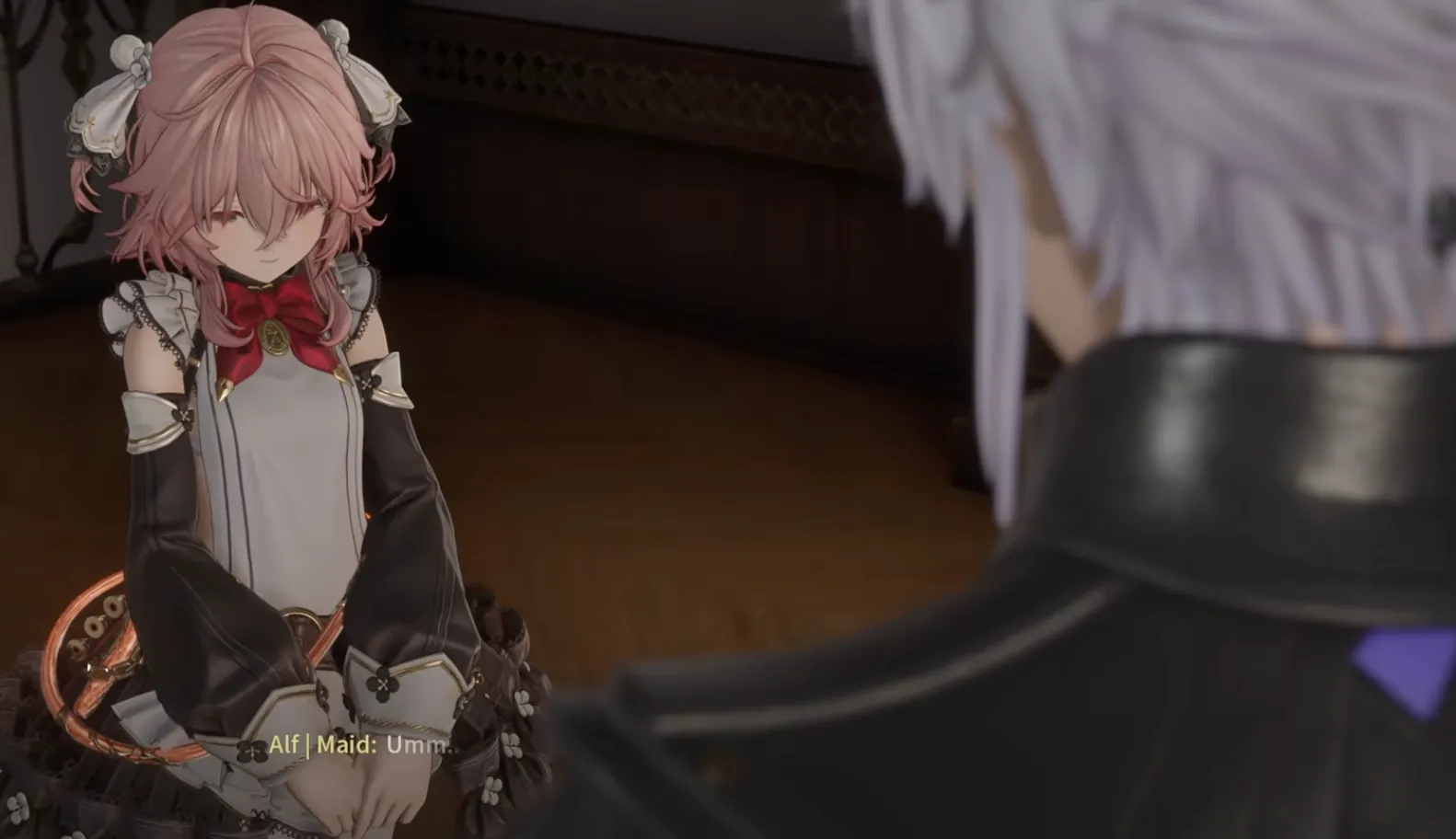
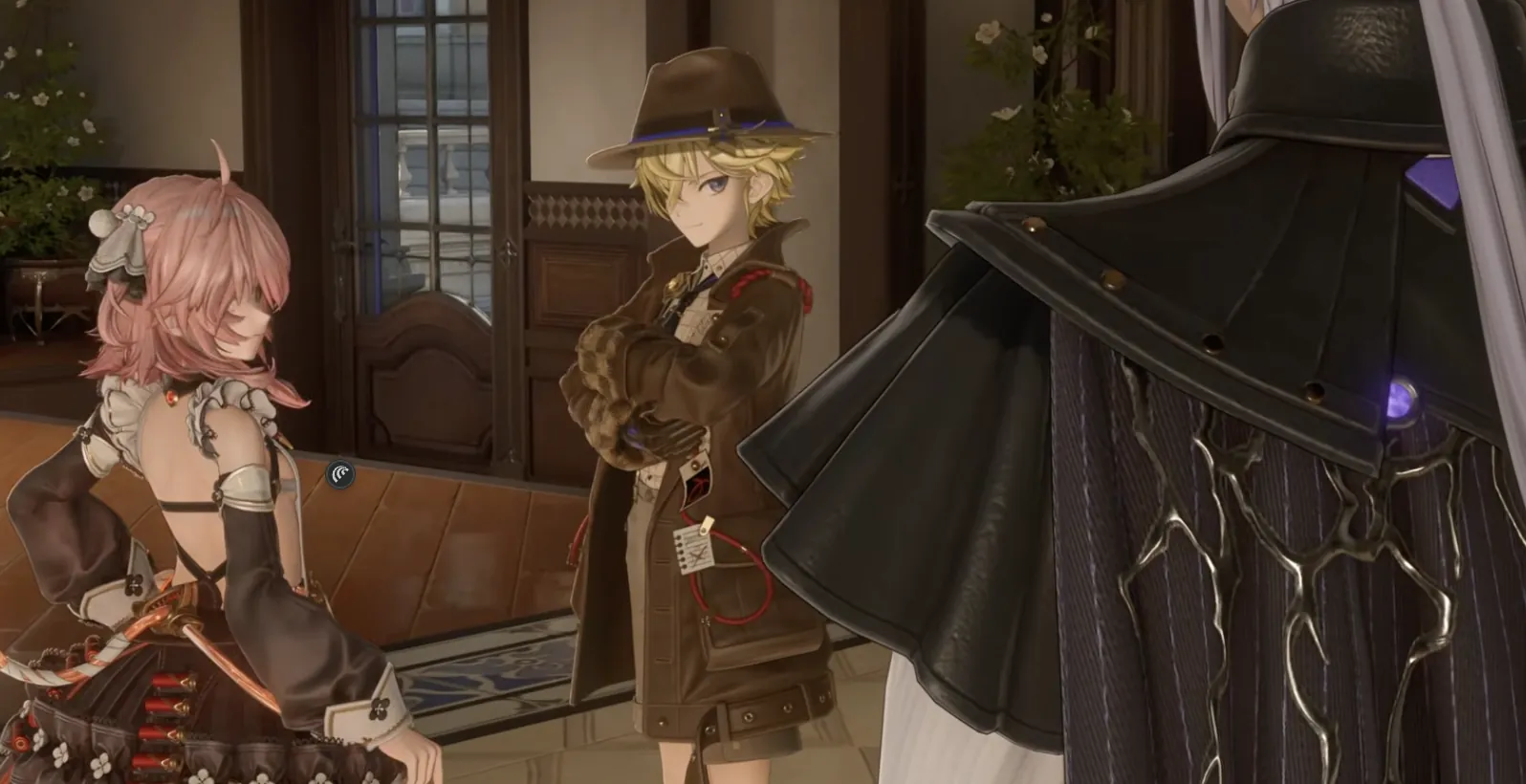
Constabulary rules say every case needs a team of two, so Lorin insists the detective cannot work alone and shortlists three assistant candidates. The interviews play out as their own little comedy. The first candidate is the eager maid Alf, Maid No. 49 of the MISS agency, who promises to "cook, clean, and fight" but fails every test the detective sets: she cannot spell, has no idea how to brew tea, and her smooth, uncalloused hands and brand-new reactor mark her as someone who has never done a hard day's work. Lorin himself admits she seems a poor fit and sends the detective to a more promising option waiting upstairs.
That second candidate is billed as a seasoned clerk with ten years of experience, but the detective quickly sees through the act. It is the Red Rose in disguise, the same woman who tried to pose as an applicant earlier. She bribed the genuine clerk to swap places purely to get a look at the detective and the rumored constabulary case. Once the detective clocks her concealed miniature reactor, hidden gun belt, and blade, she flirts, teases that the detective's assistant should be able to uncover her client's identity, and slips away promising a future encounter. The real clerk, she assures everyone, is perfectly fine.
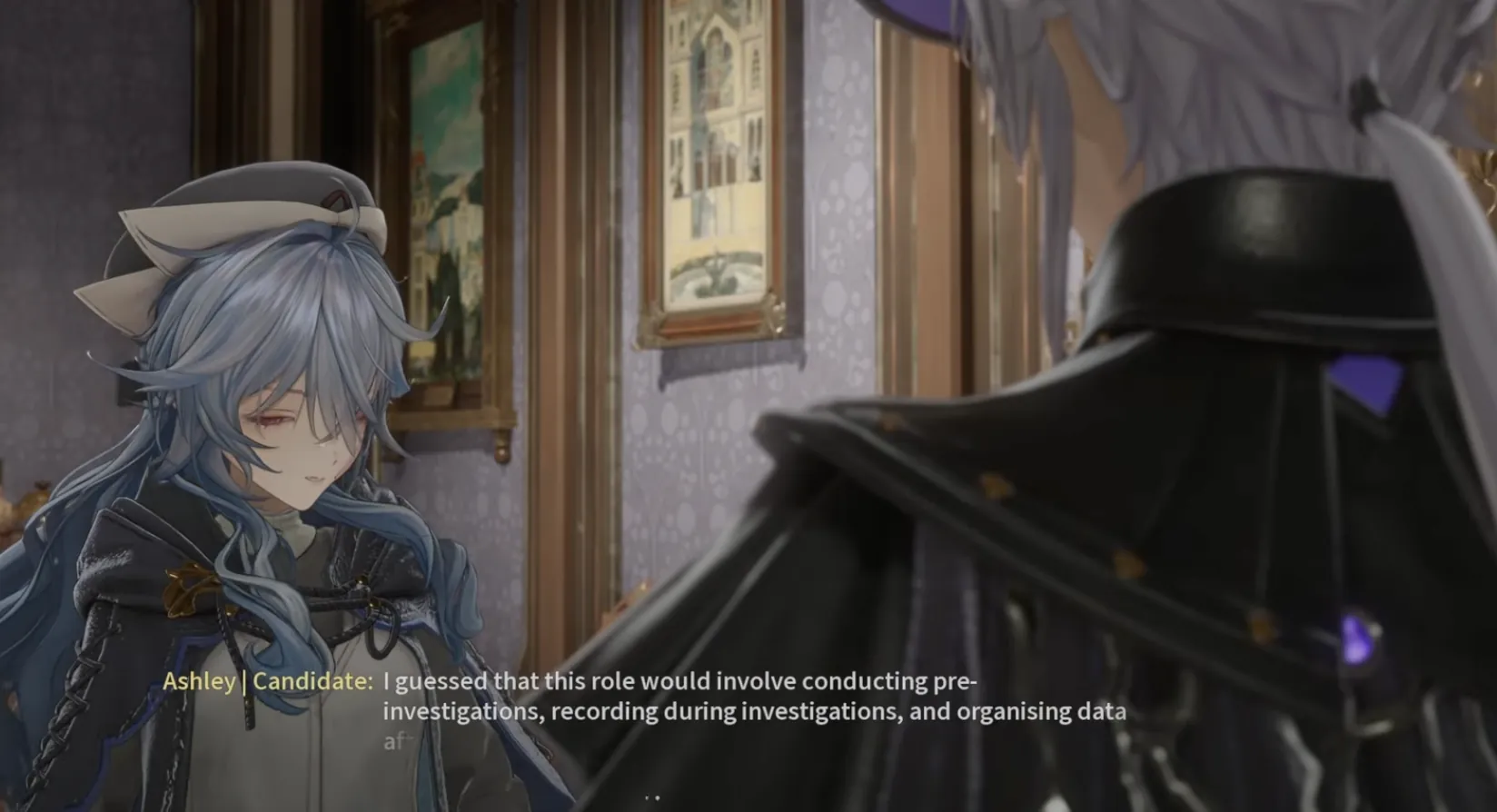
The third candidate waits on the ground floor and is nearly overlooked. She is Ashley, a fresh Royal Academy graduate who has quietly scrubbed the entire office clean while the detective slept. She is well read, answers a dossier-sorting puzzle with a precise reading-speed calculation, and asks for no wages at all. In exchange, she only wants the detective to help unravel a riddle she calls the mystery of the stolen silver: a rich man's coins vanish from a locked, single-key safe with no sign of a thief.
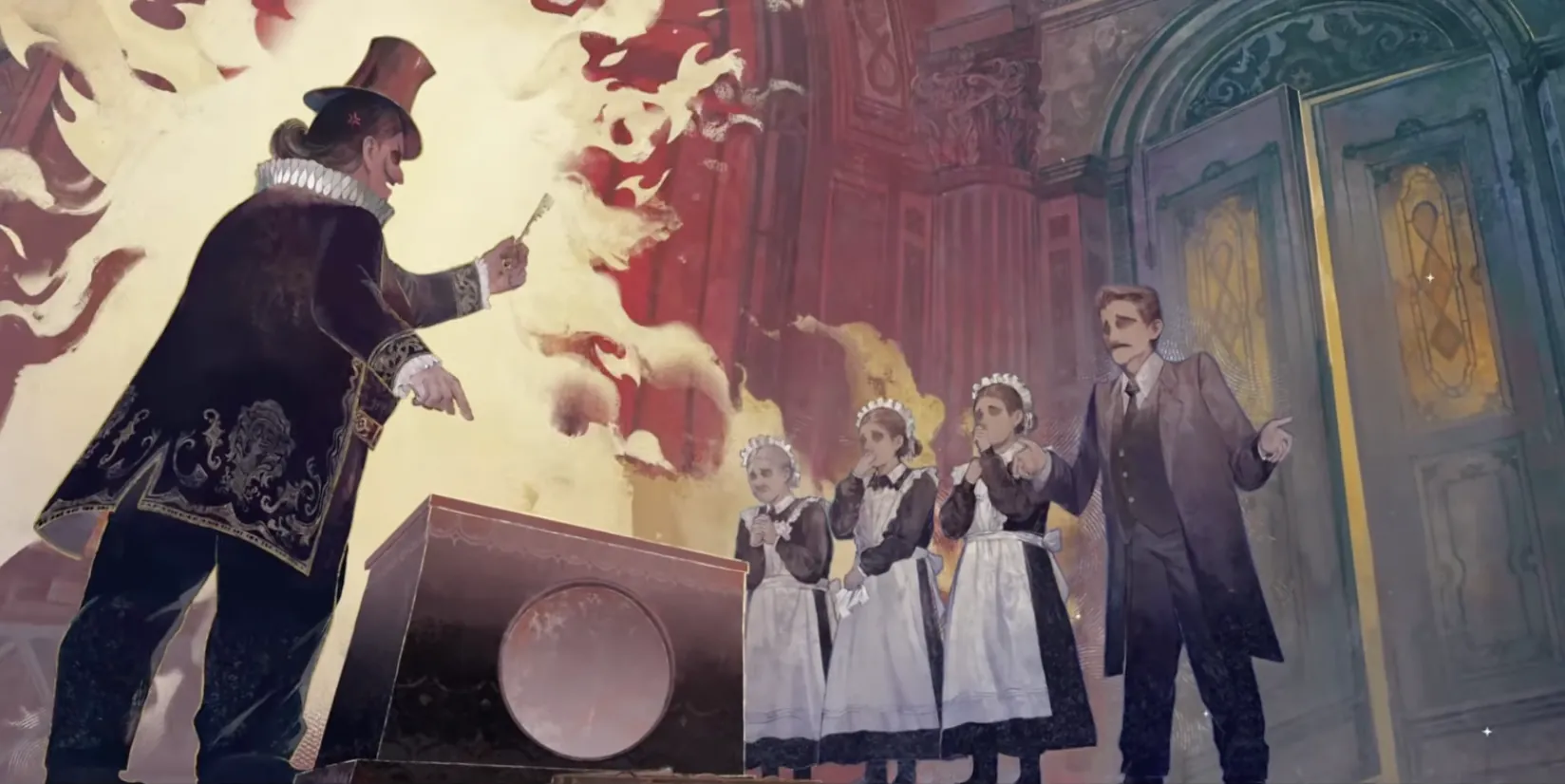
Ashley gets the job. Alf, undeterred by her failed interview, simply refuses to leave.
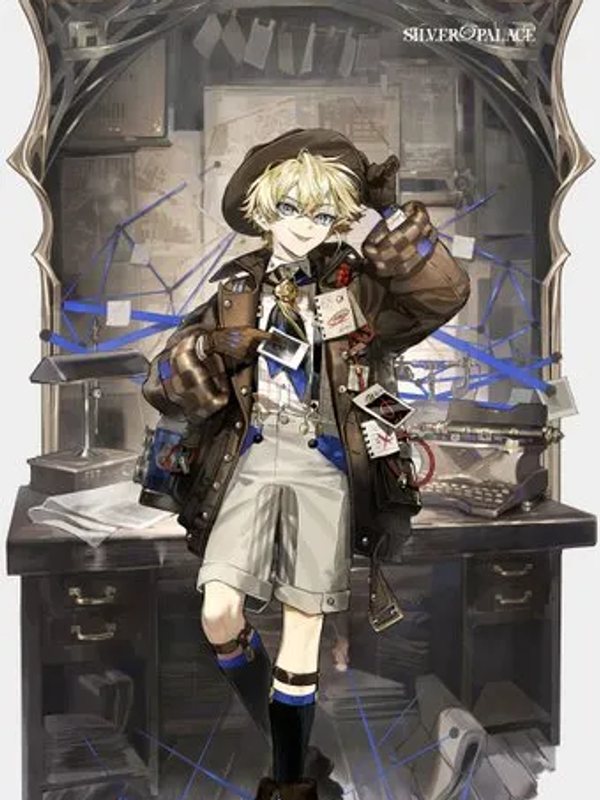
Around this time the detective also crosses paths with Grimm, a brash photojournalist who once trailed the detective's earlier cases and even ghost-wrote some of the newspaper reports that made the detective famous.
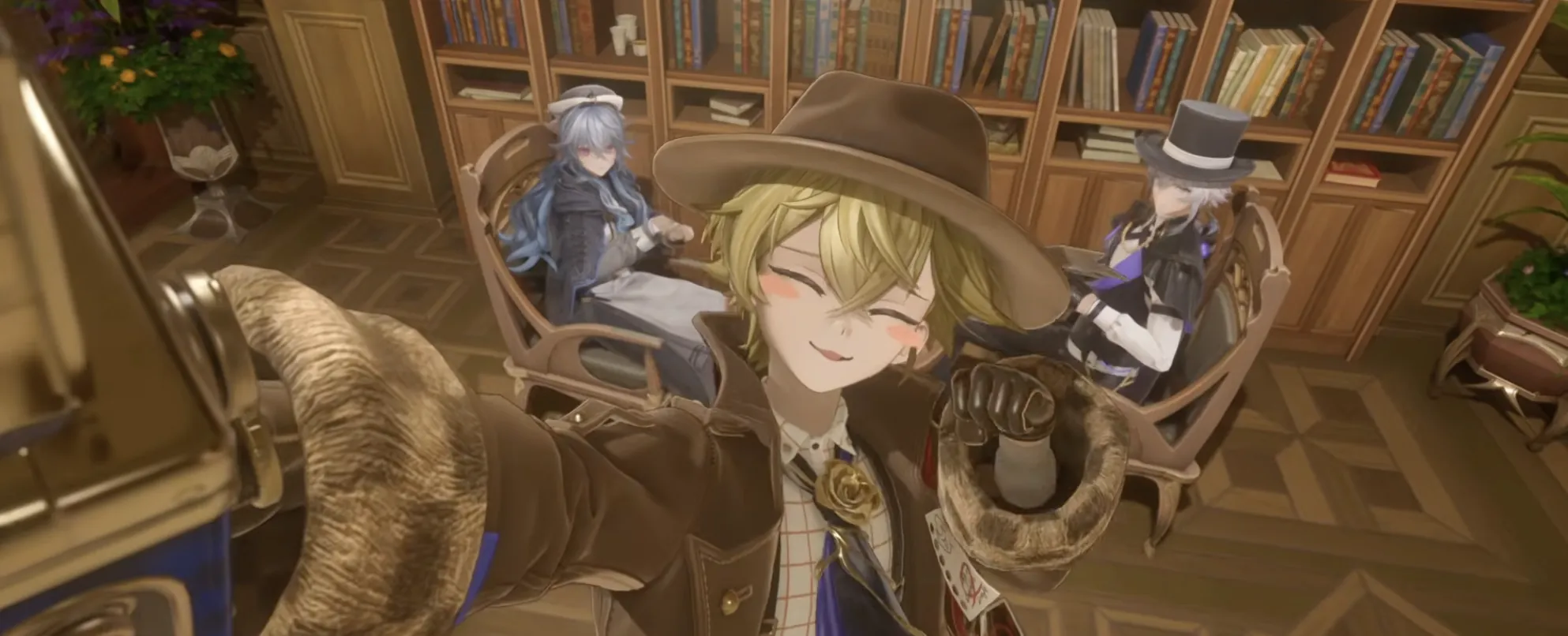
Grimm cannot fathom why anyone would walk away from a regicide, the greatest murder case a detective could ever dream of, and he needles the detective for closing the office and leaving Silvernia for three years just as that fame peaked. When Ashley tells him to mind his manners, he studies her with an odd flicker of recognition, then coldly warns her to find another line of work, noting that the detective's last partner "went down with the airship, blown up, and burnt to ashes." Ashley snaps back at him not to mock the dead. Grimm brushes it off: he is chasing a story of his own, one he swears will be real news rather than tabloid gossip, and it will finally make his name. That story is exactly what lands him in mortal danger later.
With an assistant hired and the detective's office scrubbed clean and reopened for business, Act 1 eases off the throttle. Silver Palace likes to thread its heavier cases through quieter character interludes, and the next stretch of the beta belongs to the people now gathering around the detective. It helps to know that this office is the same one the detective once shared with their late sister and former partner. The assistants have restored it down to the bookshelves and the plants she used to tend, so the reopened workplace doubles as a daily reminder of the person the detective came back to avenge. The first of these character interludes belongs to Alf.
Getting to Know Alf
Having talked her way into staying, Alf appoints herself the office's guardian and takes the role with total seriousness. That devotion pays off in an unexpected way when the journalist Grimm sneaks into the office and starts rifling through the kitchen. Alf catches him red-handed, thrashes him, and throws him out, then proudly reports to the detective that she "whipped him raw and sent him packing." It lands as a throwaway gag at the time, but Grimm did not break in to steal anything. He came to hide something, and the intruder Alf chased off will matter enormously once the detective goes looking for what he left behind.
The rest of her showcase is pure comedy and heart. Left in charge of the kitchen, she mixes up the salt and the sugar and serves the detective a proudly brewed cup of salty tea, a mishap that becomes a running joke. She rummages through the cupboards without really knowing what anything is, cheerfully repurposing the odd instruments she finds as ordinary utensils. She teaches herself to bake "super sweet, fragrant, and fluffy pancakes," having decided the proper way to time an oven is to wait for the "boom" and snatch the tray out. She wins a staring contest with a crow at the window, and she quietly saves up her own pocket money to buy the detective a gift.
Beneath the antics, Alf is fiercely loyal and wants nothing more than to be allowed to stay at the detective's side. The detective, who first judged her unfit as an assistant, lets her remain as the household's self-appointed protector, salty tea and all.
Gratia's Quest: The Bunny Knight
A trio of street children, Lulu, Poppy, and Pip, hire the detective to find their missing idol: Gratia, an Argent Knight of the Order of the Tide, handpicked by the queen as her royal knight and nicknamed the bunny knight for her looks. The children adore her even though the adults write her off as clumsy and accident-prone. Gratia trains hard for the Royal Equestrian Tournament every year but has never once won, since something always seems to go wrong. This year she has vanished entirely a day before the event, and the kids want the detective to find her so they can give her a good-luck token.
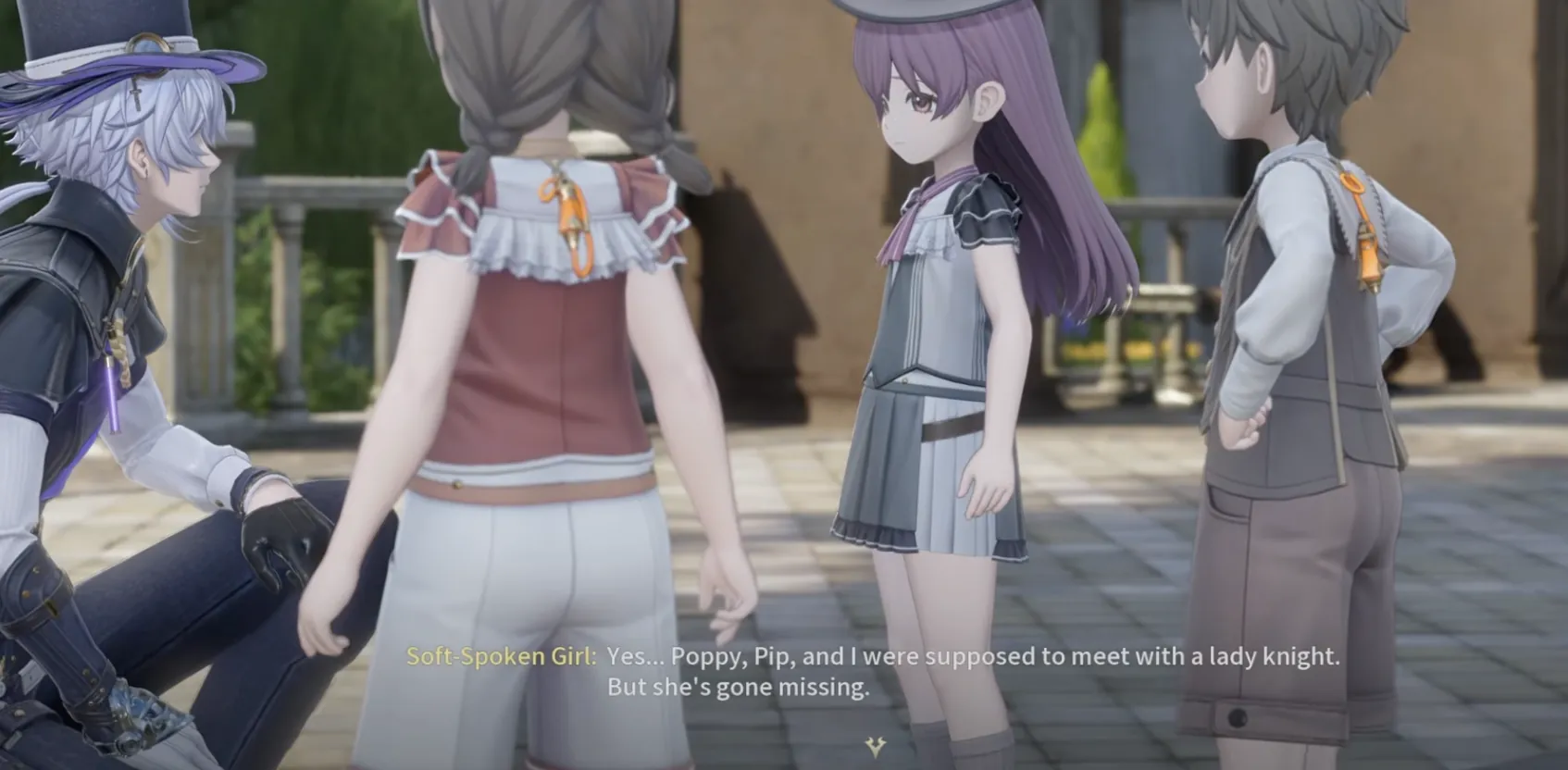
The detective finds Gratia in hiding, convinced she no longer deserves her title because she has lost the Silverium steed the queen bestowed on her a month earlier, a rare prototype said to sense its rider's feelings. She had scolded the animal during training, and it bucked her off and bolted.
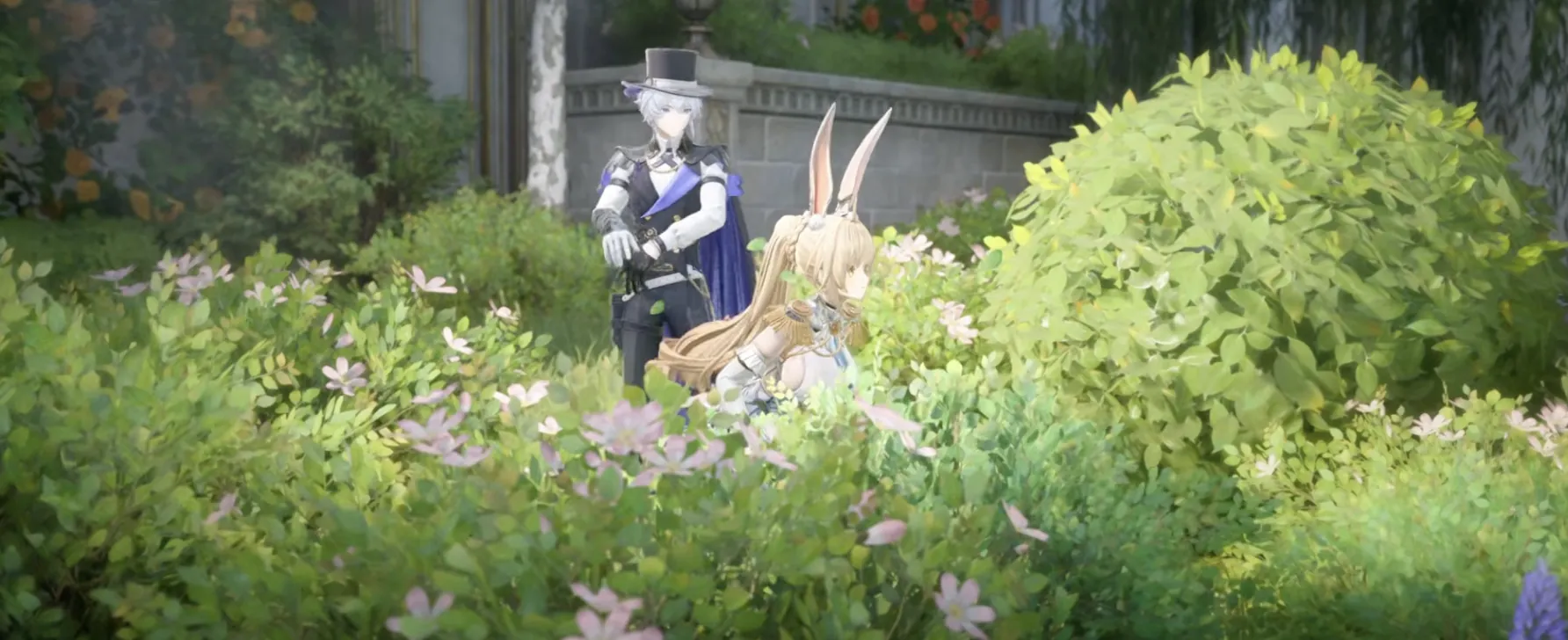
Tracing its path to the Hall of the Sentinel Knights, the detective and Gratia meet the good-natured Knight Galant, who is nearly fainting from low blood sugar inside his heavy armor and sparks a running debate about what belongs in a proper sandwich.
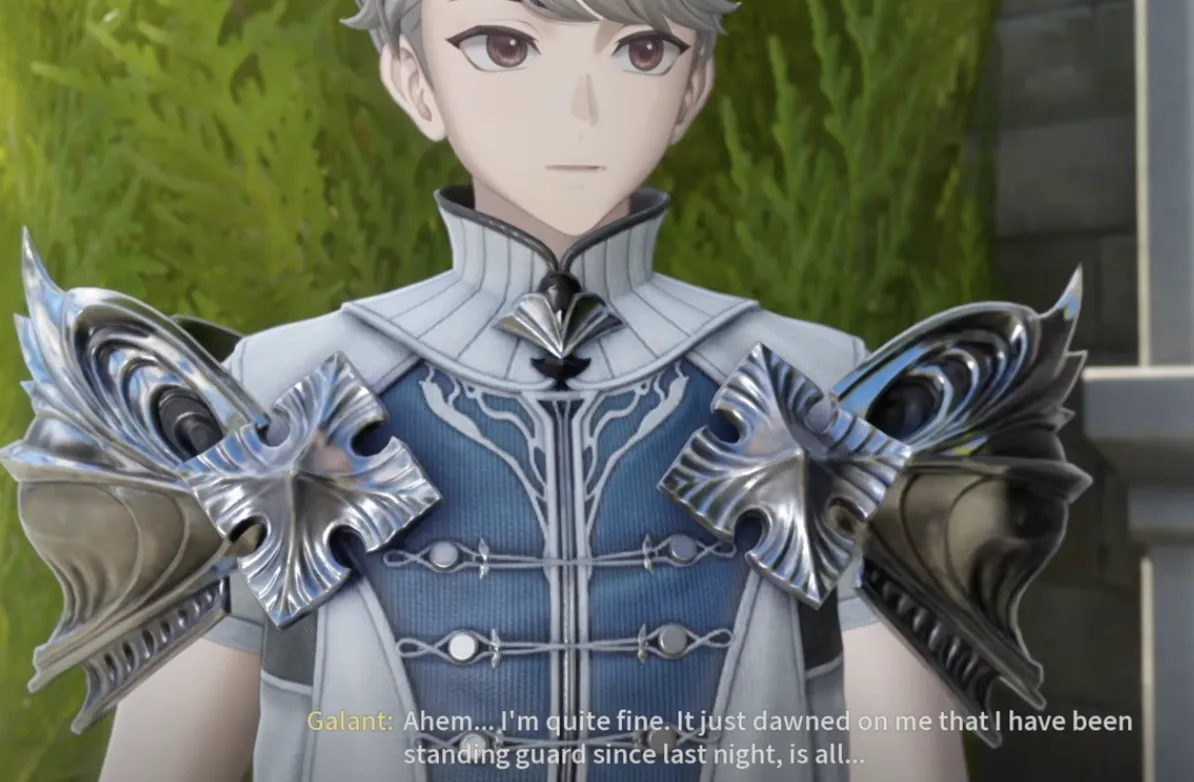
Galant points them to a gang-run alley in Bridgehead, where the detective clears out the thugs and recovers the steed. Coaxed by the detective's advice that the blunt but naive creature responds to patience and rewards, Gratia reconciles with it and names it Top Hat, after the detective's distinctive headwear.
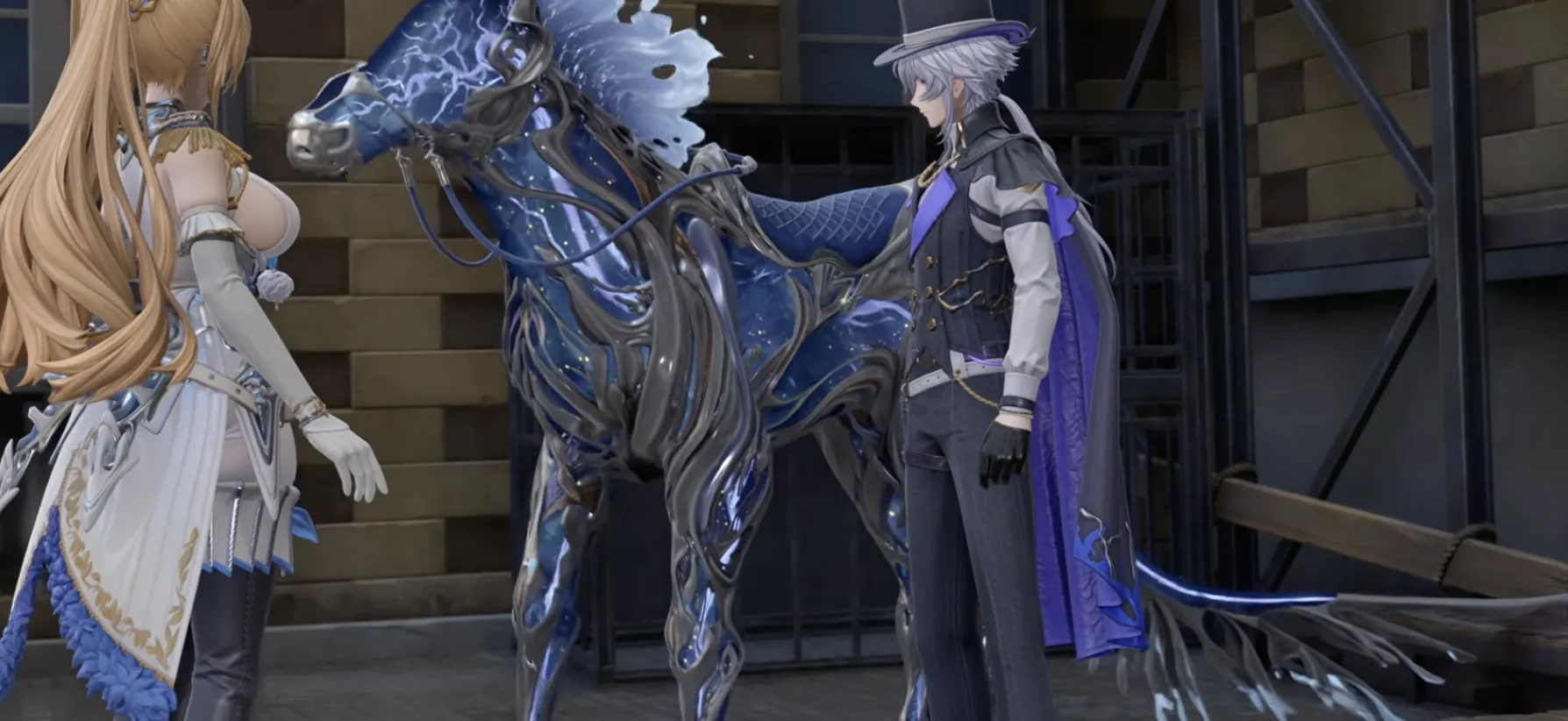
Her nerve restored, she rides for the tournament.
The race goes wrong in spectacular fashion. Mid-course, a harpy attacks the field, and Top Hat suddenly reveals a hidden ability of the new mounts: he can fly.

Gratia takes to the air to bring the harpy down and shield the crowd, but flight is against the rules, and she is disqualified while other riders pile up behind her. Certain she has failed the queen and the children who believed in her, Gratia retreats into hiding again, until the detective points out what actually happened. She did not win a trophy, but she protected people, and that is the greater thing.
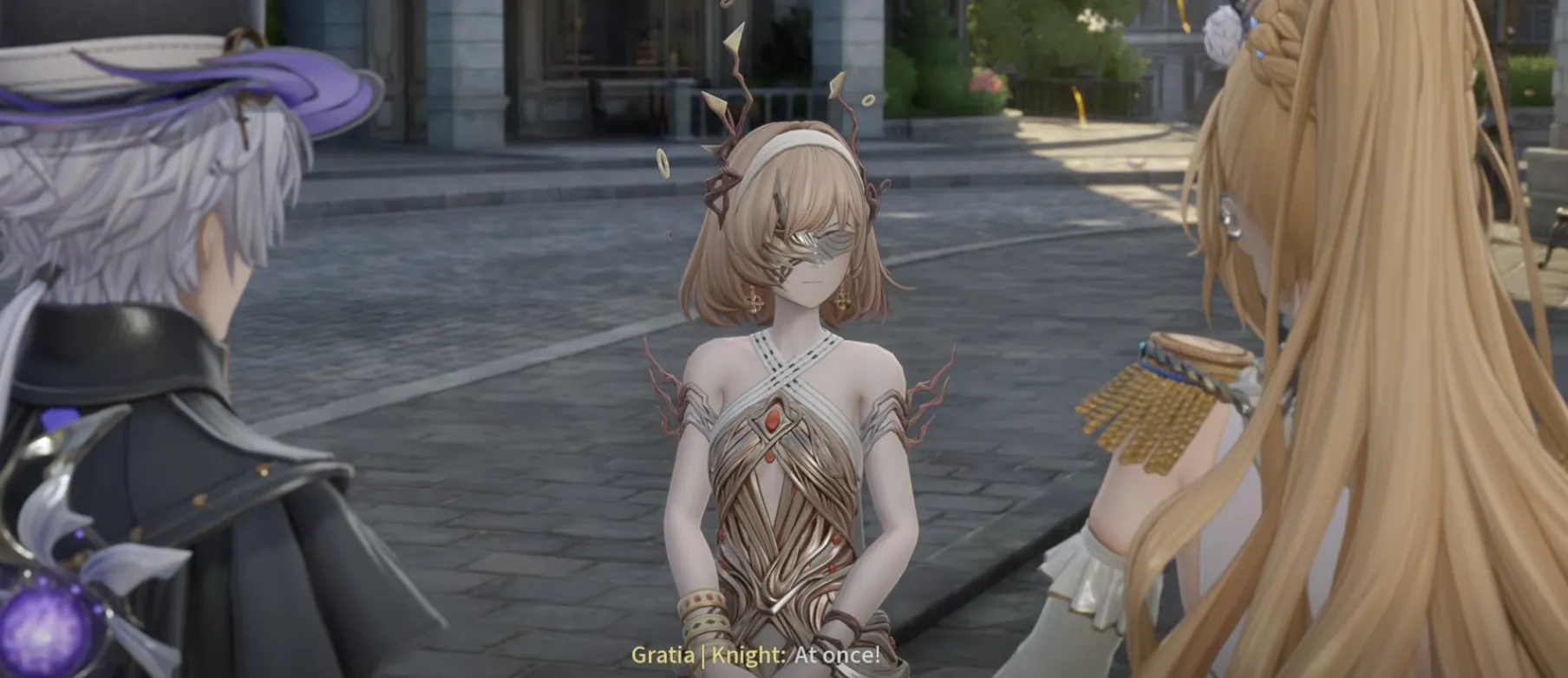
Then the Queen's Herald arrives and lets the detective in on the secret. The harpy was a staged, tightly controlled disturbance, part of a plan to show the public a knight fighting for her people rather than merely racing for glory, and to reveal that the Order of the Tide can now take to the skies. The queen, the Herald explains, deliberately keeps the trusting, pure-hearted Gratia in the dark, betting on her instinct to do the right thing when it counts. The detective is asked to keep guiding her from the shadows, to become the bunny knight's lucky four-leaf clover. Custom holds that every fan gives their knight a token before the tournament, and the detective never did, so the Herald quietly asks for one now. The detective presents Gratia a four-leaf clover, framing its leaves as love for the children, the queen, and her knightly vow, and letting her fill in the fourth herself. The scene is capped by comedy: Galant has told the other knights that the detective and Gratia are an item, and as everyone looks on, Top Hat gallops off after another steed into the sunset, leaving the knights to happily misread the whole thing as romance.
Act 2: Grimm's Impossible Death
The next morning, Lorin arrives with grim news: the journalist Grimm has been found burned to death in an alley, and the manner of his death matches the Nameless Ashes. That is exactly what makes it alarming, because the constabulary has never made a single detail of the Ashes case public, so a copycat should be impossible.
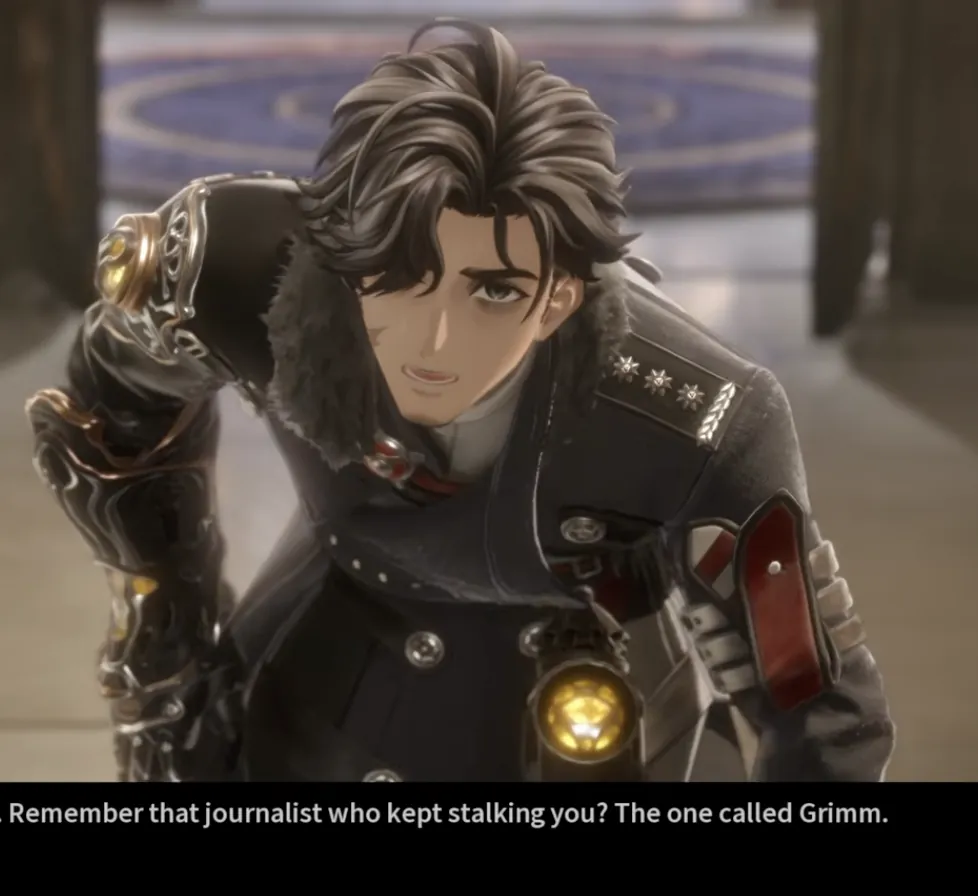
Reminding the detective of the two-person rule, Lorin waits as the detective formally takes Ashley on as an assistant, and the pair head to the scene. It is Ashley's first crime scene, and though she is visibly shaken, she steadies herself and takes careful notes.
The alley is a gang haunt at the edge of the law. A resident who waters the flowers there every evening swears he saw Grimm, blonde hair and all, screaming as the flames engulfed him, before he fled and raised the alarm. The scene seems to back him up: Grimm's distinctive wide-brimmed hat and burnt camera, a carbonized body, Silverium residue on the ground (only a reactor could produce heat that intense that quickly), and fresh footprints from more than one person. Yet one detail is wrong. Unlike the Nameless Ashes victims, this body carries none of the telltale marks. Chasing down a fleeing street punk, the detective learns that a well-dressed woman ambushed him in the dark and lost a shoe in the struggle. The detective recovers it: an expensive high-heeled shoe in an uncommonly small size, smeared with the same strange substance found on the corpse. A noblewoman, a burning, and a lost slipper. It reads like a fairy tale.
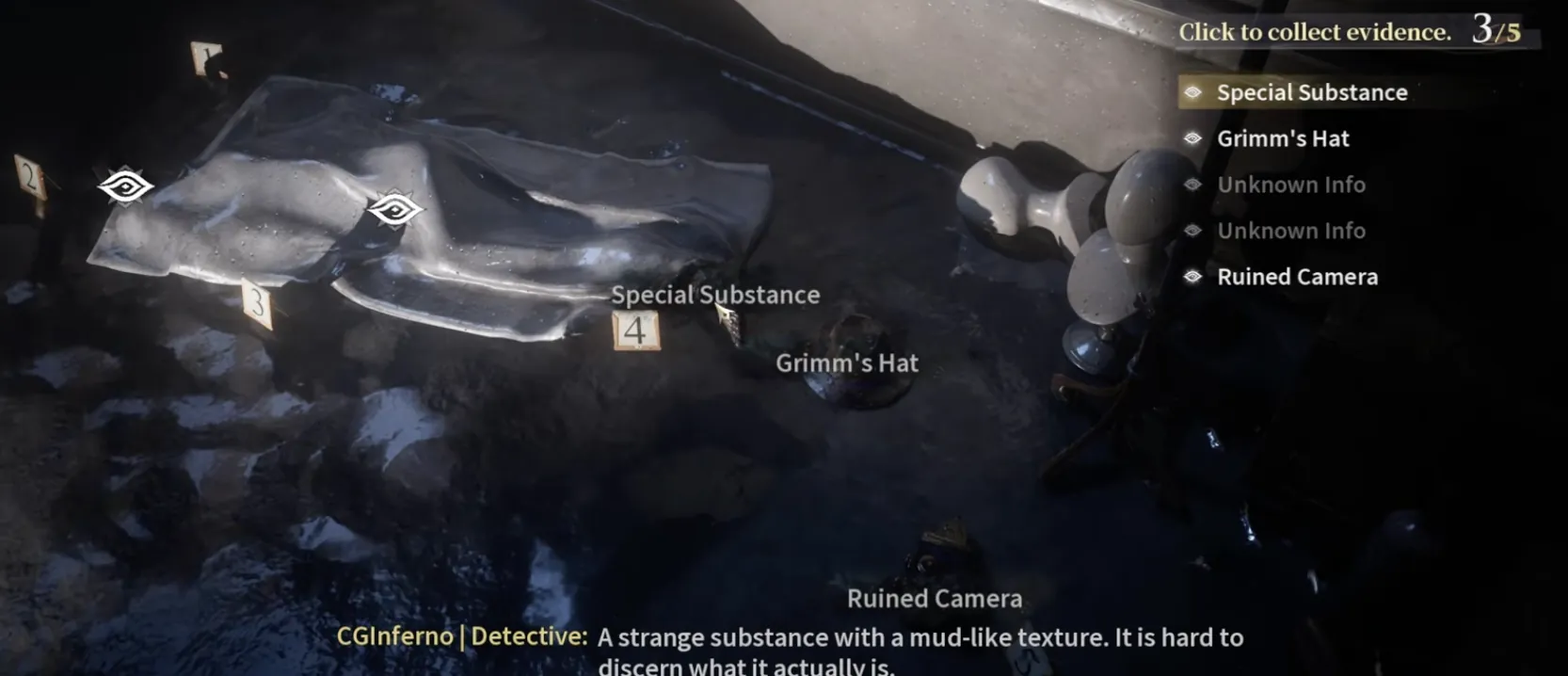
Before the detective can re-examine the body, Superintendent Rex of the Navy sweeps in, seizes the corpse, takes over the case, and bars the detective and Lorin as mere civilians.
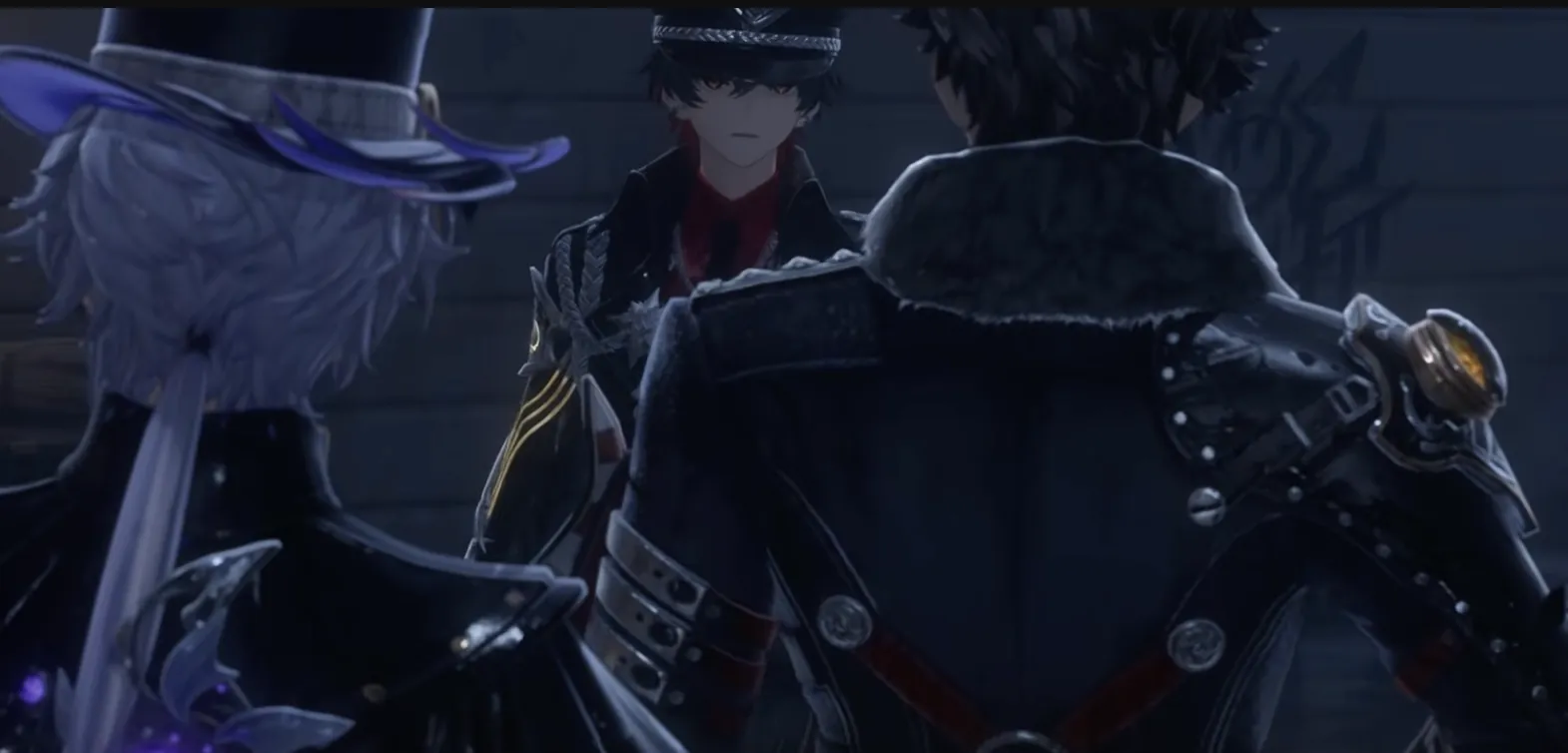
Lorin cannot openly object, but he quietly mentions a certain second-floor window on the east side that never quite shuts. The detective takes the hint, breaks into the constabulary evidence room, picks the lock on the cabinet, and recovers a fragment of the corpse's charred left arm while Ashley keeps watch. The escape turns into a brawl with Rex himself, which the detective wins, helped along by a sudden werewolf disturbance at the nearby celebration.
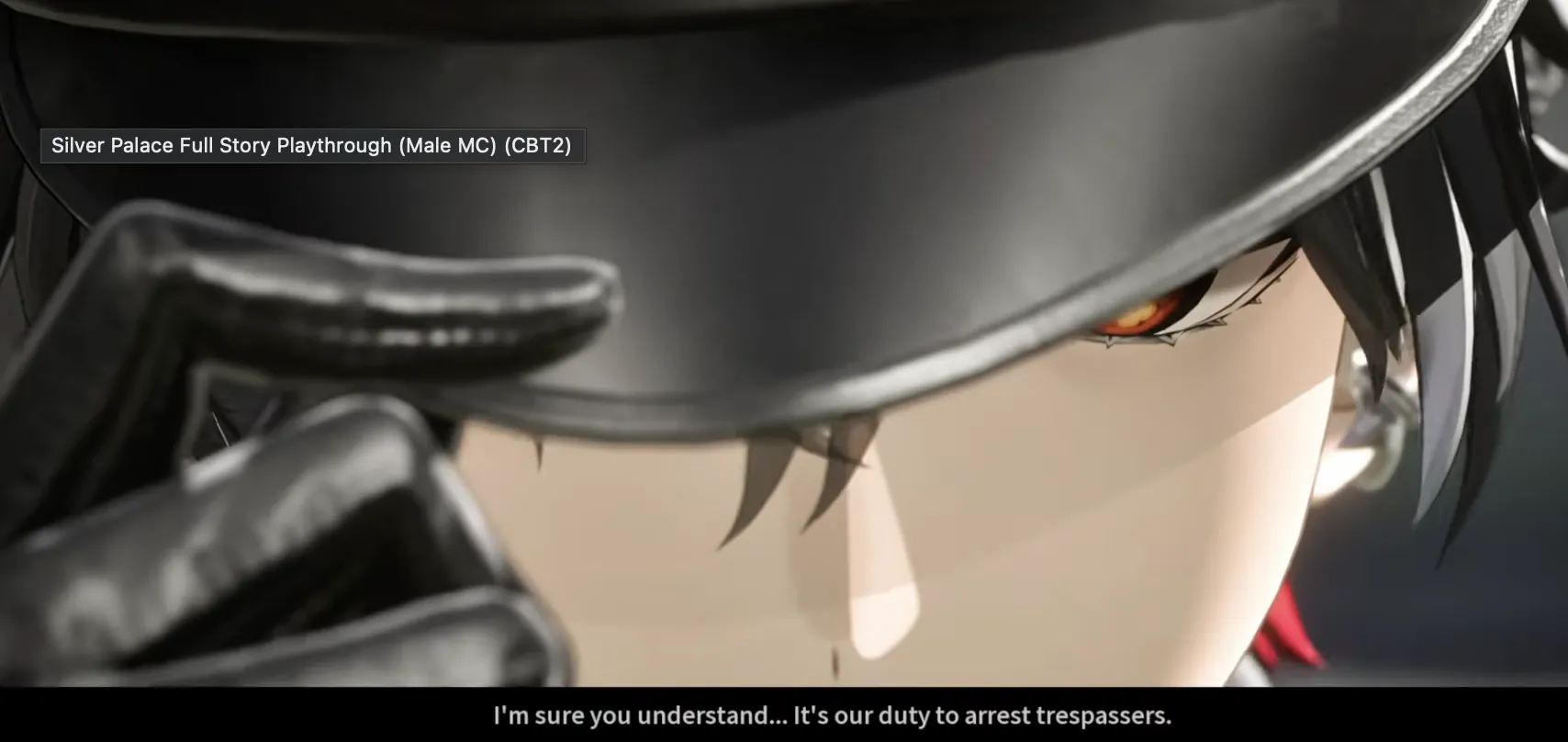
That chaos is no accident: the Red Rose engineered it, quietly fulfilling a contract someone has taken out to keep the detective safe.
In the scramble, Ashley slips on a puddle and ruins most of the salvaged remains and photographs, but the recovered arm survives, and it is enough.
The obvious reading, a noblewoman who burned Grimm to death, never quite sits right, because the corpse carries none of the marks the Nameless Ashes victims share and the whole tableau feels staged. To find out what the fire was meant to hide, the detective carries the salvaged arm to an old friend, the coroner Firtho.
Lorin's Secret: The Silver Fist
A side thread reveals Lorin's past. A gang of teenagers worships a vanished street legend called Silver Fist, and their graffiti tag matches Lorin's handwriting and his worn boxing glove. Lorin was Silver Fist, and he refused to fight the kids because he wants to reform them, not beat them. The detective helps him pose as the still-living Silver Fist, delivering a coded message that tells the boys to go back to school if they ever want to "rescue" their idol. The kids crown a new leader, "Lord Silver Arm," and grudgingly start studying. For the four clues that expose him, the fake cipher that is really a reading list, and what the reveal says about him, see Lorin and the Silver Fist.
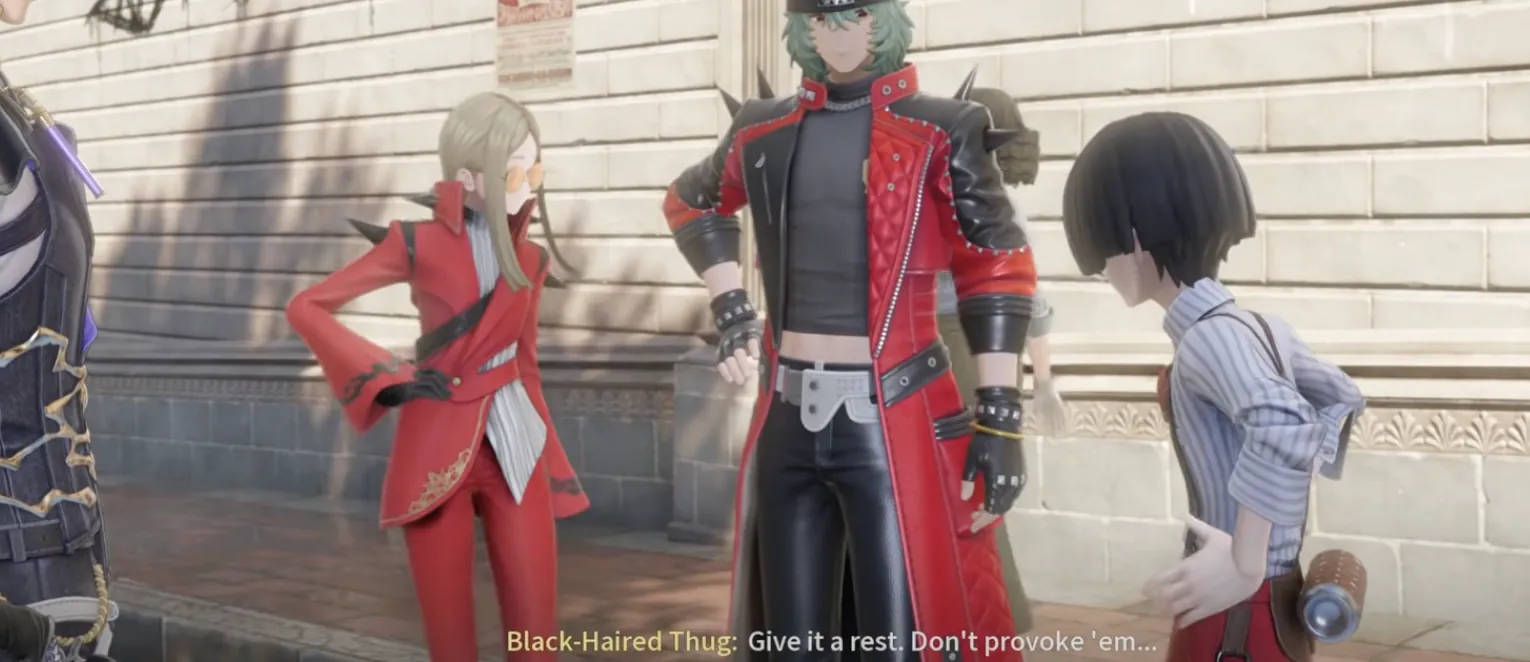
Act 2, Continued: The Cinderella Behind the Ashes
Getting that autopsy done is an ordeal in itself. The coroner is Firtho, a childhood friend of the detective who runs the corner clinic in a quiet, forgotten district and specializes in the dead rather than the living. Prickly and blunt, she refuses to let the detective's three-year disappearance slide, and she will not touch the remains until the detective first recovers a shipment of cargo that a local gang has stolen from her. The gangsters, as it happens, are terrified of her. They are convinced she experiments on them, when in truth she has been restraining and inoculating them against a contagious rash with an experimental serum, at an 80 percent success rate. Cargo returned, Firtho relents, and she quietly presses on the detective a stabilizer she formulated to suppress his recurring nightmares, having read the strain on his face the moment he walked in. Her nickname, Miss Mortis, dates back to a reclusive childhood spent silently watching autopsies.
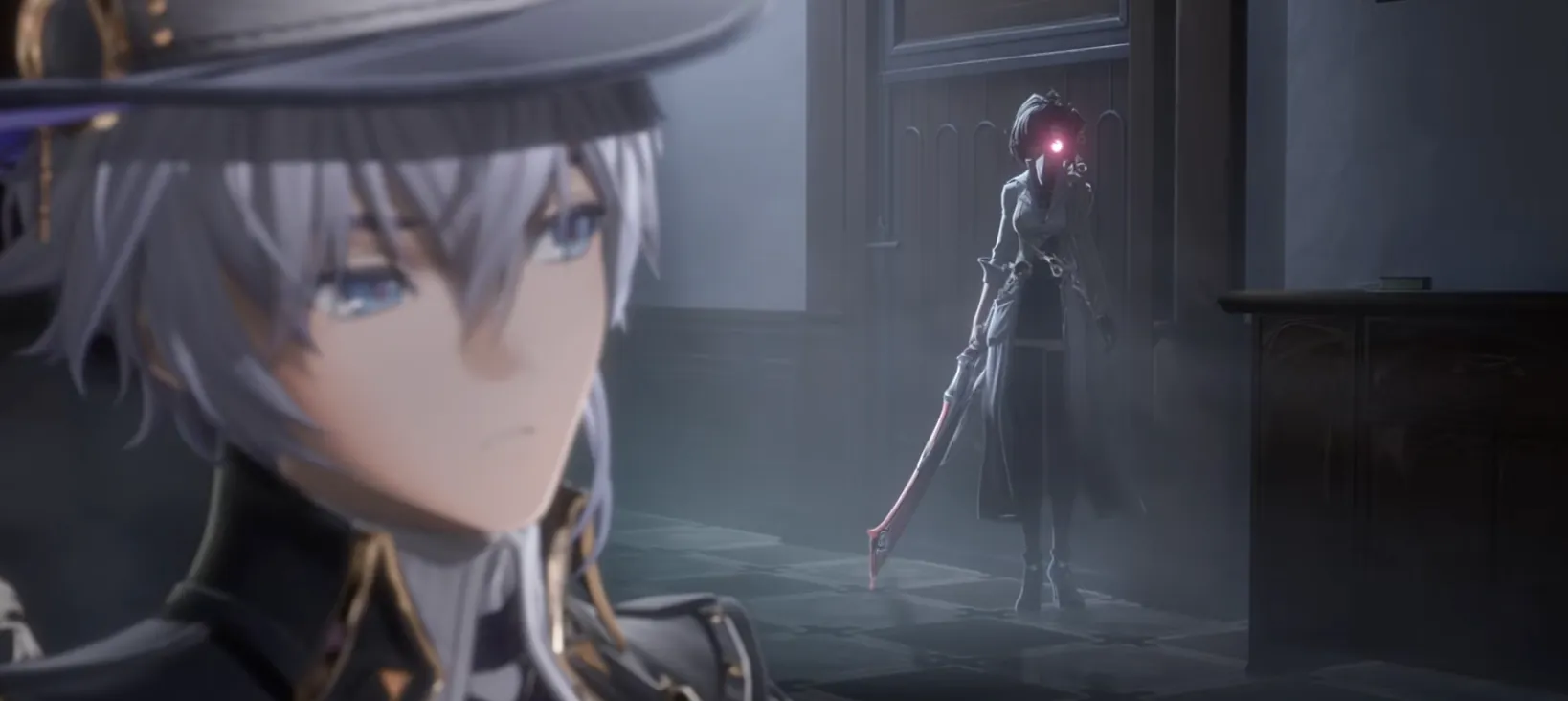
Her findings are precise and damning. The substitute victim was a man past thirty, his arm pinned from an old surgery, and the straight, undefended posture of the limbs proves he was already dead before the flames reached him. Clinging to both the body and the dropped shoe is a viscous substance with no human tissue in it, one she cannot identify without a proper laboratory. That laboratory is waiting at the detective's office, on equipment the late sister once built: a color-reaction kit that screens unknown substances against reference samples. Run through it, the mystery substance resolves into a heat-absorbing fireproofing agent, the exact material that would let a living man stand wrapped in fire without burning. It is the final proof of how the death was staged. Grimm and his well-dressed accomplice coated him in the agent, set alcohol alight with a flame reactor the instant the flower-watering witness passed, and left a substitute corpse to burn in his place, the accomplice losing her shoe as she shoved the stray street punk aside. Grimm went to these lengths because someone powerful wanted him silenced.
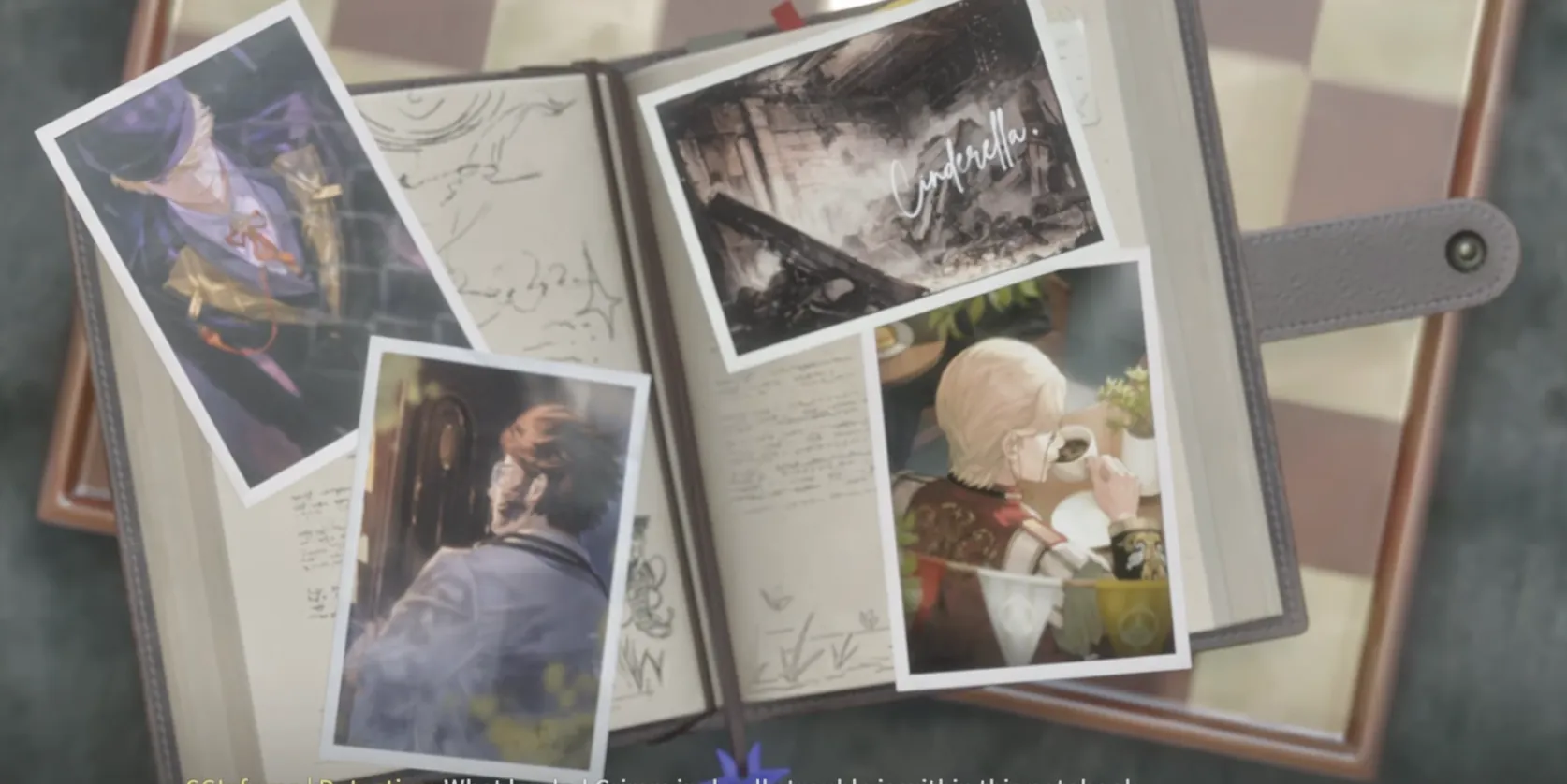
That leaves the question of what Grimm was hiding. Retracing the journalist's movements, the detective reasons that a hunted man would stash his evidence in the most dangerous place imaginable, which is precisely why it would be the safest: the office of the detective the whole city believed was his enemy. It is the very break-in Alf proudly foiled in the kitchen days earlier. Tucked where Grimm left it is his notebook, and its label renames the entire case. The Nameless Ashes are also called the Cinderellas, and there is more than one of them.
Side Cases: Keeping the Lights On
Three years without work leaves the detective broke, with the rent overdue. A stack of commissions (lost cats, a cheating spouse, more lost cats) sets up the next character quests and keeps the tone light before the story darkens again.
Cynthia's Quest: The Cat, the Werewolf, and the Baron
Lorin passes along a high-value client he cannot refuse, and the force is too buried in werewolf business to handle: Cynthia II of House Luna, the queen's young cousin and, technically, first in line to the throne. She is so highborn that even Superintendent Rex has to bend the knee to her, yet she is also a sheltered girl who has never so much as spoken to a commoner. Their first meeting is pure comedy: Cynthia frets over her etiquette, sniffs that the detective looks nothing special, then perks up when her governess Moira recounts the detective's storied career and asks whether the detectives lived happily ever after. Her actual request is almost anticlimactic. A dozen of her cats vanished from the family estate in Pretton just after midnight, the guild recovered most, and she wants the detective to find the last three. The reward is ten times the going rate for cat retrieval.
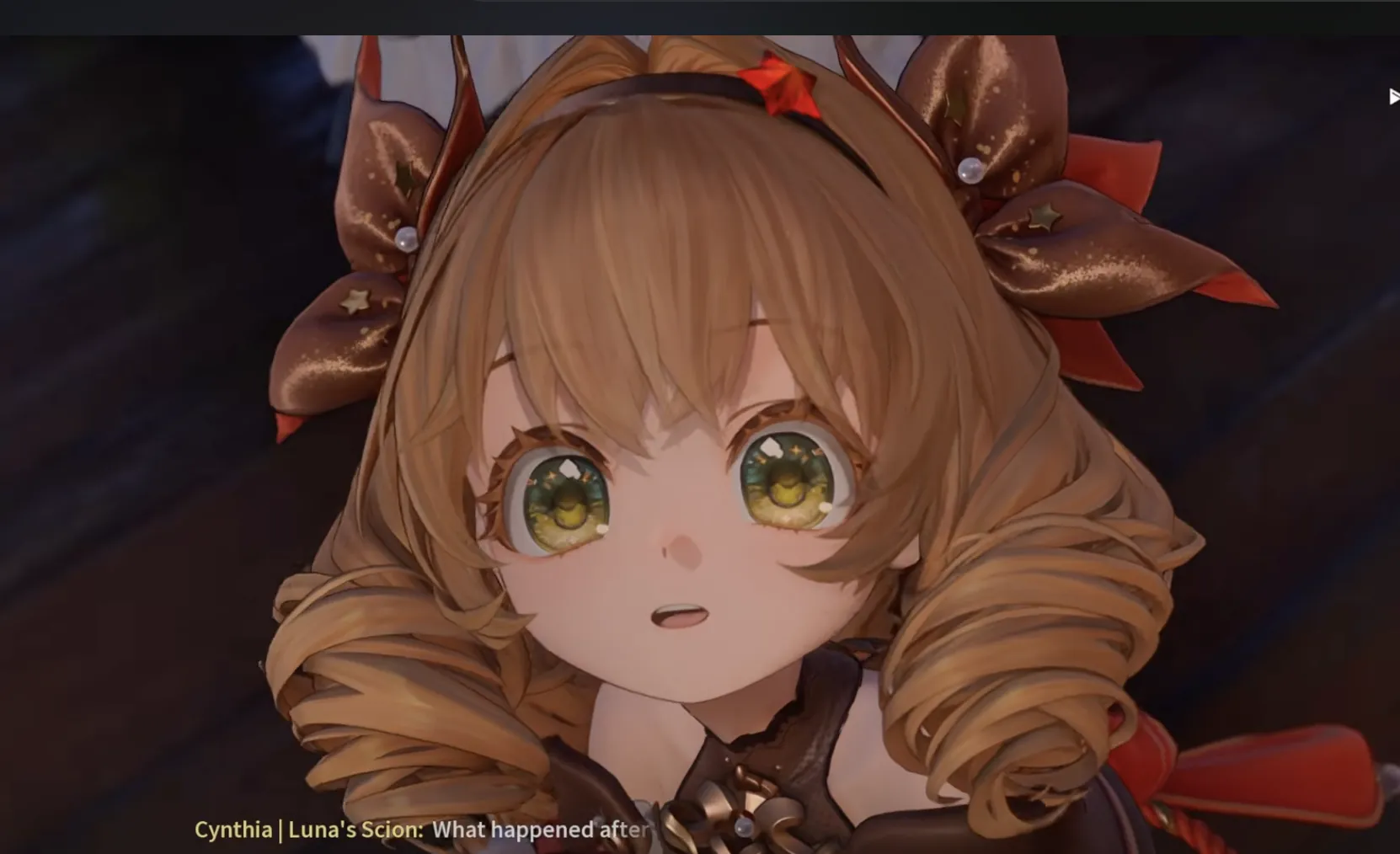
Cynthia insists on searching the streets herself, and to Moira's constant dismay she keeps discovering that ordinary people are kind. Residents cheerfully point the way, a shy girl offers a lead, and one cat has to be plucked from atop a live electrical transformer by the detective, who scales a rooftop with a grappling hook while a crowd frets below. Two cats are recovered, one of them from a stray-taking cat lady, but the last of the three, a white cat with green eyes named Fifiana, is still missing. Fifiana is one of Cynthia's own pampered house cats, and at this point she looks like nothing more than a runaway pet. What no one yet realizes is that she is the key to the whole case: a fleeing werewolf girl slipped a hidden pocket watch onto her, mistaking her for a stray, and that watch is why others are hunting the cat too. Moira keeps warning Cynthia to keep her distance from commoners and mind the curfew, and when night falls she orders her charge home. Cynthia, headstrong and stung, snaps back that Moira thinks the worst of everyone, dismisses her as a tattletale, and declares she no longer needs her. Moira withdraws, and the detective stays at Cynthia's side.
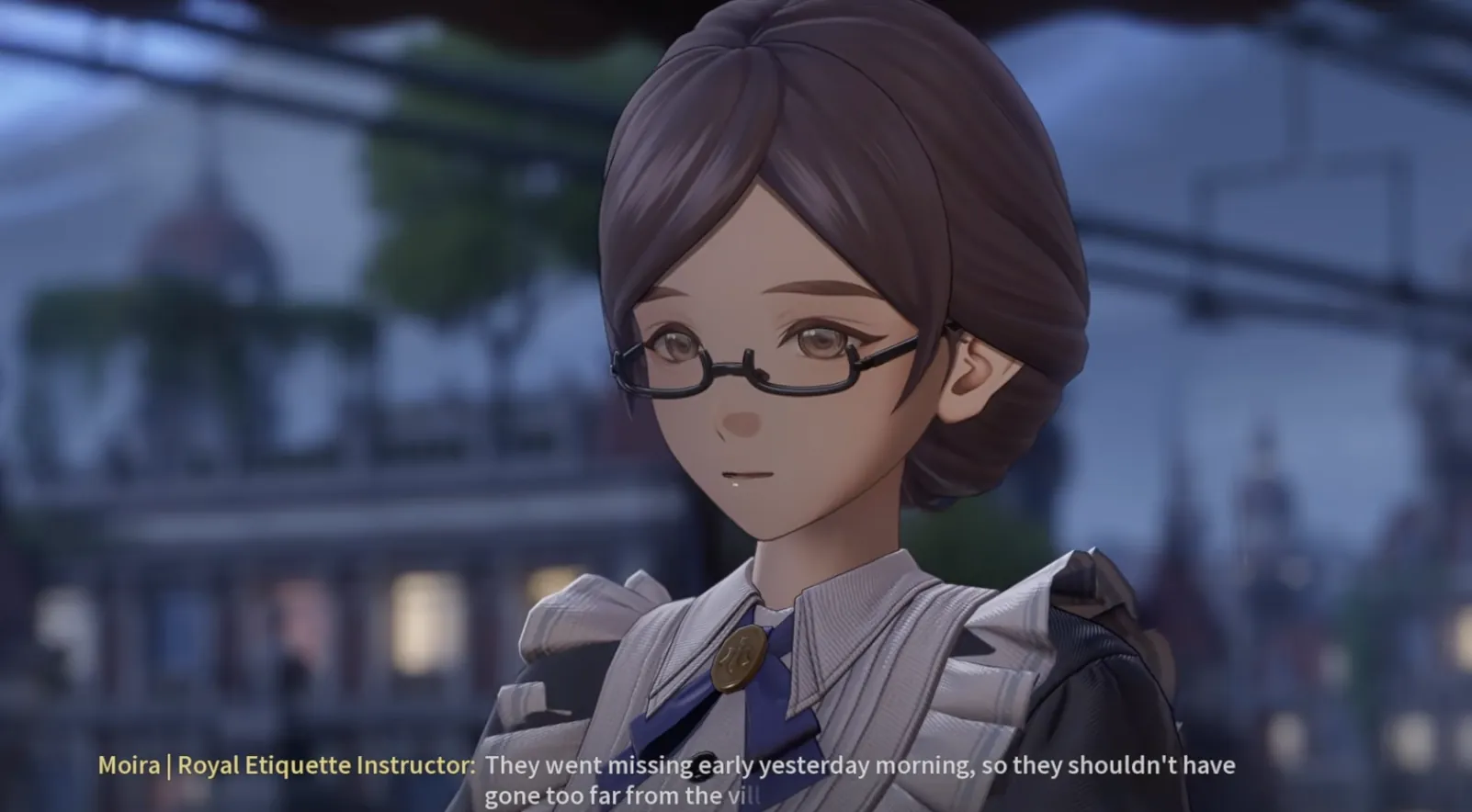
The trail of the missing cat leads to a biker gang hired to hunt it down, and to a disused guild warehouse where they are holding a beaten, half-starved captive. It is the very girl Cynthia befriended earlier that day, and she is a werewolf. When Cynthia tries to rouse her, the terrified, tormented girl transforms and lunges, and the detective steps in to subdue her before she can hurt Cynthia. Shaken but resolute, Cynthia insists on helping the injured girl rather than fearing her, and the detective carries her to Firtho's clinic. The night forces a hard lesson on Cynthia: Moira distrusts commoners, the werewolf girl hates nobles, and yet none of them are truly bad. The detective offers her a gentler way to see it, that growing up is slow and the nights are long, but she is clever, kind, and loved, and one day her own light will steady those below her. Cynthia and Moira make up.
The culprit is Baron Barton, guild master of the Crescent Guild, who has Fifiana because the cat is carrying a pocket watch the werewolf girl hid on it while fleeing. His story is that the girl's father, his guild's treasurer, embezzled a fortune before the family tried to vanish. The detective dismantles it. There was never any embezzlement. The Crescent Guild was already collapsing, its office a moth-eaten warehouse and its workers unpaid, and Barton framed the werewolf family to bury his own losses. Cornered, Cynthia refuses to take an aristocrat's word over a commoner's, vows to have her cousin the queen strip his title, and the baron lunges to silence them all. In the fight that follows, Moira lets slip that she was something far more dangerous "in another life," surprising even the detective with how well she handles herself. Afterward Cynthia showers the rescued girl with kindness, spending her entire month's allowance on a hundred crates of werewolf stabilizers and inviting her to the estate. Then comes the twist. The detective's office sits at 3 Morgue Street, and Cynthia owns the whole street through a trustee, since she is not yet of age. She waives the detective's rent forever, on one condition: that the detective always makes time to play with her, first priority, no turning her away.
Firtho's Quest: The Vampire of Williams Manor
It begins with a cake. Alf has been baking again, filling the office with the smell of chocolate, almonds, and candied strawberries, finished with a scatter of McBari's new licorice stars. This one is not for the detective. Alf made it to apologize to the coroner Firtho, having borrowed one of the scalpels Firtho left at the office and used it to carve a roast chicken. Knowing how poorly that will land, the detective decides to deliver the cake in person, and the two of them carry it to Firtho's corner clinic.
They find the clinic locked and empty, well before closing time. That is wrong, so the detective reads the room. A letter crumpled into a ball sits on the floor, addressed to Firtho and signed by a maid named Sydney, begging her to make an urgent house call for a gravely ill patient named Williams. A vial has been left out, and something large and heavy was dragged through the spilled liquid. Cemetery mud, dark with moss and fertilizer, is tracked across the doormat. The drag marks were left by a body bag. Firtho, who is never careless, read Sydney's letter, feared the worst, and rushed out with a body bag in tow. The name Williams jogs a memory of a gravestone at the nearby Cathedral of Illumination, and that is where the detective and Alf head next.
They find Firtho there, having exhumed the freshly buried grave of Howard Williams, a pharmaceutical scholar who was her late father's close friend and, later, her own patient. She had kept his chronic liver condition in check for years, until roughly half a year ago, when his maid wrote to say he no longer wished to see her. When Sydney's letter finally called her back, she arrived at the manor to find the family already carrying his body away, insisting he had died of a heart attack. Held back by the servants, she caught only a glimpse of an arm beneath the sheet: a long, fresh gash with the surrounding skin gone a strange purple. That wound is why she cannot let it rest. Yet the body she has just dug up shows no wound at all, as though the gash had healed after death, which no corpse can do. Before they can make sense of it, werewolves attack the cathedral grounds, scattering the group and destroying Alf's cake in the chaos. The timing is far too neat, as if something wanted them driven away from the body.
By the next morning, matters have curdled. Williams' freshly interred body has been stolen from the damaged grave overnight, and eyewitnesses describe two suspects: a brown-haired woman in a white coat and a silver-haired man in a top hat, a pairing that fits Firtho and the detective exactly. Superintendent Rex of the Navy seizes on it, names the detective the prime suspect, and bars the pair from the cathedral. With no police support and Howard's corpse now missing, the investigation needs a new way in.
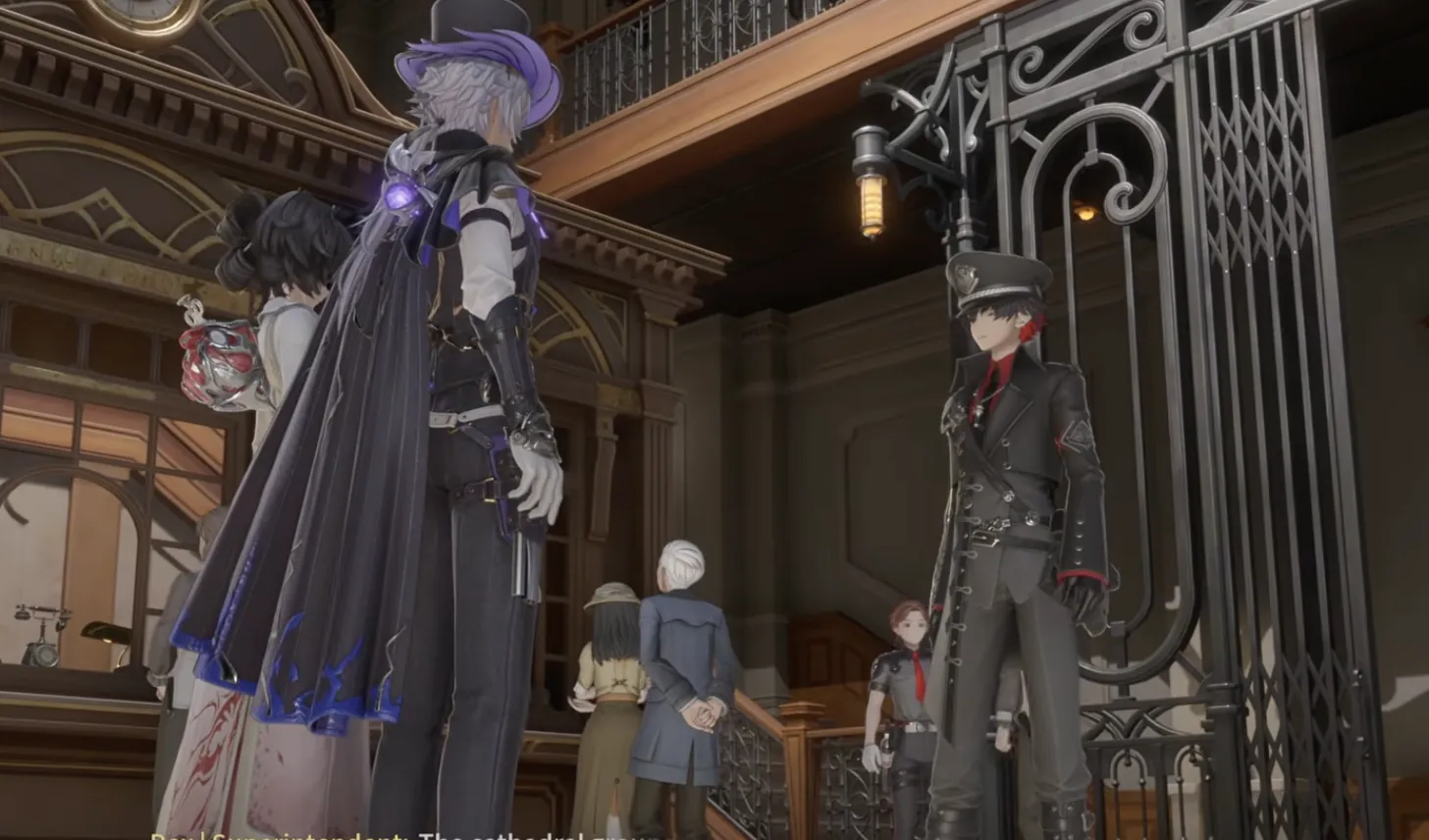
That way arrives in the person of Baron Edgar. His assistant Madeline flags the detective down, and the strangely youthful baron, a Royal Academy administrator who had funded Williams' research, offers his carriage and his authority.
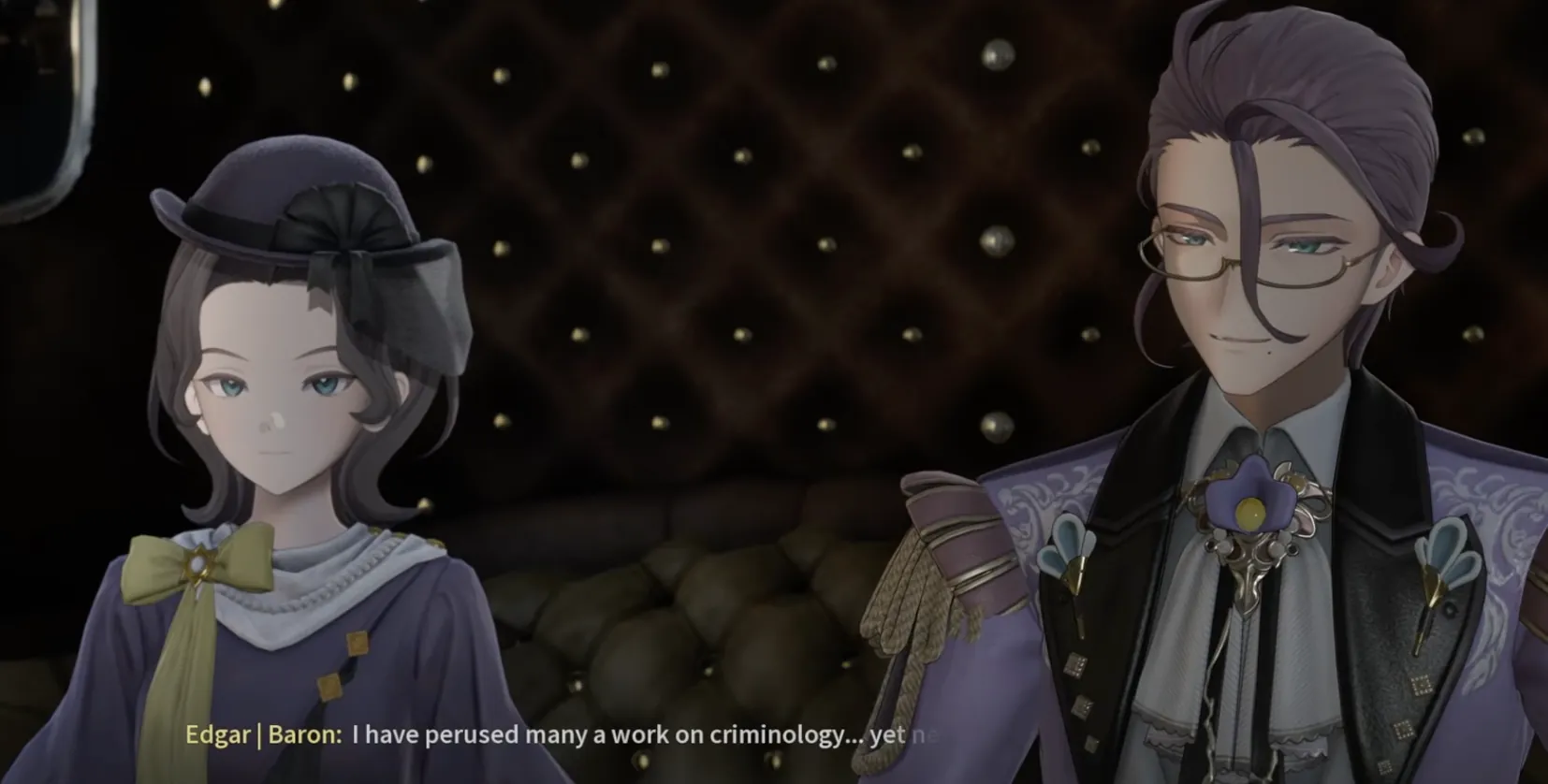
Where the manor's maids had refused the detective entry and Rex had refused to help, Edgar's presence opens every door. He is charming, insistent, and unnervingly eager to help, and from the first he nudges the detective toward a tidy conclusion: that Howard Williams simply became a vampire and crawled off into the night. It is a theory the whole city seems primed to believe. The papers are running a Royal Academy scholar's claim to have found a method for creating vampires, and Williams' own notes describe a metamorphosis triggered by a serum and a mask, echoing the legends that ran wild during Queen Mary's reign.
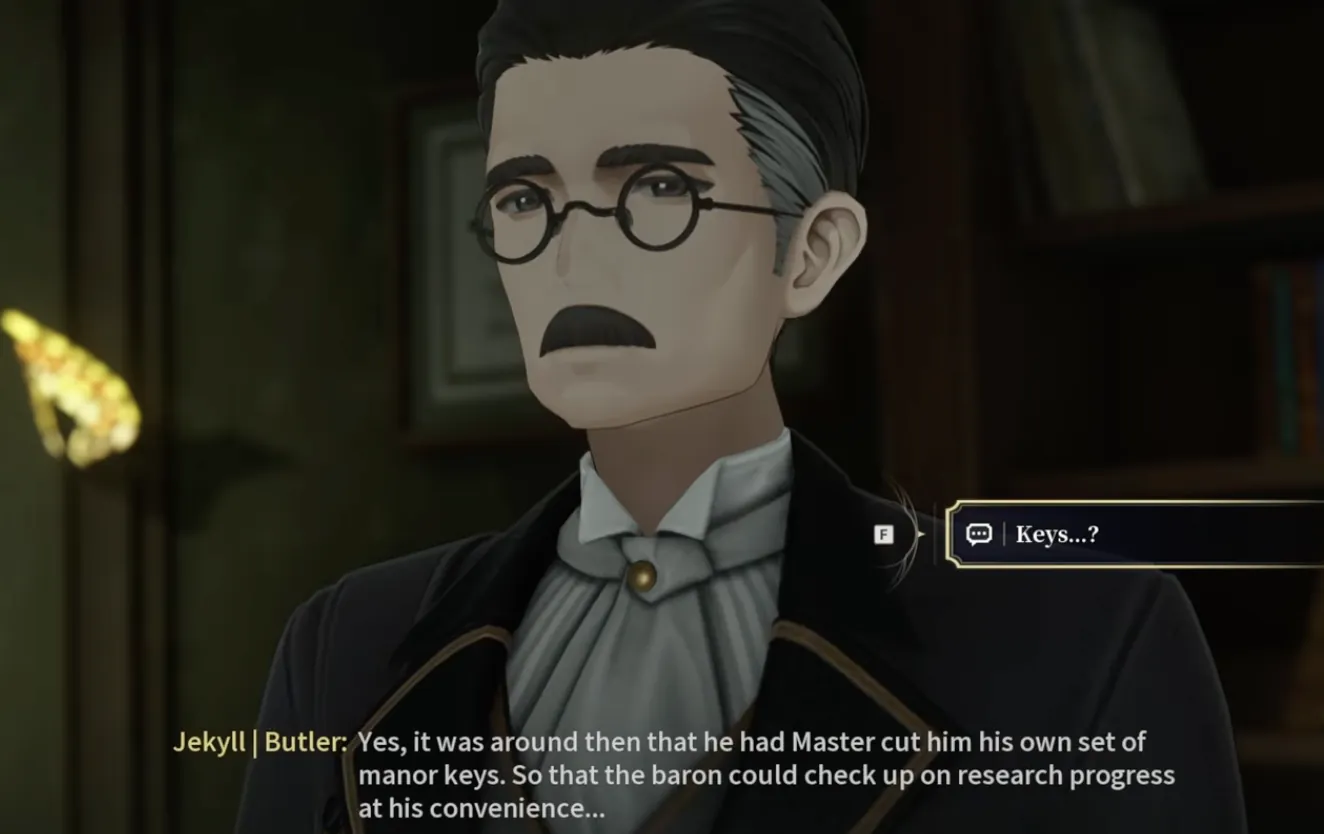
Inside, the manor is a house in decline, its lamps dimmed on the late master's orders and its original paintings sold off and swapped for cheap copies. The household is uneasy. There is the drunken, estranged son Boris, drowning in gambling debts, who had been caught stealing his father's medicines to sell and who openly said that once his father was dead, everything would be his. There is the butler Jekyll, who ran the thinned-out estate, doubled as Williams' unpaid research assistant, and quietly carried a torch for the lady of the house, Maria. And there is the prattling maid Sydney, whose letter started all of this, alongside the servant boy Grant and a pair of guard maids.
The death itself is a locked-room puzzle. Williams was found on the floor of a windowless room bolted from the inside. A scream around three in the afternoon drew the servants, but the door held until Boris produced a lockpick, and by the time they forced their way in, the scholar was dead. The room is littered with tells: a closet emptied out and scored on the inside with long tape marks, as if something had been strapped in and torn free; a spent syringe, its needle water-stained but holding no residue; a slender letter opener blackened in the fireplace; and a heap of clothing burned in the same hearth. Strangest of all, the three people who saw the body describe his face three different ways, one calm, one screaming, one smiling. The reason is that the dead man wore a garish vampire mask that hid his features entirely, and Boris, terrified of scandal, had ordered everyone to bury any mention of vampires.
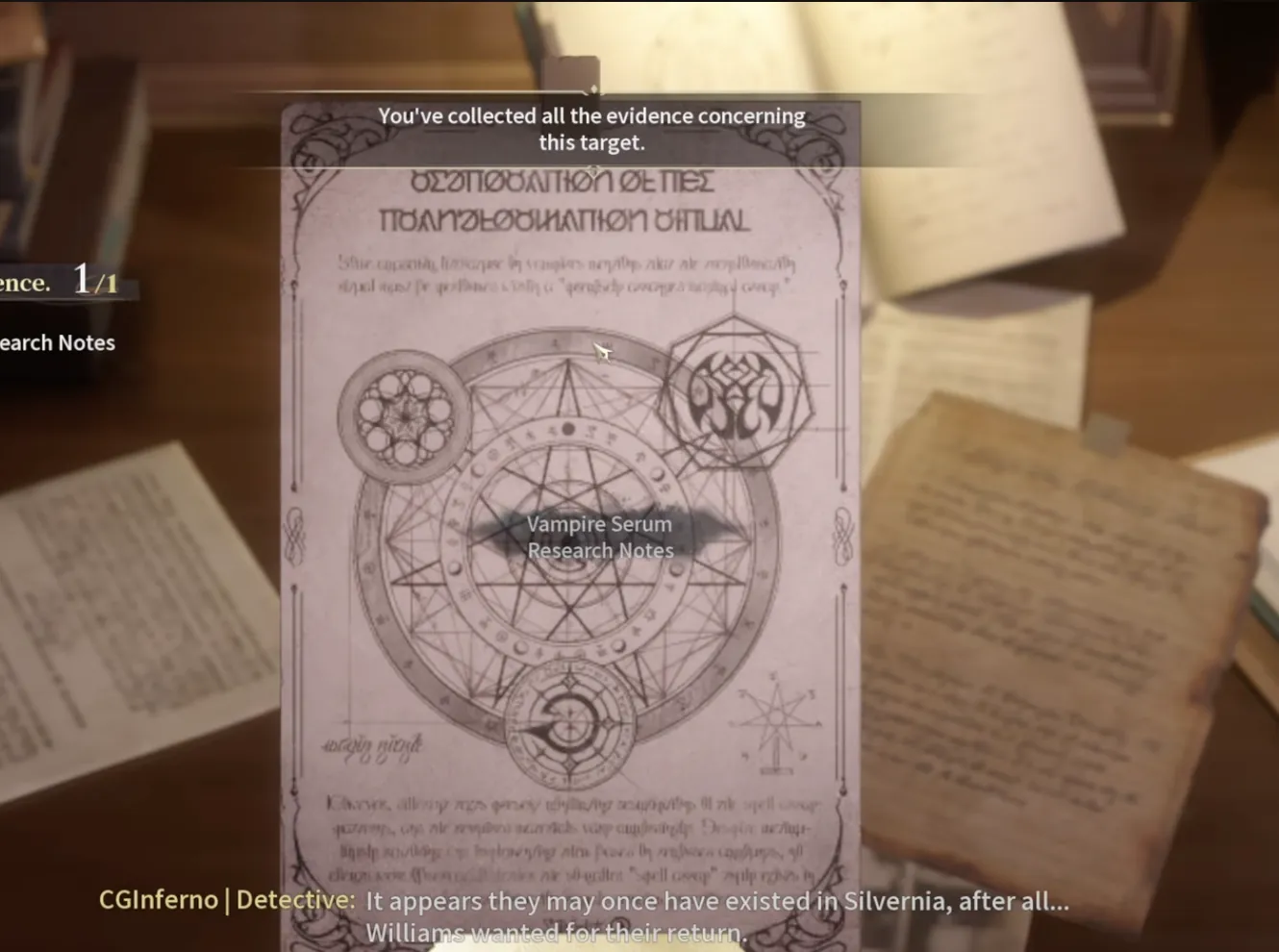
The mechanism comes apart in Williams' academy laboratory. Among his papers the detective finds the transformation ritual written out, inject a red serum and then don a mask, alongside progress reports documenting paler skin, light sensitivity, and even the temporary vanishing of his vital signs. More telling is a yellow nerve agent brewed from tetrodotoxin, described as able to suppress breathing and pulse for hours: a way to counterfeit death. Two reagents and one mask are missing from the lab, taken home by Williams for what a scholar there recalls he called "self-protection and teaching a lesson."
Firtho settles the theory the hard way. Quietly, without asking, she injects the nerve agent into her own arm and wears the mask through the night. The detective finds her cold and pulseless in the lab and fears the worst, then watches her wake roughly four hours later, her muscles too weak to stand. Her point is proven. The body found in the locked room was never a corpse at all, but the killer faking death behind the mask, while Williams' real body lay taped inside the emptied closet, waiting to be spirited to the grave and swapped back later.
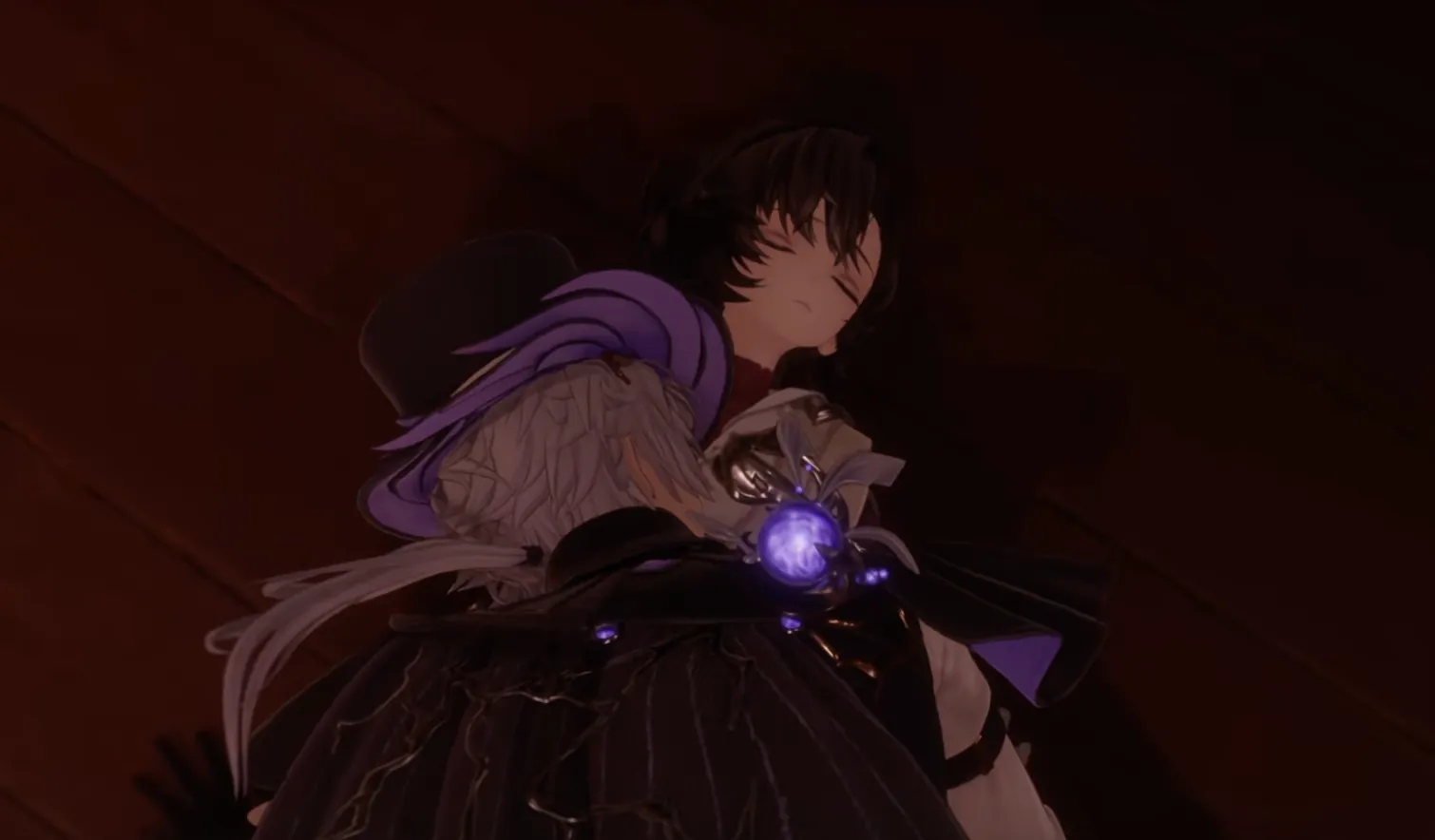
That reframes everything. The build points first at Jekyll, who alone among the absent servants matched Williams in height and could pass for him. He was supposedly away buying supplies, but slipped back to smother his master during his afternoon nap. Williams, long convinced Boris meant to kill him, had hidden a letter opener in the mattress and slashed Jekyll's arm during the struggle. The blade was smeared with the nerve agent, which is why the wound bruised purple, why the disguised body Firtho glimpsed at the manor looked so alarming, and why the gash seemed to "vanish" once the real Williams was exhumed. Jekyll traded clothes with the corpse, taped it into the closet, burned the evidence, screamed to draw the servants, and let himself be carried off as the dead man. Come evening he was meant to wake in the grave and dig his way out. But Firtho's experiment exposes the flaw: no one dosed with that agent could then claw out of a coffin and haul a body around. There had to be a second hand.
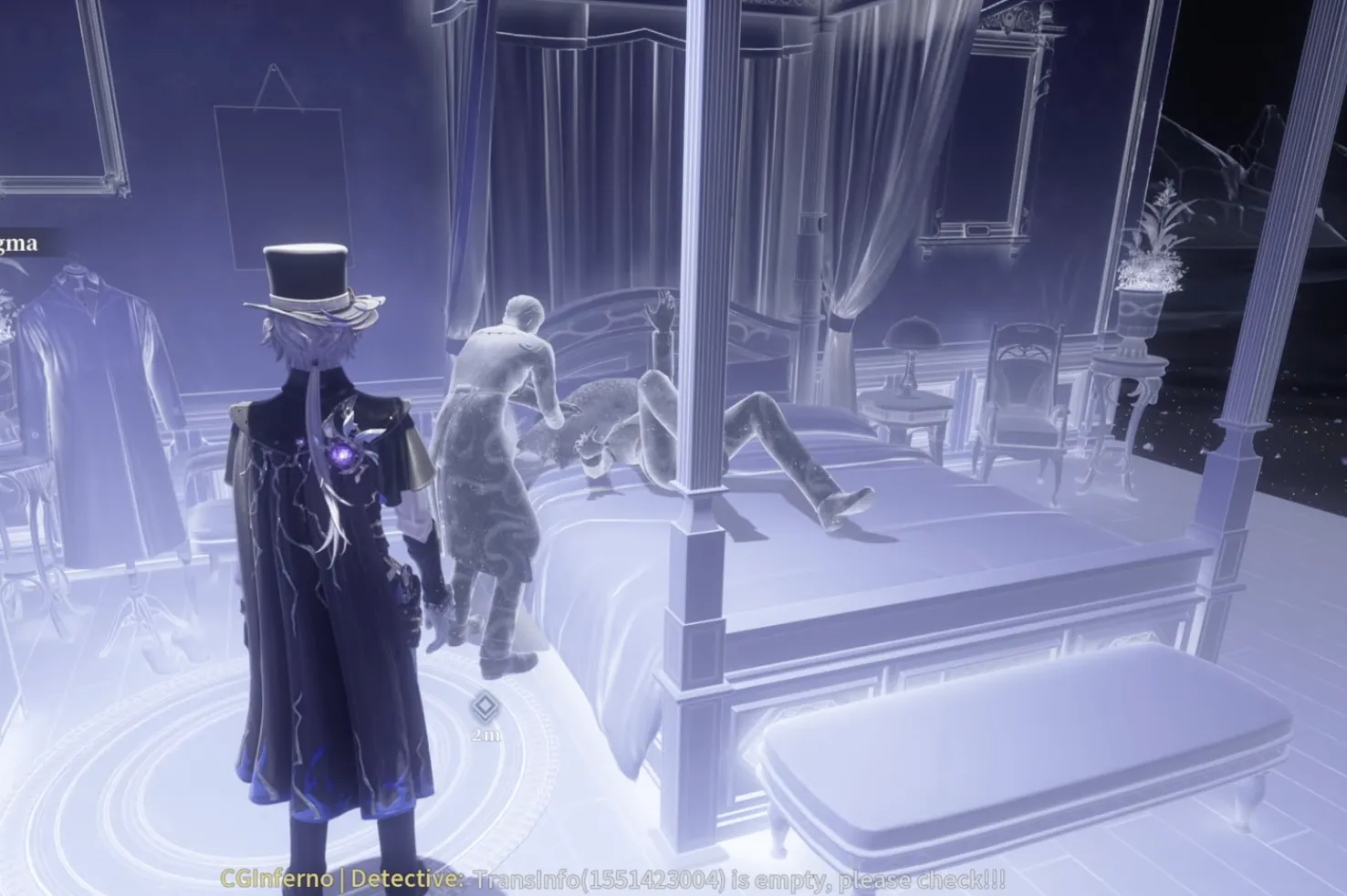
That hand is Baron Edgar, and Alf's chocolate cake is what gives him away. A pair of Williams' leather shoes in the bedroom carried the same distinctive sweet-and-bitter aroma of Alf's licorice-star cake, proof that someone had worn them out of the manor and back during the funeral. Jekyll could not have, since he was dressed as Williams, and only one other person held a set of the manor's keys. Edgar and Jekyll had planned the murder together, Jekyll drawn in by his feelings for Maria and by Edgar's promises. While the household attended the burial, Edgar let himself into the empty house, collected Williams' body, disguised himself in the dead man's coat and shoes to move about unseen, then freed Jekyll from the coffin and reburied Williams for real. It was only when he spotted Firtho arriving with her body bag that the plan wobbled, and he loosed his werewolf companions on the cathedral to drive her off and keep "vampires walk among us" as the morning headline.
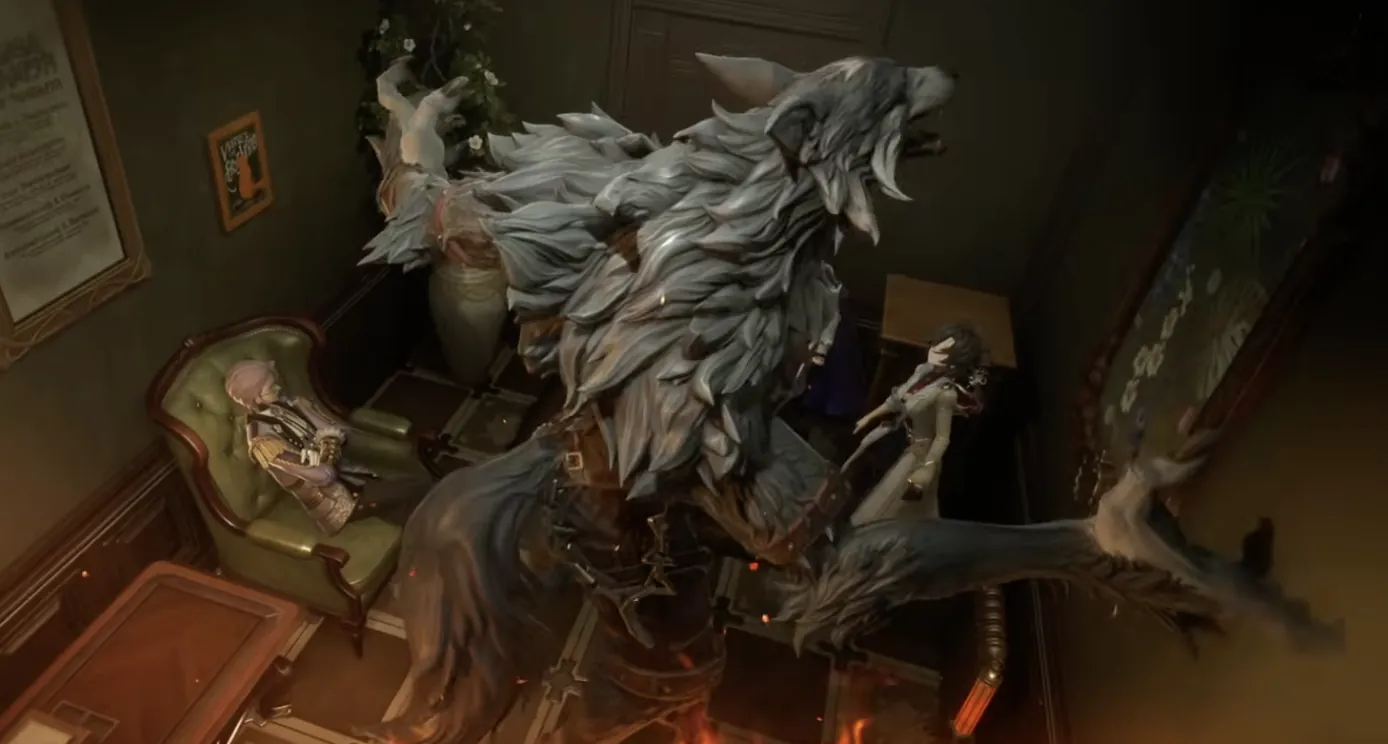
His motive is a self-appointed crusade. Edgar styles himself a purifier of the Royal Academy, hunting down scholars who embezzle research funds, and Howard, who had quietly diverted grant money to keep the failing estate afloat, was only the latest. Dressed up as devotion to the academy's glory, it is really a personal vendetta, and it does not stop at Howard. Lady Maria is burned and Boris is marked for death as well. Edgar underestimates his opponents. Firtho, who works with the dead every day, quietly swaps in a matching corpse to fool the werewolves' noses and save Boris, and the detective outfights Madeline, who proves to be a werewolf herself, and lays the whole design bare.
For Firtho the case cuts deepest of all. Edgar had been a colleague of her late father, Irwin, at the academy, and he taunts her with the memory. Yet watching Miss Mortis, once a reclusive girl who spoke only to corpses, step forward to defend the living is, he admits, exactly what her father would have wanted to see. The quest closes on the quiet thing Firtho has been chasing under all the deduction. Stung earlier by the suggestion that Alf or anyone could serve as the detective's assistant, she had put her own body on the line to prove she mattered, and afterward she asks only whether she did well at his side.
Act 3: The Cinderellas and the Silverium Trail
With the character quests behind them, the detective turns back to the case that started everything, and to the one hard lead still waiting at the office: the notebook Grimm had hidden there before staging his own death, recovered once that "impossible" burning was exposed as a fake. Working through it now makes sense of the label that first renamed the whole affair. Grimm calls the Nameless Ashes the Cinderellas, always in the plural, because there is more than one victim, and the fairy tale fits with unsettling precision: a girl left among the cinders, and a single lost slipper, echoing the ash-covered bodies and the high-heeled shoe from his staged death. Tucked inside are three photographs of three people the journalist had been chasing: a man in a flat cap in a coffee house, a physician in a starched white coat and stethoscope, and a sharply dressed rich man. With three leads and three investigators, the group splits up. Lorin takes the flat-cap man to the constabulary archives, the detective carries the physician's photo to the coroner Firtho, and Ashley and Alf take the rich man, where Alf recognizes the distinctive bread from a bakery on Felix Lane.
That bread leads them to the rich man's door. The bakery owner remembers Grimm well: he was a regular until he scuffled with a short, blonde stranger outside and stopped coming, and these days his maid shops in his stead, a high-ranking graduate of the same MISS agency that trained Alf.
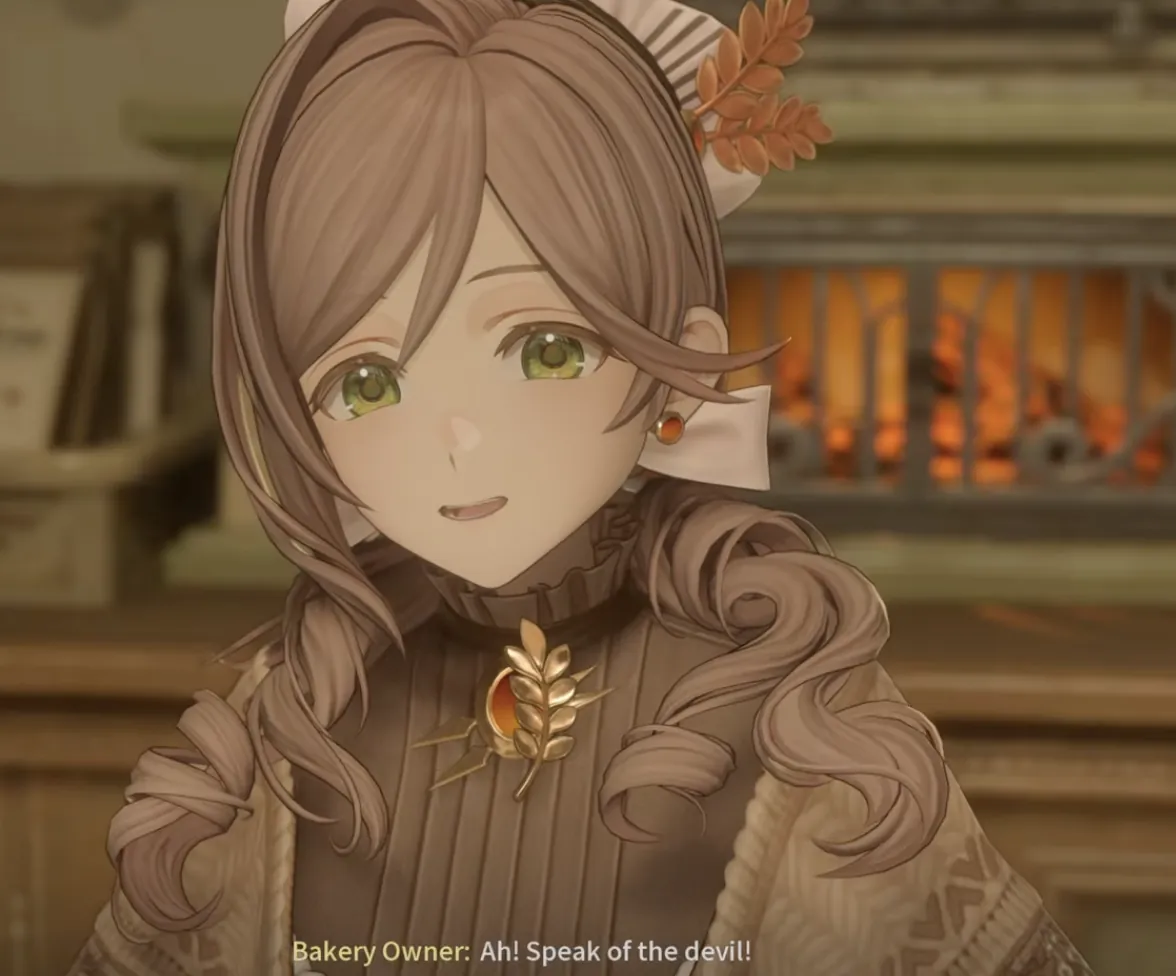
The maid is guarded, but the detective reasons that a man wealthy enough to keep an armed maid must fear for his fortune, and offers a protection she cannot.
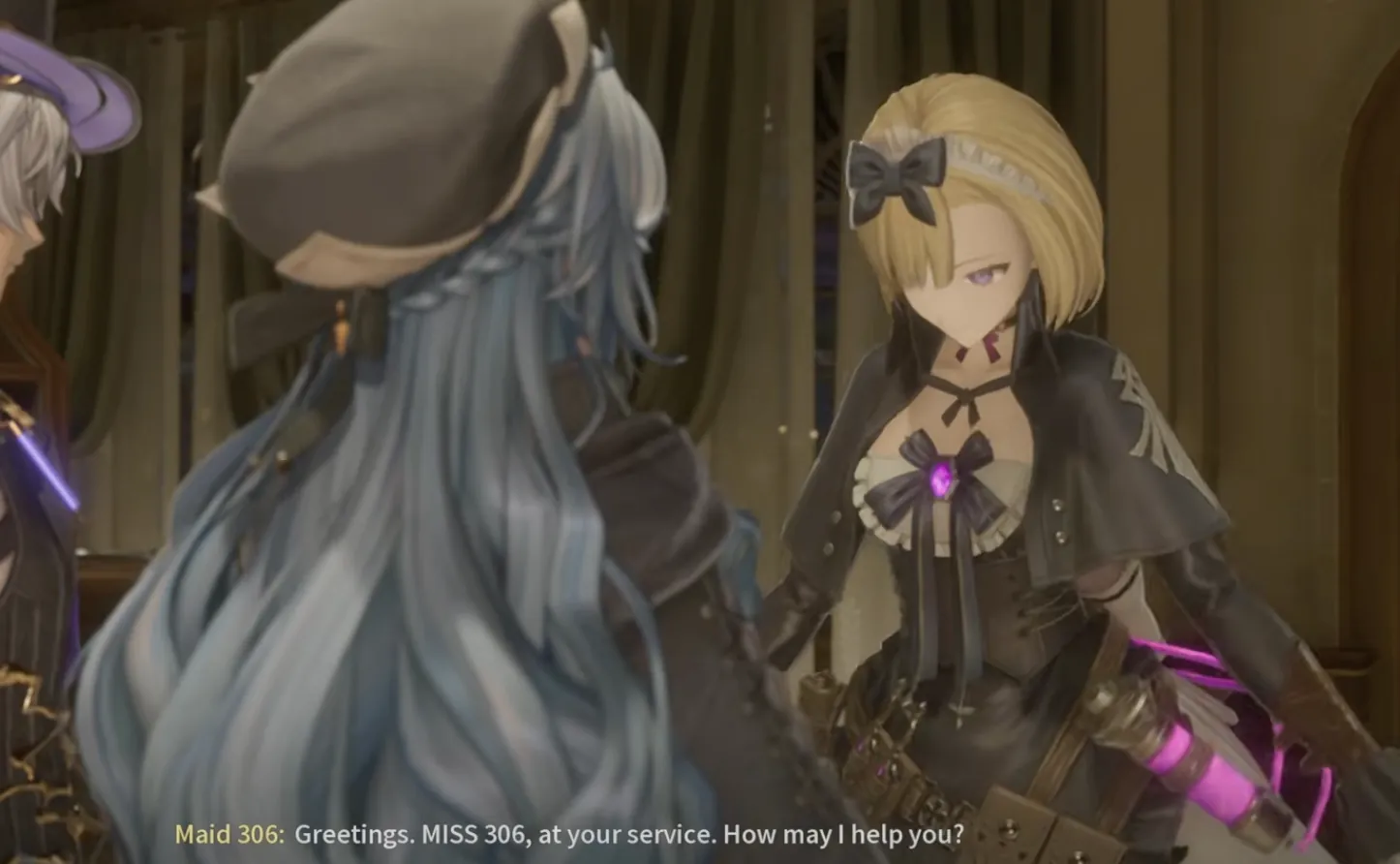
She gives up a name: Daniel Boulden, an investor working out of the Royal Bank.
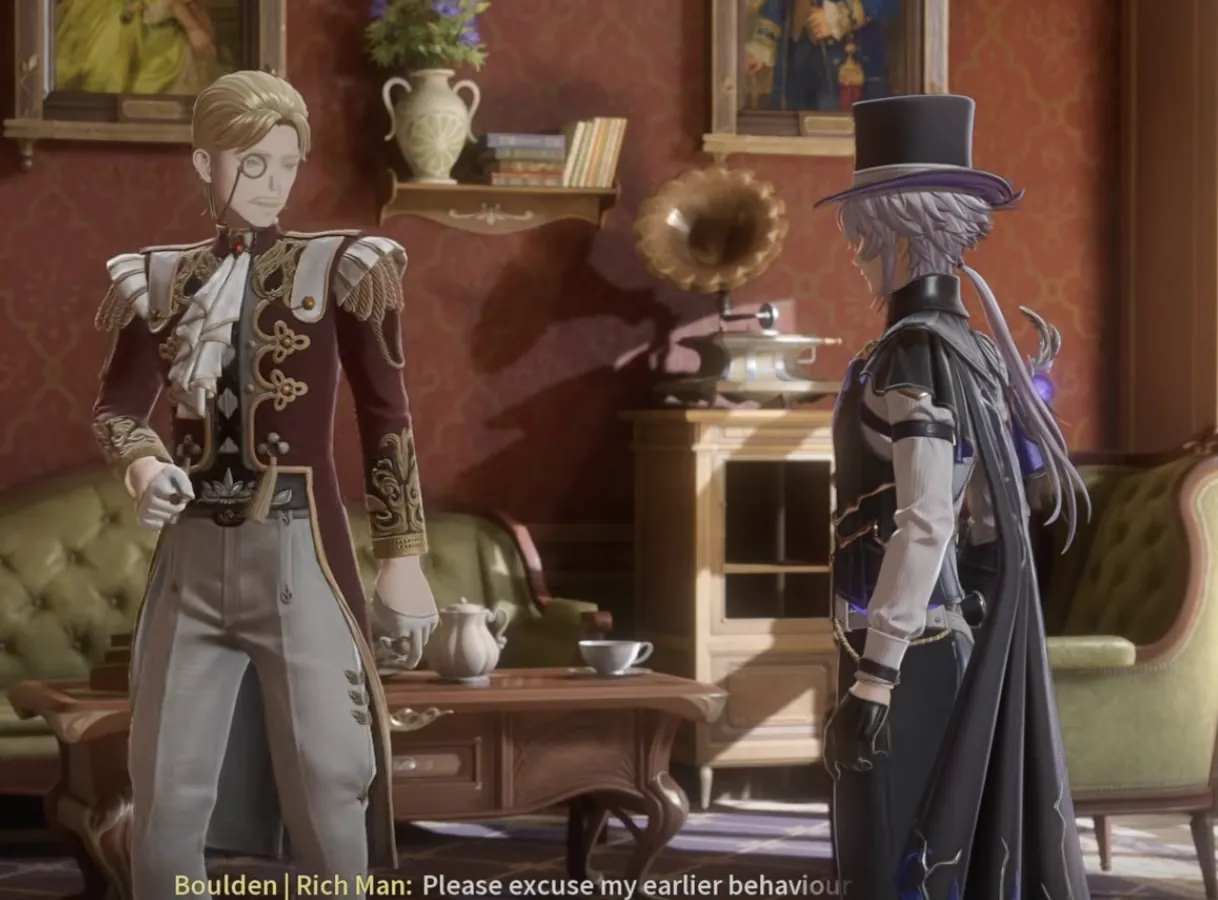
On the finance quarter's Four Crown Street, the doorman turns Ashley away as "gravel kin," judging her plain clothes beneath the bank's clientele. Rather than accept defeat, the very lesson the detective has been teaching her, Ashley works the waiting investors herself and pieces together the shape of Boulden's scheme: an invitation-only foreign venture promising a 40 percent return in three months, with nervous nobles pouring in what they have left after the parade float attack gutted their fortunes.
The thread ties into a second mystery. A master thief called the Rogue, who never fails and only ever steals art, appears to have broken his pattern to target the Royal Bank's silver. The Rogue always mails a taunting warning first, its wax seal stamped with a numeral counting his heists, and that detail undoes the ruse. The letter delivered to the bank is marked X, copied straight from a newspaper photograph, while the genuine letter held by police reads VI. The bank threat is a copycat, and the copycat is Boulden himself. He has ordered extra outbound trains for that very night, the bank's armed maids answer to him alone, and his venture is a bubble propped up by fresh investor money and about to burst. His plan is to loot the vault, pin it on the Rogue, and vanish. The detective refuses his escalating bribes, and Superintendent Rex arrests him for smuggling Silverium goods, a win that finally earns the stone-faced superintendent's respect and clears the detective to work the Cinderellas openly. The real Rogue, as it turns out, had already lifted the antique silver coins Boulden ran through his railway business. And in Boulden's suite sits his business partner, Vorsch, owner of United Vermentum Works (UVW), a UMI factory, a name that will lead to the heart of everything.
Ashley's Day Out
With Boulden behind bars and Rex finally won over, the obvious next move is the second photograph. The detective makes a different call. Something more important comes first, and that something is Ashley. The detective takes her to the Quadric Emporium, the wonderland she had only ever known from books, a place friends once told her was the greatest in the world, where dreams come true. There the detective buys her a fine dress, an accessory to match, and a bunch of flowers chosen for a girl who does her best and never gives up even when things go south, then leads her on to the Toroid Spine trade fair to watch the Silverium parade bloom over the great reactor. Ashley, who took the job for no wages and insists she has only ever done housework, is overwhelmed. Her guard slips. She hints she is no ordinary academy graduate ("we are from two different worlds, detective"), admits that meeting the detective sooner might have made her someone other than who she is now, and, watching the Silverium light fade and return, finally begins to speak the truth behind her stolen-silver riddle.
Before she can finish, the detective collapses. What used to be a nightmare that Firtho's stabilizer could hold at bay has changed into something stranger: the detective is no longer dreaming his own dream but reliving a stranger's memories, jumbled and impossible to read. A voice warns that the truth he seeks is a shattered mirror whose every shard is jagged and sharp, that reaching for it too eagerly will only cut him, and that it will be waiting "at the end of the truth." The detective wakes in Firtho's clinic, where the coroner explains what has gone wrong. He has built up a resistance to her stabilizer, and the side effects are only getting worse.
Then Firtho takes the detective aside, away from Ashley, and asks the question she has been holding back. Who is this girl, really? The detective calls her a very capable assistant hired through an open request, but Firtho is not satisfied. She has seen the bandaged hands, and she has heard the story shift from fresh manual-labor injuries to old scars that Ashley will not let anyone examine. Nobody knows her background, her experience, or her true motive for serving the detective, and Firtho cannot fathom why the detective would take on a total stranger rather than someone he already trusts. The detective concedes it is a little odd but says plainly that he trusts her and has it under control. Unconvinced and visibly stung, Firtho lets the matter drop and sends him on his way. It is the first time anyone says aloud what the story has only hinted at, that Ashley is more than an assistant, and it primes the suspicion that erupts the moment the next lead turns deadly.
Act 3, Continued: The Doctor and the Blue-Haired Woman
The second photograph leads to Romme, a doctor at a private hospital who is beloved among the poor for treating them cheaply, but who has lately let injured laborers jump the queue and vanished for days on end.
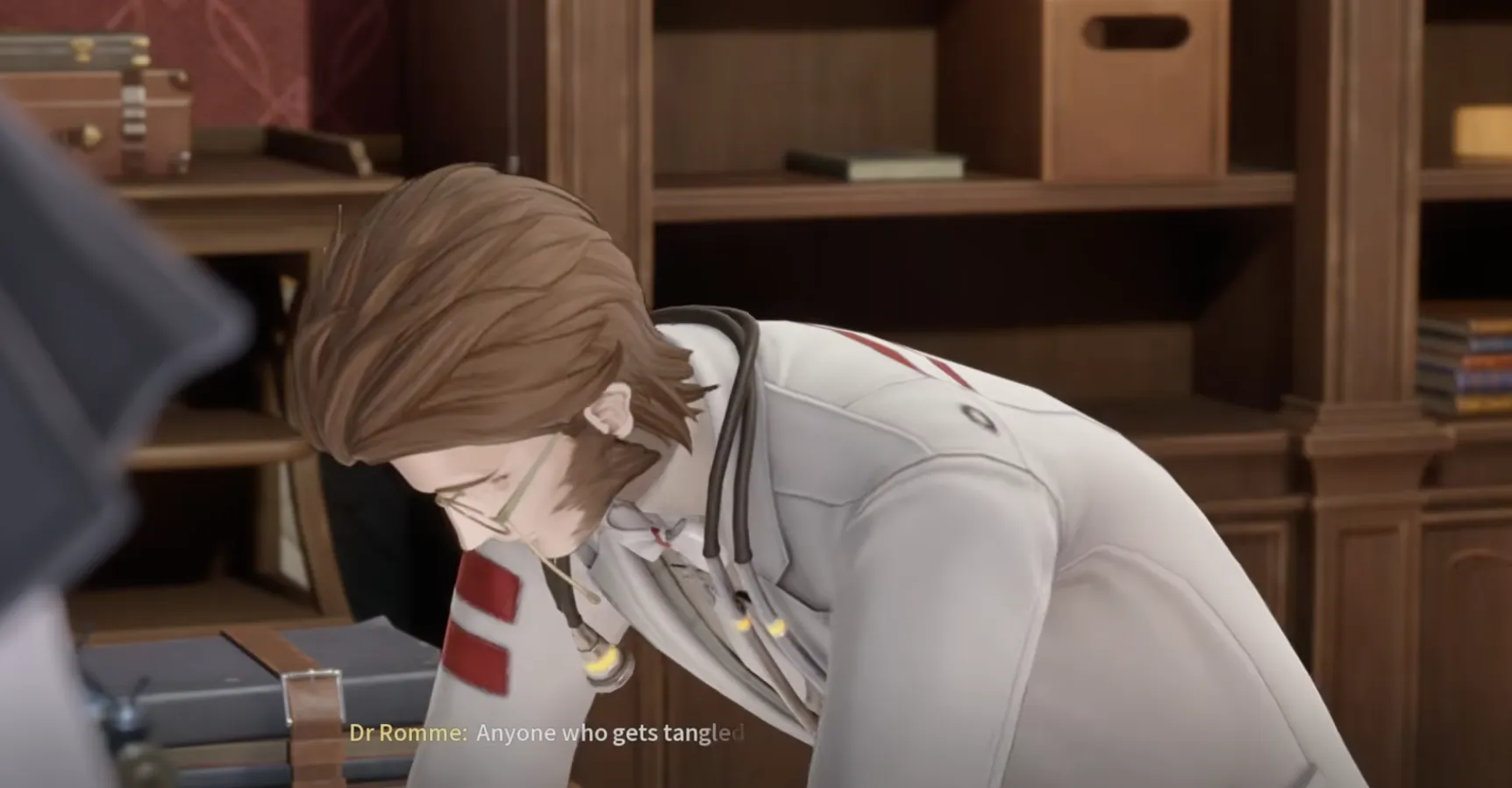
When the detective finds him, Romme is pale with terror, stuffing his valuables into a bag to flee, muttering about a safe house in Bridgehead and a woman who must not find him, and warning that anyone tangled in this ends up dead "just like Grimm." Before he can say more, high heels click closer, assassins in suits strike, and Romme is shot dead, silenced like every lead before him. The suited killers turn on the detective next, who fights clear of them before the Red Rose sweeps in and finishes off the rest, reporting the job "all taken care of" and teasing that after all the times she has quietly helped, it may finally be time they worked together in the open. Pressed on whether she led the assassins to the hospital, she insists she only alerted the constabulary and feared they would not arrive in time. Tracing the lost slipper to its maker points to a blue-haired woman shadowed by men in suits, the same suits the assassins wore, and suspicion swings hard toward Ashley, who is evasive about the scars on her hands and knows more of the case than an assistant should. Lorin wants to take her in; the detective refuses without proof. The Cinderella slipper is even put to her foot, and it does not fit, so she is not the woman they hunt. Even so, Ashley resigns to keep the detective out of danger and slips away into the crowd before anyone can stop her.
With Ashley gone and the leads cold, the detective follows a hint to a noble ballroom and draws out the Red Rose, the flirtatious assassin who has shadowed the case from the beginning, likely an agent of House Flora, whose members carry flower titles.

She finally tells Ashley's story. Years ago, on a rainy night in Bridgehead, the Red Rose came upon a blood-soaked girl who had just made her first, clumsy kill, and the girl begged her to murder someone tied to the United Mining Industry.
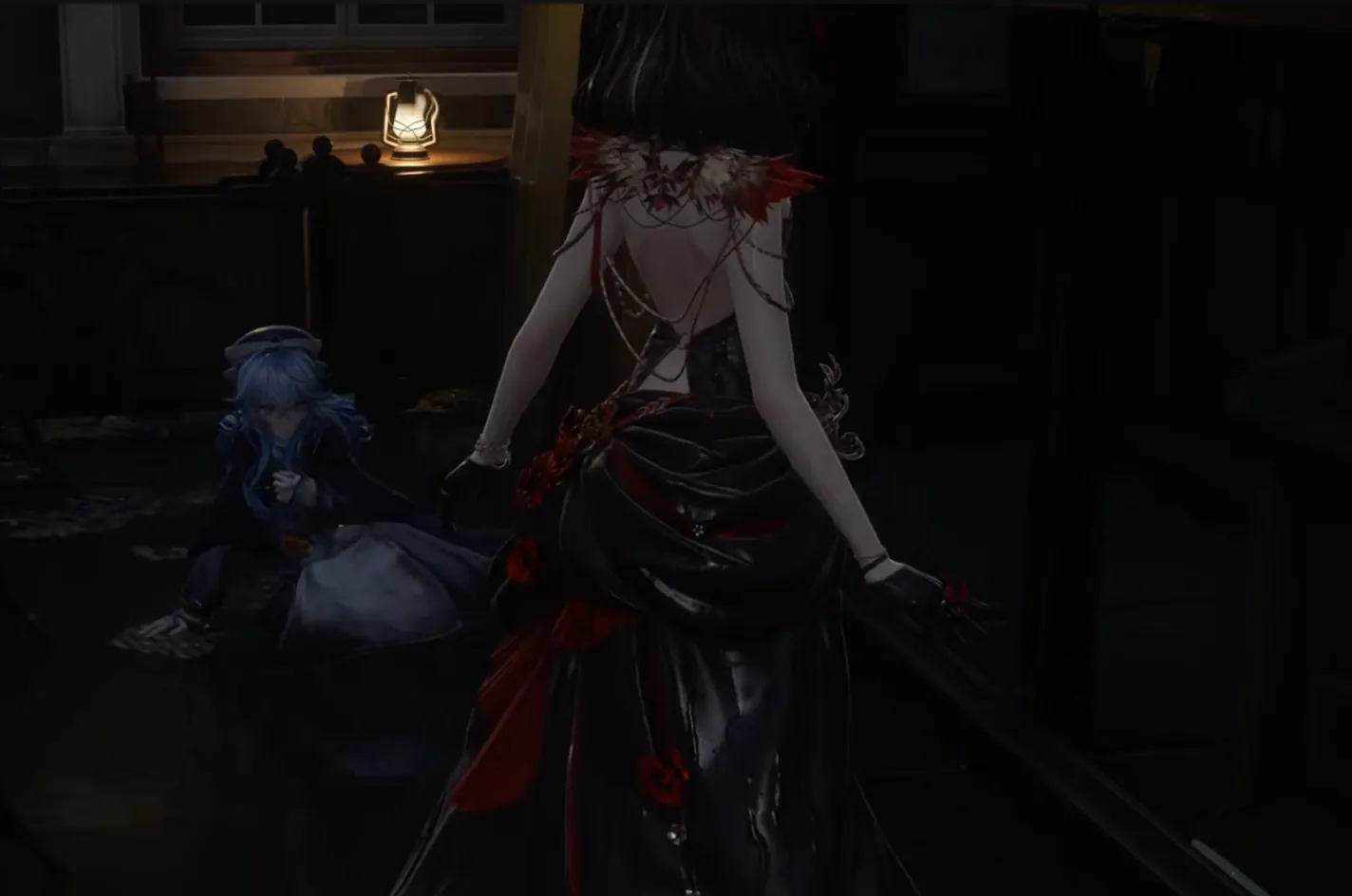
Ashley had no money, so the Red Rose declined the contract but left the offer open. Ashley saved what little she could and spent it not on revenge but on small jobs that always circled back to the detective, quietly paying the Red Rose to protect him time and again, including the engineered werewolf disturbance that once pulled him out of Rex's reach. Her one request was that, if the detective ever came asking, the Red Rose tell him everything. Ashley, it turns out, is herself one of the Cinderellas, a survivor of the factory carrying a debt of vengeance, and, the Red Rose adds before she goes, the girl cares for the detective far more than her cover ever let on.
The Red Rose also lets slip where she and Ashley first met: Bridgehead, the same district where the dying Romme begged to reach a safe house. Searching the sprawling slum from a disused clock tower, and clearing out a gang shaking down a woman whose husband was crippled in a factory accident, the detective narrows the hunt to a busy high street near a transport hub, the sort of place where anyone spotted could vanish into the crowd, and tracks the safe house to a fourth-floor office. It belongs not to Romme but to Evan King, the rising young detective who made his name after the detective left. His walls are papered with the Cinderella case: an evidence board of laborers who tried to flee, most photographs crossed out as remains dealt with and relatives silenced, and one burned so badly no body was ever found, the single escapee who got away. Evan himself is dead. The scene reads as a killing in self-defense, an unexpected visitor of smaller stature wrenching away his own initialed dagger and cutting him down before fleeing without so much as wiping the blade, a struggle Evan lost only because his arm was already injured. The commission he took was never honest detective work, and a Royal Bank check made out in UVW's name, hidden in his safe, ties his covert cleanup straight to the factory. Every thread, Boulden's smuggled coins, Romme's injections, and Evan's silencing of escapees, now points to United Vermentum Works, and its owner Vorsch steps out of the shadows to greet the detective, playing the honest man dragged into Boulden's collapse and inviting the detective to tour the factory when it opens to the public the next day.
Act 4: Inside the Factory
The tour is pure theater. Vorsch parades his fifth-generation assembly line as the pride of Silvernia's largest manufacturer, talks up filtration gear and free health checks for the staff, and shows off a fully automated security system that runs around the clock and strips every reactor and Silverium product from anyone at the gate, himself included. He steers the detective well clear of a sealed area behind the waste disposal, and of a warehouse whose output channel opens only in the presence of headquarters personnel.
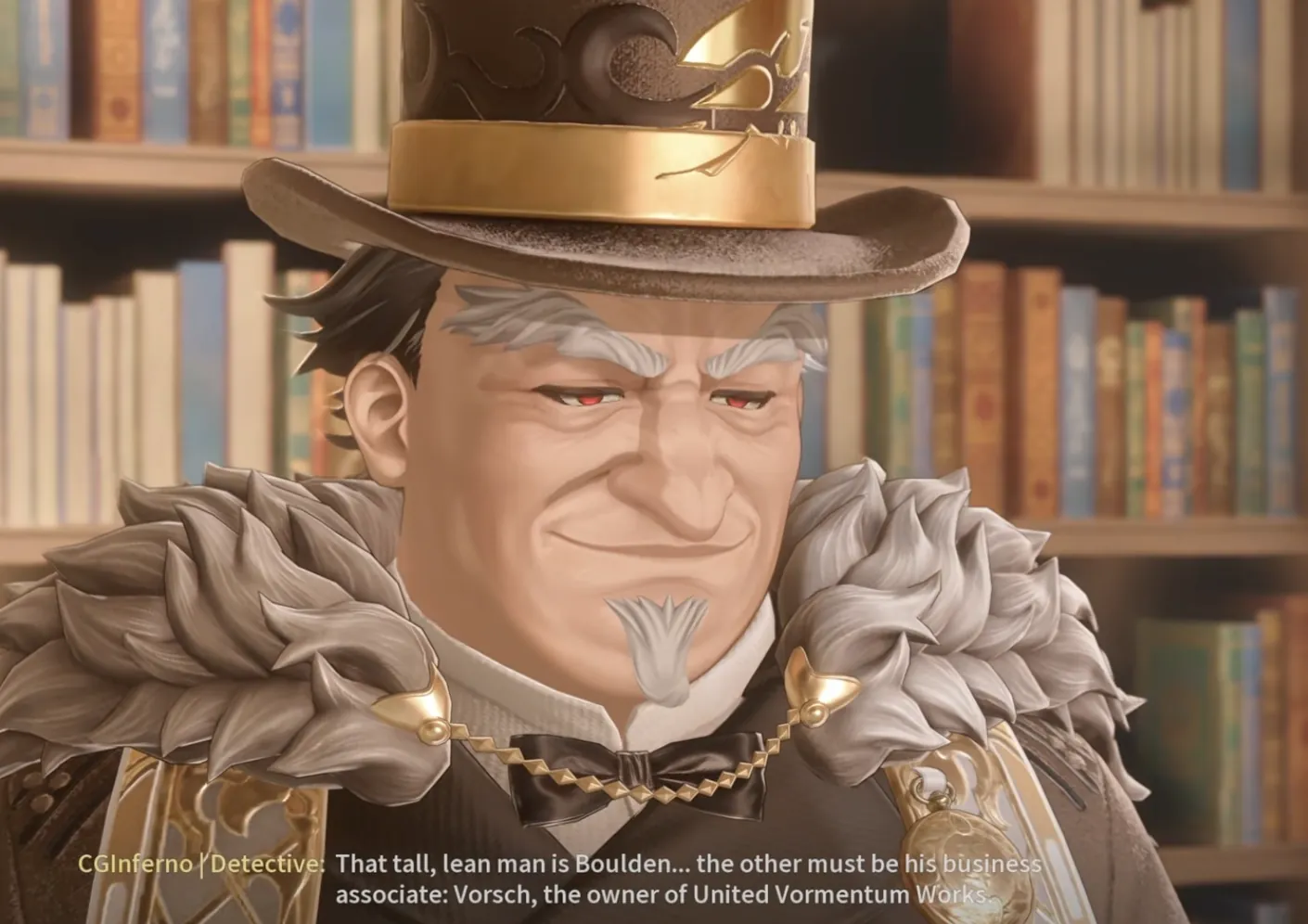
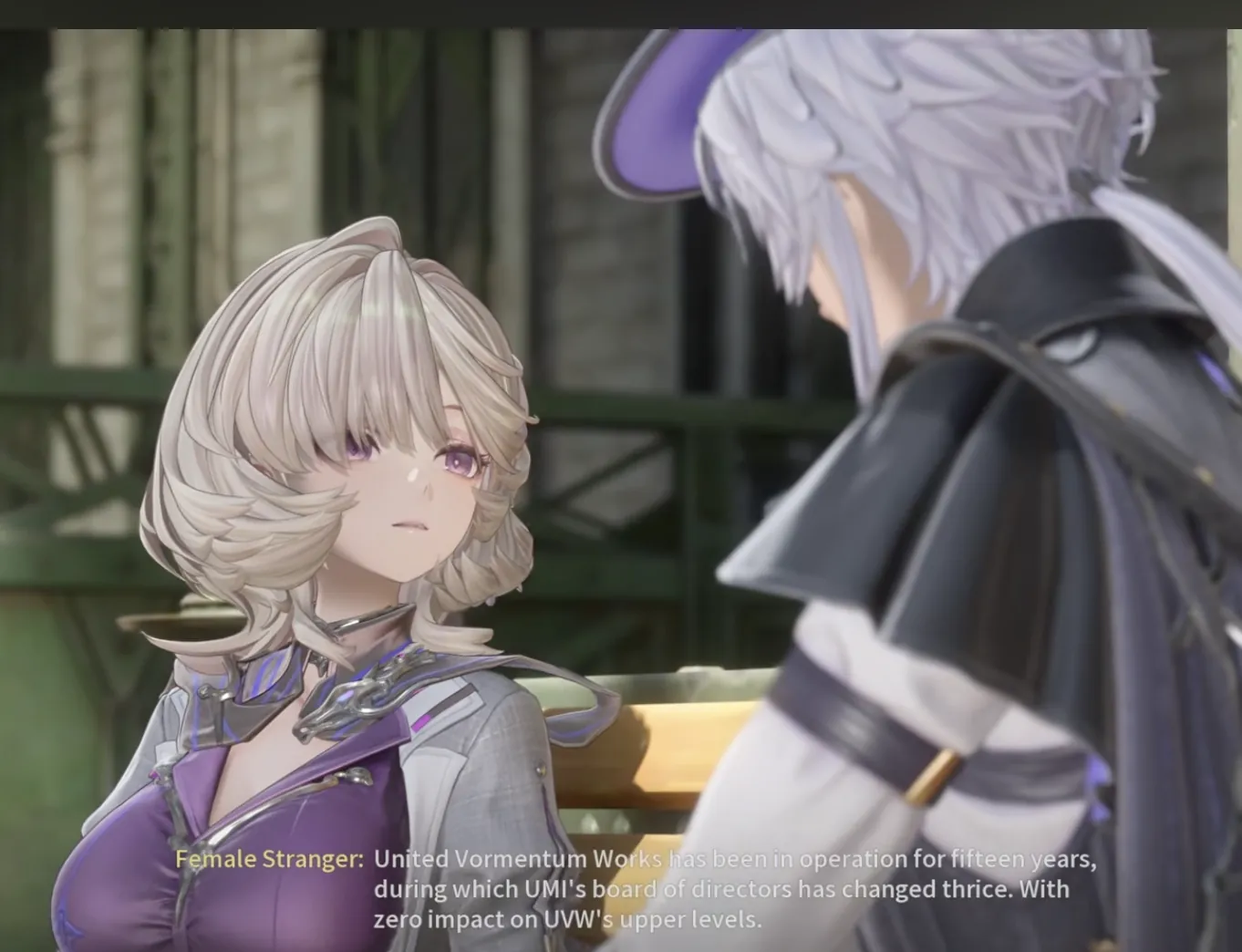
Before the tour even begins, while the detective is kept waiting, a poised woman sits down beside them and introduces herself as Miss Bentham, secretary to the general manager of UMI. She has watched the detective circle the security and sorting apparatus, guesses the trade at once, notes that UVW is so autonomous that even its own headquarters cannot see inside it, warns that curiosity can be a dangerous thing, and, plainly hunting UVW's secrets herself, proposes a deal: hand over the findings, and be paid handsomely along with her friendship.
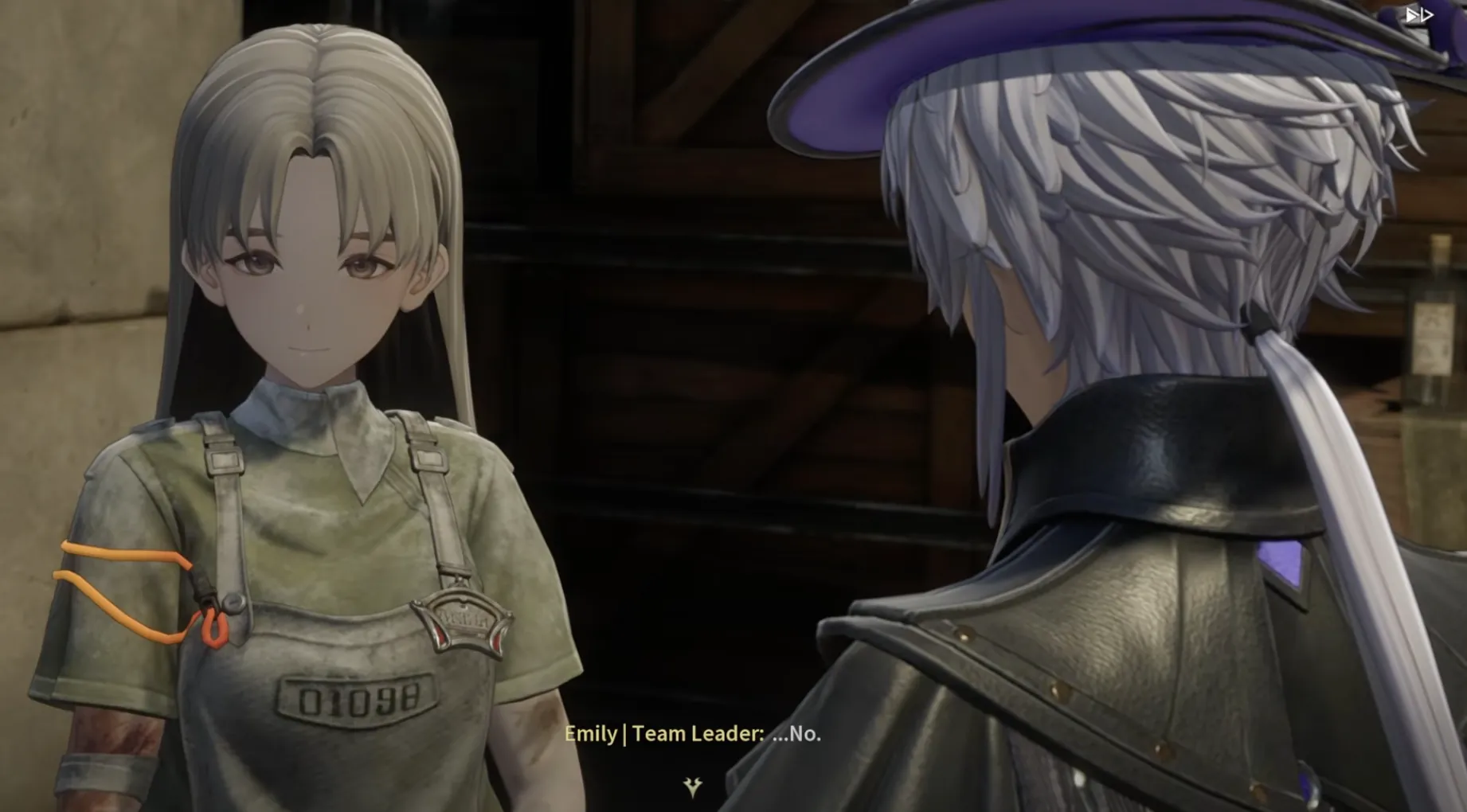
Almost every worker is a jittery new hire. The one experienced hand is a forewoman who keeps a sleeve pulled down over a burned arm and wears a team-leader badge, Emily, whom Vorsch berates in front of everyone as barely literate and threatens with the night shift and docked wages.
The moment it is clear the detective cannot be bought, Vorsch loses patience and sees the detective off, all but confirming that the factory has something to bury.
The front gate is hopeless: no worker passes, no weapons or reactors allowed inside, and combat robots waiting beyond it. So on Alf's suggestion the detective waits for nightfall, when security loosens, and slips in through the cargo route. When word spreads that a worker has collapsed, two overseers fall to bickering over who must deal with her, a supervisor resenting being hauled back after his shift and muttering that the staff are worked like the same mules they guard, while the manager over him snaps at him to stop grumbling and move.
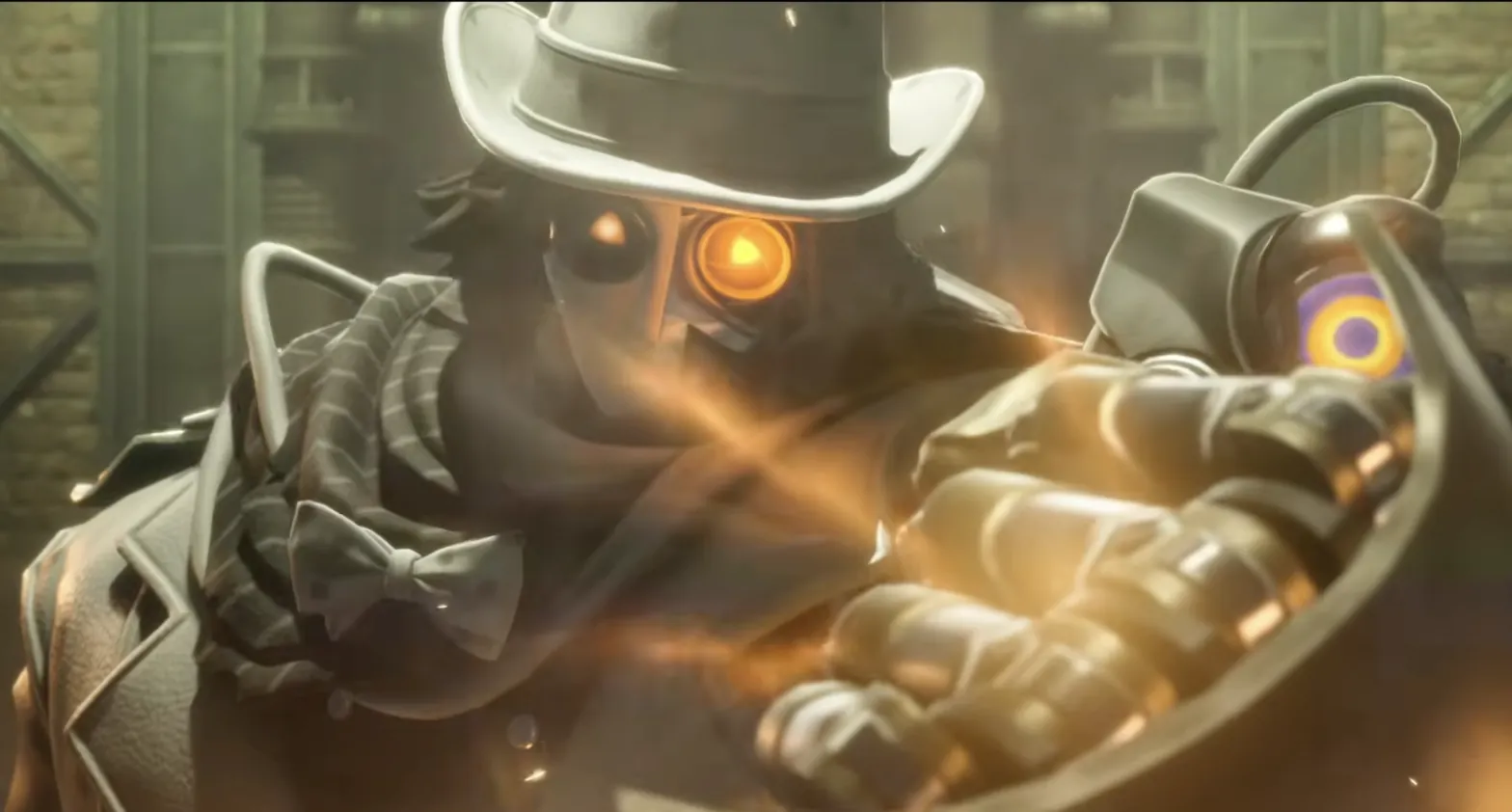
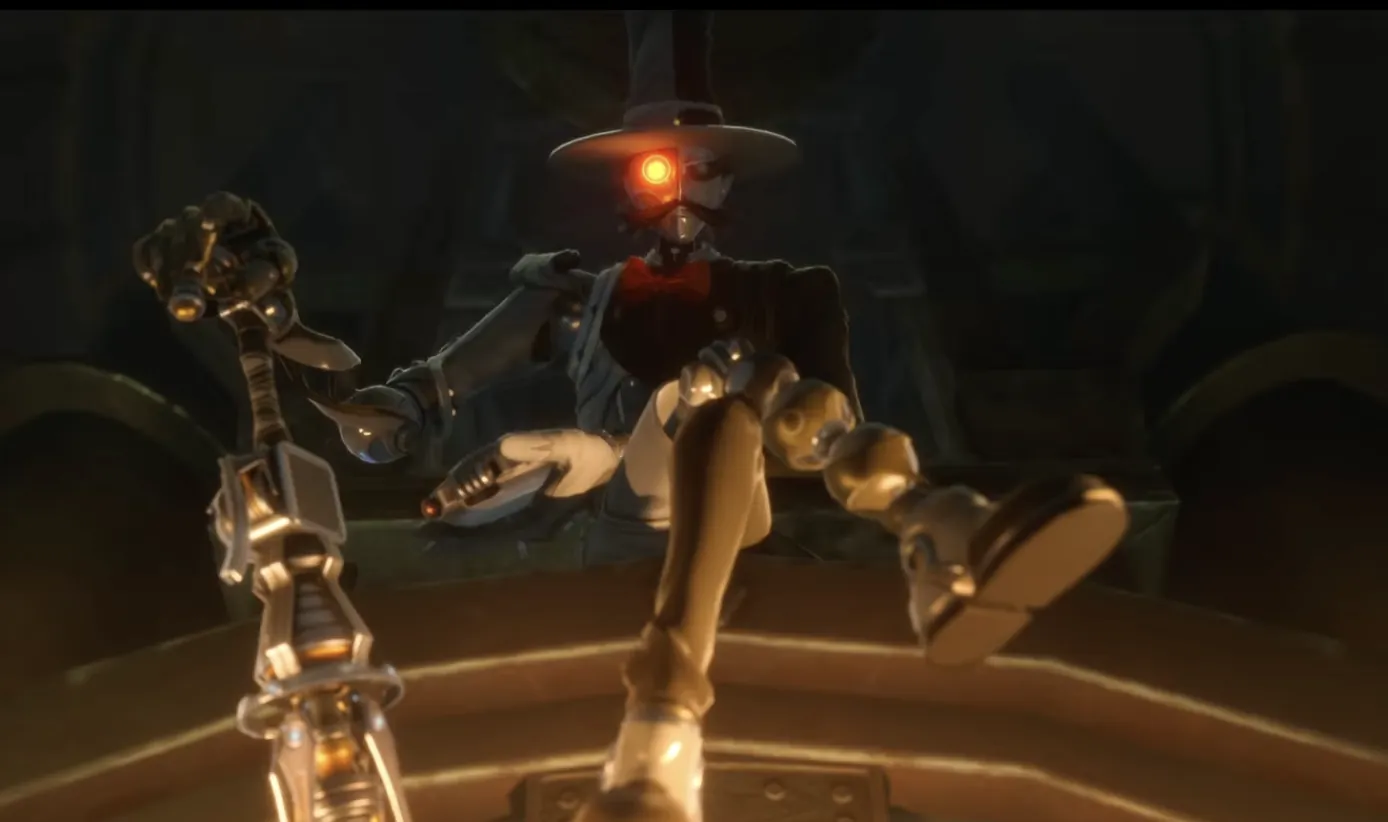
Their contempt is total: the woman is Emily, and alive or dead she still belongs to UVW, and her cowed, indebted family will never dare breathe a word. The detective tails them for cover, but the way to the infirmary is sealed, so the search detours through Vorsch's office, where his own papers give up the timeline: he seized the factory five years ago and, two years back, brought Romme in to build the infirmary at the behest of an unnamed "excellency" whose written approval is still on file, while his production records show a giant reactor pushing Silverium to 91 percent purity, military grade, banned by royal decree, and worth a fortune on the black markets beyond Silvernia's walls. The reactor's parts match the wreckage from the Cinderella case. This factory is a hell hole, and Vorsch lied about plenty, yet he told the truth that security runs around the clock, which leaves one question: how was the stolen Silverium ever smuggled out? Pressing on to find the answer trips the factory's automated defenses, and its polite reception drones flip into an "annihilation" mode. The detective fights through them, and only once the last is down does the Red Rose step out, disguised yet again and unrecognized until she speaks, revealing she has cut the alarm to buy what little time is left.
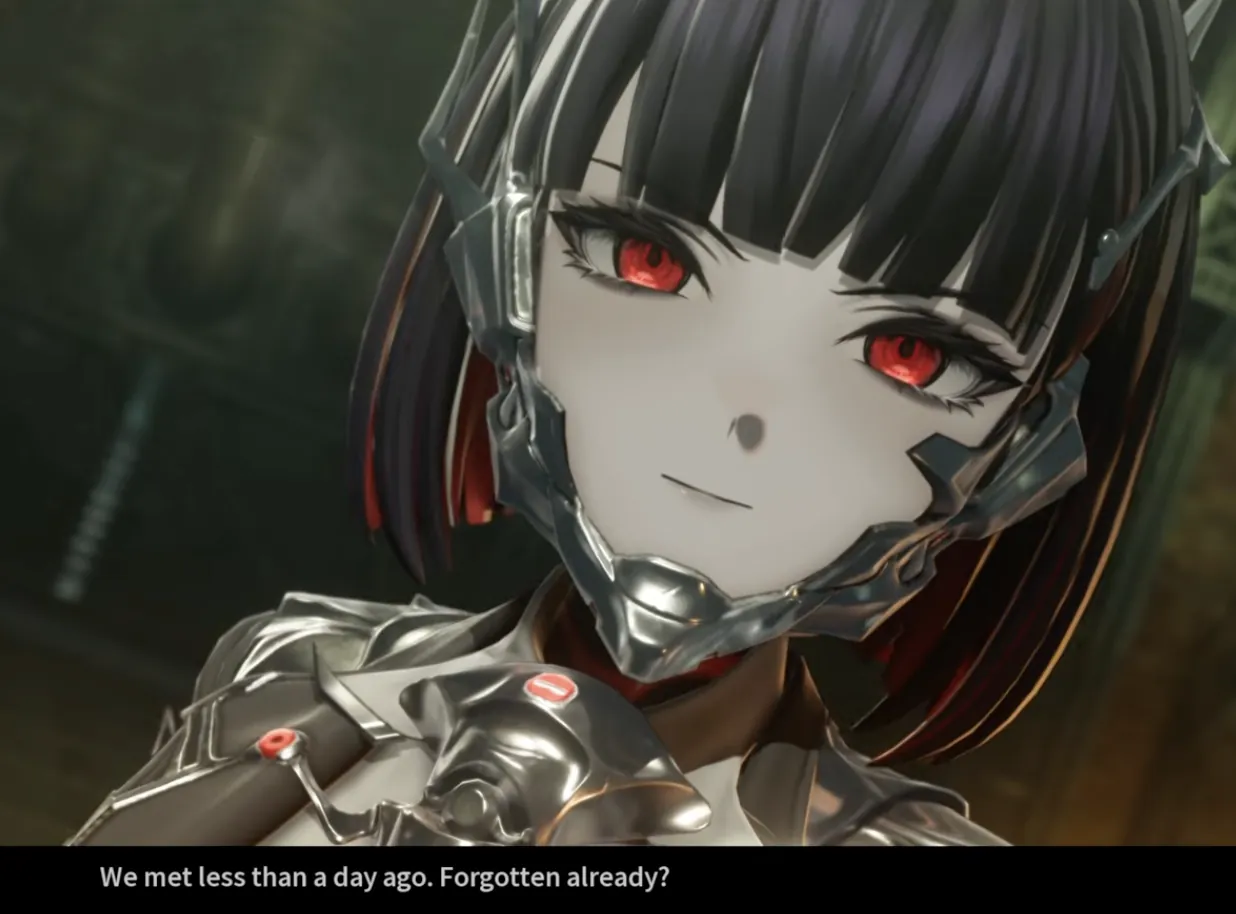
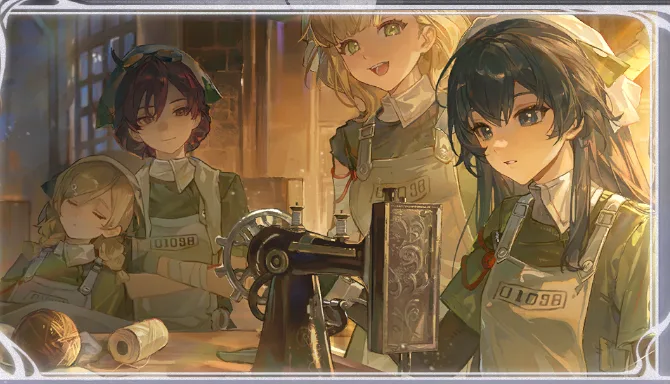
Beyond lies the injection room, where the "Cinderellas," female laborers and many of them werewolves, are hidden away and drained to feed the reactor, dosed from bottles that wear a dozen different labels yet all hold the same high-purity solution, forced in with a needleless injector that makes the process agonizing, the whole cruelty dressed up as medicine.
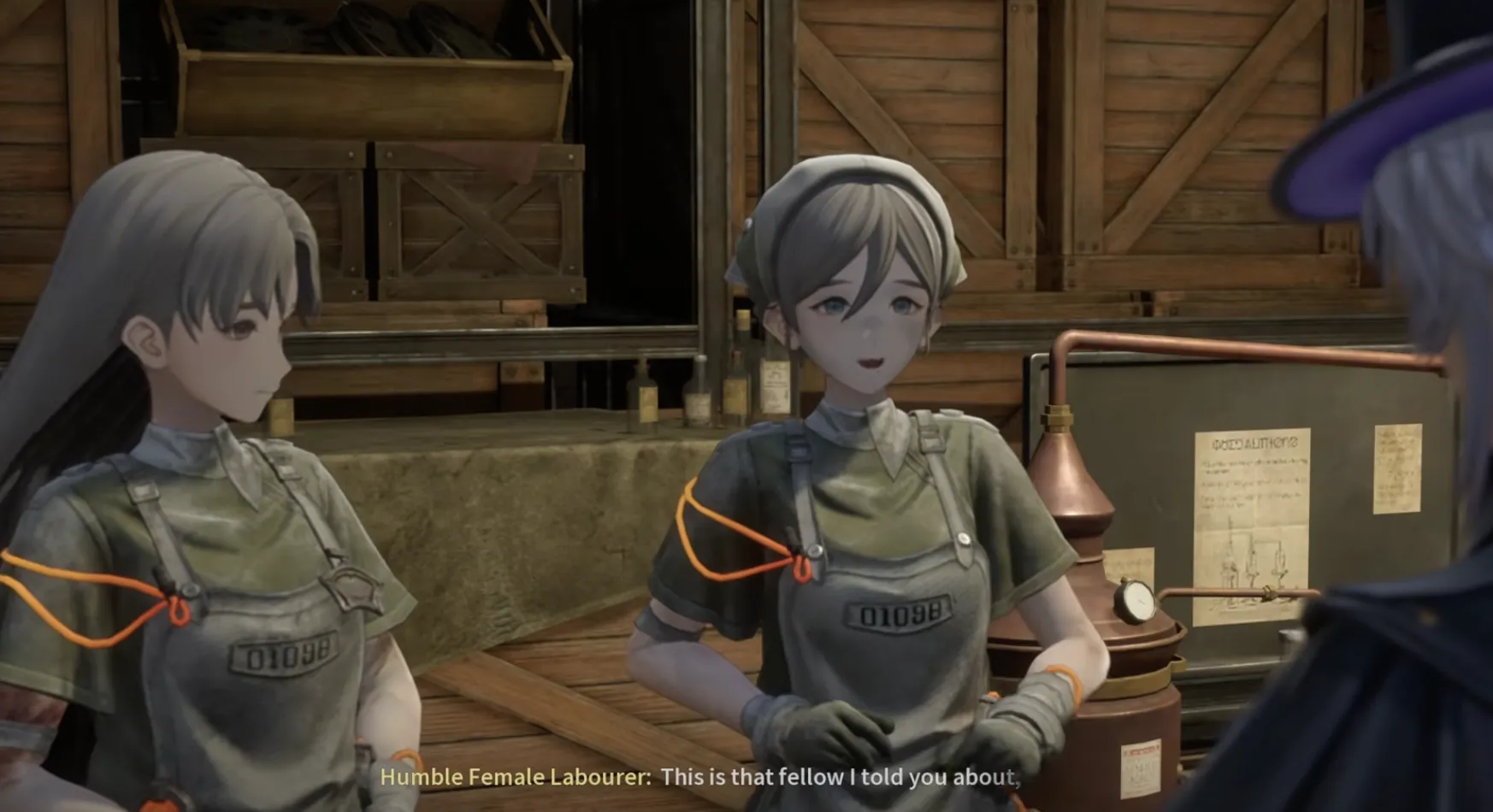
There the detective pulls the dying Emily out alive, one of the very women Ashley grew up beside.
The infirmary and its machinery stir another vision, the detective reliving a laborer's memory of bodies carried to a dock lined with gantries. Firtho, who has kept Emily alive, warns that these episodes are tearing at the detective's body while the stabilizer resistance goes unsolved, and offers a surgeon's blessing: be as ready for the truth as for death, then go and not die. She names the place from the vision as Bridgehead's renovated company docks, the only wharf in the district with gantries like those the detective described.
At the docks, Ashley is waiting. She admits she engineered her own hiring, manipulating her way to the detective's side so that the detective would uncover the truth she could not chase alone. She has never known how to tell truth from pretense or how to trust anyone, she says, until the detective, and the days spent together were the happiest of her life. She thanks the detective for saving Emily, a fellow victim she once knew, and calls the detective her prince, then refuses to lead the detective into any more danger. Insisting that only a normal girl could stay at the detective's side, she urges the detective to close their eyes and rest, and, now that the detective and the constabulary hold evidence enough to expose the ring, slips away to take her revenge alone, one of the factory's own escapees settling her debt. The detective wakes and races after her toward the crates being shipped out, and the beta closes on a dreamlike beat: a game of chess against the same voice that has haunted the visions, a board the detective could never win in reality, a quiet "checkmate," and a promise that the truth lies just ahead and the detective is never truly alone, before the voice urges, "Now wake up."
Where the Story Leaves Off
The Dichotomy Beta ends mid-conspiracy. The Silverium trafficking ring is exposed but not dismantled, Ashley has gone off on her own path, and the dream framing suggests the detective's mind palace and the queen's designs run deeper than any single case. The through line is clear: the airship assassination, the Nameless Ashes, the vampire and werewolf "legends," and the Cinderellas are all threads of one conspiracy over Silverium and who controls it. If you are following the story, the character quests are where the emotional weight lives, while the acts carry the central mystery forward.
Related reading
- Major Cases: every act and scene in order, the campaign as the game divides it, carrying the official scene titles this recap does not use
- Classical Curations, the letters, notices and reports the city writes about itself
- The Detective Board, the same cast and cases drawn as a network rather than a sequence
- The Evidence Locker, close readings of the item and achievement text the game files out of sight
Frequently Asked Questions
Who killed Queen Agoria in Silver Palace?
Queen Agoria is assassinated during the prologue aboard the airship Evermore, when a purist faction sabotages the ship's core reactor. The surviving detective is publicly blamed as the "queen slayer," but the story frames this as a lie, and the true conspiracy is tied to control of Silverium.
What are the Cinderellas?
The Cinderellas are the real name behind the Nameless Ashes case. They are female laborers, many of them werewolves, hidden inside the United Vermentum Works factory and drained to produce high-purity Silverium. The fairy-tale nickname references the lost shoe and the ash-covered victims.
Who is Ashley in Silver Palace?
Ashley is the detective's assistant, whose title is "Cinderella." She is a survivor of the factory's Silverium extraction and secretly manipulated her way into the detective's employ so the detective would uncover the truth. She has been quietly paying the Red Rose to protect the detective, and she ultimately leaves to pursue her own revenge. For a clue-by-clue read on how she gives herself away long before that reveal, see Ashley: Who Is She, Really?
What is Silverium?
Silverium is the glowing substance that powers Silvernia's technology, from reactor weapons and gauntlets to the flying Silverium steeds. Its development and control sit at the heart of the story's conflict between royalty, the aristocracy, and the United Mining Industry.
Is Lorin the Silver Fist?
Yes. Chief Inspector Lorin was once a street legend called Silver Fist. In his side quest, the detective helps him pose as the still-living Silver Fist to steer a gang of teenagers back toward school rather than crime.
Know someone tracking Silver Palace? Send them this.
About the Author
Silver Palace Meta Team
Silver Palace Meta Team
We're dedicated to providing comprehensive coverage of Silver Palace news, updates, and community insights.