Interrogation Guide
审讯系统指南
The trait chart, the five response options, and how questioning a suspect actually works in the Dichotomy beta.
Interrogation is the system that most clearly separates Silver Palace from the action-gacha games it gets compared to. Every other detective mechanic in the game (scanning a room, collecting a clue, laying evidence on a board) is something you do to objects. Interrogation is something you do to a person, and the game builds a whole interface around the idea that people are harder to read than crime scenes.
It is new in the Dichotomy beta. The first closed beta had dialogue, but not this: a structured questioning mode with a live readout of who you are talking to and a set of tactics to choose between. This guide covers what the interface shows you, how the five options work, what a bad read actually costs, and how interrogation connects to the rest of the investigation loop.
Quick Answer
When you question a suspect or witness in Silver Palace, the game opens a structured dialogue interface. A five-axis radar chart displays that character's key traits and personality attributes, and five numbered response options run down the panel beneath it. Each option is a different line of questioning or a different pressure tactic. Reading the chart correctly is how you surface hidden information and expose inconsistencies in what someone is telling you. Choosing badly does not fail the case, but it closes off what that line would have revealed.
The Trait Chart
The chart is the whole point of the system. Instead of guessing at a stranger's temperament from their dialogue, the Detective's read on them is rendered as a five-axis radar profile covering their key traits and personality attributes.
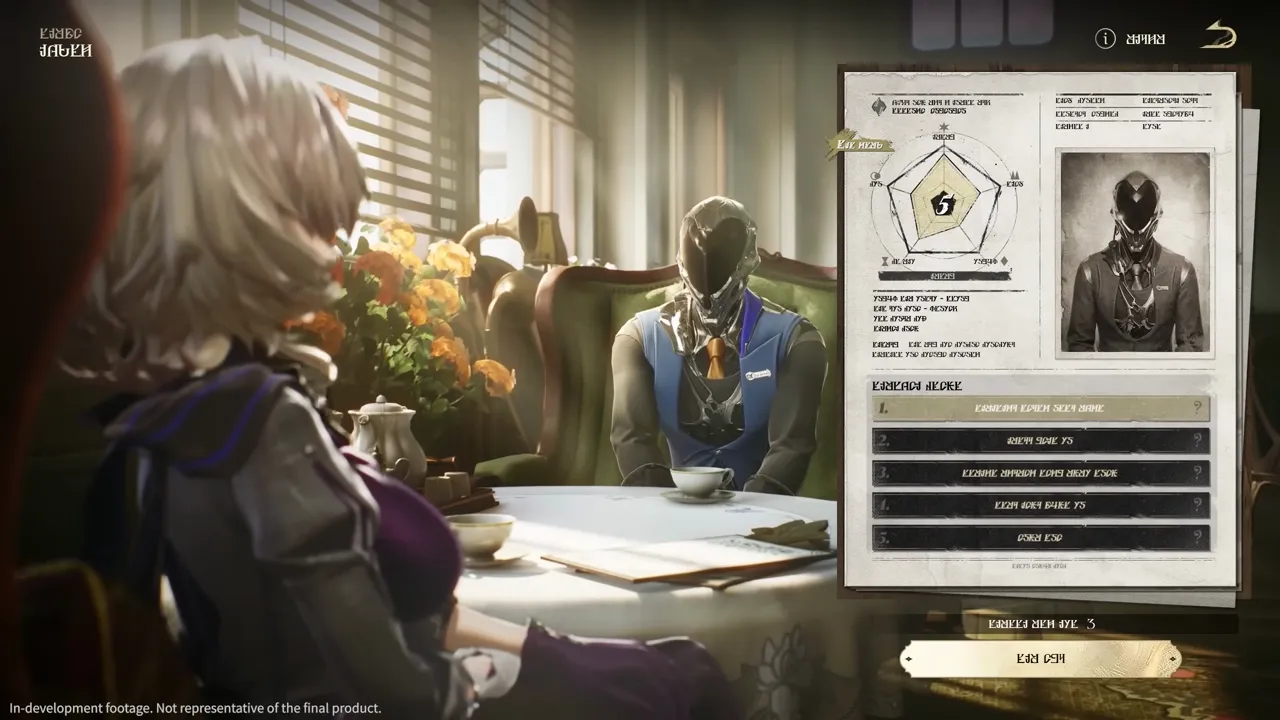
The interrogation interface in the official Dichotomy showcase. The case file carries the radar chart and the suspect's photograph, with the five numbered response options listed underneath.
Elementa has not published English labels for the five axes. In the official showcase they are marked with small symbols rather than words, and the chart sits on the suspect's case file beside their photograph and a block of case notes. What matters mechanically is the shape: a person heavy on one side of the pentagon responds to a different approach than someone balanced across it. A witness who reads as guarded is not going to break under the same question that works on someone reckless.
This is a genuine departure from how dialogue usually works in this genre. Most games hide the check behind the option ("[Persuade]", "[Intimidate]") and let you find out afterward whether you had the stat for it. Silver Palace shows you the target's stats and makes you do the matching yourself.
The Five Response Options
Five options sit at the bottom of the interrogation screen at any one time. Each represents a different line of questioning or a different way to apply pressure, and availability shifts depending on the suspect and on what you are carrying. Options that require evidence you have not collected will not be there.
The practical loop is:
- Read the chart before you read the options. The temptation is to scan the five lines of dialogue and pick the one that sounds smartest. The chart is the actual information.
- Match the tactic to the shape. Pressure works on some profiles and hardens others.
- Watch for the contradiction. The system's stated purpose is exposing inconsistencies. If a statement conflicts with something you already have, that is the moment to push.
- Bank the reveal. Information you surface here feeds forward into the case.
Because the option set is context-sensitive, doing your legwork first widens the menu. Turning up to an interrogation with a full case file gives you lines that an underprepared Detective simply does not get offered.
Evidence and Surveillance
Interrogation does not happen in a vacuum. The Detective can secretly photograph suspicious NPCs to gather evidence, which is the game's quiet acknowledgement that not every lead comes from asking. Surveillance material builds the file you bring into the room later.
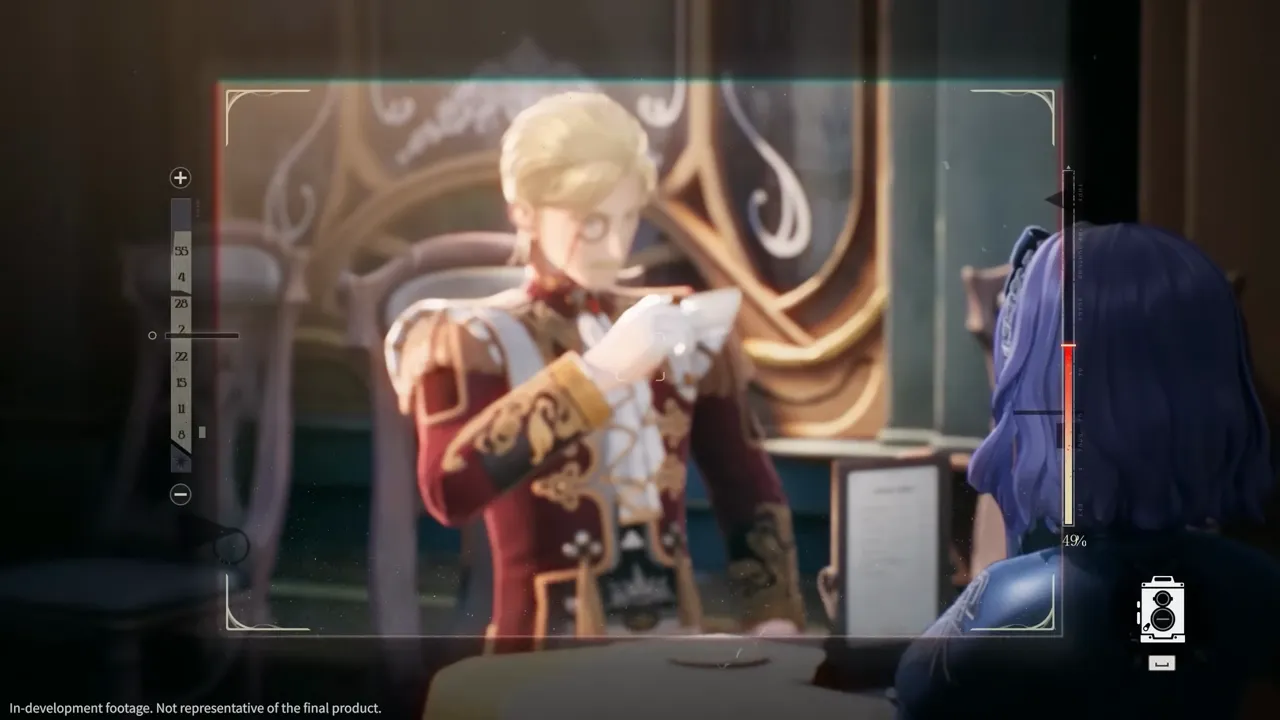
Shooting a suspect through the viewfinder in the official Dichotomy showcase. The Detective works a period twin-lens camera from cover, with framing brackets and an exposure meter on the interface.
This sits alongside the investigation tools the game already had. The deduction system covers the observation and clue-collection side: Eye of Insight, Body Forensics, crime scene work. The Curious Deductions mode covers the Evidence Board and multi-ending cases. Interrogation is the third leg: what you do once you have a person rather than a place.
What a Bad Read Costs
Less than you would think, and that is a deliberate design choice. A failed approach closes an information path. You lose the optional detail that line would have produced. The main story does not lock, and you are not forced to reload.
The consequence is that interrogation rewards curiosity rather than punishing experimentation. In a three-week beta with over 40 hours of content, that matters: you can push at a suspect to see what happens without gambling a case on it. The cost of a wrong read is depth, not progress.
How It Differs From Thought Experiment
Worth stating plainly, because the names invite confusion. Silver Palace has several systems with similar-sounding names doing completely different jobs:
| System | What it actually is |
|---|---|
| Interrogation | Structured questioning of a person, using the trait chart and five response options |
| Thought Experiment | Endgame combat challenge with difficulty tiers and waves. No dialogue |
| Curious Deductions | Multi-ending case mode built around the Evidence Board |
| Eye of Insight | The observation tool for reading a person and their surroundings |
If you are looking for the trait chart, you want interrogation. If you are looking for a fight, you want Thought Experiment.
Preparing for Interrogations
A few habits pay off across the beta:
- Photograph first, ask later. Surveillance material expands your option set before you ever open a conversation.
- Finish the scene before you find the person. Physical evidence unlocks lines of questioning that pure conversation does not.
- Do not treat pressure as the default. It is one of five tactics, not the strong one. The chart exists because different people break differently.
- Revisit witnesses. New evidence can reopen approaches that were unavailable the first time.
Frequently Asked Questions
What is the interrogation system in Silver Palace?
Interrogation is a structured dialogue mode introduced in the Dichotomy beta. When you question a suspect or witness, the game shows a five-sided radar chart of that character's traits and personality alongside five response options. You pick a line of questioning based on what the chart tells you about the person in front of you.
What is the trait chart in Silver Palace?
It is a five-axis radar chart of the person you are questioning, drawn on their case file next to their photograph. It is the information you use to decide which of the five available responses will actually work on them. Elementa has not published English labels for the five axes.
How many response options are there in an interrogation?
Five response options appear along the bottom of the screen. Each one is a different line of questioning or pressure tactic, and which ones are available shifts depending on who you are talking to and what evidence you are carrying.
What happens if I pick the wrong interrogation option?
A poor read closes off that line of questioning. You lose access to the information it would have surfaced, but the main story continues. Interrogation gates optional detail rather than blocking progress.
Can I photograph suspects in Silver Palace?
Yes. The Detective can secretly photograph suspicious NPCs to gather evidence. Photographs feed back into your case file and can give you material to present later.
Is interrogation the same as Thought Experiment?
No. Thought Experiment (formerly known as Deep Cognito) is the endgame combat challenge mode and has no dialogue component. Interrogation is part of the investigation loop and involves no fighting at all.
Interrogation is one of the two systems the Dichotomy build leans on hardest. The other is the reworked combat loop, covered in the Combat Mastery guide. For everything else new in this test, see the Dichotomy Beta guide.