Minigames Guide
小游戏指南
Chess duels, card tables, forensic autopsies and street racing. Every activity in the Dichotomy beta, and which of them are actually casework.
One of the genuine surprises of the Dichotomy beta is how much of the build is neither combat nor casework. Elementa put over 40 hours of content into this test, and a meaningful slice of it is chess, cards, surgery and horse races. Some of it is downtime. Some of it is casework wearing a different hat.
This guide covers every minigame confirmed in the Dichotomy build, what each one actually asks of you, and which of them matter to the story rather than just filling an afternoon in Silvernia.
Quick Answer
The Dichotomy beta has five distinct minigames: chess duels played 1v1 from a first-person view against a match clock; card games at a four-player table; Scarlet Gambit, a poker roguelike with its own progression systems; surgery and autopsy sequences where you choose instruments and target areas on a body model; and the Royal Equestrian Tournament, a race through the city streets. The forensic sequences feed directly into investigations. The rest is lifestyle content.
Chess Duels
Chess is the most involved of the social activities. Matches are 1v1, viewed from a first-person perspective at the board, with a flip-clock match timer running in the corner and a tray for captured pieces. Your opponent sits across from you and reacts as you move.
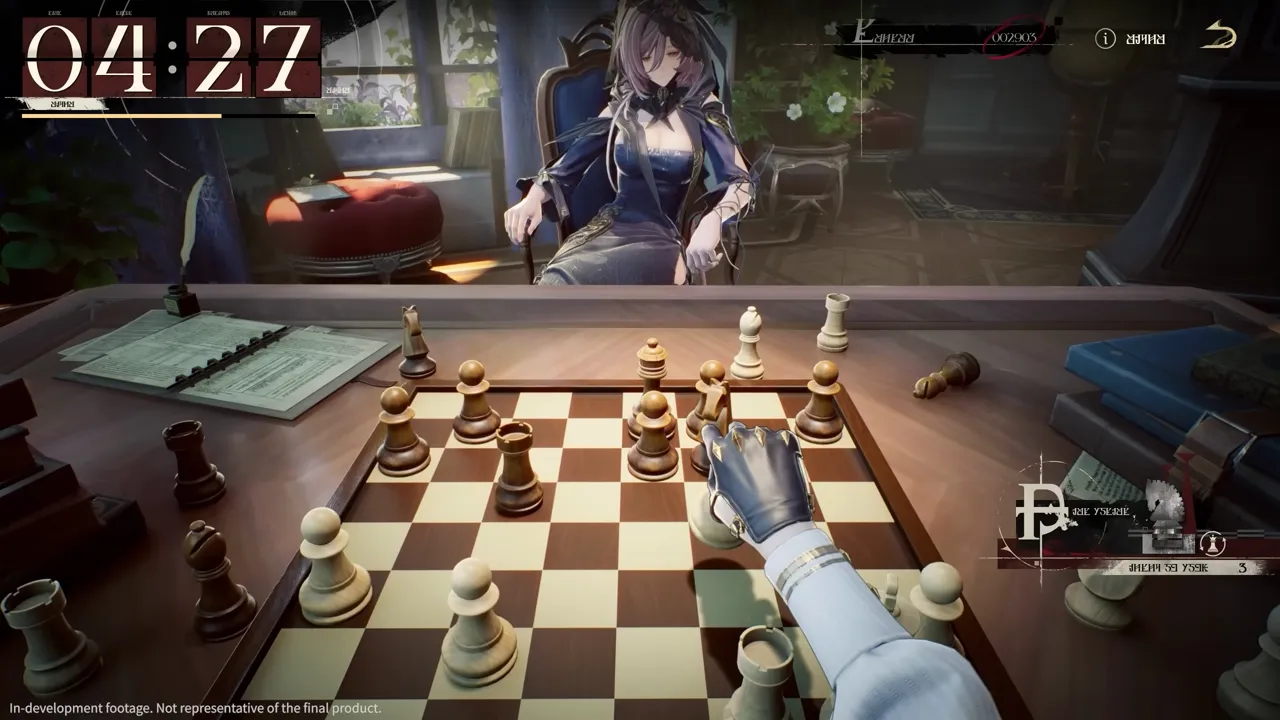
A chess duel in the official Dichotomy showcase. The clock in the top left runs through the match, and the board sits in the opponent's own study rather than a menu screen.
The framing matters more than the chess. In a game about reading people, sitting across a board from someone is characterisation, not filler. The mode gives the writers a reason to put the Detective in a room with a suspect where neither of them is doing anything overtly adversarial.
Card Games
The card table seats you with three other players at once, which makes it the most social of the activities on this list. The official showcase puts you in a first-person seat at a green baize table in a bar, with community cards laid out across the felt, a running score in the top corner and portraits of everyone still in the hand down the left edge. Reporting on the trailer has described blackjack among the card games on offer; what the footage itself shows is a betting round at a multi-player table.
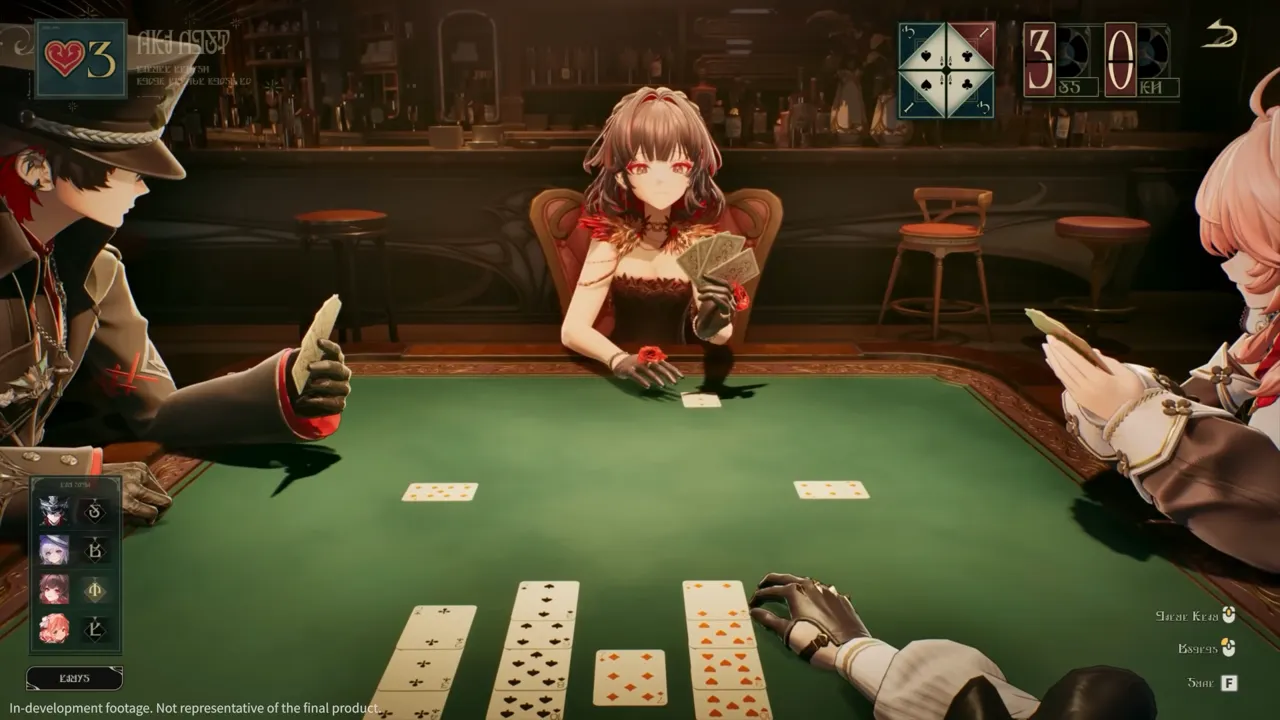
A card table in the official Dichotomy showcase. Red Rose sits opposite, two more players flank the table, and the interface tracks the score and the remaining hands.
Silvernia's Victorian setting does a lot of work here. Gambling halls are period-appropriate, and card tables give the city's nightlife somewhere to happen.
Scarlet Gambit
Scarlet Gambit is the deepest of them and the one that has drawn the most attention, because it is essentially a poker roguelike built into a detective RPG. It has its own vocabulary: Confidants, Lagers, Wax Seals, Chips and Integrity, plus a shop layer and difficulty stakes.
It is substantial enough to deserve its own breakdown. Our Scarlet Gambit deep dive maps its systems one by one and covers the obvious Balatro comparison, including where the translation holds and where it does not.
Surgery and Autopsy
The forensic sequences are the one entry on this list that is not really a minigame. You select surgical instruments and target specific areas on a body model, and what you find becomes part of the case.
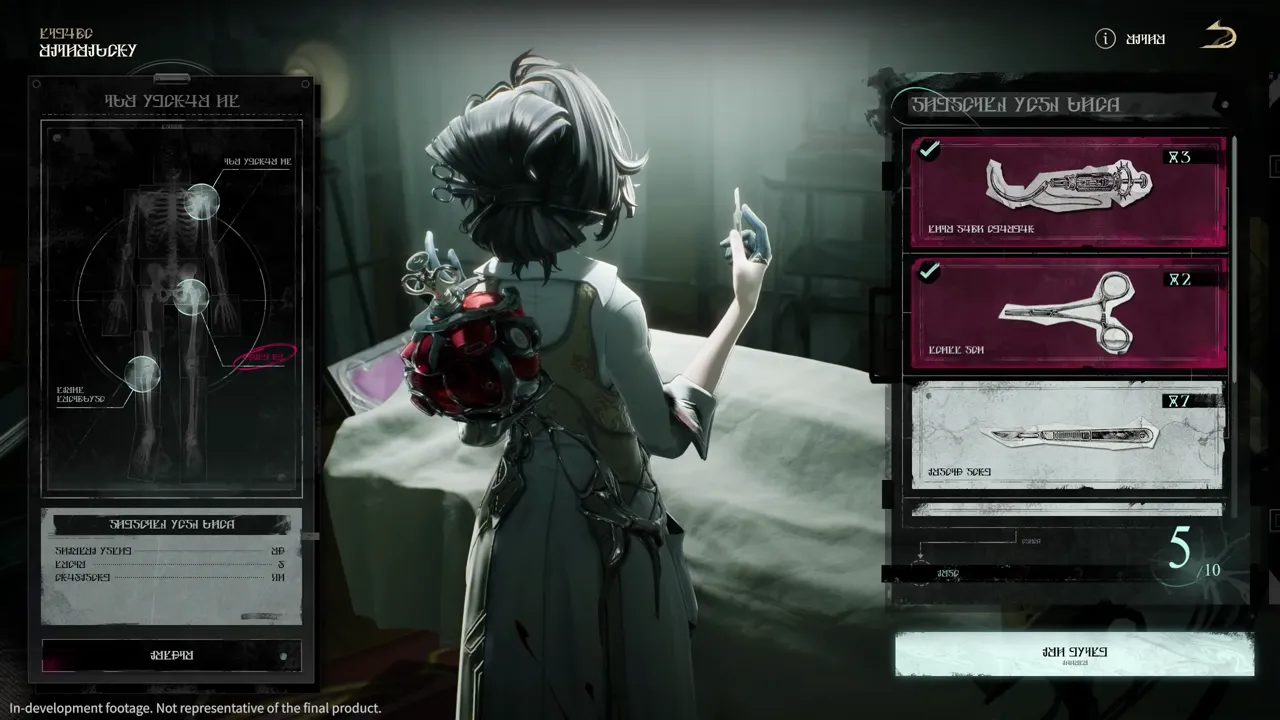
The operating interface in the official Dichotomy showcase. The X-ray panel marks the areas to work on, the tray on the right holds the instruments with their remaining uses, and a counter tracks progress through the procedure.
Tonally, this is stylised medical examination rather than horror. It fits the Victorian forensic register the rest of the game works in: careful, procedural, more interested in what a body can tell you than in shock. Mechanically it is closest to the crime scene work covered in the deduction system guide, and what you learn feeds into interrogations later.
If you are skipping content to save time in a three-week beta, do not skip these. They are casework.
Royal Equestrian Tournament
Racing sends you tearing through Silvernia's streets against the city rather than a track. It is explicitly positioned as a break from cracking cases, a way to see the city from a different angle. It is the one activity on this list that the official Dichotomy showcase does not put on screen, so the detail comes from Elementa's description and outlet coverage rather than from footage.
The game's own name for it is the Royal Equestrian Tournament, which is how its two achievements and the Private Request about a lost bunny knight both write it. It carries a bronze achievement for entering, Dark Horse, and a silver one for clearing every course in High Peers. The game modes guide lists its three courses and what each one pays.
It also doubles as a showcase for how much bigger the map got in this build. Dichotomy opened districts that Monotype kept locked, and a race through them is a faster tour than exploring on foot. For traversal outside racing, the Silverium Pegasus guide covers the mount, and movement and exploration covers grappling and the rest of the kit.
Which Ones Actually Matter
| Minigame | Type | Skip it? |
|---|---|---|
| Surgery / autopsy | Casework | No. Findings feed the investigation |
| Chess duels | Social | Optional, but good characterisation |
| Scarlet Gambit | Standalone mode | Optional, and the deepest system here |
| Card table | Social | Optional |
| Royal Equestrian Tournament | Lifestyle | Optional |
The split is clean: one of the five is investigation, the other four are the city having a life of its own. That second category is doing something specific for the game. An open-world detective story only works if the city feels inhabited, and a place where people play chess, gamble and race horses reads as more real than one that only contains crime scenes.
Frequently Asked Questions
What minigames are in Silver Palace?
The Dichotomy beta includes chess duels, card games at a four-player table, Scarlet Gambit (a poker roguelike), surgery and autopsy sequences, and the Royal Equestrian Tournament, which races through the streets of Silvernia.
How do chess duels work in Silver Palace?
Chess duels are 1v1 matches played from a first-person view at the board, against an opponent seated across from you. A flip-clock match timer runs in the corner of the screen and captured pieces collect in a tray beside the board.
Is the autopsy minigame required?
Forensic sequences are tied to cases. You select surgical instruments and target specific areas on a body model, and what you find feeds into the investigation, so they are part of casework rather than optional downtime.
Can you play blackjack in Silver Palace?
Yes. Card games seat you at a table with three other players. Reporting on the official trailer mentions blackjack; the showcase footage shows a first-person betting round at a green baize table in a bar, with community cards and a running score.
What is horse racing in Silver Palace?
The game calls it the Royal Equestrian Tournament, and it sends you tearing through Silvernia's streets on horseback. It is lifestyle content added in the Dichotomy beta, positioned as a break from casework rather than a required activity, and it carries two achievements of its own: Dark Horse for entering and Expert Equestrian for clearing every course in High Peers.
Are minigames new to the Dichotomy beta?
The breadth of them is. Dichotomy is where chess, card games, forensic sequences and the Royal Equestrian Tournament all appear together as part of the wider open-world and lifestyle content the second beta added.
For everything else the second closed beta introduced, see the Dichotomy Beta guide.