Argos: Who Is He, Really?
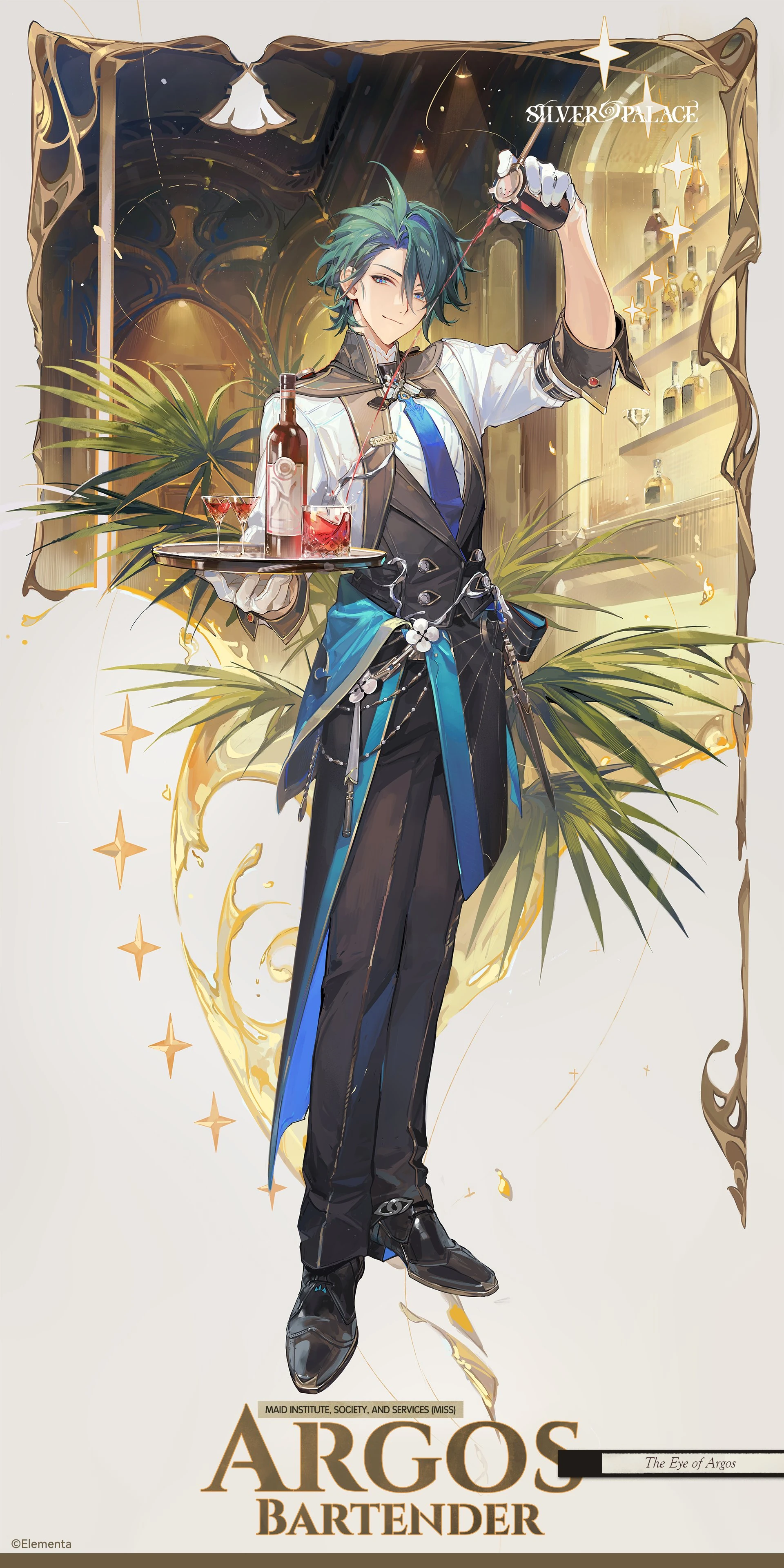
The first thing Argos does in Silver Palace is pour a drink for a man who has been away a long time. The drink has a name. It is the city wanderer, strong and sweet, and it is on the house. Now open his combat sheet and look at his six Psyches, the passive nodes you unlock as you invest in him. The first one is called City Wanderer.
Alf's six Psyches are all about Alf. Argos opens his with the drink he hands somebody else.
Both halves of that detail have been published on this site for months, the drink in the story recap and the Psyche on his character page, and nobody has put them next to each other. Put them next to each other and the rest of his file starts lining up the same way: a Motive that states outright what he is waiting for, an Ultimate whose flavour text is a list of documents, a combat resource named Confession that fills while he is standing off the field, and a voice line in which a man named Argos says "every dog has its day."
Act I is called "The Return"
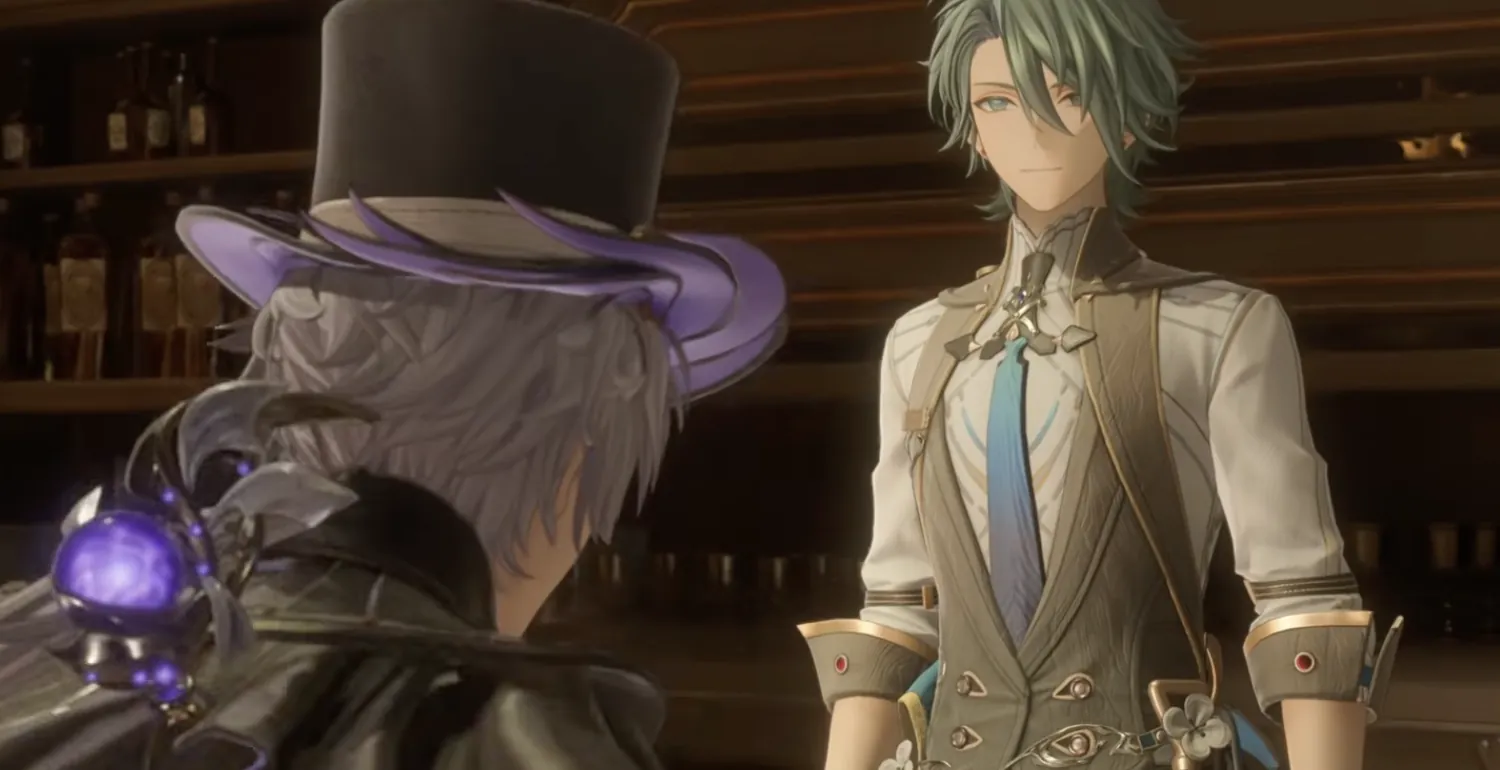
The game does not open at the bar. It opens in a cemetery in daylight, with the Detective standing over a sibling's grave, and the achievement marking that scene is called A Fall From the Peak. The city starts one scene later, and the game's own achievement text gives the hour and the place: "Dusk: at the coronation celebrations. Following a talk at the bar, the Detective agrees to work together with Lorin." That achievement is called Post-Golden Age. The scene it completes is called The Return.
Argos is the first person in it. He greets the Detective like a returning legend, pours the city wanderer on the house, and mentions that plenty of people have been waiting for this return. One of them walks in a minute later. Chief Inspector Lorin slides onto the next stool, waves off his own title because rank only puts distance between old friends, and lays out the Nameless Ashes: several bodies burned past identification, unclaimed, and all but clueless. The partnership the entire campaign runs on is agreed at Argos's bar, at Argos's hour, over Argos's drink. The site's scene-by-scene breakdown, Major Cases: every act and scene in order, says the same thing more bluntly: the deal happens in a bar, and the bar is his.
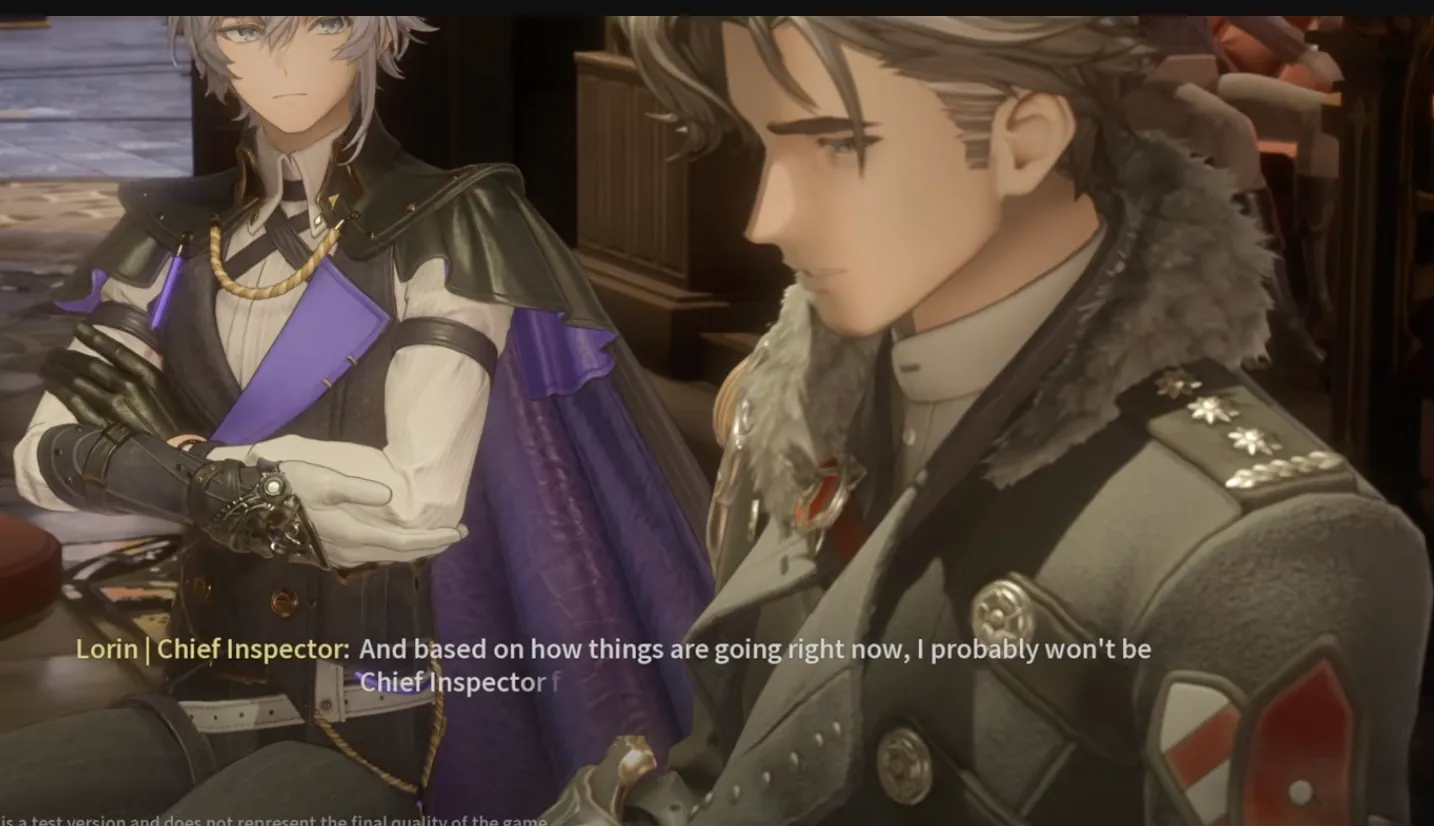
Then read his likes, four words long in the mirrored profile: paid leave, busy environments, dusk, street performers. Dusk. The character whose introducing scene is timestamped at dusk lists dusk as one of the four things he likes. On its own that is nothing. It stops being nothing once you count how many other details point the same direction.
"Every dog has its day"
Every published reading of his name, on this site and everywhere else, goes to the same place. Argos Panoptes was the giant of Greek myth covered in a hundred eyes, whom Hera set to guard Io because some of those eyes stayed open while the others slept. That reading is correct and nobody needs to argue for it. His drip marketing title is The Eye of Argos. His Ultimate is also called The Eye of Argos, and it leaves behind an area the game names the All-Seeing Domain. Eye motifs run through the design. The character name origins breakdown covers all of it, down to the peacock whose tail carries the dead watchman's eyes.
Greek literature has a second Argos, and nothing on this site has ever mentioned him.
In the Odyssey, Odysseus reaches Ithaca after twenty years away, disguised well enough that his own household walks past him. His wife does not know him. His son does not know him. The suitors eating his food certainly do not know him. One creature in the whole palace recognises him on sight: an old dog, neglected on a heap by the gate, who lifts his head, manages a wag, and dies. The dog's name is Argos.
Now read the Trust ladder. Argos has three impressions, the running label the game gives his opinion of you as trust rises. They go Memoir Regular, then Troublesome Customer, then An Old Friend, Reunited. The top of the ladder is not "trusted source" or "loyal ally." It is a reunion.
And then there is his Inner Feelings line, the slot the game reserves for what a character privately thinks about themselves: "'Every dog has its day!' Well, I had trouble believing in that, but then you showed up and injected some confidence in me."
A character named Argos, whose highest relationship tier is a reunion, in an act titled The Return, quoting a proverb about a dog, on the subject of somebody coming back.
Confidence levels, since this is the part where it matters. The name is fact. The Panoptes reference is fact. The voice line, the Trust tier and the act title are all fact, printed in the game. That Elementa was reaching for the Ithacan Argos as well as the Argive one is a reading. It is a well-supported reading, and it changes what the character is for. Panoptes watches strangers. The dog remembers one person.
"Just... as old mates"
Follow that thread and a stranger question opens up, which is how long these two have known each other.
Start with his Scattered Thoughts line, the one that plays when he has something he wants to say rather than something to serve: "Let's have a little heart-to-heart. Not as a patron and an employee. Just... as old mates." Then his Battle Start line: "It's an honour to fight along your side again, patron." Again. Then his Greeting: "Plenty of interesting things happened in the city while you were away, patron. Interested in the details?" And in the scripted introduction, before he gives his name at all, he answers the Detective's "you sound as though you know me" with "Many in this city know you well, myself included."
None of that requires a shared history. A bartender in a small district would know a famous local investigator by reputation. What does not fit reputation is the vocabulary.
His own character page carries a quote from him that reads, in full: "At your service, patron. Whether it's throwin' hands or passin' notes in a test: count me in." Passing notes in a test. Not a metaphor about discretion, a specific memory of a specific room. And the flavour text on his Skill, Celebratory Champagne, is a list of three occasions: "Birthdays, ceremonies, and graduation days. The sparkle of wine meets the shimmer of tears." Graduation days.
Then the Ultimate. The flavour tail on The Eye of Argos, the ability named after the hundred-eyed watchman, reads: "Memoirs, alumni books, and case files. Words like reflections in wine." Alumni books.
Three separate pieces of his kit reach for school. A test, a graduation, an alumni book. His top Trust tier is a reunion. His battle line says again. His greeting says while you were away.
The phrases are all fact and they are all his. The conclusion, that Argos and the Detective were at the same school before the Detective ever left Silvernia, is theory. It is the single most load-bearing unpublished thing in his file, and if a later chapter confirms it, every line above was sitting there in the Dichotomy beta build waiting.
The Ultimate is named after paperwork
Sit with that Ultimate flavour text a moment longer, because of everything in his kit it is the strangest.
"Memoirs, alumni books, and case files. Words like reflections in wine."
The ability is called The Eye of Argos. It is the character's signature move, the one the marketing title is named after, the one that leaves an All-Seeing Domain on the floor. Its flavour text contains no eye, no watching, no sight of any kind. It is a list of three kinds of written record, and the only sensory word in it is a reflection in a drink. Elementa named the eye and then wrote about documents.
The other names agree. He works at the Memoir Bar, and he is the one who explains why: "Wondering why they call it the 'Memoir Bar'? Perhaps from the memories that float to our minds after a cocktail or three. What'll you be having?" The district writeup calls it the beating heart of High Peers once dusk falls, where "amid a sea of drunken whispers, scandalous gossip, and half-remembered tales, vital clues sit waiting to be found." A memoir is not a view. It is a record somebody kept.
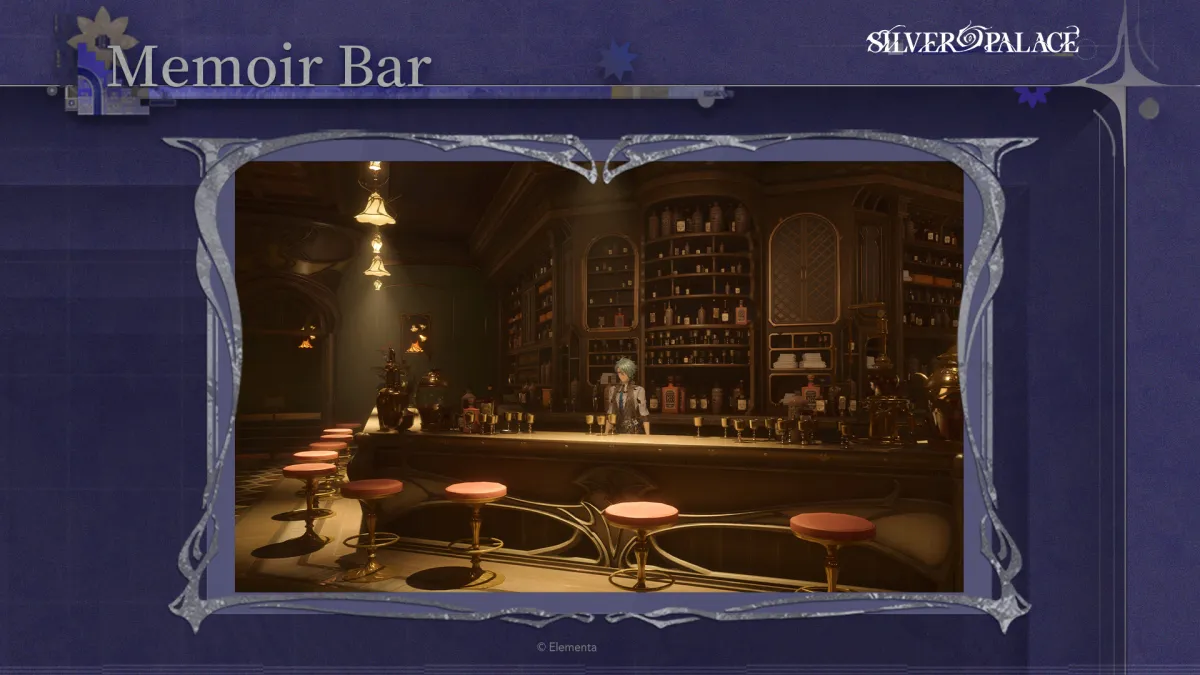
His own collectible character card carries a paragraph the site has never printed, and it is the best three sentences he has:
"An eloquent gent of a bartender, and a mysterious watcher of the shadows. Usually seen twirling his cocktail shaker with his cane gun close at hand; the former is a tool for hosting friends, and the latter is a weapon for handling trouble. He lends an ear to all, from fallen nobles to those caught in the currents of a society in upheaval. And so, he sees all that transpires in Silvernia, all events both big and small."
Read the mechanism in it rather than the mood. He does not see all that transpires in Silvernia because he has a hundred eyes. He sees it because fallen nobles and people caught in an upheaval both end up at a bar, and he lends an ear. The card puts the ear first and derives the eye from it.
Every one of his Psyches is a blind spot
His six Psyches are the clearest signal in the file, and they are almost never read as a set. Four of the six are lifted straight out of psychology, and three of those four name a way that observation fails.
| Psyche | What it is doing there |
|---|---|
| City Wanderer | The name of the drink he pours the returning Detective, on the house, before he has been asked for anything. |
| Non-Violent Communication | A conflict-resolution method. He carries a gun inside a cane, and his first tool is talking. |
| Self-Fulfilling Prophecy | The bias where expecting a thing helps cause it. The mechanic is a DEF shred: he makes the enemy easier to hurt by acting as though they already are. |
| Perceptual Blindness | You do not see what you are not looking for. This is a Psyche on the character built around seeing. |
| Old Reserves | What a bar keeps at the back. Also what he is: stock held a long time, poured when it is finally worth something. |
| All-Seeing Eye | Panoptes, stated plainly, arriving last on the list rather than first. |
Perceptual Blindness is the one to stop on. It is the formal name for looking directly at a thing and not registering it, and Elementa put it in the passive list of the character whose entire marketing identity is that he sees everything. The set does not read as a boast about vision. It reads as a curriculum in how vision goes wrong, ending on the eye.
Alf's list did the same trick with Abandoned Cat Effect. Whoever names these is working from a psychology index, and they are not naming flatteringly.
Confession, and what a Witness is for
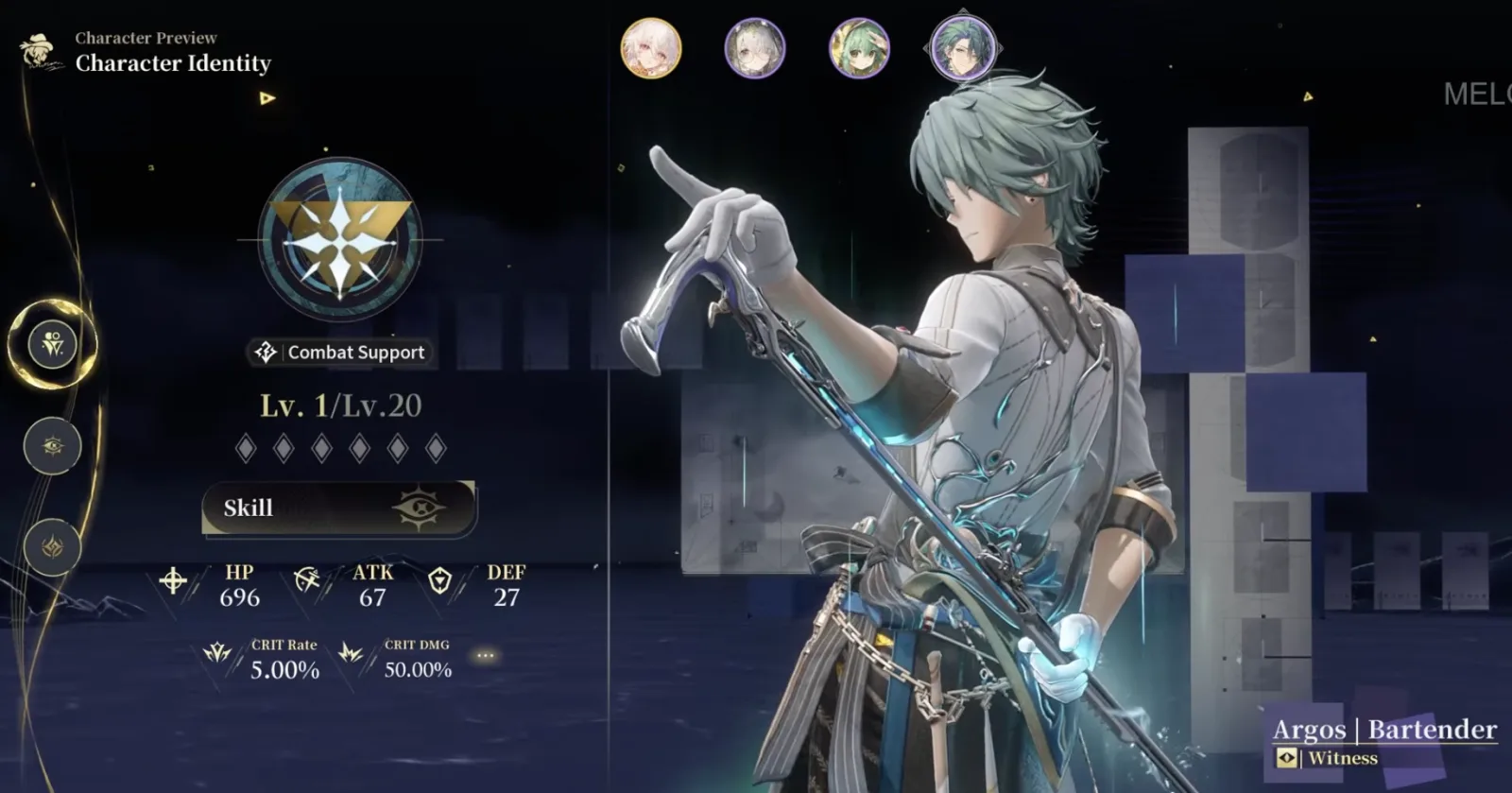
His combat sheet reads 4-star, Glacies, Combat Support, Identity Witness, signature Motive The Duplicity Mystery. The Argos build guide covers the rotation and the team fit, and the Combat Style and Identity roster covers what those brackets mean across the cast. Two mechanical facts belong here instead.
The first is the name of his resource. Argos's Skill spends a meter called Confession. It accrues on its own at one point per second up to a cap of twelve, and it accrues while he is off the field, which is why he is the least demanding support on the roster to play: he arrives already full. The character built around listening gathers confessions by not being in the room. Spend all twelve and he gains a state called Piercing Gaze, and only then does the seeing start.
The second is the Identity itself. The game defines Witness in one line: "One who observes, witnesses, records, and narrates everything to pass the story on." Observes, then records, then narrates, then passes it on. Three of those four verbs are about custody of a story rather than sight of it.
The materials you feed him to raise that Identity say it again, and read in ascending rarity they are close to a poem:
- Witness's Instinct: "Treat the world as a play. Have fun and admire it."
- Witness's Insight: "Leave the chessboard, or get trapped within it?"
- Witness's Challenge: "And so the curtain falls, and the verdict is final."
- Witness's Legacy: "Each scene before us is made complete in its observation."
The last line is the thesis of the whole character. A scene is not finished when it happens. It is finished when somebody watches it. And the Identity's ascension line runs on Wax, whose droplets carry the bleakest flavour text in the material list: "Devoid of light or warmth, it fades at the softest sigh." Candle wax, for the people whose job is to be present while something burns down.
Which brings it to his Motive, and the Motive is where Elementa stops hinting:
"A good bartender is either making friends, or on his way to making them. Just like Argos, who is either working a side job, or on his way to one. A special with 30 millilitres of alcohol can quickly loosen any tongue, then it's just a matter of listening afterwards, may it be a potpourri of truths and nonsense, or a jumble of deceit and honesty. The bartender is no expert at telling them apart, but he knows someone who is. The puzzle is already in sight, and Argos is waiting for the one who can solve it."
He is not the detective. He says so himself in his first line: "Not all are of your stature, my dear patron; consider me a supporting role, if you will. An assistant: like a dash of mixer to complement a strong liquor, perhaps." He collects testimony he explicitly cannot sort, holds it, and waits for the person who can. Act I is called The Return. The person he is waiting for walks through his door in the first scene of it.
One more naming detail, because it is too pointed to leave out. The Motive is called The Duplicity Mystery. Its combat effect is called Sincerity.
The evidence sitting in his equipment tab
Silver Palace attaches a paragraph of prose to nearly everything a character can wear, and most of those paragraphs retell a real story in miniature, credited nowhere and read by almost nobody past the first pull. The equipment guide covers what an Epiphany and an Implement actually are. What matters here is that not one of the 350 equipment pieces in the game mentions Argos, and four of them are about him anyway.
Start with the Epiphany called The Barber of Meadow: "The busiest barber in all of Meadow, the jolliest helper the town could know! Old folk and children, maidens and lads, all come to him, joyful and glad! And who is in need of his aid this time? None but the Count, a man caught in tragic romance: 'I've fallen for a girl, her guardian a doctor. She's shut up at home, hence we're unable to meet...'"
That is The Barber of Seville, and the barber is Figaro, who introduces himself in the opera's most famous aria as the town's factotum: the man who does everything, whom everybody comes to, and who spends the plot brokering somebody else's secret because his shop is where the whole town's business passes through. Argos's official bio calls him "a jack of all trades," with "considerable experience from working all kinds of jobs around High Peers." Figaro is the jack of all trades whose real trade is knowing things.
The Epiphany's effect is the part that should raise an eyebrow. It pays out "when they deal DMG while outside the battlefield," granting the team stacks of a buff named Aria. An off-field contribution, named after a song, on the character whose resource fills while he is off the field. Nothing in that Epiphany's text says Argos. Everything in its shape does.
Then the Implement set called Hey, Jack, whose four pieces are The Blind Man, The Wisher, The Debt Collector and The Cheater, all sharing one verse: "Jack, oh Jack, you're such a knave. A scoundrel who's left me looking the fool. And I suppose I am, for I fall for your games." Four people at a bar late enough for a song about being taken in, and the first of them is blind. Jack is also the word in "jack of all trades."
Then Cogs of the City, whose pieces are a non-absorbent towel, a non-dustproof dust cap, a non-insulated lunch box and a non-turnable wrench, and whose text is the only thing in the equipment list that sounds angry: "Dirt, dust, sweat, and tears. Though silent and forgotten, they are indispensable to Silvernia, for they are the cogs that keep it turning. Raise your torches, that they may get the respect they deserve."
And then Retainer's Code, the set written for MISS work specifically, whose creed is "The master's newspaper needs ironing, and the mistress's tea needs bringing to the perfect temperature: a maid's work is never done, and even when busy, they must remain elegant and composed." Its bonus raises the holder's HP and then hands the rest of the team a damage buff, which is a description of how Argos works: his passive scales the whole team's attack off his own maximum HP. MISS has exactly two playable members, Alf and Argos, and the institute's own gear set fits him mechanically better than it fits her. He has no gear named for MISS at all.
None of that is filed as Argos's story. It is filed as equipment text, attached to gear, read by whoever is chasing a number. It agrees with him regardless.
"I was never treated this well in MISS"
There is one more layer, and he keeps bringing it up unprompted.
When you break his potential, the celebratory line is not celebratory: "You're ever so kind. I must say, I was never treated this well in MISS..." When he rides, he worries about the bill: "I gotta be careful. If I put a dent on this, my MISS stipend would hardly cover the damages." Asked directly what his rank inside the institute is, he deflects and then undercuts himself: "My MISS level...? A gentleman never tells, I'm afraid... Oh, I'm just joking. It's nothing much." He mentions a second job on the side, as a part-time stable hand for The Knights. His Motive's opening sentence has him "either working a side job, or on his way to one." His stated likes include paid leave. His stated dislikes are demanding employers, trouble-making customers and unequal treatment.
The working-class Silvernia piece already made the general case that this cast is written as employed people. Argos is the sharpest instance of it, and the sharpest detail is the one about not drinking: his single Intel entry notes he "never drinks so much as a drop of alcohol while on the clock" and, for a bartender, cannot hold his liquor anyway. He is sober at the bar because he is working. The all-seeing watchman is a man on a shift, and his Motive is called Duplicity because he is doing two jobs at once and only one of them is on the payroll.
His victory line, incidentally, rhymes with a running gag from the other MISS member: "I've just the cocktail for clearing the scene, and another for destroying evidence... May I take your order?" Alf jokes about burning the evidence and then protects it. Argos jokes about destroying it and then keeps it.
The verdict
The site has spent months calling Argos the watchman, and the watchman reading is right about his eyes and wrong about his function. A watchman guards a boundary and reports intruders. Argos does not guard anything. He accumulates.
His resource is called Confession and it fills while he is out of the scene. His Identity is defined by four verbs of which three are custody. His Ultimate is named for an eye and written about memoirs, alumni books and case files. His bar is named after a written memory and he is the one who explains the name. His Motive says outright that he cannot sort truth from nonsense and does not need to, because he knows someone who can, and that he is waiting for them. His highest Trust tier is a reunion. And his private line about himself is a proverb about a dog.
Argos Panoptes had a hundred eyes and lost all of them, and what Hera saved was the eyes rather than the watchman. Argos of Ithaca had nothing but a memory of one man and it was the only thing in the palace that worked. Silver Palace named its bartender after the first one, put him in an act called The Return, and gave him the job of the second. The first scene of the story is a man walking back into a city that has forgotten him, and the character the game puts behind the counter already knows his drink.
Frequently Asked Questions
Who is Argos in Silver Palace?
A 4-star Glacies Combat Support with the Witness Identity, and one of the only two playable members of MISS, the Maid Institute, Society, and Services. He tends the Memoir Bar on Morgue Street, carries a cane gun, and is the first character the Detective speaks to in Act I, the act titled The Return.
What is Argos named after?
Argos Panoptes, the hundred-eyed watchman of Greek myth, which is confirmed by his marketing title and his Ultimate, both called The Eye of Argos. The reading this piece adds is that a second Argos fits him better: Odysseus's dog, the only one in Ithaca who recognises his master after twenty years away. His act is called The Return, his top Trust tier is "An Old Friend, Reunited," and his own Inner Feelings line quotes "every dog has its day." The Panoptes reference is fact; the Ithaca reading is theory.
Do Argos and the Detective know each other from before?
The game never says so, but three separate pieces of his kit reach for school. His own quote mentions "passin' notes in a test," his Skill's flavour text lists "graduation days," and his Ultimate's lists "alumni books." Add a Trust tier called An Old Friend, Reunited, a battle line about fighting at your side "again," and a greeting about what happened "while you were away." The lines are fact and the shared-school conclusion is theory.
What does the Witness Identity mean for Argos?
The game defines it as "one who observes, witnesses, records, and narrates everything to pass the story on." Three of those four verbs are about keeping a story rather than seeing one, and the Insight materials that raise the Identity say the same thing, ending on "each scene before us is made complete in its observation." Argos, Cynthia II and Grimm are the three Witnesses, and all three are Combat Support.
What is Confession in Argos's kit?
The meter his Skill spends. It builds on its own at one point per second to a cap of twelve, and it builds while he is off the field, so he can be swapped in already full. Spending it grants Piercing Gaze, the state his damage buffs key off. It is why he is the least demanding support on the roster to play, and the name is not an accident on a character whose Motive is about loosening tongues.
What is Argos's signature Motive?
The Duplicity Mystery, a 4-star Witness Motive whose combat effect is named Sincerity. Its text ends: "The bartender is no expert at telling them apart, but he knows someone who is. The puzzle is already in sight, and Argos is waiting for the one who can solve it." The full stat curve and refine costs are on the Duplicity Mystery page.
What should Argos equip?
Mechanically that belongs in the Argos build guide and the equipment guide. Thematically, the flavour-correct pick is The Barber of Meadow, whose text is Figaro the town factotum and whose effect pays out while the holder is off the battlefield, and Retainer's Code, the MISS creed set whose HP-into-team-damage shape matches how his passive actually scales.
Know someone tracking Silver Palace? Send them this.
About the Author
Silver Palace Meta Team
Silver Palace Meta Team
We're dedicated to providing comprehensive coverage of Silver Palace news, updates, and community insights.