Silver Palace Character Name Meanings and Mythology

Silver Palace does not name characters at random. Hugin and Munin come straight out of Norse mythology, Argos out of Greek myth, and Red Rose sits on a whole shelf of sources at once: Shakespeare, the Brothers Grimm, a Tchaikovsky ballet, a Bizet opera, and Arthur Conan Doyle. This piece works through the name origins one character at a time, keeping the confirmed references separate from the readings that are still theory.
One scope note before starting. This is a companion to the dark fairy tale reimaginings breakdown, which covers how Silver Palace twists whole stories (Cinderella, the Author meta-narrative). Here the focus is narrower: what the names themselves mean, and which source texts they point back to.
Hugin and Munin: Odin's Ravens
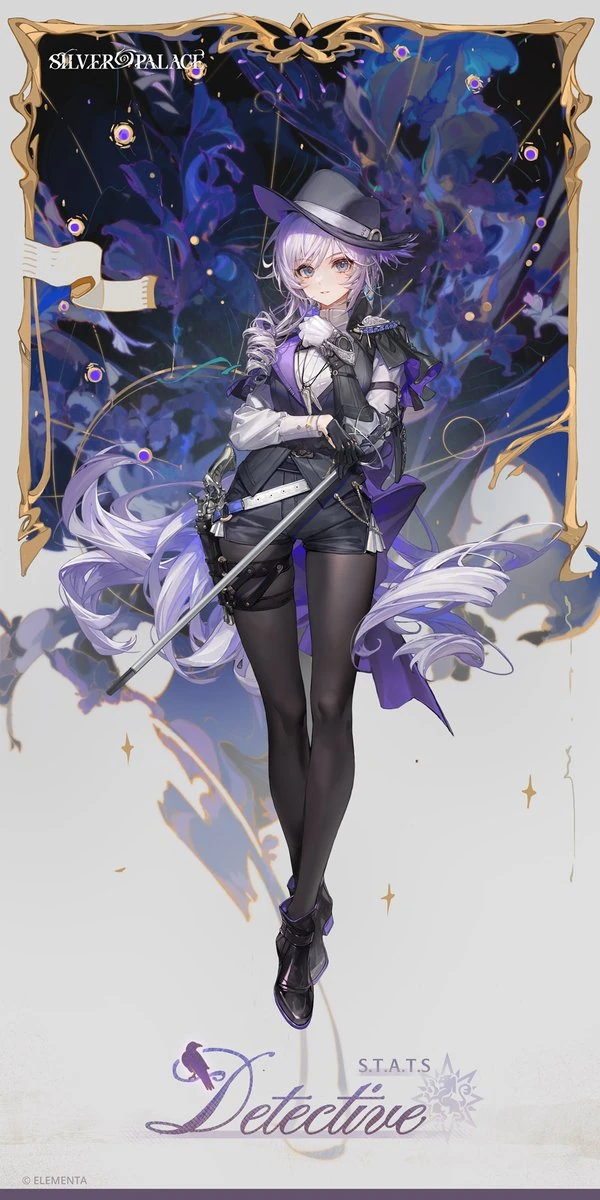
Start with the protagonists. The Detective siblings carry the Character Identity names Hugin and Munin, and in Norse mythology Huginn and Muninn are Odin's two ravens. Their names translate roughly to "thought" and "memory." Every morning they fly out across the world, watch everything, and return at dusk to whisper what they saw into Odin's ear.
That is not a loose thematic echo. It is a job description. The Raven's Beak and Raven's Claws duo, a younger brother and an elder sister running a detective agency, do exactly what the ravens do: go out into Silvernia, collect knowledge, and carry it back. The raven branding runs through their titles, their faction naming, and the female Detective's ultimate, "Thus Spake the Raven."
There is a darker layer in the source material worth knowing. In the Poetic Edda, Odin admits he fears for both ravens each day they fly out, but fears more for Muninn, for memory, the one that might not come back. For a pair of siblings whose backstory involves an airship crash and a disappearance, a naming scheme built on "thought" and "memory that might be lost" reads like foreshadowing. That last part is interpretation, not anything Elementa has confirmed. The Odin's-ravens naming itself is about as unambiguous as game references get.
Gratia: A White Rabbit in the Queen's Chess Game
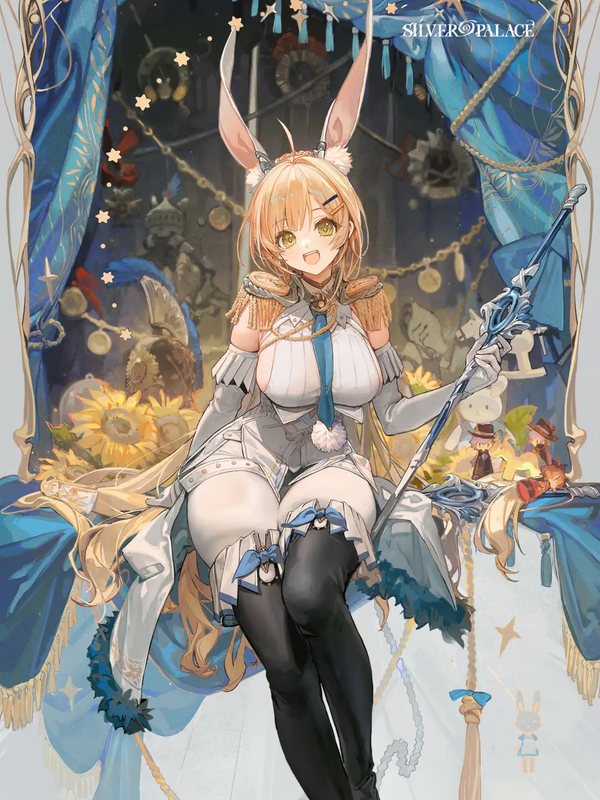
Gratia is Latin for "grace," a fitting name for a knight who fights, in her card's own words, in the name of "the Queen's grace." That much is straightforward etymology.
The more interesting reading comes from her design. Gratia is the roster's one rabbit-eared character, and she dresses almost entirely in white. A white rabbit serving a queen points hard at Lewis Carroll. And the specific Carroll book that fits is not Alice's Adventures in Wonderland but its sequel, Through the Looking-Glass, where the entire story is structured as a chess game between the White Queen and the Red Queen, with the Wonderland cast moved around the board as pieces.
Now look at Gratia's introduction quote: "Routine training shall make the knights stronger... Thus spake Her Majesty the Queen!" She does not just obey the Queen. She repeats the Queen's words verbatim, the way a chess piece executes its player's move. If the Looking-Glass reading holds, Gratia is not the player in whatever game is unfolding around the throne. She is a loyal little piece on someone else's board, and her card's closing line about "dark secrets" festering beneath that throne suggests the board is not a friendly one.
To be clear about confidence levels: the Latin meaning is fact, the rabbit-in-white design is fact, and the chess-piece reading is theory. A well-supported one, but theory.
Argos: The Hundred-Eyed Watchman
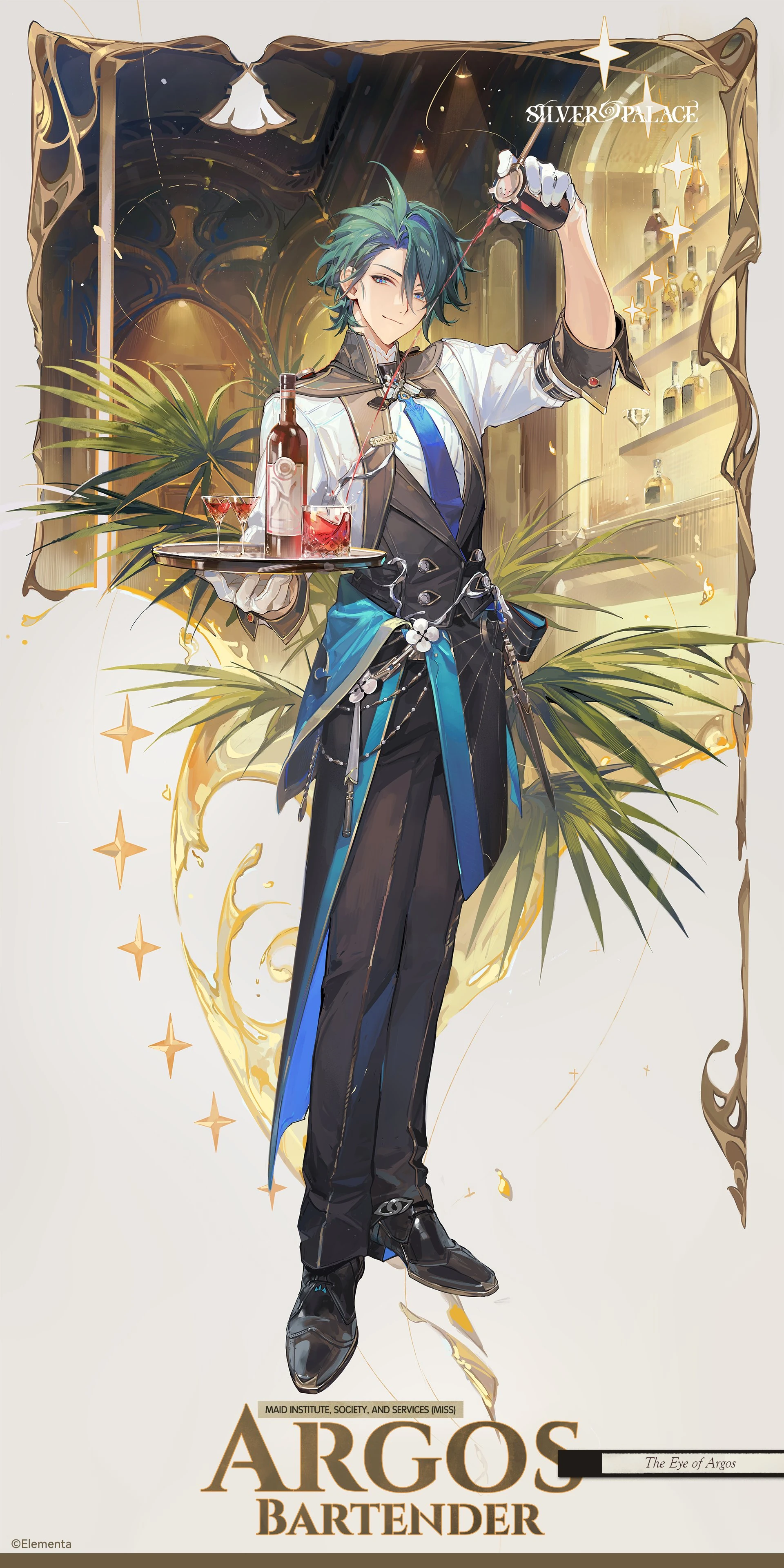
Argos takes his name from Argos Panoptes, the giant of Greek mythology covered in a hundred eyes. Panoptes literally means "all-seeing." Hera set him to guard Io precisely because some of those eyes stayed open while the others slept; he was the one watchman who could never be caught off duty. When Hermes finally killed him, Hera honored her guard by moving his eyes onto the tail of her sacred bird. That is the myth behind the peacock's feathers.
Silver Palace leans into the reference from the first frame. His drip marketing title is "The Eye of Argos," and eye motifs run through his design. The characterization completes it: Argos tends bar, and a bartender is the modern city's version of the watcher who never sleeps. People sit down, drink, and talk. He listens, remembers, and waits. All-seeing through position and patience rather than anatomy.
The dark reimaginings piece touches on Argos as an archetypal witness figure. The name-level detail worth adding here is the peacock. If Elementa ever gives Argos a peacock-feather visual, an eye-covered skill effect, or a story beat about what happens to a watchman's knowledge after he falls, the myth says that beat was planned from the day he was named.
Alf: The Light Elf in a Maid Uniform
Alf is the least hidden reference on this list once you see it. Alf is simply the Old Norse word for elf. In Norse cosmology, the Prose Edda splits the alfar into two kinds: the ljosalfar, light elves described as radiant beings "fairer than the sun," and the dokkalfar, dark elves who dwell down in the earth. Light elves are the benevolent kind, elegant and luminous, and later folklore keeps casting elf-like beings as helpers of households and humans.
A radiant, elegant helper attached to a household. That is a maid, which is exactly what Alf is: Maid No. 49 in MISS's service, cheerfully hauling a flamethrower around. The name choice does raise one question the light-elf reading cannot answer on its own. If the writers pulled from a mythology with a light and dark split, naming a character "Alf" leaves the door open to which kind she turns out to be. Nothing in her reveal suggests a dark twist, and the sunny presentation points the other way. File that one under things to watch, not things to expect.
Red Rose: A Name With Too Many Sources
Every other character on this list has one primary reference. Red Rose has at least five plausible ones, and the striking part is that they do not contradict each other. They stack.
The ballroom, the sisters, and the ballet
Her character introduction crowns her master of the Midsummer Night's ballroom, an unmistakable nod to Shakespeare's A Midsummer Night's Dream. A dancer ruling a dream-logic ballroom fits the play's territory of performance, enchantment, and things that happen after dark.
The name itself points at the Brothers Grimm. Snow-White and Rose-Red (a different Snow White from the apple one) follows two kindhearted sisters who shelter a bear through the winter; the bear turns out to be an enchanted prince. Rose-Red is the bold, outdoor-loving sister of the pair, which is not a bad personality sketch for a stage performer.
Then there is the ballet layer, which gets stronger the closer you look. In Tchaikovsky's The Sleeping Beauty, Aurora's father is King Florestan, and the ballet's most famous set piece is the Rose Adagio, where Aurora dances with four suitors, each presenting her a rose. Silver Palace has called Red Rose a "Florian Superstar," and the Floria theory breakdown digs into what that title might mean regionally. Read alongside Florestan and the Rose Adagio, a celebrated dancer named for a rose with "Florian" in her billing looks like a deliberate Sleeping Beauty callback. Her confirmed kit even runs on a Rose Petals resource.
Red and Black, the Raven and the Rose, A Study in Scarlet
The densest single piece of evidence comes from the CBT1 main quest, so treat the details as beta content that could change before launch. In her first meeting with Munin, Red Rose offers names for their partnership: "Red and Black? The Raven and the Rose. Or... A Study in Scarlet?"
Three names, three layered references:
- Red and Black describes their outfits, red for her and black for the Detective. It is also the name of a two-deck solitaire game built entirely on alternating red and black cards, closely related to the French-named Rouge et Noir. A gambler's game for a partnership she proposes on her own terms.
- The Raven and the Rose compresses both characters' branding into one phrase: the Detectives' raven titles on one side, her name and her title, "The Rose as an Engine of War," on the other.
- A Study in Scarlet is the title of Arthur Conan Doyle's first Sherlock Holmes novel, published in 1887. Offering that name to a detective is Red Rose telling Munin exactly which story she thinks they are in, and casting herself in it.
Carmen and the Irene Adler reading
The Holmes thread keeps going. From a balcony, Red Rose hums the Habanera, the entrance aria "L'amour est un oiseau rebelle" ("love is a rebellious bird") from Bizet's 1875 opera Carmen. The same melody shows up on piano, played by Munin, in the Dichotomy gameplay showcase. A shared musical motif between these two, built on an aria about love as an untameable bird, sung in the opera by a woman no one can hold onto, is not an accident of playlist.
Put the opera and the Holmes reference together and you get the strongest personality read on Red Rose so far: Irene Adler, the retired opera singer from Doyle's "A Scandal in Bohemia," the one woman who outwitted Sherlock Holmes. Adler is no villain and holds no malice toward the detective; she simply beats him at his own game and walks away. A performer who could probably just help Munin, but prefers to play with the Detective instead, would map onto Adler almost one to one. This reading is community-level theory built on beta dialogue, so hold it loosely. But no other character in the game has this many literary arrows pointing the same direction.
What the Naming Pattern Tells You
Line the five up and a pattern emerges. Silver Palace names characters the way its own Detective works a case: the surface tells you the truth if you know where the pieces come from. Norse myth supplies the knowledge-gatherers and the helper. Greek myth supplies the watcher. Carroll supplies the court. And the character built for misdirection gets five references instead of one, most of them routed through the most famous detective stories ever written.
It also means names are evidence. When the next title page drops, checking the name against mythology and fairy tale sources is not fan trivia; on this roster's track record, it is the fastest preview of the character's narrative role you can get. For the symbolism running under the game's title itself, the silver symbolism breakdown applies the same method to the metal the whole setting is named after.
Three more names hold up under the same method: Grimm as a chronicler rather than an author, Rex's Queen of Hearts and Cerberus readings, and Firtho's case for a Watson parallel. The second name-origins piece covers all three.
FAQ
What do Hugin and Munin mean in Silver Palace?
Hugin and Munin are the Character Identity names of the Detective siblings, taken from Huginn and Muninn, Odin's ravens in Norse mythology. The names mean roughly "thought" and "memory," and the ravens' job of flying out to gather knowledge and reporting back mirrors the sibling detectives' role in Silvernia.
What is Argos named after?
Argos is named after Argos Panoptes, a hundred-eyed giant from Greek mythology who served as Hera's unsleeping watchman. After his death, Hera placed his eyes on the peacock's tail. Silver Palace's Argos carries the reference through his "The Eye of Argos" drip marketing title and his role as a bartender who sees and hears everything.
Why is Red Rose connected to Sherlock Holmes?
In CBT1 beta dialogue, Red Rose suggests "A Study in Scarlet," the title of Arthur Conan Doyle's first Holmes novel, as a name for her partnership with Munin. Combined with her opera motif from Carmen, some readers see her as a parallel to Irene Adler, the opera singer who outwitted Holmes. The dialogue is real beta content; the Adler reading is theory.
Is Gratia based on Alice in Wonderland?
Possibly. Gratia's name is Latin for "grace," which is confirmed etymology. The theory comes from her design: she is a white-clad rabbit character whose introduction quote repeats the Queen's words verbatim, which fits Through the Looking-Glass, where a chess game between queens moves the cast around as pieces. Elementa has not confirmed the connection.
Know someone tracking Silver Palace? Send them this.
About the Author
Silver Palace Meta Team
Silver Palace Meta Team
We're dedicated to providing comprehensive coverage of Silver Palace news, updates, and community insights.