Silver Palace Analysis: World, Combat & Narrative
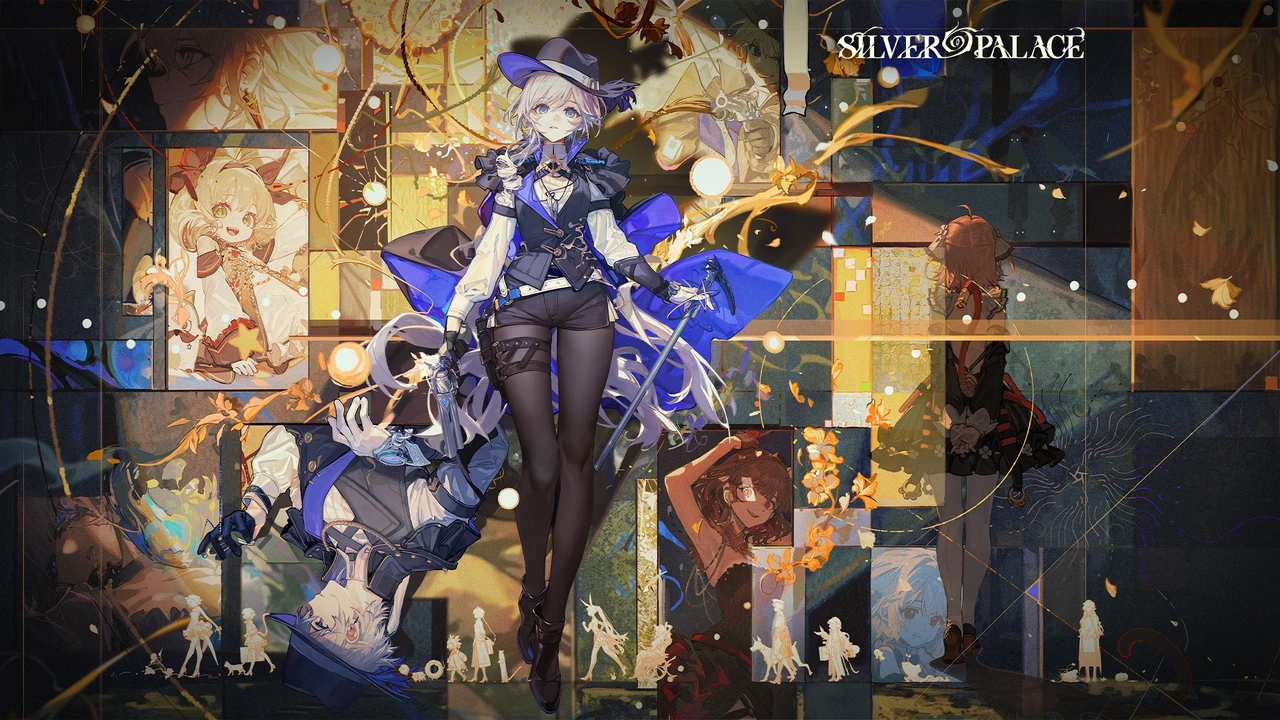
Silver Palace represents one of the most ambitious entries into the action RPG genre in 2026, merging Victorian-era aesthetics with cutting-edge Unreal Engine 5 technology. This comprehensive analysis examines the game's world-building foundations, technical infrastructure, narrative innovation, and its position within the broader gacha market.
The Industrialization of Silvernia: Lore and World-Building
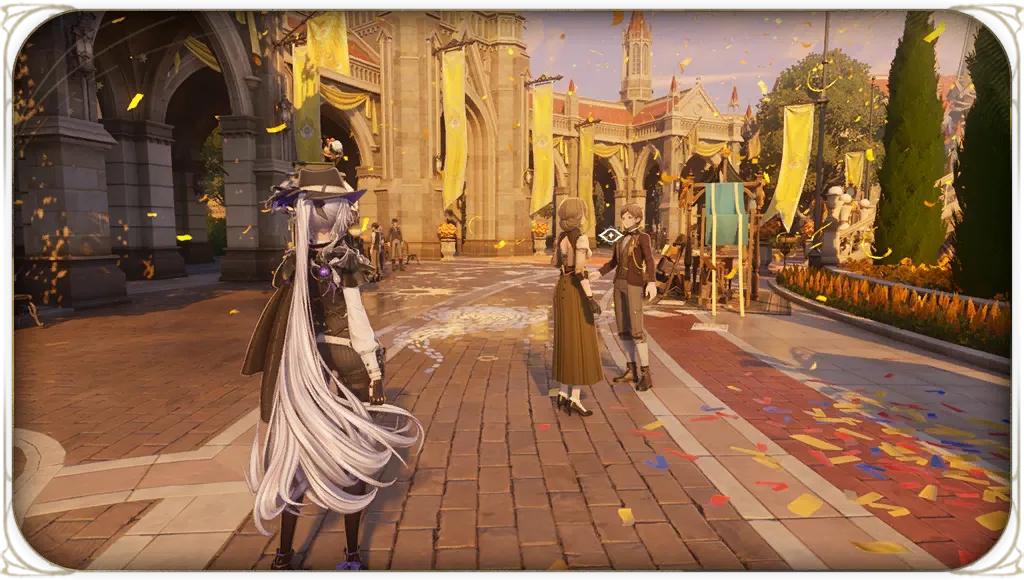
The narrative core of Silver Palace is situated in the third year of Queen Feliana's reign within the metropolis of Silvernia. The city's identity is inextricably linked to the discovery and monetization of Silverium, a mystical element that has catalyzed a rapid industrial revolution.
Silverium functions as the cornerstone of technological advancement, powering everything from streetlights to advanced weaponry through Spinotrodes, cone-tipped reactors that convert the element into electricity. This "magipunk" setting creates a unique intersection of 19th-century aesthetics and high-tech gadgets.
| Feature | Description | Narrative Implication |
|---|---|---|
| Primary Resource | Silverium | Catalyzes industrial growth but fuels factional conflict |
| City Name | Silvernia | The metropolitan setting for all major story acts |
| Era Context | Queen Feliana's 3rd Year | Period of peak industrial expansion and rising unrest |
| Core Technology | Spinotrodes & Reactors | Converts magical elements into industrial electricity |
| Camera Perspective | Always Over-the-Shoulder | Enhances immersion in the dense urban environment |
Victorian labour, reproduced rather than referenced
The setting's historical research goes further down than the streetlights. A worker's letter in the in-game Classical Curations collection describes a Silvernian factory where everyone works "scared to invoke Mr Vorsch's ire", where a girl was punished for arriving late, and where, in the writer's own words, "even clocks are considered a luxury in this place."
The letter's writer solves that problem with a side job the game does not have to invent. He becomes a knocker-upper: rising before dawn, walking the dormitories with a long stick, tapping on windows to wake workers who cannot afford an alarm, and getting paid per sleeper woken. Knocker-uppers were a real occupation in industrial Britain, employed for exactly that reason and by exactly that arrangement, and they persisted into the twentieth century in mill towns. Dropping one into Silvernia is a sharper piece of period grounding than any amount of gaslight and brass, because it is a detail that only makes sense in a society with the specific economics the setting claims to have: wage labour, fixed shift times, punitive lateness rules, and a workforce too poor to own the instrument that measures them.
The tone is the other half of it. The writer sends the story home to his sister as a joke, promises to take the family out for pizza with the extra money, and asks after their father's bad back. Silver Palace's industrial cruelty is delivered through people who are not describing it as cruelty, which is a harder register to write than misery and a more Victorian one.
The world-building deliberately subverts the "apocalyptic monster" trope prevalent in contemporary gachas. Instead of an external existential threat, the "monsters" in Silvernia are often demons and conspiracies hiding in plain sight within a functioning society. This shift toward mystery-driven urban fantasy highlights the developers' confidence in a more grounded, narrative-heavy experience.
Technical Infrastructure and the Unreal Engine 5 Paradox
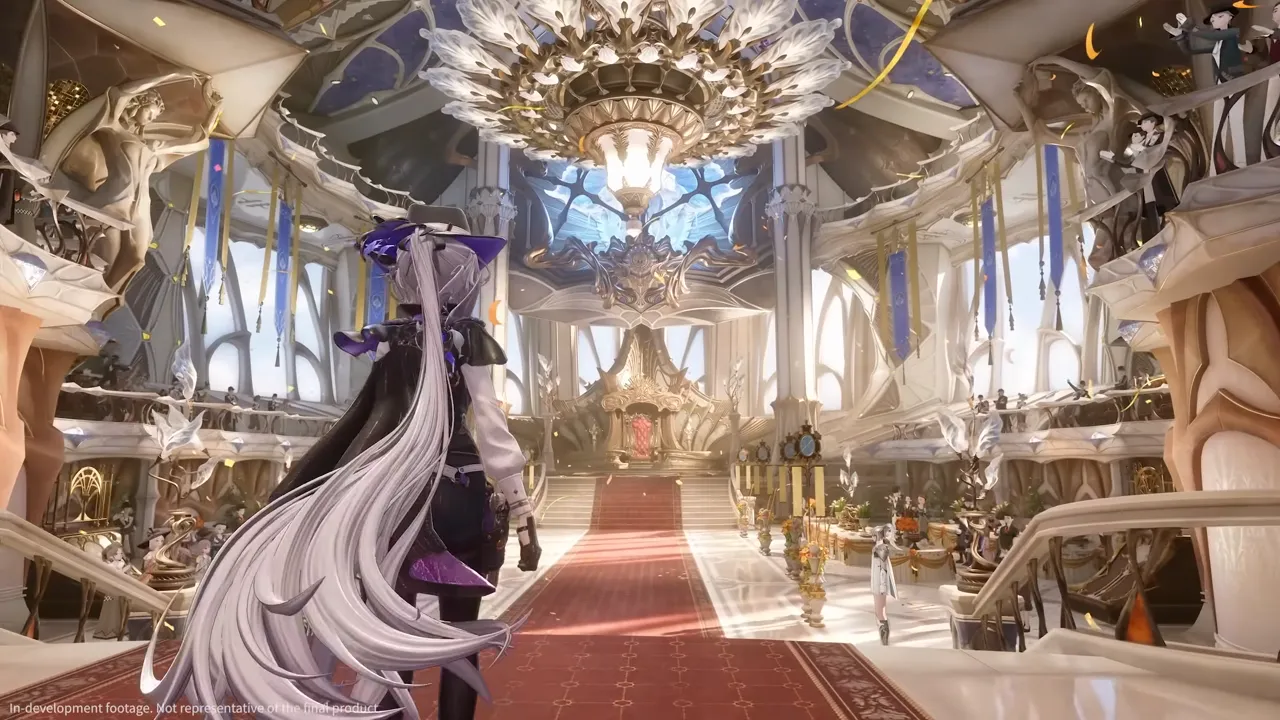
The utilization of Unreal Engine 5 (UE5) is perhaps the most discussed technical aspect of Silver Palace's development. While UE5 allows for advanced lighting, fluid animations, and high-fidelity textures, it imposes hardware requirements that are exceptionally high for the mobile market.
| Component | Minimum/Target Specification (PC) | Technical Context |
|---|---|---|
| CPU | Intel Core i7-12700 | Required for processing dense urban NPCs and physics |
| GPU | NVIDIA GeForce RTX 3060 | Necessary for advanced lighting and UE5 shader effects |
| RAM | 16 GB standard | Required for cross-platform open-world loading |
| Storage | 60 GB SSD | SSD required for seamless city-section loading |
| Platform | Windows (Initial Test) | Early testing prioritized platform stability over portability |
Note: During the "Monotype" Beta Test, the recommended specifications indicated a significant move toward mid-to-high-tier hardware, raising accessibility questions for the general mobile audience.
Beta testers noted that while Unreal Engine 5 offers superior visuals, it often turns laptops into "combustion engines" due to high thermal output. Critics argue the trend toward "better graphics = better game" destroys the low barrier to entry that made mobile gachas popular. However, proponents point to UE5's targeted features for seamless events and high-traffic urban areas.
The Detective and the "Author" Motif: Meta-Narrative Innovation
Silver Palace introduces a narrative mechanism that distinguishes it from the standard "amnesiac protagonist" trope. The player assumes the role of a Detective, but the game heavily implies that the Detective also occupies the role of an "Author" within the world's structure.
This meta-narrative suggests that Silvernia may not exist as a physical city on a planet, but rather as a world within a book or a fairy tale. The promotional trailer concludes with the statement that one can only fight fate "if they are the author," followed by a visual of the Detective closing a book while sitting on a throne.
Characters are classified into archetypal roles: Hero, Guardian, Outlaw, Victim, Saviour, and Witness. These are not just functional labels for combat but narrative markers that define a character's place in the "story" being investigated.
Character Identity and Personality Duality
The game offers a choice between a male and a female Detective, both referred to as "Ravens":
| Character Option | Title | Postulated Personality |
|---|---|---|
| Female Detective | The Raven's Claws | Straightforward, aggressive, willing to play the "bad cop" |
| Male Detective | The Raven's Beak | Diplomatic, refined, potentially more focused on negotiation |
Both characters returned to Silvernia after a three-year exile, following a failed case resulting in the death of a sibling. The Raven motif is a direct allusion to Edgar Allan Poe's gothic poetry, emphasizing themes of death, duality, and the inescapable nature of the past.
Gameplay Mechanics: Investigation, Combat, and Traversal
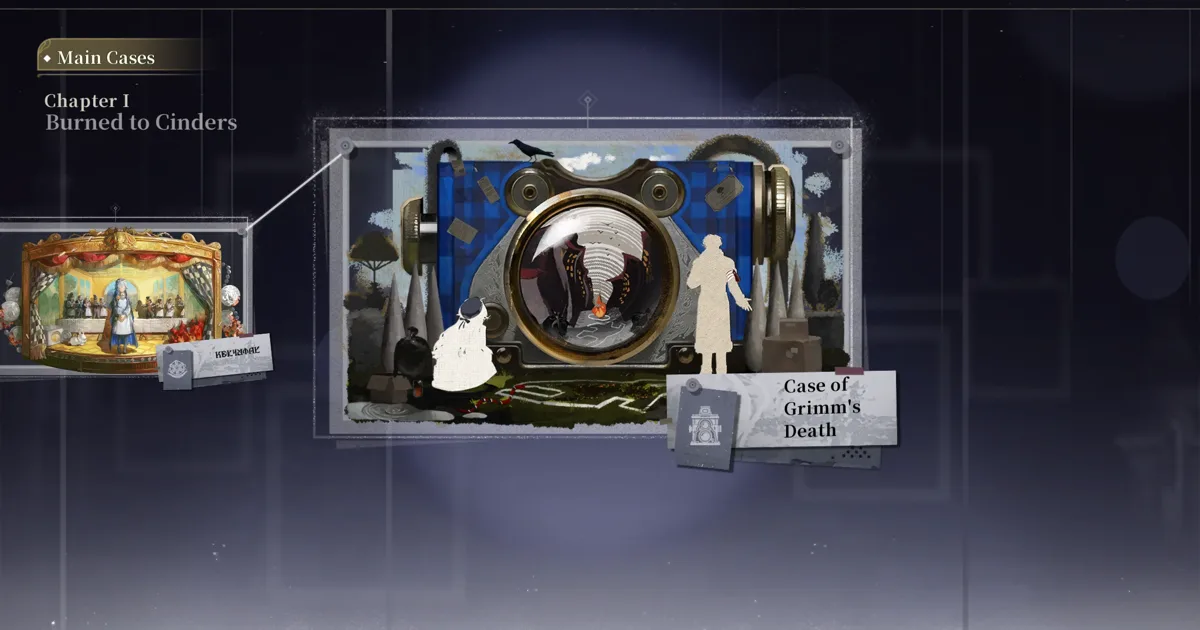
The gameplay of Silver Palace is divided into two primary loops: the investigation phase and the high-speed ARPG combat phase.
The Detective System: Clues and Observation
| Mechanic | Function | Impact on Gameplay |
|---|---|---|
| Danger Radar | Detects hidden entities | Encourages careful exploration over mindless rushing |
| Crime Scene Investigation | Examines a scene item by item | Unlocks story progression and feeds the Evidence Board |
| Expose | Initiates battle with hidden foes | Transitions gameplay from investigation to action |
| Crime Scene Analysis | Examines environment for clues | Engages the player in the narrative mystery |
Testers have likened these systems to the investigation mechanics in the Batman: Arkham series, adding a layer of intellectual engagement often missing from contemporary open-world gachas.
Combat: Reactor Attributes and Resonance
The combat system is a real-time, tag-team ARPG experience where the player controls one character at a time but can switch between four active party members to execute combos and Quick-Time Events (QTEs).
Key combat features:
- Break Meter beneath enemy health bars, depletion leaves foes vulnerable to finishing moves
- Resonance System based on team composition rather than elemental reactions
- Parry-focused mechanics emphasizing timing and stagger management
Seven Reactor Attributes: Ignis (Fire), Glacies (Ice), Fulmen (Lightning), Gravitas (Gravity), Radiatio (Light), Ferrugo (Dark), and Alba (White/Pure).
Character Roles:
- Hero: Primary damage output (e.g., Detective, Alf, Cinderella)
- Guardian: Damage amplification & protection (e.g., Lorin, Firtho)
- Witness: Healing and utility support (e.g., Argos, Cynthia II)
Traversal and Verticality
The Detective has access to several high-mobility traversal tools, including a grappling hook for vertical exploration and mechanical mounts such as a panther or "Silverium Pegasus" for horizontal travel. The world is designed with significant verticality, with hidden chests and exploration milestones located on rooftops and within industrial nooks.
The Character Roster: Design and Identity
Characters in Silver Palace are designed with a cohesive identity that matches the Victorian aesthetic, avoiding the "fantasy mishmash" often seen in gacha games.
Argos: The Mysterious Witness
A bartender with an affiliation to the shady organization MISS. As a Gravitas "Witness" character, Argos utilizes a cane-gun to heal allies and provide support. His design reflects a refined but dangerous Victorian gentleman.
Alf: The Flame-Wielding Maid
The Detective's quirky maid, fiercely loyal despite her clumsiness. As an Ignis "Hero" character, Alf wields a massive flamethrower to incinerate foes. Her design contrasts the traditional maid aesthetic with heavy industrial equipment.
Firtho: The Cold Medical Lancet
A doctor running "The Corner Clinic" who suffers from a congenital illness requiring a life-sustaining device. As a Radiatio "Guardian," Firtho wields a chainsaw-like cleaver, centering on the heart motif and the duality of life and death.
Cynthia II: The Noble Prankster
Scion of House Luna and the Detective's landlady. A "naughty prankster" accompanied by loyal "bread kitty" toys. Based on the "Hansel and Gretel" fairy tale, her abilities reference moonlight, white pebbles, and bread.
"Cinderella": The Vengeful Fableborne
A meticulous planner of vengeance and member of the Fableborne affiliation. Unlike the passive princess of traditional tales, she rides a mechanized pumpkin-shaped carriage and utilizes magma-based fire attacks.
The Gacha Economy and Progression Infrastructure
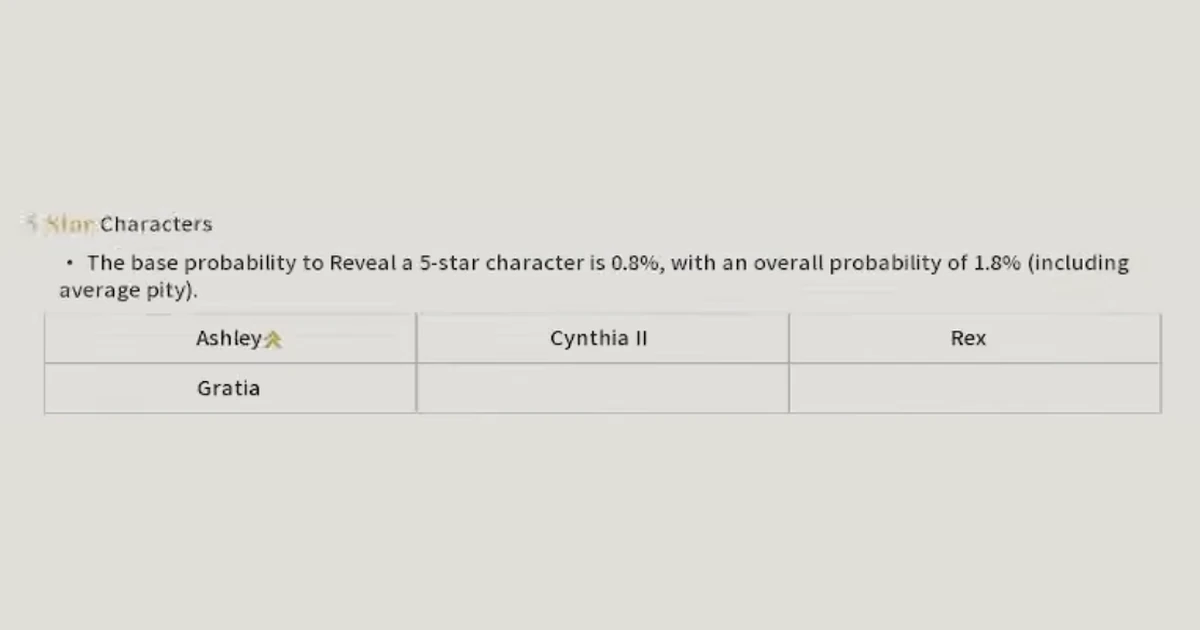
Silver Palace utilizes a model that community leaks compare to Arknights: Endfield, moving away from the standard 50/50 model in favor of a 120-pull guarantee system.
The 120-Pull Pity System
| Gacha Metric | Silver Palace (Monotype Test) | Comparison (HSR/WuWa) |
|---|---|---|
| Soft Pity | 80 Pulls | 70-80 Pulls |
| Hard Guarantee | 120 Pulls | 160-180 Pulls |
| Guarantee Carryover | No | Yes |
| 50/50 Success Rate | 50% | 50% (HSR) / 50% (WuWa) |
The soft pity at 80 pulls guarantees a high-rarity character with a 50% chance it is the featured character. The hard guarantee at 120 pulls ensures the featured character. However, the 120-pull counter resets with each new banner and does not carry over.
Warning: The lack of carryover for the hard guarantee means players must save a full 120 pulls to ensure success on a specific banner. Some players argue this creates an "infinite 50/50" scenario that feels punishing for low-spenders.
Progression: Crisis Levels and Character Growth
Account progression is divided into Account Level and Crisis Level. As the Account Level increases, the Crisis Level rises at specific milestones, acting as a world-tier gate that unlocks higher farming stages and character Limit Breaks.
Character power is modified by:
- Motives (Riddles): Equipment providing stat boosts and unique passive effects
- Methods: A skill tree for each character requiring farmable materials
The system appears to favor a more deterministic progression path compared to RNG-dependent gear systems in other titles.
Competitive Landscape and Community Sentiment
| Game Title | Primary Genre | Engine | Key Differentiator |
|---|---|---|---|
| Silver Palace | Open-World Detective ARPG | UE5 | Victorian gothic investigation system |
| Arknights: Endfield | Real-time Strategy RPG | Unity/Proprietary | Industrial factory building & automation |
| Wuthering Waves | High-Action Open-World ARPG | UE4 | Fast-paced combat & monster capturing |
| Infinity Nikki | Open-World Dress-up RPG | UE5 | Platforming & aesthetic-driven exploration |
Monotype tester feedback
Positive highlights:
- Visual identity and soundtrack received high marks for consistency
- Atmospheric depth praised across all testing phases
- Character design cohesion noted as a standout feature
Critical feedback:
- World Density: The city was described as "beautiful but empty," with many areas inaccessible
- Mystery Pacing: Some players felt the game "spoon-feeds" detective solutions
- Optimization: Performance on mid-range hardware remains a concern with thermal issues
Strategic Recommendations for Players
- 120-Pull Savings Strategy: Due to the lack of guarantee carryover, avoid "building pity" and instead save 120 pulls before committing to a character banner
- Author Lore Theory: Track parallels between the Detective's investigation and fairy-tale reinterpretations to reveal hidden story beats regarding Silvernia's true nature
- Crisis Level Management: Efficiently manage stamina (Stabilizer) to reach Crisis Level 2 early for character Limit Breaks required for "Thought Experiment" challenge mode
FAQ
What engine does Silver Palace use?
Silver Palace uses Unreal Engine 5, enabling advanced lighting, fluid animations, and high-fidelity textures. This makes it one of the most technically demanding mobile games announced to date.
Is Silver Palace free to play?
Yes. Silver Palace follows a free-to-play gacha model with a 120-pull guarantee system. The monetization structure has been compared to Arknights: Endfield rather than the traditional 50/50 system used by other titles.
When will Silver Palace be released?
Elementa has not announced a release date and has never named a launch year. Two tests have run and finished, Monotype in January 2026 and Dichotomy in July and August 2026, and a third, the Dichotomy: Retrace Technical Test, is recruiting on Android, iOS and PC with no test dates yet. The release date tracker has what each storefront says.
How does Silver Palace's combat differ from Genshin Impact?
Silver Palace emphasizes parry-based combat with a Break Meter system rather than elemental reactions. The tag-team system focuses on QTE chains and stagger management, while the integrated detective investigation mechanic adds a puzzle-solving layer absent in competitors.
Conclusion
Silver Palace is a high-stakes entry into the ARPG market that prioritizes atmospheric immersion and narrative complexity over standard combat tropes. Its Victorian magipunk setting, meta-narrative Author motif, and detective-driven investigation mechanics position it as a unique offering in the gacha landscape.
Key Takeaways:
- The UE5-powered Victorian metropolis of Silvernia offers unprecedented visual fidelity but raises accessibility concerns
- The Author meta-narrative and fairy-tale character reimaginings provide a fresh narrative framework distinct from typical gacha storytelling
- The 120-pull gacha system is mathematically favorable but lacks guarantee carryover, requiring strategic pull management
- Technical optimization for mobile remains the game's greatest risk factor, and no mobile build has been in a test yet, and Dichotomy: Retrace will be the first
Sources
Know someone tracking Silver Palace? Send them this.
About the Author
Silver Palace Meta Team
Silver Palace Meta Team
We're dedicated to providing comprehensive coverage of Silver Palace news, updates, and community insights.