Silver Palace Dichotomy Beta Review: CBT2 Verdict
Six months separate the Monotype test from Dichotomy, and the gap between the two builds is larger than that timeline suggests. Monotype was a proof of concept: seven characters, one slice of city, five days to prove the parry loop worked. Dichotomy is a game. Over 40 hours of content, 15 playable characters, a second protagonist, districts that were locked doors last time, and three whole systems that did not exist in January.
That is the headline, and it is genuinely impressive. What follows is the more useful question: is the game underneath the expansion actually better, or just bigger?
This review is based on the build as it has been shown and reported during the live test, which runs to August 13, 2026. Everything in it is pre-release and subject to change.
The combat rework is the real story
The roster grew and the map grew, but the change that matters most is the one that is hardest to screenshot. Combat has been rebuilt rather than tuned.
Monotype's loop was parry-centric and fairly forgiving. Dichotomy adds stamina management and a stun buildup mechanic on top of dodging and parrying, and the effect is that fights now have a resource you can run out of. That single addition changes the texture of every encounter. You cannot dodge-spam your way through a boss because dodging costs something. Parry timing matters more because the alternative has a price.
The stun gauge sits under the enemy health bar and fills from damage, parries and skills. Fill it and the enemy staggers into a vulnerable window, which is where executions come in: the highest single-hit damage in your rotation plus a party-wide damage boost. Boss encounters now get dedicated finishing animations. The Combat Mastery guide breaks down the full loop.
The skill ceiling is higher than Monotype's, and Elementa clearly knew that would lose people. Hence the combat-assist system, which sits alongside Casual Mode's time dilation and incoming-hit prompts. It is a reasonable answer to a real problem, and it is better implemented than most difficulty toggles in this genre because it does not change the fight, only your read on it.
Testers report the assist going further than a nudge: one mode auto-parries everything and charges a damage penalty for it. That is a real trade rather than a free pass, and it is opt-in, which is the right shape for this kind of feature. If a boss has stopped you seeing the rest of a case, the game lets you through and makes you pay for the shortcut.
The two characters most testers progressed on carry the loop well. The Detective flows between attacks and movement without a seam, with ammunition to manage and a gravity field that pays off whenever you can pull a group into it. Rex is the opposite temperament, built on holding momentum: extend the combo, build vault charge, cash it into a longer finishing sequence. The Detective is the more versatile of the two, Rex the more satisfying to simply stay on a target with. Neither is fully stress-tested here, since most story enemies die before a full rotation lands.
Verdict on combat: the biggest improvement in the build. It is the difference between a game that plays adequately and one worth learning.
Interrogation is the most interesting new system
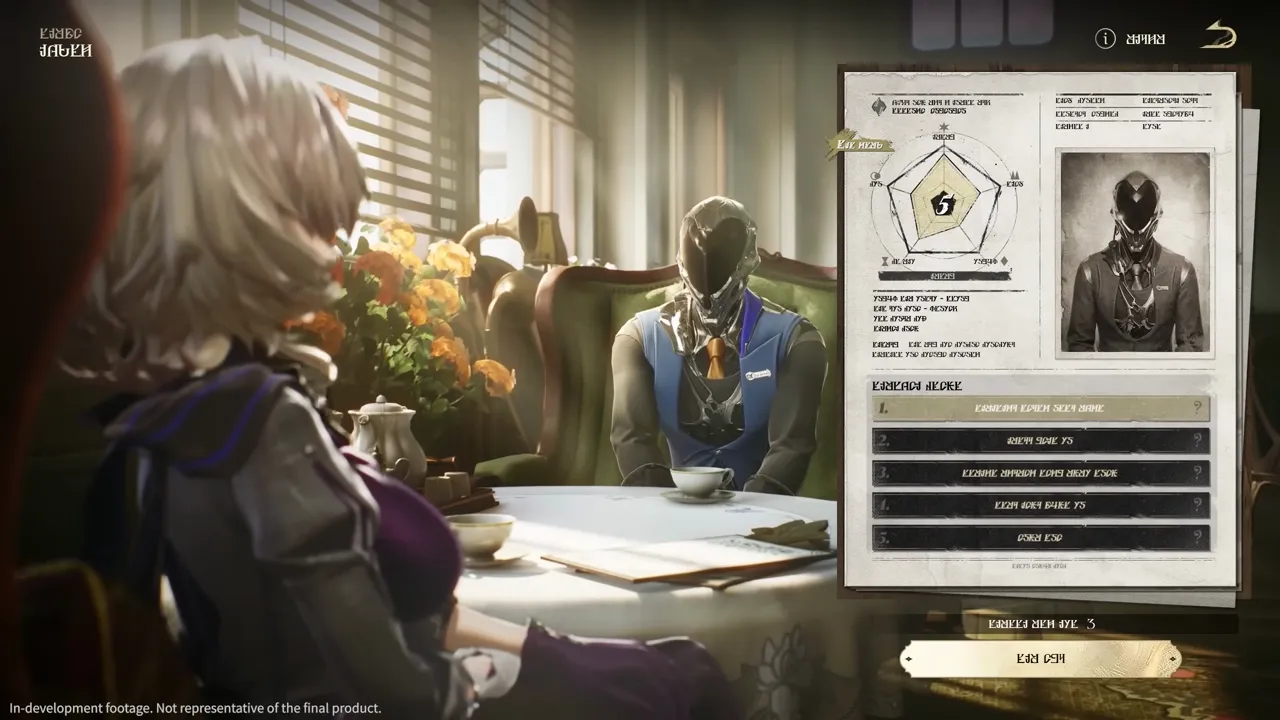
The interrogation interface is the thing Dichotomy has that nothing else in the action-gacha space does. Question a suspect and the game shows you their case file, carrying a five-axis radar chart of their traits and personality plus five numbered response options, and asks you to match the tactic to the person.
What makes it work is the inversion. Most RPG dialogue hides the check behind the option and lets you discover afterwards whether you had the stat. Silver Palace shows you the target's profile and makes the read your job. It converts conversation from a menu into a puzzle.
The honest caveat is that the system's depth is not fully legible from three weeks of footage. Elementa has not published what the five axes represent; in the showcase they are marked with symbols rather than words. Whether that reads as elegant or as opaque is going to depend on how well the game teaches it over a full campaign.
Verdict on interrogation: the most promising thing in the build, with the most room to disappoint.
Two Detectives, one story
The male Detective is the addition that drew the most attention, and it is a straightforward win. You choose at the start, both leads are fully playable, and the two carry different banners: The Raven's Beak for the male build, The Raven's Claws for Munin. Their paths through the city run separately before converging.
This is not a cosmetic toggle. Giving players the choice was one of the loudest requests after Monotype, and Elementa delivered it as a real narrative fork rather than a skin. See our Raven's Beak and Raven's Claws breakdown for the sibling framing.
Fifteen characters, and the roster finally has shape
Monotype's seven characters could not really demonstrate a team-building system. Fifteen can. The eight debuts in this test fill in the gaps: Gratia brings greatsword-and-shield survivability, Rex brings electric pressure, Red Rose is a combat support built around her Rose Petals gauge, and Bentham, Grimm, Gucia and Captain Kaboom round out roles that were thin or empty.
Six of the seven Reactor Attributes now have playable units. Only Ferrugo is still empty. That is enough coverage for the Resonance system to be a real decision rather than a theoretical one, which it was not in January.
The tier list ranks all of them on this build's data.
The city has a life now
The expansion nobody asked for and everybody seems to like: Dichotomy fills Silvernia with things that are not crime. Chess duels played against a match clock, card games at a four-player table, Scarlet Gambit (a full poker roguelike), and urban horse racing through the streets. The minigames guide covers each one.
This could easily have been filler. It mostly is not, because an open-world detective story only works if the city feels inhabited. A Silvernia where people gamble and race horses reads as a place. A Silvernia that only contains crime scenes reads as a level.
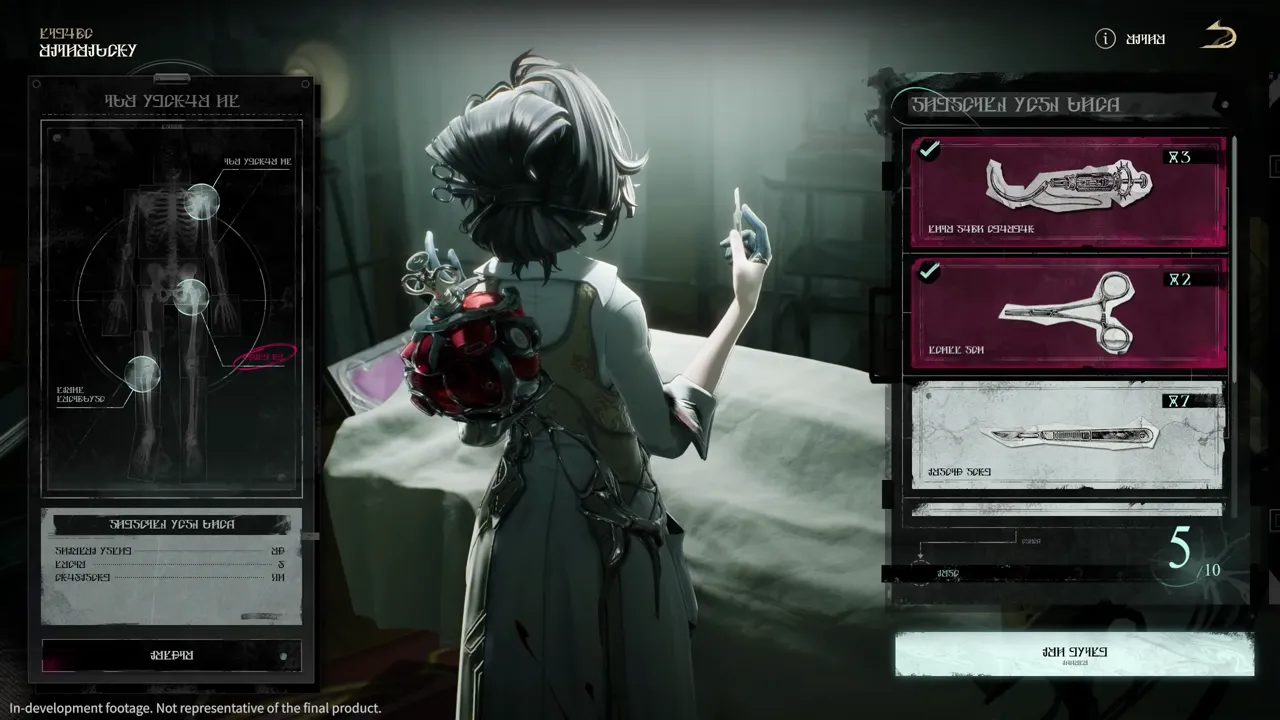
The surgery and autopsy sequences are the exception to the lifestyle framing: you select instruments and target areas on a body model, and the findings feed the case. Those are casework, and they are the most distinctive investigation content in the build.
Underneath the theming these are structured content rather than flavour, gated by City Affairs stamina and feeding the same Popularity track as everything else in the district. The Monotype vs Dichotomy breakdown covers that side of the city, along with City Property, the system that turns Silvernia into an economy you own a piece of.
Character investment has four separate taps
The roster is deep enough to matter, but the build asks for four kinds of investment per character and they do not substitute for one another.
Identity is levels, granting HP, attack and defence as they climb. Motive is an equipped card giving additional stats and a unique effect, on the order of 12 percent CRIT Rate or 24 percent attack. Simulation is the separate equipment system, where a completed set is worth roughly 24 percent attack. Methods is the skill tree, cheap at the early nodes and fed by the Method Mastery and Case Review farms.
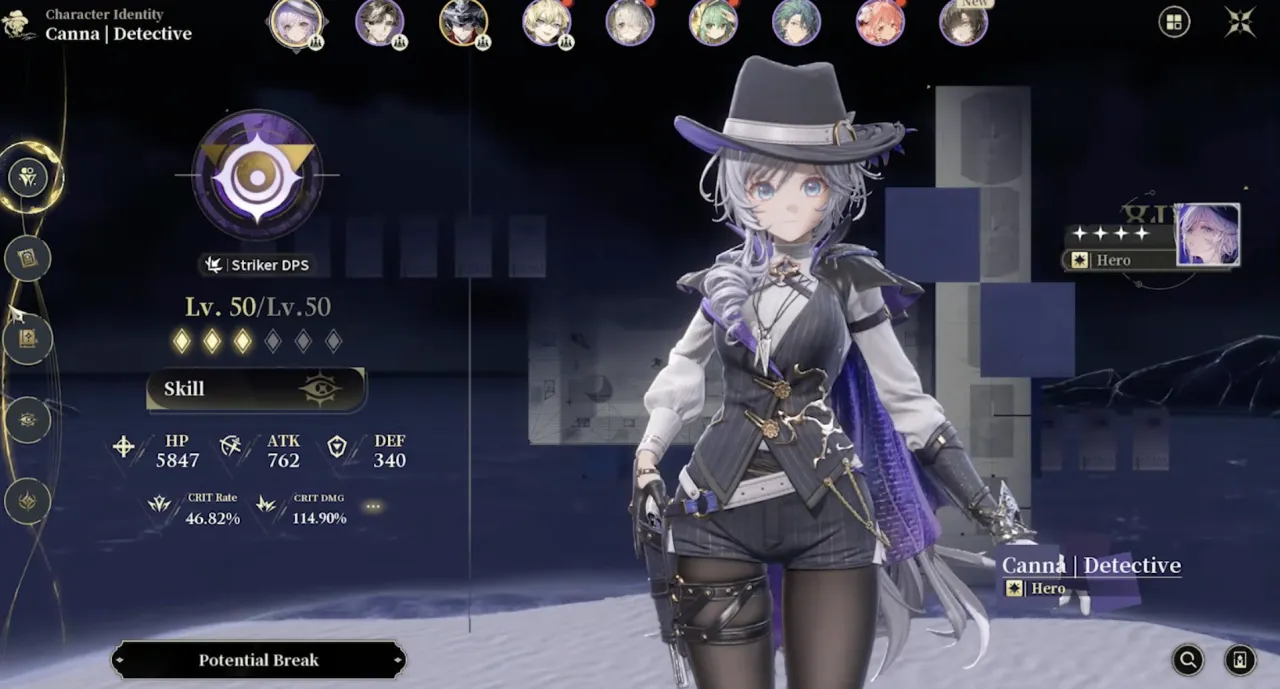
The practical read from the test is that a character with empty Simulation slots and no Motive is leaving a large fraction of their output on the table. That is easy to miss, because the story does not gate you on it until it suddenly does. How grindy any of this ends up at launch is a separate question, and a three-week wiped beta cannot answer it.
Verdict on progression: legible, but front-loaded with menus. Four screens per character is a lot to introduce in the opening hours.
The daily loop, and what it costs you
Dichotomy also ships the live-service scaffolding, and it is heavier than Monotype's.
The efficient day is short enough to state in one line: clear the City Roaming dailies, run one Case Review, work whatever City Records phase you are on, and drain both stamina bars before either caps. Vitality goes into Method Mastery early, which is the safest possible investment because skill nodes never stop being useful. City Affairs stamina goes wherever you enjoy, since the activities all feed the same Popularity track.
The design is reasonable and the numbers are not punishing, but the honest note is that both stamina pools award account experience when spent, which quietly converts "play when you want" into "log in daily or fall behind". That is standard for the genre. It is still worth saying plainly, because Monotype's progression was bare enough that nobody had to think about it.
Verdict on the daily loop: conventional, and the one part of Dichotomy that feels like it was designed by the category rather than by this game.
Visuals and music carry more than they get credit for
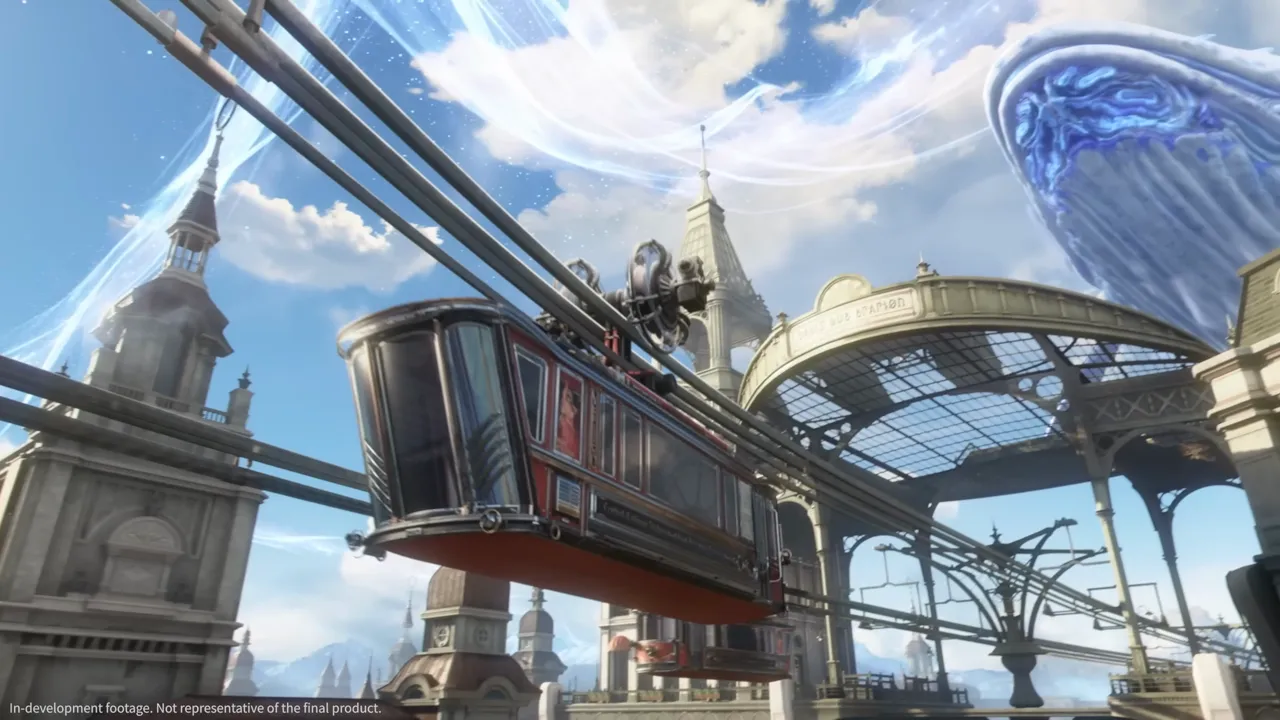
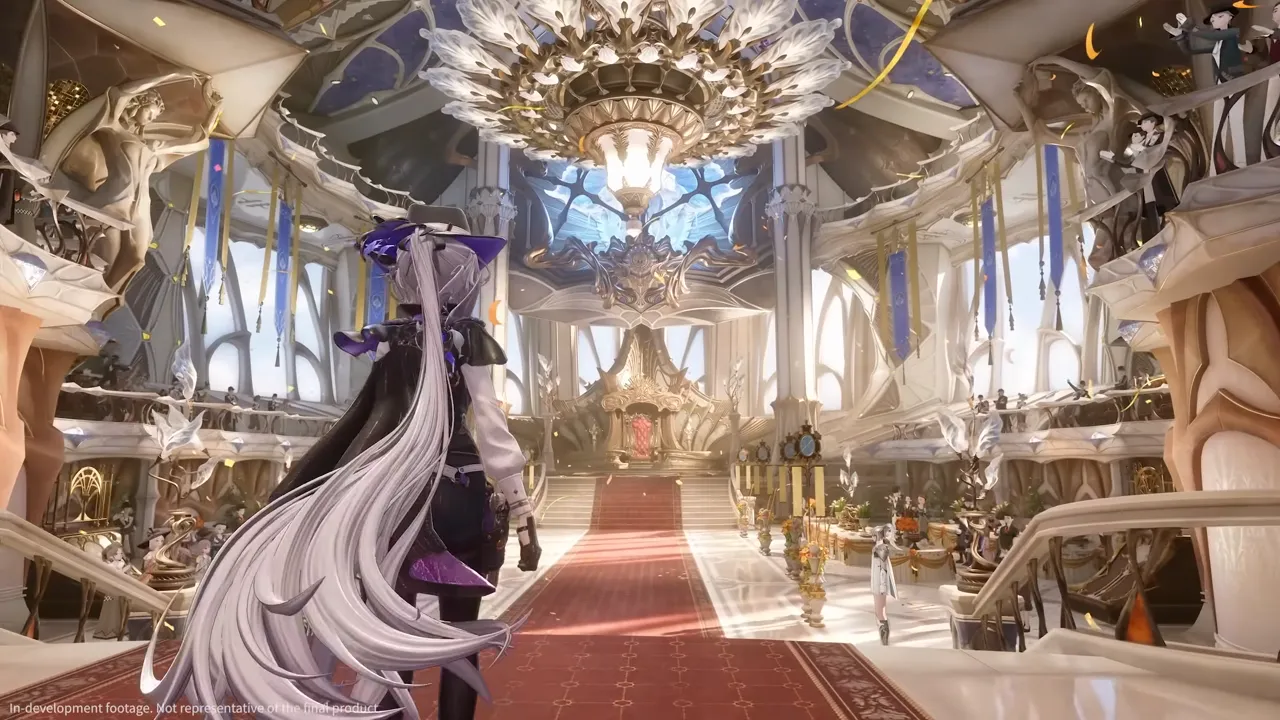
Between the two tests it is clear the art and audio teams delivered. The city is dense with detail, with long open views, tall clock towers, old European facades and floating structures out on the skyline, and it manages that without the screen feeling cluttered. The lighting does most of the heavy lifting: bright skies, reflections and softer colours make the world read as somewhere lived in rather than a backdrop you run past.
The soundtrack matches it. What has been heard so far is built around the piano, elegant and slightly mysterious, and it never competes for your attention. It gives the quieter stretches a mood and stays out of the way while you explore or work a case.
Before anyone judges the endgame or the long-term content, the presentation is already one of the strongest parts of this build. The city, the atmosphere, the lighting and the piano-led score add up to something with a distinct feel, which is not a thing most games in this category manage.
What still needs work
The naming is a mess. The game now has Thought Experiment (endgame combat), Curious Deductions (multi-ending cases), Eye of Insight (observation) and the interrogation trait chart, and nothing about those names tells you which is which. Players are already conflating them. This is a localisation and UX problem that will get worse as more systems ship.
Ferrugo is still a slot with nothing in it. Seven attributes, six with characters. Fine in a beta, awkward at launch.
The test is three weeks and the content is 40+ hours. That is a good problem, but it does mean most testers will not see the back half of what they are meant to be testing. Feedback coverage will skew heavily toward the early game.
You still cannot climb. Traversal is flat. Silvernia is built vertically, with clock towers, floating structures and layered arcades, and the Detective can look at all of it and reach almost none of it on foot. This was noted in Monotype and it is unchanged here. Mounts, automobiles and airborne vessels widen how far you can travel without changing what you can reach.
Everything wipes on August 13. Standard for a closed beta, but worth stating plainly: nothing here carries forward.
The verdict
Dichotomy is the point at which Silver Palace stops being a promising trailer and starts being a game with an identity. The combat rework gives it mechanical weight, the interrogation system gives it something genuinely its own, and the roster is finally deep enough to support the team building the game is built around.
The risks are legible and mostly solvable. Naming clarity, onboarding for the interrogation system, and one empty attribute slot are all fixable before launch in a way that a bad combat loop would not have been.
Compared against Monotype, this is not an iteration. It is a different scale of product. Our full Monotype vs Dichotomy breakdown goes system by system, and the Dichotomy Beta guide covers everything in the current build.
Frequently Asked Questions
Is the Silver Palace Dichotomy beta good?
Yes, and notably better than the first test. The combat rework around stamina and stun buildup gives fights real weight, the interrogation system is genuinely novel for the genre, and 15 playable characters is enough roster to make team building meaningful.
How long is the Dichotomy beta?
Elementa puts the build at over 40 hours of playable content. The test window itself runs July 23 to August 13, 2026.
What is the biggest change from the Monotype beta?
The combat overhaul. Monotype's loop was parry-centric and forgiving; Dichotomy adds stamina management and a stun buildup mechanic, which raises the skill ceiling considerably. The male Detective option and the roster jump from 7 to 15 characters are the most visible changes, but combat is the one that changes how the game plays.
What should you do every day in the Silver Palace beta?
Clear the City Roaming dailies, run one Case Review for the late-game skill materials, complete whatever City Records phase is active, and spend both stamina pools before either one caps. Vitality is best spent on Method Mastery early, and City Affairs stamina can go to any city activity, since they all raise the same Popularity level. Unlock City Property as soon as it appears, because its revenue only accrues while you own the property.
Does Dichotomy beta progress carry over to launch?
No. All progress is wiped when the test ends on August 13, 2026. Nothing carries into the next test or into the full release.
Know someone tracking Silver Palace? Send them this.
About the Author
Silver Palace Meta Team
Silver Palace Meta Team
We're dedicated to providing comprehensive coverage of Silver Palace news, updates, and community insights.