Silver Palace CBT1 Review: Combat, Cases, Classes
The first closed beta test, the January 2026 Monotype build, was the moment Silver Palace stopped being trailer footage and became something you could actually hold a controller against. It was a short test, roster-light, and every screen carried a "this is a test version and does not represent the final quality of the game" watermark. But short betas are still the most honest look you get at how a game feels moment to moment. Here's the full breakdown of what CBT1 delivered, based on tester footage and hands-on reports from the build.
Treat everything below as a snapshot of a pre-release build. Numbers, kits and systems will move before launch. What matters at this stage is the shape of the game, and CBT1 gave a surprisingly clear one.
Reactor Attributes: seven elements, five in play
Silver Palace splits its combat identity across two axes: the elemental Reactor Attribute a character channels, and the class (called an Identity) they fight as. The beta exposed the full attribute list even though only part of it was playable. Seven Reactor Attributes are defined in the build: Ignis, Glacies, Fulmen, Gravitas, Radiatio, Ferrugo and Alba.
Each one is framed the same way in the in-game codex: an activated Reactor converts the Silverium flowing through it into a damage-dealing state. Ignis becomes a super-heated combustible gel, Glacies a super-cold condensate, Fulmen a highly conductive magnetofluid, Gravitas a concentrated dark-matter halo, and Radiatio an unstable radioactive material. The two outliers are the interesting ones: Ferrugo converts contaminated Silverium into an excited state, and Alba produces stable pure-phase matter. That framing hints Ferrugo and Alba sit apart from the core five thematically, which lines up with them not having playable characters in CBT1.
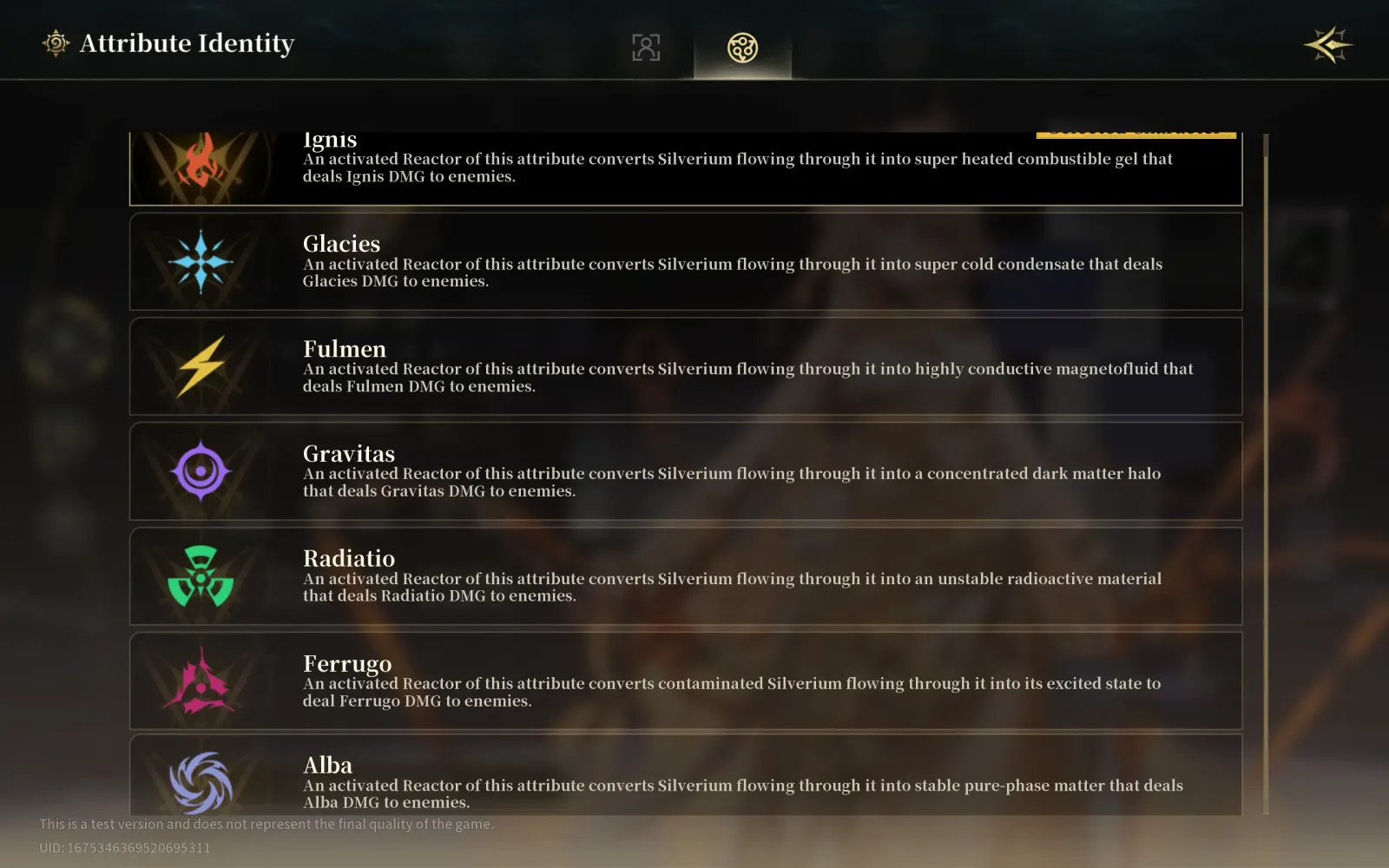
Of those seven, the playable elements in the beta were Ignis, Glacies, Fulmen, Gravitas and Radiatio. If you want the deeper theory on how these attributes might interact at launch, the catalyst attribute reactor breakdown goes further than the beta codex does.
Identities: six classes, three you could actually feel
The Identity system is where CBT1 got a little muddy. Six Identities exist on paper, but only three had playable representatives, and the roles they implied did not always match what the characters did in your hands. The three you could test were Hero, Guardian and Witness.
Hero read as the straightforward damage class, covering the Detective protagonist, Cinderella and Alf. Guardian characters, Firtho and Lorin, leaned into amplification, pushing damage through their own skills or, more often, through the passive baked into their equipped Motive, such as a defense-shred effect. Witness was pitched as the healer bracket, made up of Argos and Cynthia II. That last label is where things wobbled: once testers unlocked Cynthia II through the sign-in track, she turned out to lean on crowd control and damage amplification rather than raw healing, which muddies the neat class-to-role mapping the UI seemed to promise.
That's worth flagging rather than papering over. In CBT1 the Identities described a character's flavor more than a rigid battlefield job, and you should not assume a Witness is a healer or a Guardian is a pure buffer. For the corrected element-and-role rundown of the beta cast, the Monotype beta recap sorts each of the seven playable units, and the full roster tier list tracks how they stack up.
Update: later expo preview footage confirms why that mapping never quite held together. Identity (Hero, Guardian, Outlaw, Victim, Saviour and Witness) is a narrative archetype label, not a role filter. The actual gameplay role sits on a separate screen called Combat Style, with five values: Resonator Output, Striker Output, Break Oppressor, Combat Vanguard and Survival Healer. The Combat Style guide breaks down all five roles plus the full seven-attribute Reactor list.
No weapons, only Motives
Silver Palace has no weapon slot in the traditional gacha sense. The equivalent is a Motive: an Identity-specific piece of gear that grants a stat package plus a passive. A Guardian Motive, for example, can be the source of that damage-amplifying defense shred rather than the character's own kit. Because Motives are keyed to Identity rather than to a single character, they behave more like a class-wide gear category than a personal signature weapon. The Motives and Identity system guide covers how that slotting works in more detail.
Resonance replaces elemental reactions
Here is the design choice that separates Silver Palace from its obvious peers: there is no elemental reaction system. You do not freeze a burning enemy for bonus damage or overload a wet one. Instead, the payoff for building around elements comes from the Resonance system, which reads your full party's Reactor Attributes and grants team-wide effects.
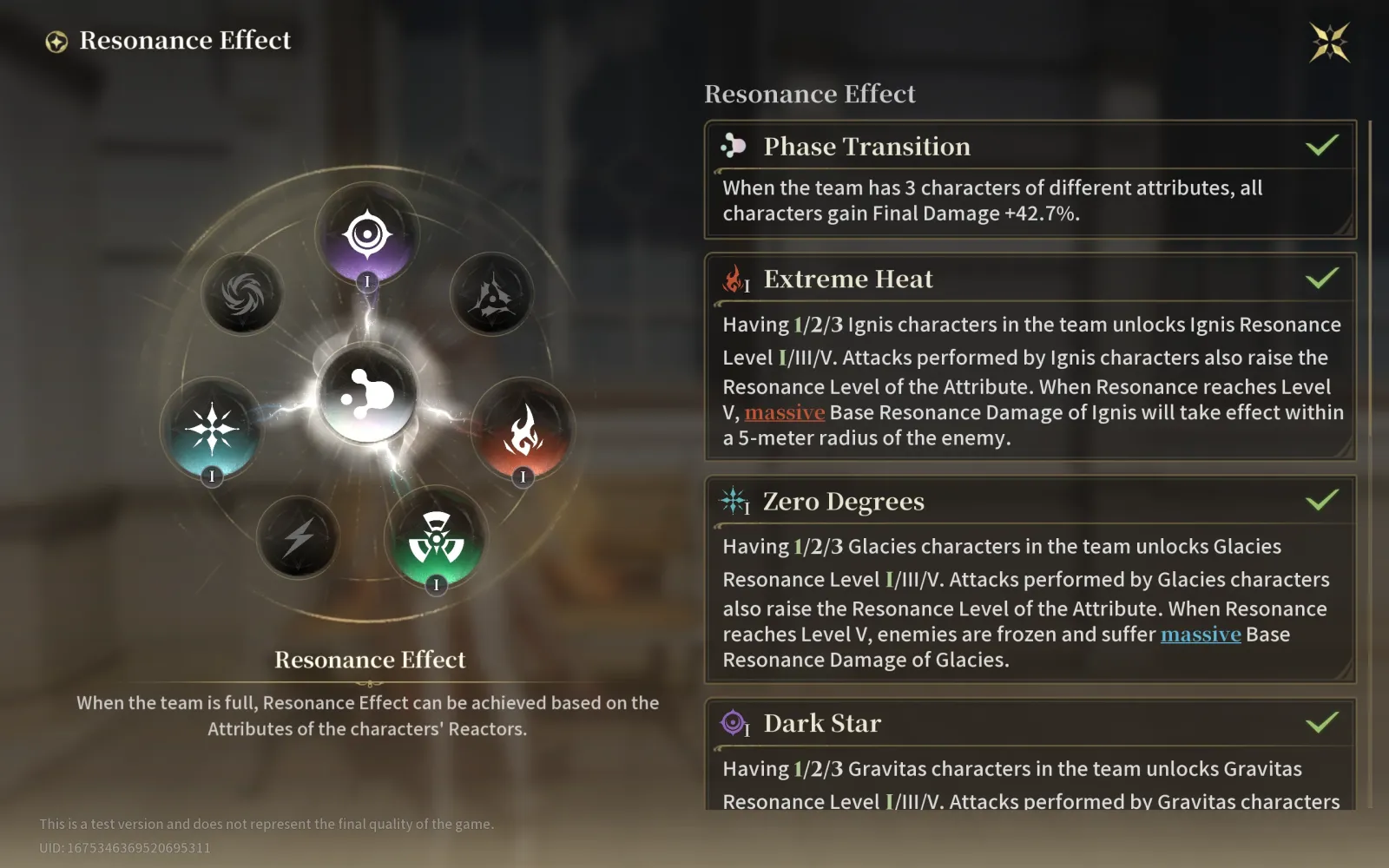
The cleanest example is Phase Transition: run three characters of different attributes and the whole team gains a flat Final Damage boost of 42.7% in the beta build. That single line is why a rainbow team is genuinely competitive here, not a beginner trap. Stack the other way and you unlock element-specific resonances instead. Extreme Heat scales with your Ignis count, Zero Degrees with Glacies, Dark Star with Gravitas; each moves through Resonance Levels I, III and V as you field one, two or three matching characters, with the level-V payoff being a heavy attribute burst near the enemy. Resonance only activates on a full team, so it rewards committing to a plan rather than swapping pieces mid-run. The Resonance deep dive breaks down every effect and the team templates they favor.
Combat feel: parry first, gun second
In the hand, CBT1's combat sits closest to Wuthering Waves. The spine of a fight is the parry: read the wind-up, time your defense, and open a punish window. Get greedy and you eat the hit instead. The "gun gameplay" people saw in trailers is not a free ranged option. It functions as a character skill, and not every character even carries one, so treat it as part of a kit rather than a universal aim-and-shoot layer.
The other borrowed idea is a switch-in mechanic reminiscent of Wuthering Waves' intro skill. Several combat actions feed a meter that banks up to three stacks; spending a stack lets an incoming character perform an "ambush" as they tag in. Round that out with an execute triggered when you break an enemy's stagger bar, and the moment-to-moment loop becomes parry, skill, ultimate, stagger, execute, repeat. It reads simple written down, but it flows well and reads cleanly at speed.
The one consistent complaint was the camera. The default zoom sits close enough that busy fights get hard to track, and enemies off-screen can catch you out. The build softens that with a radar-style sense feature that pings threats outside your view and telegraphs incoming attacks, so a blind-angle parry is at least predictable rather than pure luck. It's a patch, not a fix, and camera work is the clearest thing on the combat to-do list.
Progression is deliberately bare in CBT1
Do not read too much into the growth systems yet, because most of them weren't implemented. There was no gacha in the first beta, and no dupe, constellation or sequence layer of any kind. What you had was the skeleton: character leveling, a limit break (potential break) gated behind your crisis level, and basic talent and skill upgrades that add levels to your basics, unlock a passive, or hand over a flat stat bump. Character stat lines were cookie-cutter and did not introduce anything the genre hasn't seen. That's normal for a first test, since the monetization and vertical-progression systems are exactly the parts studios hold back, but it does mean CBT1 tells you almost nothing about how generous or punishing the eventual gacha will be.
Story and the case loop
The narrative pull is real. The beta opens by dropping you straight into a fight against Cinderella, cuts on a cliffhanger, and then rewinds to the Detective returning to the city after three years away, chasing the mystery of what happened back then before a deeper plot pulls them in. It's a confident cold open, and the short slice on offer landed better than its length suggested it would.
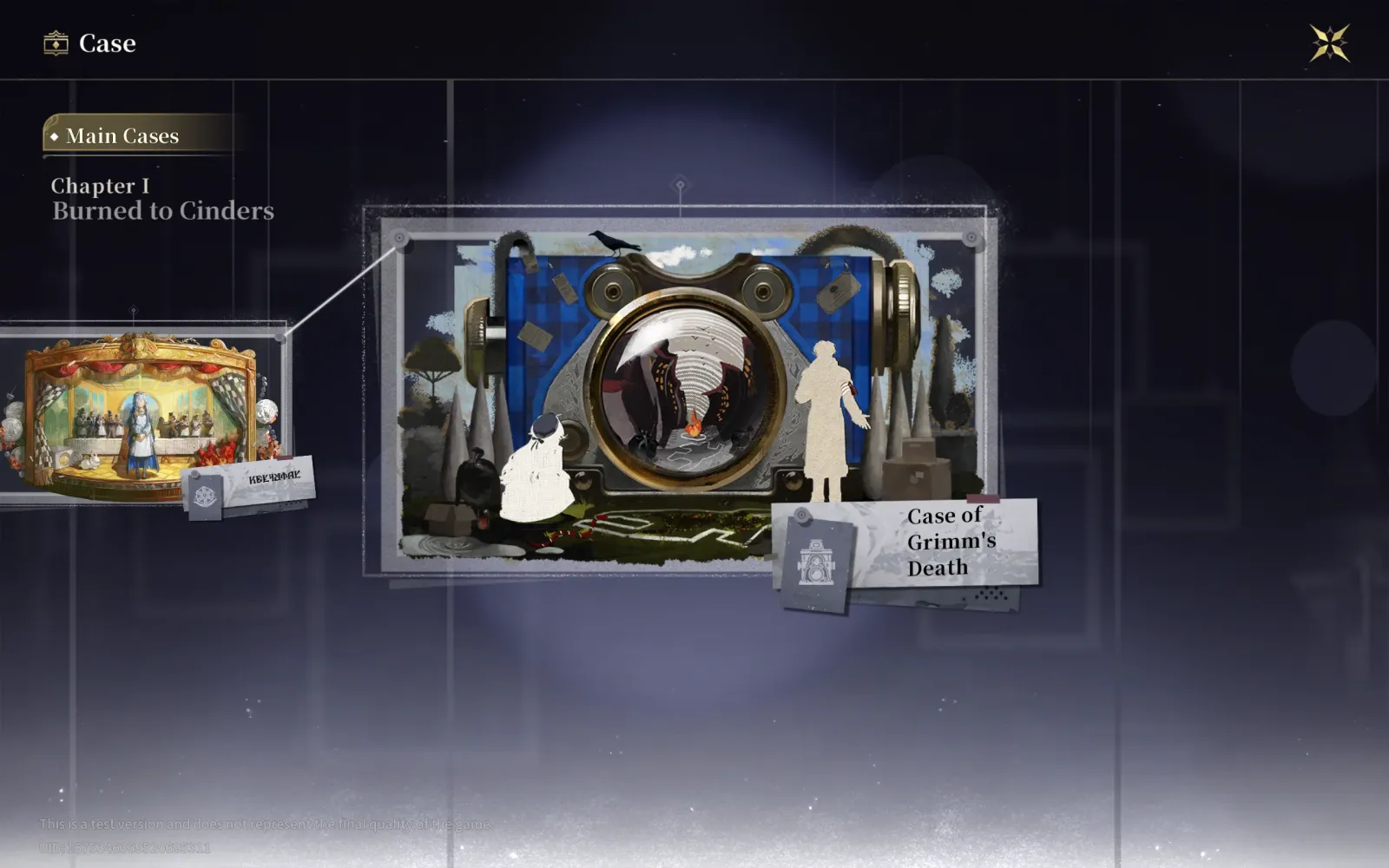
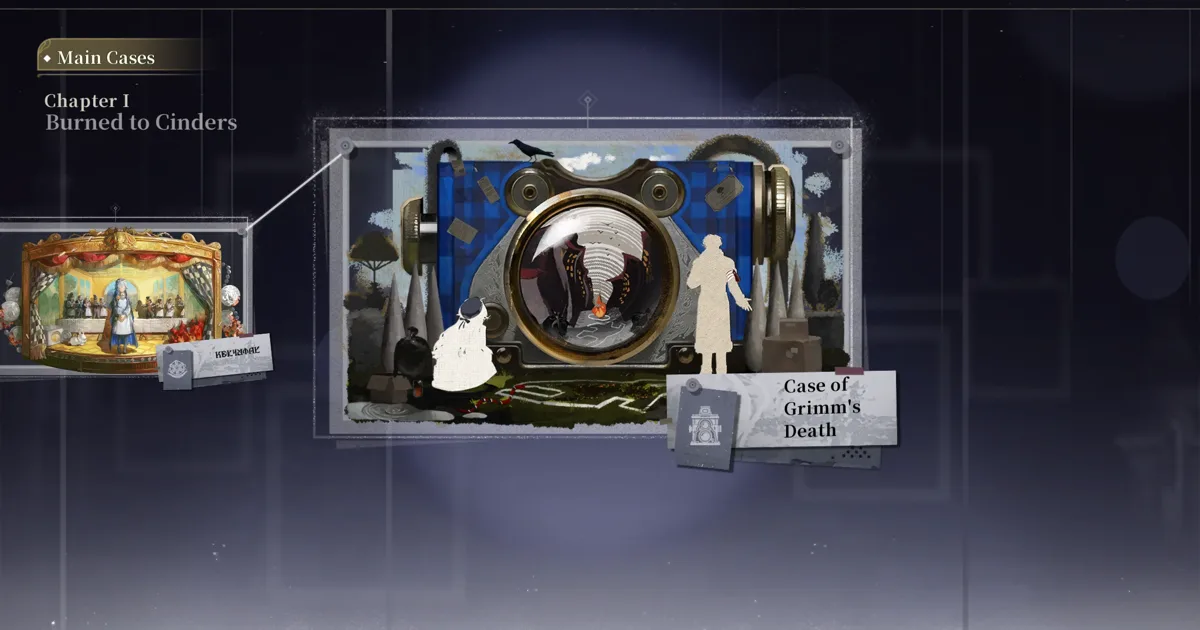
Structurally, the main story runs on Cases, which is exactly the hook you'd want from a detective-flavored game. Chapter I, "Burned to Cinders," opens the Case of Grimm's Death, a journalist found dead in an alley, and tasks you with gathering evidence and reconstructing the truth. The investigation plays out on an Evidence Board where you collect clues from the scene and connect them into a chain that resolves the case.
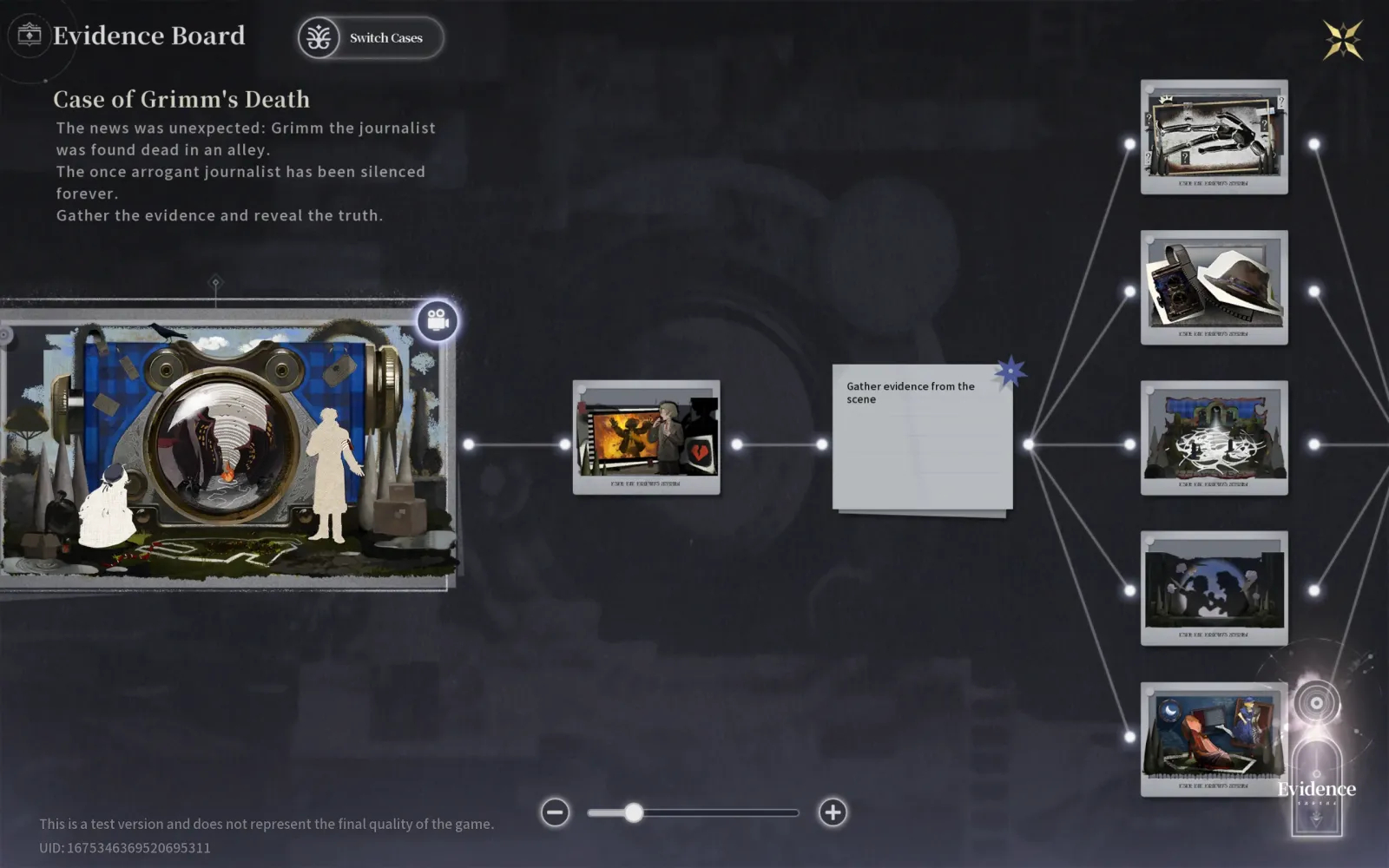
This deduction loop is the most distinctive thing in the whole build. It turns the downtime between fights into actual detective work rather than fetch-and-return busywork. If that's the part that sells you, the deduction system guide walks through how clue collection and case solving fit together, and the Cinderella boss breakdown covers the opening fight.
Exploration: a city block, chests and a mount
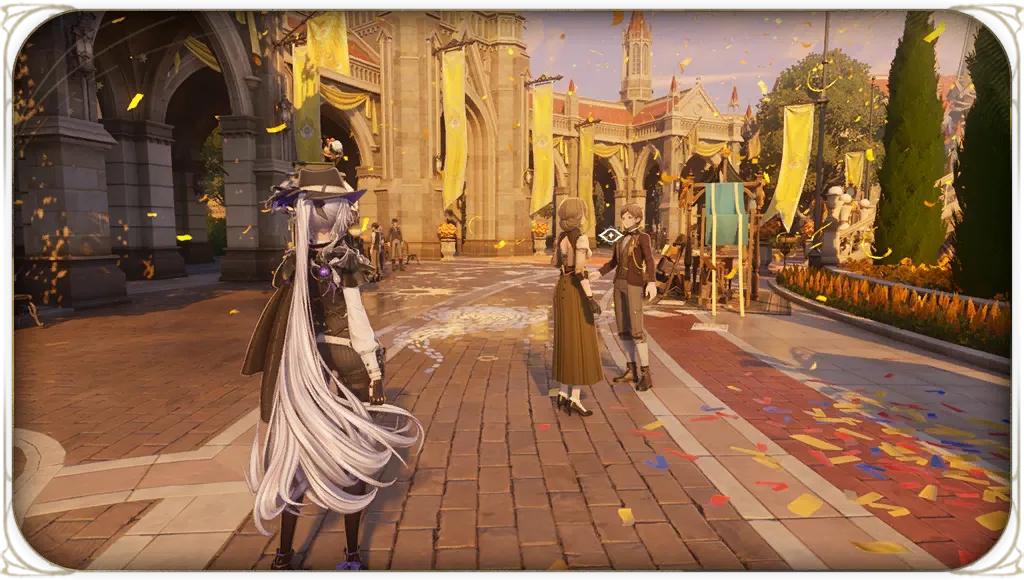
Open-world play in CBT1 was locked to a generous but bounded chunk of the city: the Riverside Quarter, split across areas like Morgue Street, Four Crowns Street and Dayfair Way. Whether that footprint expands later is unknown; for now it's a slice, not a continent.
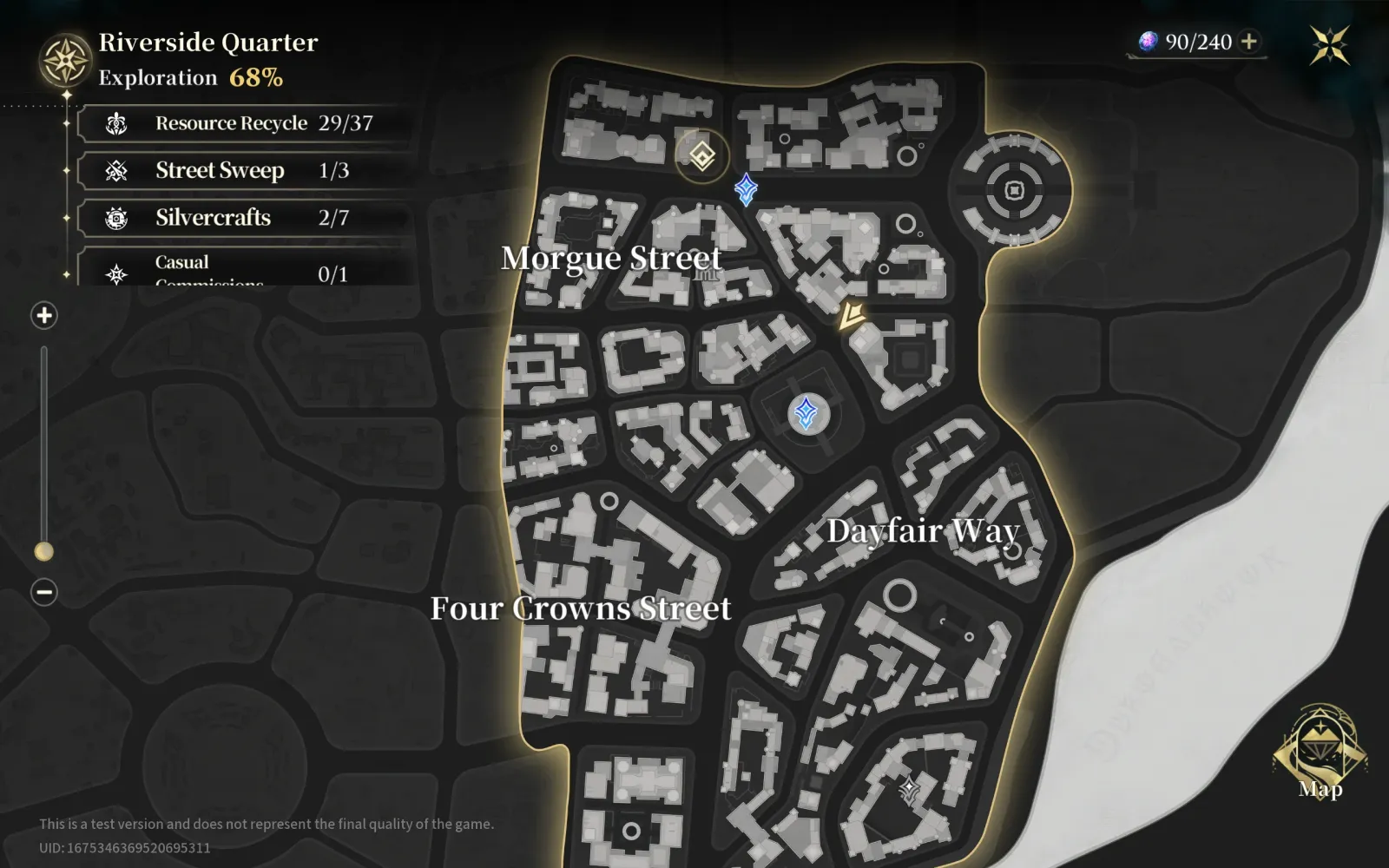
Exploration milestones are the familiar gacha checklist: chests tucked into nooks, collectible categories like Resource Recycle, Street Sweep and Silvercrafts ticking toward completion, and a mount you use to fly onto rooftops for the chests people inexplicably leave up there. Puzzles exist but stay simple at this stage. The one genuine friction point is traversal: there's no jump mechanic in this build, which makes moving around feel awkward when you want to hop a small ledge and can't. Side quests match the low-stakes tone, from a treasure hunt for a kid to photographing machinery for a man a little too fond of it. If you've played any major open-world gacha, you already know this rhythm; our exploration and traversal guide covers what the mount can and can't do.
Audio, voice and localization
The soundtrack leans on classical music with a contemporary edge, which suits the Victorian-detective framing. Voice acting held up well in the Japanese dub, with the caveat that not every line was voiced. Most content was, and the gaps read more like unimplemented lines than deliberately silent ones. Lip-sync and facial animation didn't always land, partly a function of the art style. Localization was clean, with few grammatical slips; a handful of cutscenes with bespoke animation carried Japanese-only subtitles, which is the kind of thing you fully expect to be temporary in a first beta.
Dailies, endgame and other modes
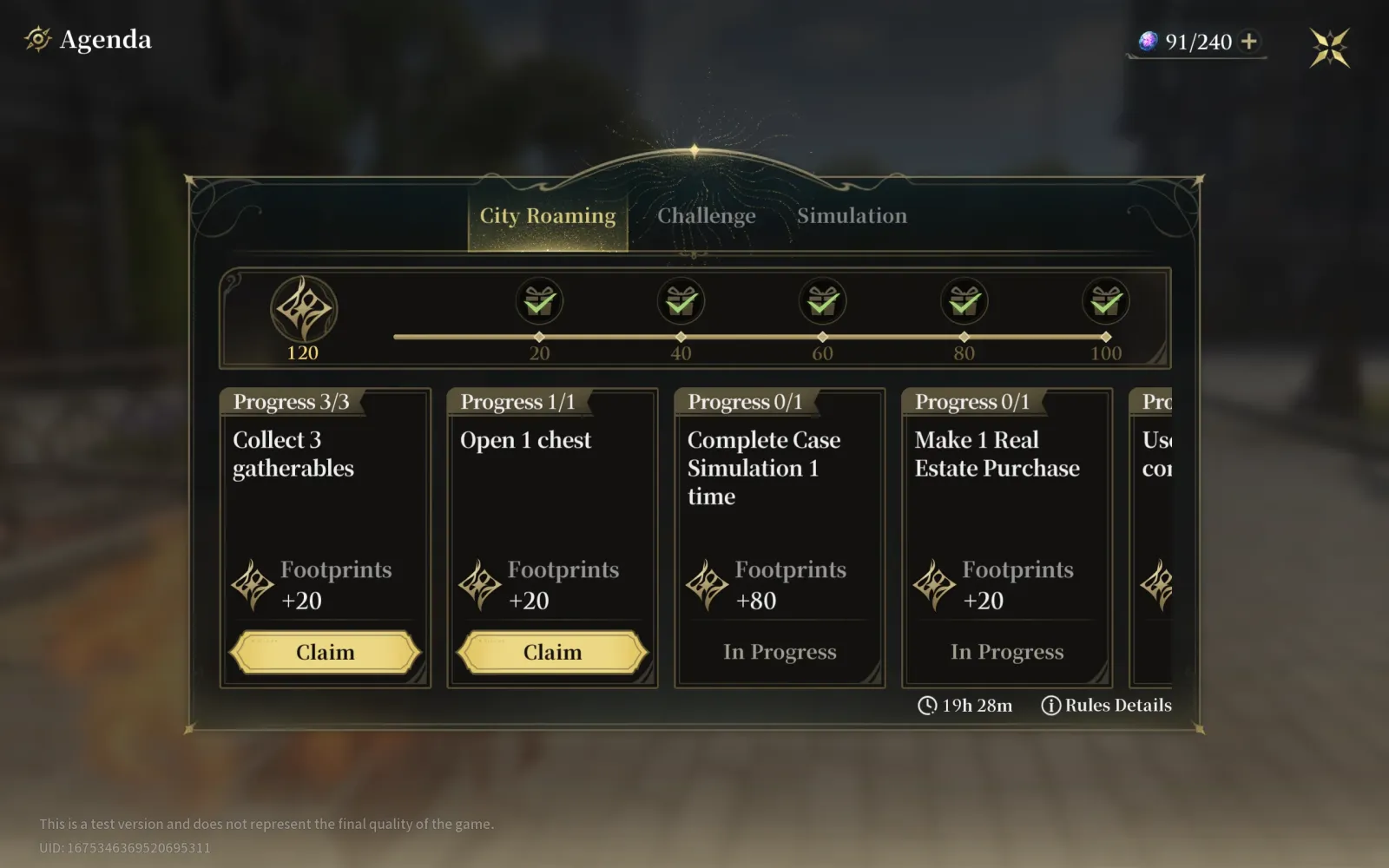
The live-service scaffolding was in place. Daily activity runs through an Agenda screen split into City Roaming, Challenge and Simulation tracks, where you spend Stabilizer (the stamina resource) and complete rotating tasks (collect a few gatherables, open a chest, run a Case Simulation, make a real-estate purchase) for Footprints rewards on a roughly 20-hour reset.
For tougher content there's Thought Experiment, the game's challenge-tower mode and its hardest offering in the beta. Notably, there was no sign of an Abyss- or Tower-style resetting endgame with a recurring cycle in CBT1, and Thought Experiment didn't appear to reset during the test window. That's a meaningful gap to watch, since a resetting spend-your-account endgame is a big part of what keeps genre veterans logging in.
Performance and technical state
On high-end hardware the build ran well: a stable 80-plus FPS on an RTX 5080 paired with a Ryzen 7 9800X3D at maxed settings, with frame generation present but disabled by default (and enable-able via a file injection). The one real issue was a memory leak that surfaced after about two hours, cleared by a force-close and restart, an ordinary beta wart. On the lower end of the stated minimum specs, testers reported a stable 45 to 60 FPS at 1080p on medium, which should improve with frame generation on. If you're gauging your own rig, the system requirements breakdown has the full picture.
Verdict: a promising shape, not a finished game
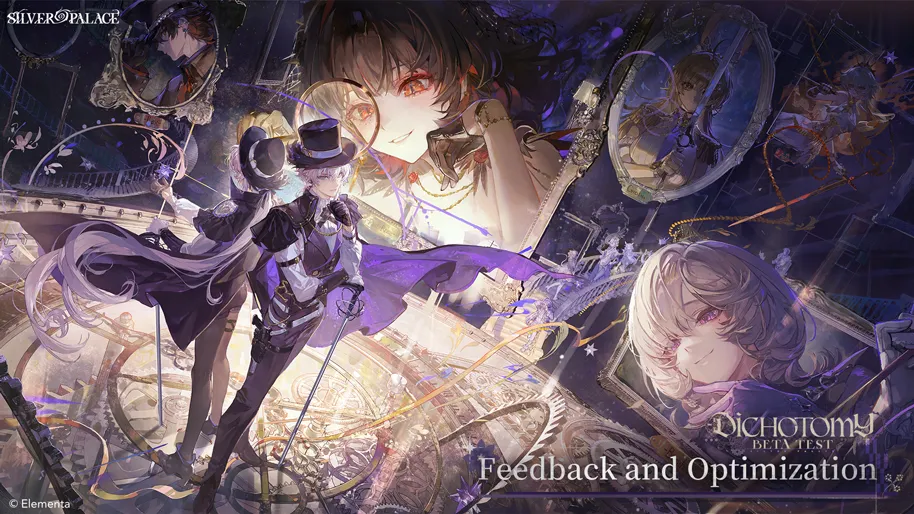
CBT1 was small on purpose, and judged as a first beta it's encouraging. The parry-driven combat already feels good, the Resonance-over-reactions decision gives team building real texture, and the Case deduction loop is a genuine identity rather than a reskin of open-world chores. The rough edges (camera zoom, the missing jump, an endgame with no visible reset, and a progression system that's mostly still boxed up) are exactly the things a second test should address. If the team keeps adding characters, combat variety and exploration depth on this foundation, Silver Palace is shaping up as a solid entry. The next real data point is the PC-only Dichotomy beta; our Dichotomy beta test guide tracks how to get in and what's changed since CBT1.
FAQ
When did Silver Palace CBT1 run?
The first closed beta, the Monotype test, ran for roughly five days in January 2026 on PC. It was the game's first global closed beta and the first time most players got hands-on time instead of watching trailers.
How many elements and classes were in CBT1?
The build defined seven Reactor Attributes (Ignis, Glacies, Fulmen, Gravitas, Radiatio, Ferrugo and Alba), of which five were playable. There were six Identities (classes), but only three (Hero, Guardian and Witness) had playable characters.
Does Silver Palace have elemental reactions?
No. CBT1 had no elemental reaction system. Element synergy instead comes from the Resonance system, which grants team-wide buffs based on your party's attributes, including a Final Damage bonus for running three different attributes.
Was there a gacha in CBT1?
No. The first beta had no gacha and no dupe, constellation or sequence system. Progression was limited to leveling, a crisis-level limit break, and basic talent and skill upgrades.
What is the combat like?
Parry-focused and closest to Wuthering Waves, with a switch-in "ambush" mechanic that banks up to three stacks and an execute on breaking an enemy's stagger bar. The in-game "gun" is a character skill, not a universal ranged option, and the main complaint was a close camera zoom.
How did Silver Palace perform in the beta?
Around 80-plus FPS on an RTX 5080 and Ryzen 7 9800X3D at max settings, and a stable 45 to 60 FPS at 1080p medium on lower-end minimum-spec machines. Frame generation was available but off by default. The only notable bug was a memory leak after about two hours, fixed by restarting.
Know someone tracking Silver Palace? Send them this.
About the Author
Silver Palace Meta Team
Silver Palace Meta Team
We're dedicated to providing comprehensive coverage of Silver Palace news, updates, and community insights.