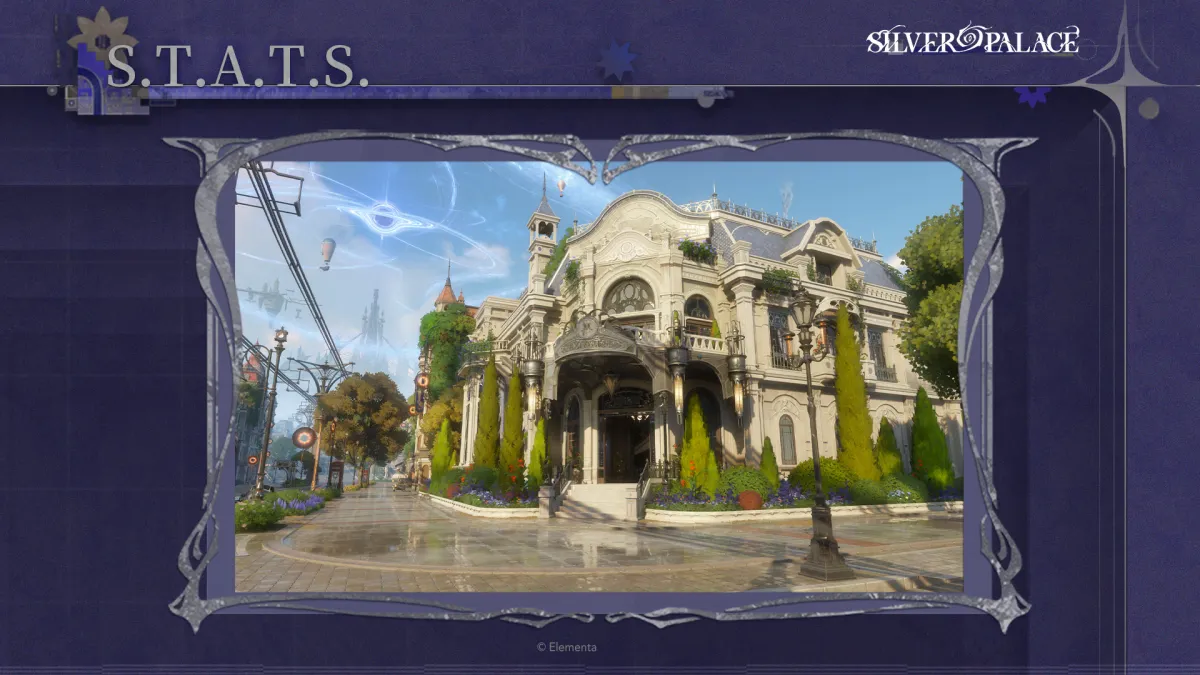
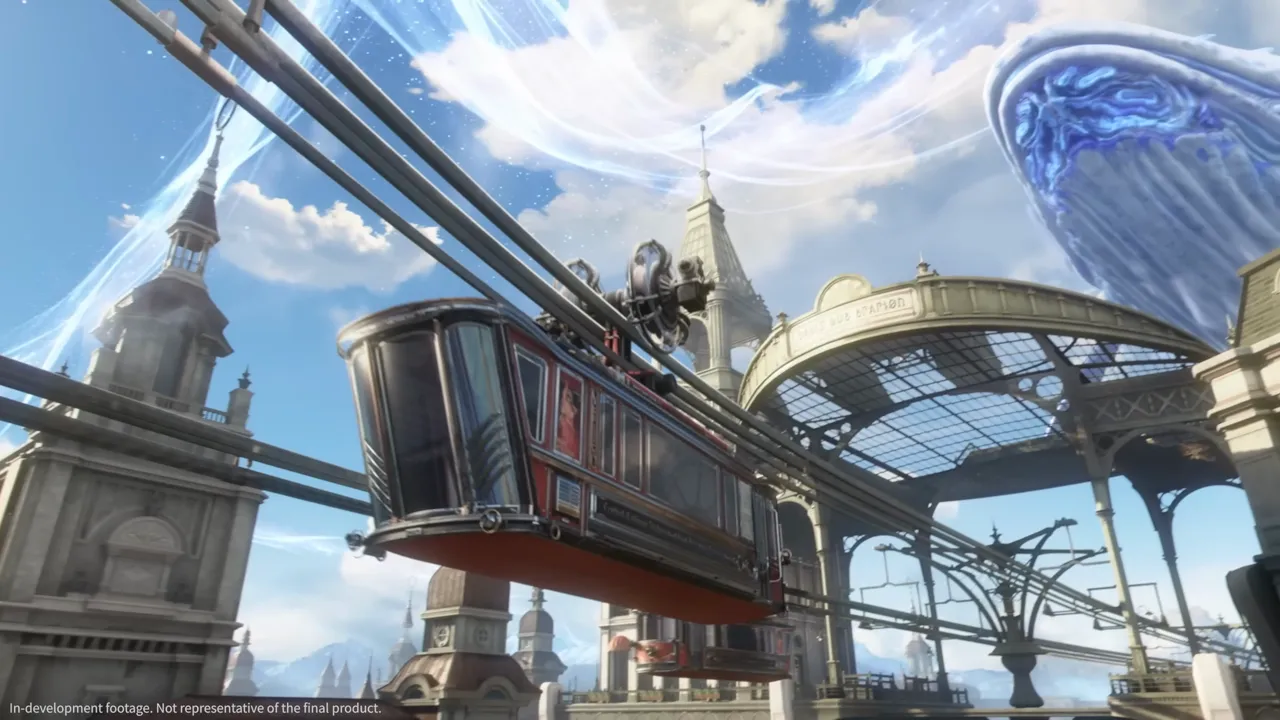
Silver Palace Map: Silvernia Districts Guide
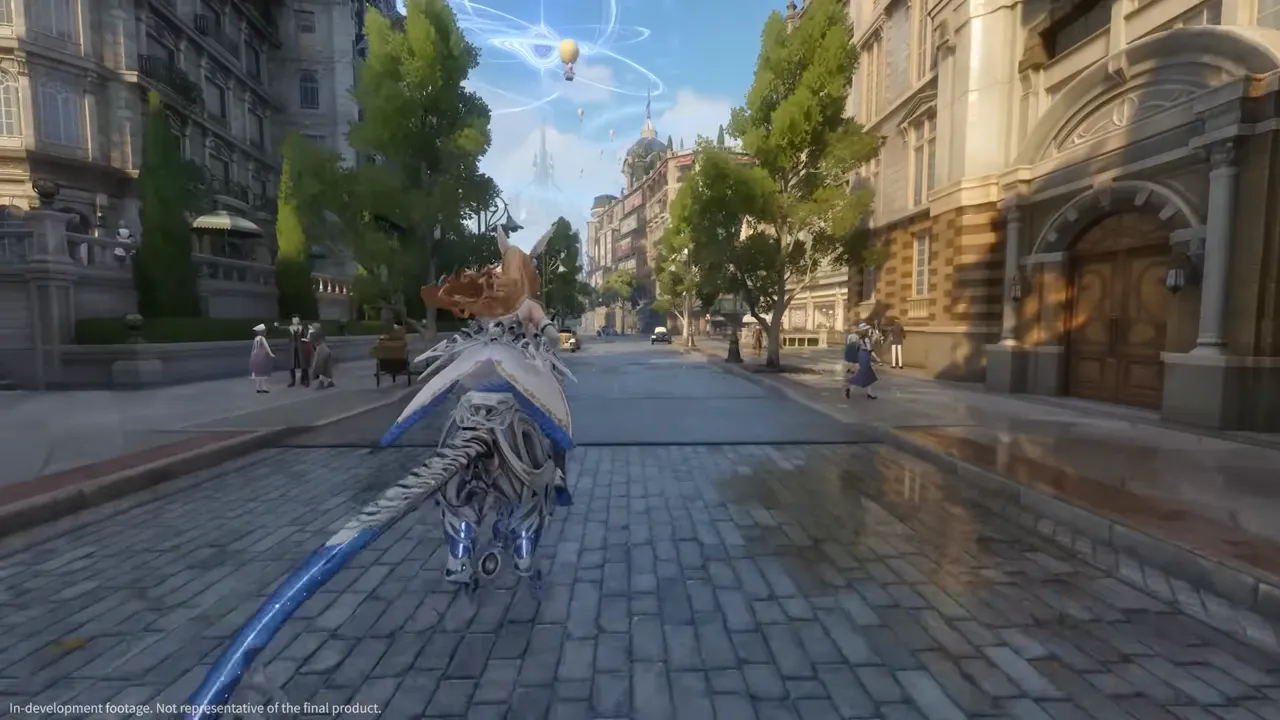
Silvernia is not the backdrop to the case. It is the case. Silver Palace is a detective game built inside one Victorian metropolis, and how much of that metropolis you can actually stand in has been the most closely watched number across two closed beta tests.
This is the map as it stands: every place Elementa has named, what happens in each, and how much of the city Dichotomy actually opened. Where a name comes from an in-game screenshot rather than an official announcement, that is flagged.
Quick Answer
Silvernia's confirmed geography runs to a handful of named places. High Peers is the prosperous upper district, its skyline dominated by the cone-tipped Spinotrode reactors that power the city. Morgue Street is the crossroads enclave inside it, home to the S.T.A.T.S. agency, the Memoir Bar and the Voicepipe Café. The Riverside Quarter was the playable open-world footprint in the first beta, split across Morgue Street, Four Crowns Street and Dayfair Way. Bridgehead is the dockside slum the story runs through. Above all of it, the Dichotomy beta opens with the Floating Palace and the Royal Banquet, and unlocks districts the first test kept locked. The beta's in-game map, below, adds twelve smaller area names on top of that.
The Dichotomy Beta Map
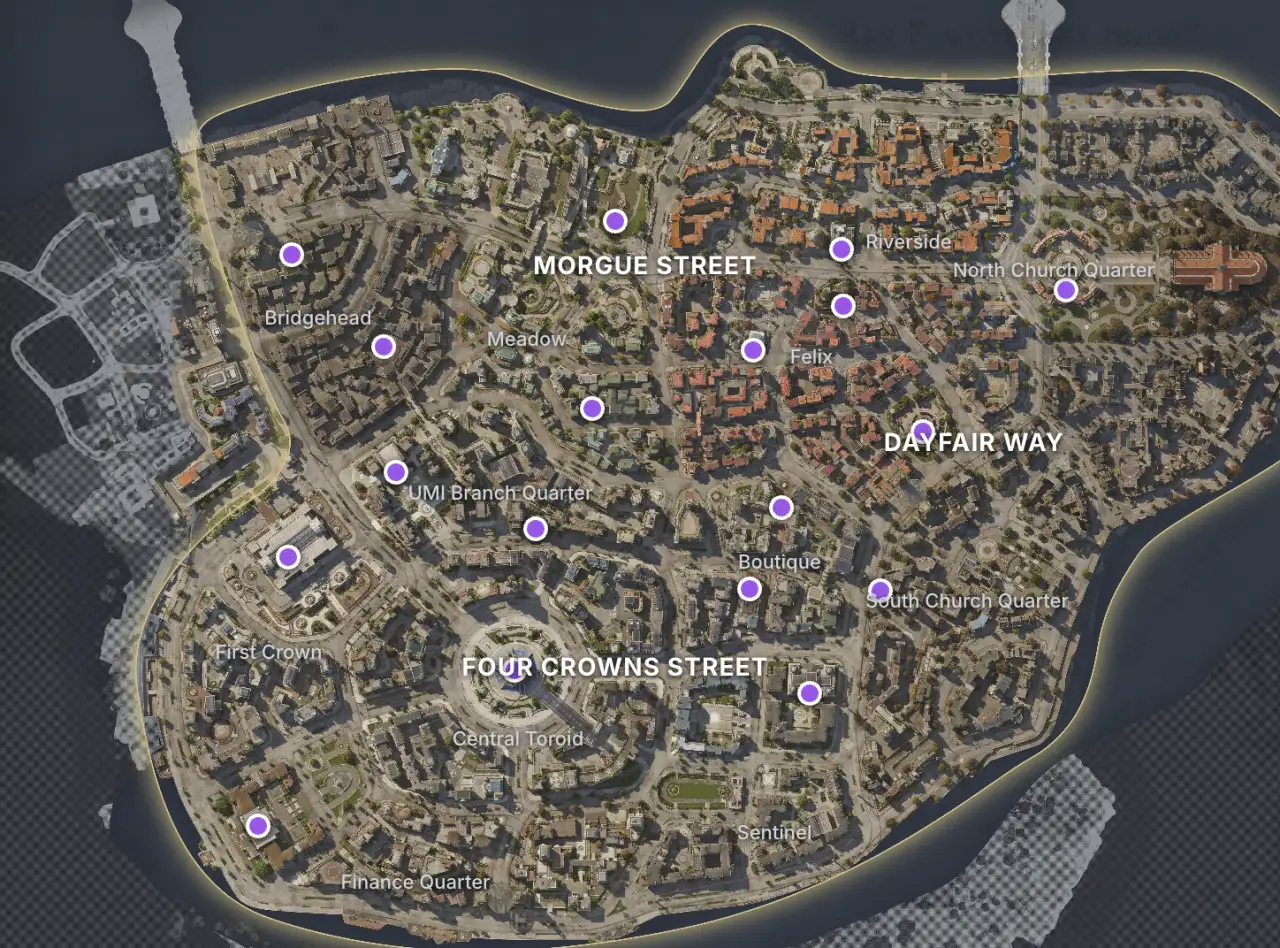
This is the world map from the Dichotomy build, and it is the most complete picture of Silvernia anyone outside Elementa has. Three names are set in large capitals, which makes them the top-level regions: MORGUE STREET across the north, DAYFAIR WAY on the eastern side, and FOUR CROWNS STREET across the south and west. Everything else on the map is a smaller label sitting inside that frame.
The glowing yellow outline is the boundary of what you can walk. Inside it the city is rendered in full colour, street by street. Outside it the ground turns to flat grey hatching, and there is a lot of it: a large block west of Bridgehead with its road layout still faintly visible, and a wedge along the eastern and southern riverbank. Those are the districts the beta still keeps shut, drawn but not opened. Two pale causeways run off the top of the map and stop at the boundary, which is the map telling you the city continues north.
Twelve smaller areas carry names, and several of them are places the story has been talking about for two betas:
| Area | Where it sits | What is known |
|---|---|---|
| Bridgehead | Western edge, hard against the locked grey block | The dockside slum the beta's cases keep returning to |
| Meadow | Left of centre, beside the map's green parkland | Named here for the first time |
| Riverside | North east, at the top river bend | Shares its name with the first beta's Riverside Quarter |
| Felix | East of centre, in the terracotta-roofed cluster | Named here for the first time |
| North Church Quarter | Far east, beside the large cruciform building | The only church-scale structure drawn on the map |
| South Church Quarter | East, below Boutique | The southern of the map's two church quarters |
| Boutique | Centre east | Retail district by name, unconfirmed in play |
| UMI Branch Quarter | West of centre | Carries the United Mining Industry name |
| First Crown | South west | Shares its name with the Four Crowns Street region around it |
| Central Toroid | Centre south, on the circular plaza | Shares its name with the Toroid Spine reactor |
| Sentinel | South east | Shares its name with the Hall of the Sentinel Knights |
| Finance Quarter | Southern tip, along the water | Named here for the first time |
Four of those names line up with places the story visits, and the map does not confirm the connection either way. Central Toroid sits on a large circular plaza with a spire at its centre, and the story recap has the Detective take Cynthia to the Toroid Spine trade fair to watch the Silverium parade bloom over the great reactor. Sentinel and the Hall of the Sentinel Knights share a name. And the cruciform building beside North Church Quarter is the right shape and scale for the Cathedral of Illumination, which official material places in eastern High Peers. Treat all of these as name matches worth watching rather than settled identifications.
For how much this footprint grew, compare it against the first beta's map further down.
The Floating Palace
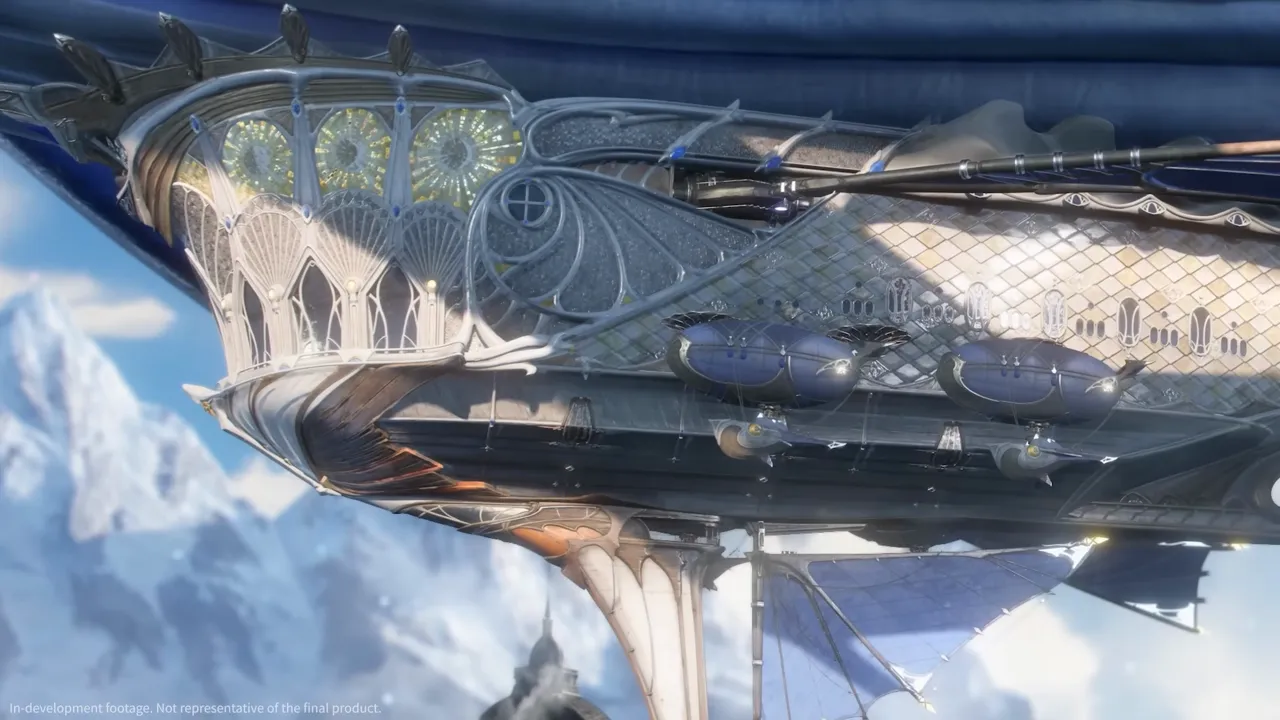
Dichotomy opens in the air. Elementa's launch announcement puts it plainly: "The Floating Palace soars into the sky, signalling the start of the Royal Banquet. This is your moment of glory, Detective, but beware: where there is light, shadow follows."
The vessel in the official showcase is enormous and deliberately unlike a warship. It is architecture that happens to fly: rose windows, vaulted arches, filigree across a hull the size of a cathedral. Holding a royal banquet aboard it is a statement about who Silvernia's power belongs to, and putting the Detective on the guest list hands you a room full of suspects at altitude.
There is an echo the game has not spelled out. Our story recap covers the Evermore, a floating palace built by the United Mining Industry that went down three years earlier, killing Queen Agoria and the Detective's sibling. Nothing published connects the two vessels. Whether this is the same class of ship, a replacement, or a deliberate restaging of the worst night of the Detective's life is what the beta is not telling you yet.
High Peers
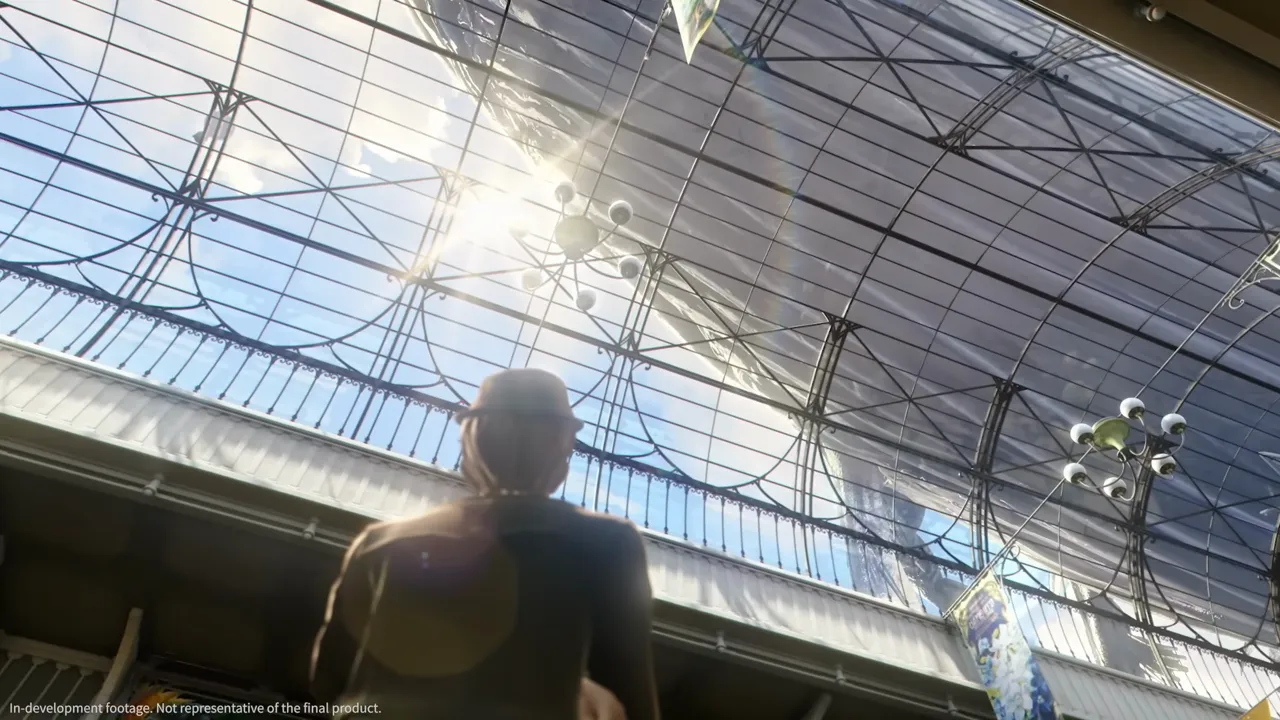
High Peers is the city at its most self-satisfied. Official material calls it "the gleaming, tranquil, and prosperous crowning jewel of Silvernia," and the thing that defines its skyline is infrastructure rather than monuments: the Spinotrodes, cone-tipped Reactors that convert Silverium into electricity and form the backbone of the city's power grid.
That detail does quiet work. Silvernia's wealth is generated rather than inherited, and generated by a substance the rest of the setting treats as dangerous. Our Silverium lore guide covers the split between an Upper City with abundant power and clean air and a Lower City on limited allocation and refinement pollution. High Peers is the top of that arrangement seen from the inside.
Maintaining it is somebody else's job. The Spinotrodes are serviced by the Kaboom Team, a crew of homeless children working under a United Mining Industry badge, which our UMI faction breakdown covers in full. The crowning jewel is kept lit by the people who live furthest from it.
Morgue Street
Morgue Street is the single best-documented location in the game, and the only district Elementa has given a dedicated feature. Official material calls it "one of the most iconic enclaves within High Peers," a "vital thoroughfare connecting multiple districts" where "those of all social spheres and distant lands converge."
What makes it work as a hub is that nobody owns it. It is described as a hornet's nest of rival factions in which no single power has ever taken full dominance, leaving a fragile equilibrium and "each standoff poised on a knife-edge of lethal peril, and boundless opportunity." That is a design brief as much as a description: a neutral ground where anyone can plausibly turn up.
Three landmarks anchor it:
- S.T.A.T.S., the Detective's agency, "part cluttered headquarters, part modest flat." It sits at 3 Morgue Street, and per the story, Cynthia owns the entire street through a trustee, since she is not yet of age.
- The Memoir Bar, "the beating heart of High Peers once dusk falls," tended by Argos, where clues sit waiting inside drunken gossip and half-remembered tales.
- The Voicepipe Café, where intellectuals, clerks and merchants argue between shifts. Official material calls it "a conduit for the city's endless chatter," which is a polite way of saying it is where you go to overhear things.
Our Morgue Street breakdown covers the landmarks and the hostile factions in detail.
The Riverside Quarter
The first closed beta, Monotype, gave you one bounded piece of the city, and the in-game map named it. From our CBT1 review:
Open-world play in CBT1 was locked to a generous but bounded chunk of the city: the Riverside Quarter, split across areas like Morgue Street, Four Crowns Street and Dayfair Way. Whether that footprint expands later is unknown; for now it's a slice, not a continent.
Dichotomy is the answer to that open question, and the answer is yes.
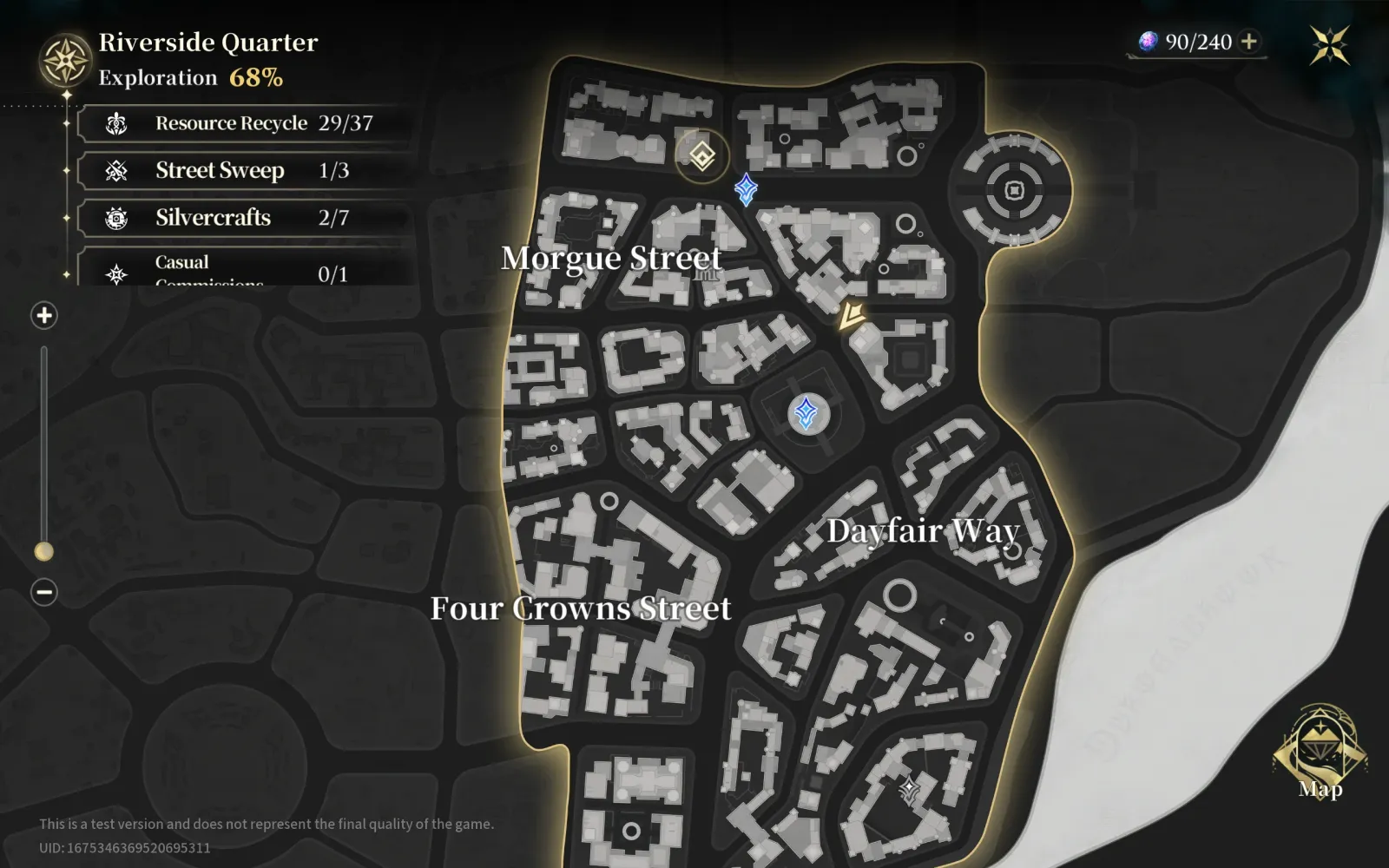
Put that map beside the Dichotomy one above and the growth is easy to measure. Monotype drew the city as a dark schematic, grey blocks on black, with the same three street names and nothing else. Its boundary stopped at the river: the entire eastern bank was flat grey, unlabelled and shut. On the Dichotomy map that bank is inside the lit outline, rendered in full colour, and carries four names of its own in Riverside, Felix and the North and South Church Quarters. The west grew too, with Bridgehead pulled inside the line.
The naming shifted along with the footprint, which adds a layer to a wrinkle worth noting rather than papering over. Official material places Morgue Street inside High Peers; the CBT1 in-game map placed it inside the Riverside Quarter; the Dichotomy map demotes Riverside to one small label in the north east and promotes the three streets to the top-level names instead. All three come from primary sources, so all three are recorded and none is presented as sitting under the others.
The CBT1 map also showed how exploration is scored: a completion percentage per area, plus collectible categories called Resource Recycle, Street Sweep and Silvercrafts. Chests hide in nooks and on rooftops. The one real friction point was traversal, because that build had no jump button, which made small ledges into walls.
Beyond the Quarter
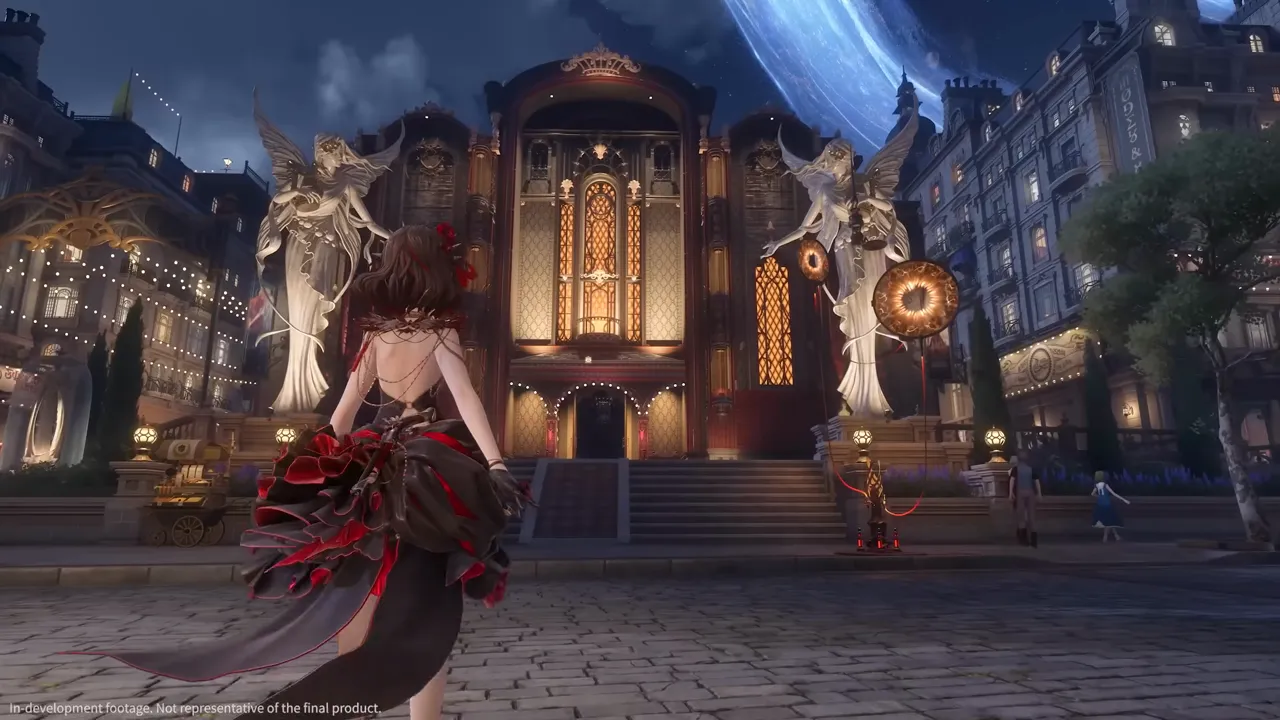
The story reaches well past the playable footprint, and the places it visits are the best preview of what the map eventually becomes.
Bridgehead matters most, and the Dichotomy map settles part of its status. Our story coverage describes a sprawling slum with gang-run alleys, a disused clock tower, a high street beside a transport hub, and renovated company docks used as a smuggling route. It is the Lower City made concrete, and where several of the beta's cases end up. On the Dichotomy map it is a labelled area inside the playable boundary at the western edge, which the first beta's map did not show at all.
Sentinel is in the same position: a labelled area in the south east of the Dichotomy map, sharing its name with the Hall of the Sentinel Knights the story visits. A label inside the boundary is not proof of unrestricted access, since story areas can gate behind progression, but both places have moved from story-only to drawn and named.
The rest are still story-only. Williams Manor, northwest of Dayfair Way; the United Vermentum Works factory; and Firtho's corner clinic in a quiet, forgotten district are named, described, and on the board without appearing on the map. The Cathedral of Illumination in eastern High Peers, where a fresh grave becomes a plot point, is the interesting middle case: the map's only church-scale building sits beside North Church Quarter on the eastern bank, in the right part of the city, which makes it a likely match rather than a confirmed one.
What Dichotomy Opened Up
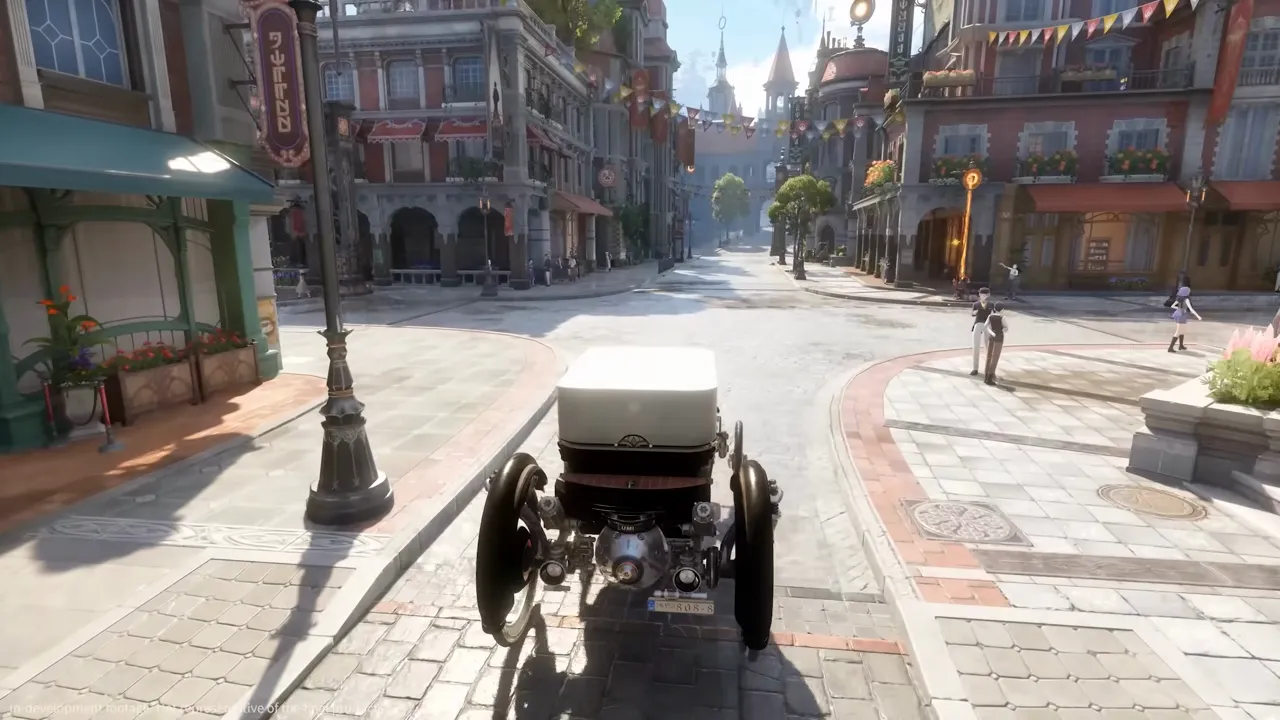
Elementa has been specific about the character of the new districts and looser about their names. Previously unavailable areas are now accessible, described as full of hidden treasures, puzzles, interactive objects and mysterious incidents.
That list is worth parsing, because each item is a different design intent. Hidden treasures are the standard open-world reward loop. Puzzles are the detective fantasy applied to the environment rather than to a case. Interactive objects are texture, things to touch that are not loot. Mysterious incidents are the interesting one: unscripted urban events that happen in the street while you are passing through.
That last category is what separates a city from a hub. Silvernia in Monotype was a place you moved through between objectives. Silvernia in Dichotomy is meant to interrupt you.
Getting Around a Bigger City
A larger map needed a larger traversal kit. The Silverium Pegasus is still the backbone, with ground running, flight inside marked zones, and drifting through tight streets. Dichotomy adds vintage automobiles and large airborne vessels to the mix.
The rest of the kit still matters, and the movement and exploration guide covers it: grappling for verticality, automated rails between major districts, wall running for gaps grappling cannot start from. The city signposts which is which. Metallic rings mark grapple points, blue lines mark rail routes, purple haze marks flight zones, and upper Silvernia carries more flight zones than the streets below.
The City as Content
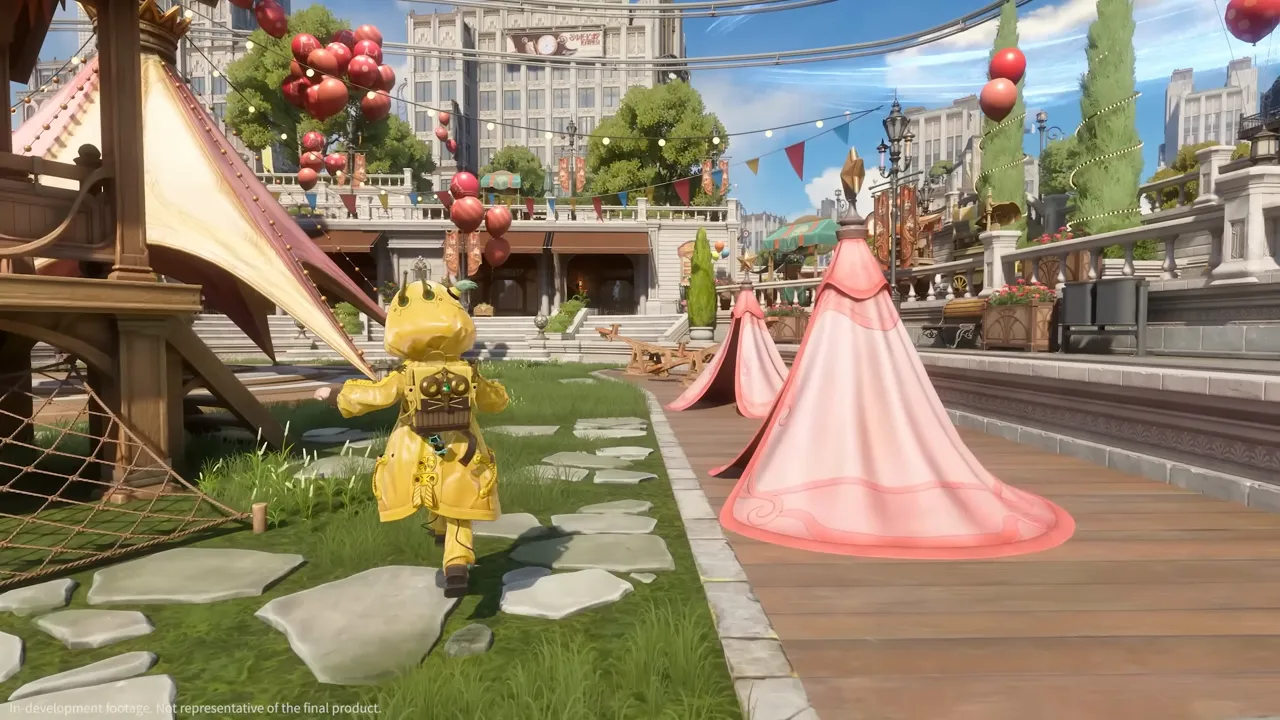
The expansion that surprised people is not the districts but what Elementa put inside them. Chess duels, card tables, urban horse racing and Scarlet Gambit give the city's social spaces a reason to exist, and the minigames guide covers each one.
It is the mysterious-incidents argument made louder. A detective game lives or dies on whether the city feels inhabited, and you can build that with writing or by letting players gamble in the same rooms the suspects do.
Who Holds What
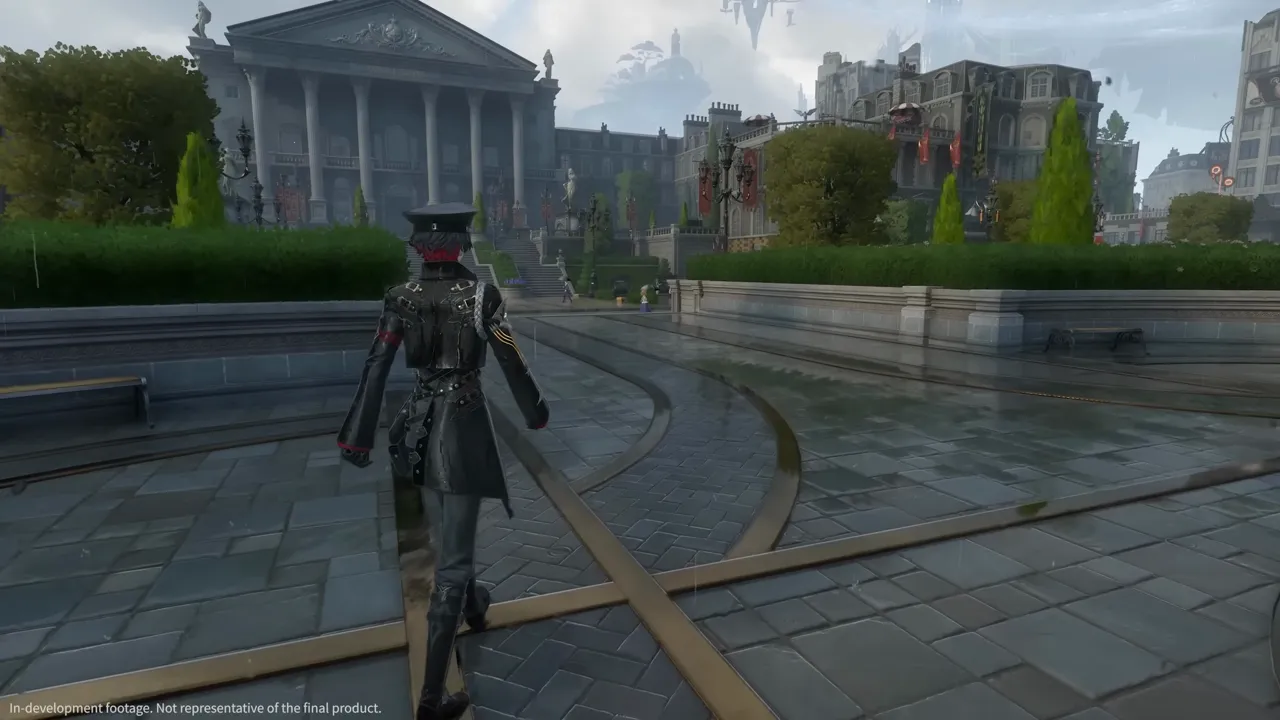
Territory in Silvernia is contested rather than divided, and the factions overlap on purpose.
The Stonefall Syndicate haunts every corner of High Peers, a loose coalition of street gangs whose strength is numbers rather than structure. Street Punksters work the alleyways below them. Werewolves, the Metal-Blooded, pass for ordinary citizens across the metropolis until high-purity Silverium exposes them.
Institutionally, the River Constabulary works from an office the Navy vacated, funded by UMI at the Crown's behest, with a jurisdiction that rubs directly against S.T.A.T.S. MISS runs an information network out of the nightlife scene. Our factions roster maps who answers to whom.
What This Means for Launch
Two betas is enough to see a shape. Monotype gave you one quarter. Dichotomy opened more of the city and filled it with activities rather than objectives, while the story kept naming places you cannot yet walk to.
If that ratio holds, launch Silvernia will be dense rather than sprawling: a city you learn rather than a landscape you cross. That is the right call. An investigation needs a place with corners you recognise.
For everything else the second closed beta introduced, see the Dichotomy Beta guide, our CBT2 review, or the Monotype vs Dichotomy comparison.
Frequently Asked Questions
What are the districts in Silver Palace called?
High Peers is the prosperous upper district and Morgue Street its best-documented enclave. On the Dichotomy beta's in-game map the three top-level regions are Morgue Street, Dayfair Way and Four Crowns Street, with twelve smaller areas named inside them: Bridgehead, Meadow, Riverside, Felix, North Church Quarter, South Church Quarter, Boutique, UMI Branch Quarter, First Crown, Central Toroid, Sentinel and Finance Quarter. The first beta's map instead used Riverside Quarter as the region title for the same three streets.
What is High Peers in Silver Palace?
Official material calls High Peers the gleaming, tranquil and prosperous crowning jewel of Silvernia. Its skyline is dominated by Spinotrodes, cone-tipped Reactors that convert Silverium into electricity.
What is the Floating Palace?
The Floating Palace is the airship that hosts the Royal Banquet at the opening of the Dichotomy beta story. Elementa's launch post describes it soaring into the sky to signal the start of the banquet.
How big is the map in the Dichotomy beta?
Elementa has not published a size figure. What is confirmed is that Dichotomy opens districts that were locked in Monotype, and that the build holds over 40 hours of playable content overall.
What are the sub-areas on the Silver Palace CBT2 map?
The Dichotomy beta map labels twelve. Across the north and west sit Bridgehead, Meadow and Riverside. On the eastern side sit Felix, North Church Quarter, South Church Quarter and Boutique. Across the south and centre sit UMI Branch Quarter, First Crown, Central Toroid, Sentinel and Finance Quarter. The map does not draw borders between the three top-level regions, so those groupings follow position on the map rather than a stated hierarchy.
Is Bridgehead explorable in the Dichotomy beta?
The Dichotomy map labels Bridgehead as an area inside the lit playable boundary, at the western edge against the locked grey block. That is a change from the first beta, whose map did not show it. A label inside the boundary is not proof of unrestricted access, since story areas can gate behind progression, so read it as drawn and named rather than confirmed free-roam.
Where does the first beta's area fit on the map?
The Riverside Quarter was the entire open-world footprint in Monotype, split across Morgue Street, Four Crowns Street and Dayfair Way. Dichotomy expands past it.
Is Morgue Street in High Peers or the Riverside Quarter?
Both sources are primary and they do not agree. Official material calls Morgue Street an enclave within High Peers, while the first beta's in-game map placed it inside the Riverside Quarter. These may be different layers of naming, a social district against a map region, or the naming may have changed between builds.
Know someone tracking Silver Palace? Send them this.
About the Author
Silver Palace Meta Team
Silver Palace Meta Team
We're dedicated to providing comprehensive coverage of Silver Palace news, updates, and community insights.